Process, Time, and God

Whitehead is frequently characterized as holding an ontology of events. This is not an unhappy characterization, if what is meant is that all other entities can be defined, or constructed, in terms of events and their properties, especially relations. In fact, in The Concept of Nature Whitehead tells us "the final conclusion" is "that the concrete facts of nature are events exhibiting a certain structure in their mutual relations and certain characters of their own" (CN 167). No one would question the central place of events in Whitehead’s earlier work, beginning with An Enquiry Concerning the Principles of Natural Knowledge (1919) and extending through Science and the Modern World (1925). I myself think that this earlier work forms an essential background for Process and Reality. In this essay I want to use Whitehead’s concept of an event from these earlier writings to elucidate his concept of "process" and its relationship to time in Process and Reality and, in turn, to use this to elucidate Whitehead’s conception of God. As is generally recognized, Whitehead has two types of process, and the understanding of the difference between these two types of process and their relationship to time is essential to understanding his conception of God.

Let us look now at the way in which the term ‘event’ is used in Whitehead’s earlier writings. In The Concept of Nature, for example, he defines an event as "a place through a period of time" (CN 52). And he tells us," Every event extends over other events, and every event is extended over by other events" (CN 59). Conversely, every event is divisible into proper parts which are events, and every event is a proper part of some larger event. Thus, what he calls there the "ether of events" (CN 78) is infinite in extension and infinitely divisible. Here there are no atomic events, that is, events which are not divisible further into events. This same positibn is taken mAn Enquiry Concerning the Principles of Natural Knowledge and suggested in The Principle of Relativity.

In Science and the Modern World, an ‘event’ is defined as "a volume of space through a duration of time" (SMW 103); or as "a region of space-time" (SMW 66). In the Theory of Extensive Connection in Part IV of Process and Reality, this term ‘region’ or ‘extensive region’ becomes the technical term. The term ‘region,’ he tells us, "will be used for the relata which are involved in the scheme of ‘extensive connection’" (PR 294/ 449). In this new theory the relation, ‘extensively connected,’ or ‘connected,’ is taken as primitive, or undefined.1 The other extensive relations of the earlier work, such as ‘part of ’ and ‘overlap,’ along with some new relations, ‘externally connected,’ ‘tangential part of,’ and ‘nontangential part of ’ are defined in terms of connected.’ The term ‘region now replaces the term ‘event,’ for "a place through a period of time" or "a volume of space through a duration of time." And just as events in the earlier work were infinitely divisible into further events, so now regions are infinitely divisible into further regions. Assumption 9 in the Theory of Extensive Connection assures this:

Every region includes other regions and a pair of regions thus included in one region are not necessarily connected with each other. Such pairs can always be found, included in any given region. (PR 296/ 452)

Just as there were no atomic events in the ether of events, there are no atomic regions in the Theory of Extensive Connection. Likewise, just as infinite sequences of converging events were used to define points, lines, and other geometric elements, so infinite sequences of converging regions are now used to define the geometric elements. In fact, the Theory of Extensive Connection was Whitehead’s last formulation of what was to have been, according to Russell, the unwritten fourth volume of Principia Mathematica, which was to have been on geometry and written by Whitehead.2 And the first part of Assumption 9 above assures us that there are points, and the second part assures us that between any two points on a line there is a third point.

In Process and Reality, then, the ether of events of the earlier work is replaced by the scheme of extensive connection, and Science and the Modern World is the transitional work in which the terms ‘event’ and ‘region’ are used synonymously. Whitehead himself expresses the relation between the earlier ether of events and the scheme of extensive connection in this way:

If we confine our attention to the subdivision of an actual entity into coordinate parts, we shall conceive of extensiveness as purely derived from the notion of ‘whole and part,’ that is to say, ‘extensive whole and extensive part.’ This was the view taken in my two earlier investigations of the subject [PNK and CN]. This defect of starting point revenged itself in the fact that the ‘method of extensive abstraction’ developed in those works was unable to define a ‘point,’ without the intervention of the theory of ‘duration.’ Thus what should have been a property of ‘durations’ became the definition of a point. (PR 287/ 439f.)

This defect, however, is purely a technical problem of logical construction and does not affect the philosophical purpose and role of the two theories. Their philosophical purpose and role are the same. Their purpose is to construct a space-time topology, not based on space-time points, but based on extended individuals, either events or regions, and in turn to define space-time points in terms of these extended individuals in such a way that there is a natural isomorphism between the set of events, or regions, and the set of certain subsets of the set of all space-time points. In short, there will be a one-to-one correspondence between any event, or region, and the set of space-time points incident in that event, or region. Such a one-to-one correspondence is Assumption 29 of the Theory of Extensive Connection.3

There are three important points to be noted in the above quotation from Process and Reality in which Whitehead compares his new scheme of extensive connection to his earlier ether of events. First, Whitehead uses the general term, actual entity, here rather than the more specific term, actual occasion. This means that God is included in this division into parts. Second, Whitehead uses here his technical term, coordinate division. Coordinate division is one way of dividing the actual entity into prehensions, thus exhibiting the spatiotemporal relation of the prehensions of an actual entity. In an actual entity, he tells us, "there is an indefinite number of prehensions, overlapping, subdividing, and supplementary to each other" (PR 235/ 359). The first two of these relations are relations of extensive connection.

Third, although, as we shall see later, actual occasions are atomic events, that is, they have no events in the new use of that term (i.e., actual occasions and nexus) as parts, they do have spatiotemporal parts, namely, prehensions, and are infinitely divisible into such parts. This is contrary to what appears to be a rather common interpretation of the atomic nature of actual entities; that is, that actual entities do not have parts that are temporally ordered. John Cobb, for example, tells us that actual occasions "are indivisible into earlier and later portions" (CNT 18Sf.). If Cobb were right, then the construction of space-time points and the temporal ordering of points in a real line would be impossible. In short, the whole physical topology which it was Whitehead’s intention to construct would collapse -- a labor of over fifteen years.

We must turn now to the temporal ordering of regions in terms of temporally before and after. All the relations of extensive connection above were spatiotemporal; that is, none were purely temporal relations. In the earlier ether of events in The Concept of Nature, the temporal relation ‘before’ appears to be an additional primitive relation. There, and in the Essay Concerning the Principles of Natural Knowledge, Whitehead is concerned with the temporal ordering of parallel durations into a particular time.system. A duration is defined as "the whole simultaneous occurrence of nature which is now for sense-awareness’ (CN 53). Although he uses the term "simultaneous, a duration has temporal thickness; it is, he says, "aconcrete slab of nature" (CN 53), which is "cogredient," or temporally coextensive, with a percipient event. As an event, a duration is infinitely divisible into smaller durations, and such a set of infinitely smaller durations, under certain conditions, approaches a moment, which is instantaneous. The temporal ordering of moments in terms of ‘before’ is derivative from durations. He writes, for example, of the temporal ordering of moments into a time system as follows:

. . . the passage of nature [i.e., temporally successive durations] enables us to know that one direction along the series [of moments] corresponds to passage into the future and the other direction corresponds to retrogression towards the past. (CN 64)

In short, the temporal order is a perceived order; and there are alternative such orders of parallel durations, or time systems.

In The Principle of Relativity, Whitehead adopts a Minkowski-like topology of event-particles, or space-time points, in which the temporal ordering of points is causally defined, rather than perceptually defined as in the two earlier works. The result is, given any event-particle e, we can speak of three sets of event-particles, or space-time points, those space-points which causally influence e, e’s causal past; those space-time points which e influences, e’s causal future; and the remainder, e’s contemporaries. Unlike the moments of the earlier theory, moments are defined in terms of a set of space-time points each of which is contemporaneous with e and any two of which are contemporaneous with each other. There would, however, be alternative moments, each of which contained e, or alternative definitions of simultaneity. And each such moment would define a relative past and a relative future; namely, the causal pasts and the causal futures of each of the points in that given moment. Each such past or future would be relative in the sense of being relative to that moment, or definition of simultaneity.

In Symbolism: Its Meaning and Effect, Whitehead first tries to bring together these two bases for temporal order, the earlier one perceptually based and the latter causally based. He does this in terms of two modes of perception, perception in the mode of presentational immediacy and in the mode of causal efficacy. In Process and Reality the assimilation of the two theories of time, time as an ordering of durations and their percipient events, which is perceptually based, and time as a causal ordering, come to fruition. The percipient event is now replaced by an actual occasion. Given any actual occasion A, there will be three sets of regions: The set of regions from which A causally inherits, A’s causal past; the set of regions which causally inherit from A, A’s causal future; and the set of remaining regions, A’s contemporaries. Just as a moment was causally defined previously, now a duration can be causally defined. A duration for A would be a set of regions each of which is contemporary with A and any two of which are contemporary with each other. And as with moments, so with durations; A can have many alternative durations. In presentational immediacy there is one special duration which is picked out by projection in presentational immediacy. This is A’s presented duration. Thus the actual occasion A with its presented duration is the old percipient event with its duration.

Thus the two theories are assimilated, and since causal efficacy is a mode of perception, time as a causal ordering is perceptually based. Suppose, for example, that A was your experience of a star at night. There is a space-time region many light years in the past from which the light was emitted, and there is a causal chain, or, to use Whitehead’s terminology, a causal nexus, from the star’s past region through your body to A, which is located somewhere in the area of the central nervous system. The quality of that causal inheritance, white, is then projected onto a contemporary region in A’s presented duration, and that is where the star is seen in A’s now from A’s here.

Since the satisfaction of any actual entity in coordinate division is infinitely divisible into prehensions, then any prehension can be treated in the same Minkowsi-like manner. "As an example," Whitehead writes,

suppose that P [a prehension] is a coordinate division of an actual occasion A. Then P can he conceived as an actual occasion with its own actual world [or causal past] . . . . In fact, P is the hypothetical process of concrescence with this standpoint. The other coordinate divisions of A are either in the ‘actual world’ for P, or contemporary with P, or have a complex relation to P expressed by the property that each one of them is coordinately divisible into prehensions Q1, Q2 . . . ., such that each of them has one or either of the three above mentioned relations to P. (PR 286/ 439)

Whitehead’s failure to mention the future of P is mysterious, since we are talking about a satisfaction which is fully actual and ‘x is after y’ is equivalent to ‘y is before x.’ Therefore, if there are prehensions in A’s satisfaction ordered by the temporal relation before, then there are prehensions ordered by the temporal relation after. This failure cannot be considered any more than an oversight on Whitehead’s part. Thus any prehension, or subregion of an actual entity, can be treated in the same Minkowski-like fashion, with a causal past, a causal future, and causal contemporaries. This infinite divisibility of the satisfaction of an actual entity into prehensions, each with its own causal past, causal future, and causal contemporaries is essential for Whitehead’s definition of space-time points and their temporal ordering. There is a natural mapping of the Minkowski-like topology of regions into the subsets of the set of all space-time points. Such a mapping depends on the one-to-one correspondence of regions and the set of all space-time points incident in that region. This is why I maintained earlier that if Cobb were right that actual entities could not be divided into portions which were before and after, then the definition of space-time points and their temporal ordering would break down.

Thus in coordinate divisibility the atomic nature of actual entities, which we recognized in the beginning of this paper, becomes irrelevant. In fact the distinction between prehensions, actual entities and nexus becomes irrelevant; they are all treated on a par as regions. Whitehead, for example, writes,

. . . just as for some purposes one atomic actuality can be treated as though it were many coordinate actualities, in the same way, for other purposes, a nexus of many actualities can be treated as though it were one actuality. (PR 287/ 439)

It is in coordinate divisibility of actualities that efficient causality is discovered. For example, he writes, "In coordinate division we are analyzing the complexity of the occasion in its function of an efficient cause" (PR 293/448). But as we have seen, efficient causality and time are inseparable. Together, they form one of Whitehead’s two forms of process, what he calls the process of transition. It is the process of causal transition from actuality to actuality. It is not merely a process of transition from actual occasion to actual occasion, as is usually suggested. It is a process of transition from prehension to prehension within an actual entity as well. It is a temporal process, and it is spatiotemporally continuous. It is what we usually mean by ‘the flow of time’ or ‘the temporal process,’ with adjustments for relativity theory.

Let us now turn to Whitehead’s other type of process, what he calls the genetic process, or the process of the becoming of an actual entity. Here we are concerned with the becoming of an event, and this Whitehead conceives of as quite different from the temporal transition within the event. Just as we turned to Whitehead’s earlier work for an elucidation of the process of transition, or the temporal process, we can likewise turn to this earlier work for help in elucidating the genetic process, or the becoming of an event. In An Essay Concerning the Principles of Natural Knowledge he writes:

. . . natural knowledge is a knowledge from within nature, a knowledge ‘here within nature’ and ‘now within nature,’ and is an awareness of the natural relations of one element in nature [namely, the percipient event] to the rest of nature. (PNK 167)

But what constitutes the immediacy of this percipient event; that is, its ‘now within nature’? He goes on,

Knowledge issues from this reciprocal insistence between this event and the rest of nature, namely relations are perceived in the making and because of the making. For this reason perception is always at the utmost point of creation. We cannot put ourselves back to the Crusades and know their events while they are happening. We essentially perceive our relations with nature because they are in the making. (PNK 168)

Thus what constitutes the ‘now within nature’ of an event is the process of becoming related to the rest of nature the way in which it is related to the rest of nature.

We have already discussed the physical relations of space-time, or extension, in the Theory of Extensive Connection and the relation of causal efficacy, or inheritance, from which the temporal relations of an event are derived; and Whitehead seems to mean the same by ‘x transmits to y,’ ‘y inherits from x,’ ‘y conforms to x,’ and ‘y reproduces x.’ What is transmitted, or conversely, what is inherited, is energy with a spatiotemporal pattern of quality and intensity. If A inherits immediately from B, then A conforms to, or reproduces, a spatiotemporal pattern of quality and intensity of B. The simple qualities of the pattern are called simple eternal objects of the subjective species. A pattern of qualities and intensities is called a subjective form. The geometric properties of an event, those constructed on the basis of the Theory of Extensive Connection, are referred to as eternal objects of the objective species. The relation of instantiation (or what Whitehead calls ingression) which eternal objects have with an event also become in the becoming of that event. In other words, not only the physical relations which an event has with other events become in the immediacy of that event, the relations which that event has with eternal objects also become in the immediacy of that event.

The relation which an eternal object of the subjective species may have to a percipient event, for example, may be quite complex. The eternal object may be inherited from some past region, located in a prehension belonging to the percipient event and projected on to (or situated in) some subregion of that event’s presented duration, as was, for example, the white in our above example of seeing a star at night. The parts of an actual entity as relata of relations in making are called feelings, because they become related by feeling the other relata of the relations, be they eternal objects or other regions, that is, other prehensions, actual entities, or nexus. And it is these feelings of becoming so related that give us the sense of being ‘here-now within nature.’

This becoming related of an actual entity is by Whitehead divided into phases, or stages; he seems to use the terms interchangeably. These phases, or stages, are usually called the phases of the concrescence of an actual entity. Here the term concrescence is used both in the sense of growing together into a pattern and in the sense of becoming concrete, or actual. In listing these phases, however, Whitehead is not always consistent. Usually the context determines how he divides up the process of becoming. In general, however, he lists three phases:

(1) the first is the "primary," "dative," "conformal,"" reproductive," or "responsive" phase. He uses all these adjectives.

(2) the second is the supplemental phase. This is the phase in which novel eternal objects, that is, eternal objects not inherited from the past actual world, enter the picture.

(3) the third phase is the satisfaction, the fully concrete event in all its relations.

Whitehead characterizes the distinction between the various phases or stages, in this way: "The distinction between the various stages of concrescence consists in the diverse modes of ingression of the eternal objects involved" (PR 163/ 248). In short, when an eternal object functions in the relation of inheritance, or the mode of causal efficacy, it belongs to the first phase of concrescence. When an eternal object supplements what is inherited, it is functioning in the supplemental, or second, phase. And, of course, the satisfaction is the event in all its relations.

It is the relationship of these three phases of the concrescence of an actual entity to time which causes the interpreters of Whitehead difficulty. He specifically states, for example:

This genetic passage from phase to phase is not in physical time: the exactly converse point of view expresses the relation of concrescence to physical time. It can be put shortly by saying, that physical time expresses some of the features of the growth, but not the growth of the features. The final complete feeling is the ‘satisfaction.’. . . Physical time makes its appearance in the ‘coordinate’ analysis of the ‘satisfaction.’ (PR 283/ 434)

We have already seen how physical time "makes its appearance in the ‘coordinate’ analysis of the ‘satisfaction’ "of an actual entity. It does so through causal inheritance and the Minkowski-like cones, and such an analysis, as we saw, applies to the prehensions of an actual entity as well as to actual occasions. But how does the ‘coordinate’ analysis express some features of the growth, but not the growth of the features"?

Whitehead points to two historical precedents for what he means by the genetic process. He writes, ". . . Hume, Kant and the philosophy of organism agree that the task of critical philosophy is the analysis of constructs; and ‘construction’ is ‘process’" (PR 151/229). Of Hume he writes, ". . . the credit must be given to Hume that he emphasized the ‘process’ inherent in the fact of being a mind" (FR 151/229). He explains what he means by this ‘construction’ or ‘being a mind’ in Hume in this way: "Hume’s analysis of the construct which constitutes a mental occasion is: impressions of sensation, ideas of impressions of sensations, impressions of reflection, ideas of impressions of reflection" (PR 151/229). Whitehead, then, thinks of Hume as having a five-phase analysis of the becoming of an experience, or the genetic process, if we include the experience itself as the fifth phase, or satisfaction.

Of course, Whitehead disagrees with Hume’s analysis of the construction of an experience, as well as he does with the analysis of Kant, whom he calls "the great philosopher who first, fully and explicitly, introduced into philosophy the conception of an act of experience as a constructive functioning" (PR 156/236). Of Kant he writes, for example, "Kant for whom process ‘is mainly a process of thought accepts Hume’s doctrine as to the datum’ [i.e., the impressions of sensation] and turns the ‘apparent’ objective content into the end of the construct" (PR 152/ 231). He goes on to draw this analogy with his own analysis: "So far, Kant’s ‘apparent’ objective content seems to take the place of the ‘satisfaction’ in the philosophy of organism" (PR 152/231). Whitehead is here obviously referring to what Kant calls that activity of "our faculty of knowledge" whereby,

objects affecting our senses partly of themselves produce representations, partly arouse the activity of our understanding to compare these representations, and by combining or separating them, work up the raw material of the sensible impressions into that knowledge of objects which is entitled experience. (CPR 41)

We might think of Kant’s analysis of the genetic process as consisting of four phases: (a) the reception of the impressions of sensation, (b) the application of the pure forms of intuition, space and time, (c) the combining and separating through the application of concepts, including the categories, and (d) the ‘apparent’ objective world. Whitehead, of course, recognizes that this four-phase analysis of the genetic process would be inadequate since it only takes into account theoretical reason and ignores practical reason (PR 152/231). Since our concern is with the genetic process and time, this analysis of Kant will be adequate for our present purposes.

There is, however, a fundamental difference between Whitehead and Kant concerning the construction, or concrescence, of an experience. For Kant the apparent world which emerges is the objective world -- that is, if certain peculiarities of the particular subject are ignored. For Whitehead, the world that emerges, the world of presentational immediacy, is the apparent world for that subject. The objective world, or the actual world, is the world at the level of causal efficacy. This is what Whitehead is referring to when he says that the constructing in Kant transforms "subjectivity into objectivity," whereas in the philosophy of organism it transforms "objectivity into subjectivity" (PR 156/236). Because of this difference, Kant’s first two phases, the reception of sensation and the application of the pure forms of space and time, are replaced by Whitehead’s first phase. The sensations are not received and the pure forms of intuition applied to them; rather, the data in the first phase are in space-time. They are felt as inherited here-now from there-then. They are felt as vectors which locate that experience, as an event, in space-time.

There is this similarity, however: just as Kant’s phases of construction, or concrescence, cannot be temporally ordered, neither can Whitehead’s. It would not make sense, for example, to say of Kant’s construction, or, to use his word, synthesis, that we first in time receive sensations, and then temporally later we apply the pure forms of sensuous intuition, space, and time, and then temporally later we apply the concepts, including the pure concepts of the understanding, and then later in time there emerges the objective world. This would be nonsense, since the same spatial and temporal relations which hold at the level of sensibility hold also at the level of what Whitehead calls Kant’s satisfaction -- that is, the objective world.

It would be equal nonsense to say of Whitehead’s three phases that first in time we have the conformal phase, and later in time this phase is supplemented, and after this supplementation, later in time, we have the satisfaction. As we have suggested, it is the first phase, the phase of inheritance, that locates the experience in space-time, and these spatiotemporal relations hold throughout the process of becoming and are exhibited in the satisfaction. It is for this reason that Whitehead says, The problem dominating the concrescence is the actualization of the quantum [i.e., the spatiotemporal region] in solido" (PR 283/ 434). Thus Whitehead’s process of becoming, like Kant’s synthesis, is not a temporal process. The space-time region with all its physical relations is presupposed throughout the process of becoming in much the same way as it is in Kant’s synthesis. Physical time, however, does pertain to some features of the growth in the first phase and to these same features in the satisfaction, much as with Kant’s objective world. The major difference between the two is that Whitehead is concerned with knowledge of "nature from within nature."

When Cobb, for example, writes, "In all other entities satisfaction is not attained except as the completion of the entity. If God is a single entity who will never be completed, . . . he can never know satisfaction" (CNT 189), he is conceiving of the satisfaction as temporally after the first two phases of concrescence. William Christian suggests the same thing when he writes, "Considering the process of transition . . . we may say that the satisfaction of an actual occasion is temporally final. With the satisfaction the occasion comes to an end in time" (IWM 298). This is clearly a confusion of the process of transition and the process of becoming.4 He goes on to call the satisfaction of an occasion "the temporal end or finis of the occasion" and writes, "It is the goal achieved by the concrescence and it is also the temporal end of the concrescence" (IWM 299). The satisfaction is the goal, but it is no more the temporal end of an actual entity than it is the temporal beginning. The beginning of the satisfaction is the temporal beginning of the actual entity, and the end of the satisfaction is the temporal end of the entity.

What becomes in the genetic process is an event with all its relations, and it is infinitely divisible. Whitehead himself puts it this way: "In every act of becoming there is the becoming of something with temporal extension, but the act itself is not extensive, in the sense that it is divisible into earlier and later acts of becoming. . ." (PR 69/107). This is what Whitehead is asserting in his often quoted, but I fear frequently misunderstood, maxim, "There is a becoming of continuity, but no continuity of becoming" (PR 35/ 53). What becomes is a segment of the temporal process of transition limited to a here-now, and its process of becoming is nontemporal.

How does Whitehead get the three phases of concrescence? In much the same way as Kant got his phases of synthesis, by taking the concrete outcome, experience, or knowledge of objects and analyzing it into the components which went into its synthesis: sensations, space and time, and concepts. Whitehead takes the concrete outcome, the satisfaction, and instead of analyzing it in terms of the temporal process, analyzes it into the components which went into its construction, or concrescence; namely, inheritance and supplementation. There is nothing necessarily temporal about this type of analysis whatsoever. It is, however, teleological. As Christian was quoted as saying above, the satisfaction is the goal of the concrescence. The complex pattern of relations exemplified in the satisfaction of an actual entity serves as the subjective aim of the entity guiding its concrescence.

It is here that atomicity enters the picture, for actual occasions are taken to be atomic events, and distinguished from prehensions, their parts, and nexus. Whitehead, for example, writes:

In fact, any characteristic of an actual entity is reproduced in a prehension. It might have been a complete actuality; but by reason of a certain incomplete partiality, a prehension is only a subordinate element in an actual entity. A reference to the complete actuality is required to give the reason why such a prehension is what it is in respect to its subjective form. This subjective form is determined by the subjective aim at further integration, so as to obtain the ‘satisfaction’ of the completed subject. In other words, final causation and atomism are interconnected philosophical principles. (PR 19/ 28f.)

We have already seen in our discussion of the first type of process that prehensions, actual occasions, and nexus are all treated on a par as regions in the temporal process of transition, or efficient causality. Final causality is not considered in the process of transition. In the genetic process of becoming, however, prehensions, due to the subjective aim of the actual entity of which they are parts, have an incompleteness of subjective form. Their subjective form is only a component in the subjective aim of the complete actual entity. In terms of efficient causality, the occasion is infinitely divisible. In terms of final causality, the actual occasion is not divisible; it is atomic. And each actual entity exemplifies within itself both types of process.

Having distinguished Whitehead’s two types of process and considered their relation to time, let us now turn to Whitehead’s conception of God in Process and Reality. Just as our discussion of the two types of process and time went back to Whitehead’s earlier work for a background, so can our discussion of his conception of God. Whitehead, for example, in the chapter "Time" in The Concept of Nature introduces us to an imaginary being; he writes,

We can imagine a being whose awareness, conceived as his private possession, suffers no transition, although the terminus of his awareness is our own transient nature. There is no essential reason why memory should not be raised to the vividness of the present fact; and then from the side of mind. What is the difference between the present and the past? Yet with this hypothesis we can also suppose that the vivid remembrance and the present fact are posited in awareness as in their temporal serial order. (CN 67)

What we have suggested here in this imaginary being is a "percipient event whose present, its ‘here-now; is coextensive with the entire ether of events. In comparing our present immediacy to that of the imaginary being, Whitehead goes on:

Thus our own sense-awareness with its extended present has some of the character of the sense-awareness of the imaginary being whose mind was free from passage and who contemplated all nature as an immediate fact. Our own present has its antecedents and its consequences, and for the imaginary being all nature has its antecedent and its consequent durations. Thus the only difference in this respect between us and the imaginary being is that for him all nature shares in the immediacy of our present duration. (CN 69)

The only purpose which this imaginary being serves in The Concept of Nature is to indicate that a present, or a percipient ‘here-now,’ is spatially and temporally extended and that there is no necessary limit to its extension. It is merely an empirical fact that our ‘here-now’ is limited spatially and temporally and, consequently, is superceded by a new ‘here-now’ so that it becomes a ‘there-then.’ Whitehead writes, for example, sense-awareness might be free from any character of passage, yet in point of fact our experience of sense-awareness exhibits our minds as partaking in this character" (CN 67f.). This becoming of a new ‘here-now,’ replacing the old ‘here-now’ and turning it into a ‘there-then,’ is what Whitehead means by passage. It is the coming to be and perishing of subjective immediacy in Process and Reality. Since the imaginary being does not participate in passage, its ‘here-now’ is everlasting. But the everlastingness of the awareness of this imaginary percipient event does not rule out temporal passage within the terminus of its awareness. There is temporal passage in the terminus of the awareness of any percipient event. The only difference between finite percipient events and this imaginary percipient event is in the extent of the ‘here-now.’

This imaginary being of The Concept of Nature becomes the God of Process and Reality, but it requires supplementation. In the original Lowell Lectures, which formed the basis for Science and the Modern World, Whitehead used the romantic poets as a vehicle for introducing intrinsic value into an event. He writes,

Remembering the poetic rendering of our concrete experience, we see at once that the element of value, of being valuable, of having value, of being an end in itself, of being something which is for its own sake, must not be omitted in any account of an event as the most concrete actual something. (SMW 136)

Intrinsic value is that at which the becoming of a concrete event aims. It is here that final causality first enters the picture for Whitehead. And in two supplementary chapters to the original lectures, "Abstraction" and "God," Whitehead develops further this notion of the aim at intrinsic value. It becomes God’s function to order the patterns of eternal objects according to value. "In place of Aristotle’s God as Prime Mover," Whitehead tells us, "We need God as Principle of Concretion" (SMW 250). As the Principle of Concretion, God functions as the ultimate final cause luring the various processes of concrescence. But as such, Whitehead points out, "God is not concrete, but He is the ground of concrete actualities" (SMW 257).

In Process and Reality, however, Whitehead adopts what he calls the Ontological Principle and which he summarizes as, "No actual entity, then no reason" (PR 19/ 28). Thus the Principle of Concretion, serving as the ultimate final cause, must be in some actual entity. The imaginary being of The Concept of Nature now has a function to perform, to house the Principle of Concretion. In Process and Reality, the Principle of Concretion and the imaginary being are synthesized into God with his primordial nature and his consequent nature. In this synthesis, not only does the imaginary being find a function to perform, the Principle of Concretion itself is based in something concrete.

That the Principle of Concretion becomes the primordial nature of God there can he no doubt. Whitehead describes the function of the primordial nature in this way,

The conceptual feelings [prehensions] which compose this primordial nature, exemplify in their subjective forms their mutual sensitivity and their subjective unity of subjective aim. These subjective forms are valuations determining the relative relevance of eternal objects for each occasion of actuality. (PR 344/ 522)

And he goes on to add: "From this point of view, he [God] is the principle of concretion." Whitehead then immediately introduces the consequent nature of God, which he characterizes as "in unison of becoming with every other creative act" (PR 345/ 523). If God is "in unison of becoming" with every other actual entity, then for him, as for the imaginary being, "all nature shares in the immediacy of our present duration" (CN 68). Whitehead also refers to the consequent nature as ‘everlasting’ and explains, "the property of combining creative advance with the retention of mutual immediacy is what . . . is meant by the term ‘everlasting’" (PR 346/ 524f.). Thus God, like the imaginary being, does not participate in the passage of nature. His subjective immediacy does not perish, or as Whitehead puts it in The Concept of Nature, the past is raised to the vividness of the present fact" (CN 67). The Principle of concretion and the imaginary being are synthesized in this way: "This prehension into God of each creature is directed with the subjective aim, and clothed with the subjective form, wholly derivative from his all inclusive primordial valuation" (PR 345/ 523). God thus becomes a single actual entity, with its own subjective aim, its own subjective form, its own prehensions, its own concrescence, and its own satisfaction.

God, like all finite actual entities, or occasions, participates in both types of process, the genetic process of becoming and the temporal process of transition. God, like any actual occasion, does not change; his relations merely become; they do not change. Also, God’s prehensions in his satisfaction, like the prehensions of any actual occasion, are ordered by the temporal relations, before, after, and contemporaneous with; his satisfaction is coordinately divisible. This was noted above in our discussion of the Theory of Extensive Connection.

God, however, differs from finite actual entities, or occasions, in three important respects. First, his subjective aim involves prehensive relations to all eternal objects. As Whitehead puts it, God is "devoid of all negative prehensions" (PR 345/ 524). This is required by God’s functioning as the Principle of Concretion, or his primordial nature. Second, God’s satisfaction is coextensive with the entire extensive continuum. This is required by the fact that God’s subjective immediacy does not perish and he does not participate in the passage of nature. As a consequence, however, God has no causal past, no causal future, and no causal contemporaries. Although God’s prehensions are temporally ordered, God is not. He is not a member of the field of the temporal relations, before, after, and contemporaneous with. He is the nontemporal actual entity. It is for this reason that Whitehead does not apply the term ‘event’ to God, although finite actual entities, or occasions, are termed events (PR 73,113, 124f.). Third, God is not a member of any causal chain of efficient causality. This follows from the previous point. God influences the temporal occasions by final causality. God himself is not to be found within the subject matter of physics; God is not an event in nature.

In describing exactly how a finite actual occasion is objectified in God, most interpreters of Whitehead will agree, he is not as clear as we would have hoped. In fact, when he does write concerning the objectification of occasions in God, he tends to abandon his technical vocabulary and resort to poetic language. At one point, however, he does say of the objectification of an occasion in God, "This element in God’s nature inherits from the temporal counterpart according to the same principles as in the temporal world the future inherits from the past" (PR 350/ 531f.). This may at first appear to be contrary to what we have maintained in this paper. Everything, of course, hinges upon what Whitehead means here by the phrase ‘the same principle.’ If he means the principle of causal objectification, then there is a serious difficulty here. If, however, he is speaking of the more general principle of objectification, or prehension, then there is no problem. The temporal one-way causal objectification of efficient causality, he explicitly tells us, is only one type of objectification, or prehension (PR 58/ 91). Actual entities in unison of becoming, despite a widely held belief to the contrary, can objectify, or prehend, each other.5 In fact, a nexus is defined in terms of a set of actual entities "constituted by their prehensions of each other, or . . . their objectifications of each other" (PR 24/ 45), and he speaks of mutual prehensions (PR 194/ 295, 230/ 351). Likewise, contemporaries objectify, or prehend, each other in presentational immediacy (PR 61/ 95f., 63/ 98, 64/100, 67/104, 301/473, 321/ 483). Thus God needs no past from which to inherit, or a past to objectify or to prehend.

As a way of explicating objectification in God, I would suggest the following: Each finite actual occasion, relative to God’s subjective aim, functions as one of his prehensions aiming at further integration into his subjective form according to his subjective aim. We saw above that a prehension belonging to an actual entity has all the characteristics of an actual entity except for an incompleteness of subjective form due to its aim at further integration according to the subjective aim of its parent actual entity. Thus relative to God’s subjective aim, each finite actual occasion has a certain incompleteness of form and aims at further integration with other occasions according to God’s subjective aim, resulting in his consequent nature. I am suggesting that a better analogy for God’s relation to finite actual occasions would be an actual entity’s relation to its prehensions rather than the relation of an actual occasion to its actual causal past. The relation of conformation, or reproduction, would apply, but not the temporal relation. This is not to suggest that the temporal actual occasions are merely parts of God’s satisfaction They are that, but in concrescing into his satisfaction they concresce according to his subjective aim into his subjective form and become a part of his everlasting now. Such an interpretation would be true to Whitehead’s technical vocabulary and, at the same time, do justice to his poetic language. He writes, for example, "The World is the multiplicity of finites, actualities seeking a perfected unity" (PR 348f./ 529). This perfect unity is found in their concrescence into God’s everlasting satisfaction. God’s consequent nature so interpreted, along with his primordial nature, appears also to do justice to Whitehead’s statement,

The theme of Cosmology, which is the basis of all religions, is the story of the dynamic effort of the World passing into everlasting unity, and of the static majesty of God’s vision, accomplishing its purpose of completion by absorption of the World’s multiplicity of effort. (PR 349/ 529f.)


References

CNT -- John B. Cobb, Jr., A Christian Natural Theology. Philadelphia: Westminster Press, 1965.

CPR -- Immanual Kant, Critique of Pure Reason, translated by Norman Kemp Smith. London: Macmillan, 1963.

IWM -- William A. Christian, An Interpretation of Whitehead’s Metaphysics. New Haven: Yale University Press, 1959.


Notes

1For an axiomatized formal development of Whitehead’s theory of connection, see my "Calculus of individuals Based on ‘Connection," Notre Dame Journal of Formal Logic 22/3 (July, 1981), 204-18.

2 See "Preface" of Bertrand Russell, Our Knowledge of the External World (London: C. Allen and Unwin, 1952).

3 For a formal treatment of points in a theory of connection, see my "Individuals and Points," forthcoming, in which the above is carried out; then Assumption 29 becomes provable.

4 It is frequently pointed out that Whitehead uses temporal terminology in speaking of the phases of concrescence, such as, ‘successive,’ ‘earlier phases,’ ‘latter phases.’ it should be remembered, however, that the natural numbers are frequently defined in terms of a successor function, so that 3 is earlier in the sequence of natural numbers than 8. Yet the ordering of the natural numbers is not a temporal ordering. Whitehead was a mathematician.

5 Lewis Ford, for example, in "The Divine Activity of the Future," PS 1l:171, writes: in Whitehead’s philosophy two concurrent concrescences cannot prehend each other." If this were true, contemporaries would not prehend each other, and there would be no presentational immediacy. See also AI 258f., where contemporaries prehend each other. The evidence is against Ford’s statement.

[Ford’s statement needs qualification: two contemporary occasions cannot physically prehend each other. Mutual prehension or immanence is used almost exclusively to define nexus in terms of the only general relation its members need have in common: their spatiotemporal relatedness to each other. This very general sense of prehension (worked out in SMW) does not include the more concrete ways of prehending (later developed in PR), e.g., physical or conceptual prehension -- Editor.]

The Untenability of Werth’s Untenability Essay

In a recent article, "The Untenability of Whitehead’s Theory of Extensive Connection" (PS 8:37-44), Lee F. Werth argues that Whitehead’s definition of a straight line "contradicts a derivable theorem that no geometrical element a is ever incident in a geometrical element b" (PS 8:37). Werth goes on to maintain that "from this theorem we can demonstrate that, according to the explicit theory of extensive connection Whitehead proposes, all geometrical elements are points" (PS 8:37). He is quite right in pointing out that if he is correct, then this has very serious consequences for some of Whitehead’s other theories: "it follows that Whitehead’s geometrical account of presentational immediacy and of the strain-locus is untenable in its present form" (PS 8:37). Werth’s argument needs seriously to be examined, not just for its consequences for Process and Reality, but also for the sake of the theory of extensive connection and abstraction. It is important in its own right. Or, at least Whitehead thought so. He began working on his theory at least as early as 1914 and continued to reformulate it and revise it until the Gifford Lectures of 1928 (see AE 214, footnote).

The nervus probandi of Werth’s argument is his Theorem 22, which he states as follows:

Theorem 22.The relation of covering, if it is to hold between any two abstractive sets always holds symmetrically.

In the concluding paragraph of his article, for example, he makes this claim:

To refute my argument requires the satisfaction of two criteria. Asymmetrical coverage between abstractive sets must be possible, i.e., the refutation of theorem 22. It must also be established that it is not always possible to construct a covered set a such that a’s associated geometrical element can be said to be incident in ’s associated geometrical element (for if a covered set can always be constructed where a does not cover its coverer, then all geometrical elements are not points). (PS 8:44)

This claim is far too strong. All that is needed to refute Werth’s argument is to show that he has not made his case -- that is, to show that his argument is invalid, or if valid, unsound. Although I shall consider his criteria later, I would like first to attempt to demonstrate (I) that Werth’s Theorem 22 is ambiguous as stated; (II) that what he says follows from it does not in fact follow; (III) that it does not follow from what he says it does; and (IV) that under either interpretation it is false.

In examining Werth’s theorems and proofs it will useful (if not necessary) to introduce some logical tools. Let us assume the classical two-functional senential logic, classical quantificational theory with identity, and some form of set theory. We will let the individual variables ‘. . . , x,y,z,’ range over Whiteheadian regions, the variables, ‘a, b, c range over sets of regions, and the variables, ‘a', b', c' , . . .,‘ range over sets of sets of regions. The English ‘if . . . then . . .,’ ‘and,’ ‘or,’ and ‘not’ will be used in the truth-functional sense of the horseshoe, dot, wedge, and tilde. The quantifiers, parentheses, and brackets will be used in their conventional way. With this logical machinery we can symbolize the following relevant Whiteheadian definitions, where ‘Cx,y’ is taken as primitive and is a rendering of ‘x is extensionally connected with y.’ I shall follow Whitehead’s own numbering in Part IV of Process and Reality and give in parentheses his own formulation.

DEF 2. ‘Ix,y’ = def ‘ (z) (if Cz, y then Cz,x)’

(Region A is said to ‘include’ region B when every region connected with B is also connected with A.)

DEF 3. ‘Ox,y’ = def ‘ (Ez) (Ix,z and Iy,z)’

(Two regions are said to ‘overlap,’ when there is a third region which they both include)

DEF 7. ‘ECx,y’ = def ‘Cx,y and not Ox,y’

(Two regions are ‘externally’ connected when (i) they are connected, and (ii) they do not overlap.)

DEF 8. ‘TIx,y’ = def ‘Ix,y and (Ez) (ECz,x and ECz,y)’

(A region B is ‘tangentially’ included in a region A, when (i) B is included in A, and (ii) there are regions which are externally connected with both A and B.)

DEF 9. ‘NTIx,y’= def ‘Ix,y and not (Ez) (ECz,x and ECz,y)’

(A region B is ‘non-tangentially "included in Region A when (i) B is included in A, and (ii) there is no third region whil is externally connected with both A and B.)

All the above relations, both primitive and defined, hold between regions. We shall now introduce a series of Whiteheadian definitions which characterized certain sets of regions and sets of sets of regions.

DEF 10. ‘ABSa’ = def ‘ (x) (y)[if (x a and y c a) then (NTIx,y or NTIy,x)] and not (Ex)[x a and (y) (ify eathen NTIy,x)]’

(A set of regions is called an ‘abstractive set, when (i)any two members of the set are such that one or them includes the other non-tangentially, (ii) there is no region included in every member of the set.)1

DEF 11. ‘COVa,b’ def ‘ABSa and ABSb and (x)[if x a then (Ey) (y b and NTIx,y)]’

(An abstractive set a is said to ‘cover’ an abstractive set , when ever)’ member of the set a includes some members of the set .)

DEF. 12. ‘EQVa,b’ = def ‘CO Va,b and COVb,a’ ERC (T

(Two abstractive sets are said to be ‘equivalent’ when each set covers the other.)

DEF. 13. ‘GEOEa'’= def ‘ (b) (c)[if (b a' and c a') then EQVb,c] and not (Eb) (Ec) (b a' and not c a' and EOVb,c)’

(A geometrical element is a complete group of abstractive sets equivalent to each other, and no one equivalent to any abstractive set outside the group.)

The ease with which these definitions can be rendered into the logical notation demonstrates the careful, precise, and systematic way in which Whitehead has presented his theory in Part IV of Process and Reality. (Alas, had only the rest of Process and Reality been written as precisely, carefully, and systematically.)

I

With the logical tools and these Whiteheadian definitions, let us now examine Werth’s Theorem 22 as stated above. It is difficult to know precisely what Werth is asserting here. The difficulty lies in knowing the force of the phrase ‘if it [covering] is to hold between any two abstractive sets’ and the force of the term ‘always.’ The usual definition of symmetry is as follows:

1.0 ‘R SYM’ = def ‘ (x) (y) (if Rx,y then Ry,x),’

where ‘SYM’ designates the class of symmetrical relations. There is no such thing as a relation’s being sometimes symmetrical and sometimes not (i.e., nonsymmetrical). It either is symmetrical or it is nonsymmetrical. Therefore, the force of the conditional (‘if it holds’) and the ‘always’ could be taken to assert something like this:

THM 22'. If (Ea) (Eb) COVa,b then (c) (d) (if COVc,d then COVd,c).

It is mysterious to me, however, why Werth would wish to put this condition on the symmetry of "covering," for THM 22 follows from the symmetry of the relation itself, but not vice versa. Therefore, it could be that the force of the conditional and the ‘always’ of Theorem 22 is intended to assert something like this: It is always the case that if ‘x covers y’ holds then the reverse also holds. If so, then Theorem 22 would appear as follows:

THM 22’. (a) (b) (if COVa,b then COVb,a).

In discussing his Theorem 26, Werth tells us that Theorem 26 "follows from the symmetry of coverage (22)" (PS 8:40). Also, he later speaks of Theorem 22 as "the theorem of the symmetry of coverage"(PS 8:42);and again, "the theorem of symmetrical coverage (22)" (PS 8:44). This leads me to think that it is THM 22’, rather than THM 22, which he has in mind. At any rate Werth’s statement of Theorem 22 is ambiguous, since the two formulations (THM 22 and THM 22’) are not logically equivalent.

II

Let us now examine two of Werth’s theorems which he claims follow from Theorem 22. Theorem 26, which we mentioned above, he tells us "follows from the symmetry of coverage (22)." This theorem he states as follows:

Theorem 22

When every member of an arbitrary geometrical element a covers every member of an arbitrary geo metrical element b, every member of geometrical element b will cover every member of geometrical element a.

This theorem appears to be quite unambiguous and would be rendered in the logical notation as,

THM 26.

(a') (b')[if (GEOEa' and GEOEb' and (c) (d)[if (c a' and d C b) then COVc,d]) then (c) (d)[if (d b'and c a') then COVd,c]].

Now THM 26 does not follow from the conditional form of Theorem 22 (THM 22), but it does follow from the unconditional form (THM 22’). The proof is rather simple and is worth detailing. From THM 22', by quantification theory, we get

2.0 If COVc,d then COVd,c,

and by sentential logic we can get

2.1 If (c a and d b) then (if COVc,d then COVd,c).

This by sentential logic is equivalent to

2.2 If [if (c a and d b) then COVc,d] then [if (d b and c a) then COVd,c].

By quantification theory we can obtain

2.3 If (c) (d)[if (c a and d b) then COVc,d] then (c) (d)[if (d b and c a) then COVd,c].

From this, by sentential logic, we can get

2.4 If (GEOEa' and GEOEb') then ( (c) (d)[if (c a' and d b') then COVc,d] then (c) (d)[if (d b' and c a') then COVd,c]).

And this, by sentential logic, is logically equivalent to

2.5 If (GEOEa' and GEOEb' and (c) (d)[if (c a' and d c b') then COVc,d]) then (c) (d)[if (d b' and c a') then COVd,c].

From 2.5 by quantification theory we can obtain THM 26. Here Werth is quite correct.

This proof leads me to think that Theorem 22 should be rendered as THM 22’. But be that as it may, Theorem 27 is, in turn, said to follow from Theorem 26 and DEF 12. Let us examine this proposal. This theorem is stated as follows:

Theorem 27.

The members of geometrical element a and the members of the geometrical element b are equivalent to each other.

(p. 120 ff.) What is intended here appears to be unambiguous enough and would be rendered as,

THM 27. (a) (b) (if [GEOEa' and GEOEb''] then (c) (d)[if (c a' and d b') then EQVc,d]).

Unfortunately THM 27 does not follow from TEM 26 and DEE 12. The difficulties can be seen easily if we use DEE 12 to rewrite THM 26 in a definitionally equivalent form; that is,

3.0 (a) (b) (if [GEOEa' and GEOEb'] then (c) (d)[if (c a' and d b') then (COVc,d and COVd,c)]).

Comparing 3.0 with an equivalent form of THM 26 might give us a clue as to why Werth has been led astray. By sentential logic THM 26 is logically equivalent to

3.1 (a) (b) (if [GEOEa' and GEOEb'] then (c) (d)[if (c a’ and d b’) then (if COVc,d then COVd,c)]).

An examination will reveal that 3.0 and 3.1 are identical except for the final ‘and’ of 3.0 and the final ‘if... then...’ of 3.1. Perhaps Werth has confused the form ‘p and q’ with the form ‘if p then q.’ Be that as it may, this much is clear: 3.0 does not follow from 3.1 and THM 27 does not follow from THM 26 and DEE 12.

Now since THM 27 is a major step in the proof of Werth’s main thesis that all geometrical elements are points and, consequently, that there are no straight lines, we must conclude that his argument is invalid.

III

Let us now examine Werth’s proof of Theorem 22. Werth tells us that Theorem 22 follows from Theorem 20 and Theorem 21. Let us look at Theorem 20 first. It is stated as follows:

Theorem 20. If every member of an abstractive set includes some members of another abstractive set, it will always be the case that every member of the latter abstractive set includes some member of the former abstractive set.

On the surface of things, this theorem appears to be unambiguous and should be rendered as

THM 20. (a) (b)[if (ABSa and ABSb and (x)[if x a then (Ey) (y b and NTIx,y)]) then (x)[if x b then (Ey) (y a and NTIx,y)]].

That this is a proper rendition of Theorem 20 into logical notation is supported by the fact that Theorem 22 under one interpretation (i.e., THM 22') follows from it. In fact, THM 20 by DEF 11 is logically equivalent to THM 22'. The proof is rather simple and probably worth stating. THM 20, by sentential logic is equivalent to

4.0 (a) (b)[if (ABSa and AESb and (x)[if x a then (Ey) (y e b and NTIx,y)]) then (ABSb and ABSa and (x)[if x b then (Ey) (y a and NTIx,y)])], which, by the substition of DEF 11, is equivalent to

4.1 (a) (b) (if COVa,b then COVb,a),

or THM 22'. THM 20 is not equivalent, however, to THM 22, but it does entail THM 22, since THM 22' entails THM 22.

There is, however, a difficulty here. Werth tells us that Theorem 22 follows from Theorem 20 and 21. Since THM 20 and THM 22' are logically equivalent, it is a mystery as to how Theorem 21 fits into the picture. Werth states Theorem 21 as follows:

Theorem 21. The two abstractive sets of 20 cover each other.

The phrase ‘the two abstractive sets of 10’ is puzzling. Theorem 20, it appears, is about all pairs of, or any two, abstractive sets; if not, then THM 22' does not follow. We certainly cannot reason from two sets to all pairs of sets. Perhaps Werth only means to assert: Two abstractive sets of 20 cover each other, or

THM 21. COVa,b and COVb,a;

that is, an instantiation of THM 20. Theorem 21, however, is said to follow from Theorem 20 by DEF 11. This, however, is certainly not the case. By DEE 11, the most that we can get from THM 20 by instantiation, as we have seen, would be

5.0 If COVa,b then COVb,a.

Here again we have the same apparent fallacy which we saw in the proof of Theorem 27; that is, an attempt to go from ‘if p then q’ to ‘p and q.’ This strengthens the belief that this was Werth’s error in the proof of Theorem 27.

Since, however, THM 21 is not needed in the proof of THM 22' or THM 22, let us not tarry here and proceed to look at Werth’s proposed proof of Theorem 20. He tells us that this theorem follows from Theorem 11 and 13. Theorem 11 is stated in this way:

Theorem 11. Every member of an abstractive set a includes some members of the set ; and Theorem 13 in this way:

Theorem 13. Every member of an abstractive set includes some members of the set .

Now since is a particular kind of set -- namely, one "determined by a" (see Theorem 4,5, 6, and 7, from which Theorem 11 and 13 are said to follow, or to follow from theorems which follow from these) -- then cannot be universally quantified. On the other hand, since every abstractive set, according to the argument, "determines" some set , a can be universalized. Also, the a of both theorems concerns the same set and the of both theorems concerns the same set -- a is the "determinor" and the "determinee" in both cases. In order to keep the quantifiers straight and since Theorem 20 is said to follow from the conjunction of 11 and 13, let us conjoin them before we attach the quantifiers. In this wax’ we obtain the following.

THM 11 (13). (a)[if ABSa then (Eb) (ABSb and (x)[if x a then (Ey) (y b and NTIx,y)] and (x)[if x b then (Ey) (y a and NTIx,y)])].

Now, I have absolutely no quarrel with Werth about THM 11 (13). It does follow from Whitehead’s definitions and assumptions along with set theory. There is, however, only one difficulty with THM 11 (13); it does not entail THM 22 or THM 22'. 1 do not believe there is any question about the notation of THM 11 (13). It is a straightforward rendering of Werth’s often repeated thesis: Every abstractive set a determines some abstractive set , such that a covers , and , in turn, covers a. I think it will be easy to see how Werth was probably led astray in his proof if we recast THM 11 (13) in a logically equivalent form; that is,

6.0 (a) (Eb)[if ABSa then (ABSb and (x)[if x a then (Ey) (y b and NTIx,y)] and (x)[if x b then (Ey) (y a and NTIx,y)])].

Now from 6.0 by sentential logic and quantification theory, we can gets2

6.1 (a) (Eb)[if ABSa and (ABSb) then ((x)[if a then (Ey) (y b band NTIx,y)] and (x)[x b then (Ey)(y a and NTIx,y)])].

A comparison of 6.1 to a logically equivalent form of THM 20 will, I think, give us a clue. That form is this:

6.2 (a)(b)[if (ABSa and ABSb) then (if (x)[if x a then (Ey)(y band NTIx,y)] then (x)[x b then (Ey)(y a and NTIx,y)])].

Here, again, we have the ‘if p then q’ and ‘p and q’ difference, which we have encountered before. In addition, however, we have the problem of different quantifiers. This shows us why Theorem 11 and 13 together do not entail Theorem 20. Under no circumstances does ‘ (a) (Eb)p’ yield ‘ (a)(b)p’. Thus, THM 20 does not follow from TI-IM 11 (13).

It appears that throughout his argument Werth has confused two different statements:

7.0 (a) (b) (if COVa,b then COVb,a), or THM 22', which is logically equivalent to 6.2; and

7.1 (a)(Eb) (COVa,b and COVb,a),

which is equivalent to 6.1. This confusion would, I think, explain the invalid proposed proof of Theorem 27, the invalid proposed proof of Theorem 20, the mysterious appearance of Theorem 21 in the proof of 22, and the ambiguity of Theorem 22.

Now, as I suggested above, 7.1 does follow in Whitehead’s system. But this does not make "covering" a symmetrical relation. It merely makes more than one abstractive set converge to the same geometric lement. This is harmless enough. In fact, Whitehead recognizes this fact. This is why he defines a geometric element in terms of an equivalent set of converging abstractive sets (DEE 13), rather than in terms of one converging abstractive set. A geometric element is a set of converging abstractive sets, all converging to the same geometric element.

IV

I would now’ like to argue that not only has Werth not proven Theorem 22 nor proven his main thesis which he claims follows from it, but that Theorem 22, in either of its formulations, is false. Consider, for example, Diagram 1. Let X be the set, X = [1, 2, 3,...], and Y be the set, Y [a, b, c,...], and Z the set, Z [A, B, C, D,...], where the exemplified pattern is repeated ad infinitum. Now all three sets, X, Y, and Z, will fulfill the definition of an abstractive set. In each set, choose any two regions: one will nontangentially include the other -- the first half of DEF 10. Also, since the same pattern of interlocking regions is repeated over and over, there will be no smallest member of any of the three sets -- the second half of DEE 10. Now set Z, according to DEF 11, will cover both set X and set Y, but neither X nor Y will cover Z. These three sets serve as a counter-example to both TEM 22 and THM 22’. Consequently, both forms of Theorem 22 are false. In fact, the associated geometric element of set Z will be a "segment" between the two "end points" associated with set X and Y (see Definitions 18 and 19, PR 457).

V

I would like now’ to say something about Werth’s two criteria (quoted above) which he feels must be fulfilled for a refutation of his argument. Let us first consider the second criterion: "It must also be established that it is not always possible to construct a covered set such that ’s associated geometrical element can be said to be incident in a’s associate geometrical element" (PS 8:44). This criterion rests upon Werth’s apparent assumption, which is false, that 7.0 entails 7.1. The fact that given any abstractive set a, we can always construct an abstractive set /3, which it covers and which in turn covers it, is perfectly harmless and does not entail that covering is symmetrical.

In his first criterion Werth tells us that in order to refute his argument one must refute his proposed Theorem 22. To refute a proposed theorem usually means to prove within the given system the negation of that proposed theorem. Now if Werth’s contention, which he has not proven, that Whitehead’s system is contradictory (or inconsistent) were true (PS 8:37), then, as a matter of fact, Theorem 22 in both its forms would be provable. In fact, any theorem whatsoever would be provable. The problem of contradictory, or inconsistent, systems is a tricky business. As Whitehead once said, one of the "prevalent habits of thought" which must be repudiated is the "belief that logical inconsistencies can indicate anything else than some antecedent errors" (PR viii). Inconsistencies can usually be patched up. When Russell proved his now famous paradox, the story is that he sent a copy of it to Frege and that Frege responded with a postal card saying, "Alas, arithmetic totters." Well, arithmetic still stands. Alas, it was only Frege who tottered. If Werth has succeeded in demonstrating anything, it is the need for someone to cast Whitehead’s theory of extensive connection and abstraction in a systematic form and in logical notation. The theory is too important, too subtle, and too complex to be handled in any other way.


Notes

1 In formulating this definition, I am following Werth (PS 8:42) rather than the text of Process and Reality. In the second half Whitehead uses the term included’ rather than nontangentially included.’ I rather think this is a slip on the p art of Whitehead. This difference, however, is quite irrelevant to our argument. As Werth says, "actually ‘includes’ as opposed to ‘nontangentially includes’ is a pseudo-issue" (PS 8:42).

2The proof here is rather clumsy, so I have not included it. It is based on the quantification theorem, ‘If (x) (if p then q) then [if (Ex)p then (Ex)q],’ with ‘if ABSb then (ABSb and (x)[if x a then (Ey)y b and NTIx,y)] and (x) [if x b then (Ey) (y b and NTIx,y[) and (x) [I x b then (Ey)(y a and NTIx,y)]) ‘p’’ and ‘If (ABSa and ABSb) then ((x)[if x a then (Ey)(y b and NTIx,,y)] and (x)[if x b then (Ey)(y a and NTIx,y([)’ replacing ‘q’. The antecedent of the quantification theorem will be tautology, and 6.0 with the ‘a’ instantiated will be the antecedent of the consequent of the theorem.

Probing the Idea of Nature


I

Both in colloquial and in methodic discourse the idea of nature has functioned in a large number of ways, and the variety of these ways makes it seem impossible to find significant relatedness among them. Nature has been distinguished from man, from art, from mind, from chance, from purpose, from history, from eternity, from irregularity, from society, from civilization, from God, from evil, from good -- to name some of the best known historical contrasts. Yet with respect to every one of these same ideas, nature also has been made inclusive of it or synonymous with it or continuous with it. I have no intention of trying to explain how all this has come about. But it will not be irrelevant to remark that the very fact of the concept "nature" lending itself to so many and conflicting uses can be seen as a cue, a hint to metaphysical thinking rather than as a ground for despair. My subject will take the form of considering two broad philosophic tendencies which have determined specific conceptions of nature. One of the tendencies is to regard nature as limited, and the other is to regard nature as unlimited. After asking what the difference comes to, and after persuading you to think exactly as I do, I shall propose a possible way of defining nature. But first, some observations that are more or less historical.

According to Collingwood’s book The Idea of Nature, the two most frequently used broad senses that have been given to the word "nature" are: first, the collective sense of a "sum total or aggregate," and second, the sense of a "principle" or arché, a source which defines or informs whatever is called "natural" and which justifies our speaking also in the plural, of "natures" or "essences." This second sense is held to be the original and so-called proper sense of physis. I think it would be better to identify these two ways of conceiving nature as "orientations" rather than senses or direct meanings. The first of them I would call the domain-orientation; the second, the trait-orientation. Thus reframed, each can be seen in a way that permits certain distinctions to emerge. For example, with regard to the first orientation, nature conceived as a domain may be, but need not be, conceived as a collection or sum or aggregate; instead, it may be conceived as a certain kind of domain. And with regard to the second orientation, nature as the principle or source of traits that are called "natural" can be thought of as just that -- a principle of traits -- and not a principle only of those traits that are called "essential." Thus it is at least possible to omit the notion of inherent essences without violating this second orientation. We may observe, in general, that it is a trait orientation which has given rise to concern about the natural vs. the unnatural, or the natural vs. the artificial, and that it is a domain-orientation which has given rise to concern about the natural vs. the supernatural. In the present discussion such concerns are reduced to the general issue of the natural vs. the non-natural, which is one way of rendering our question of nature unlimited vs. nature limited.

It is within what we are calling the domain-orientation that Collingwood believes the difference is to be found between nature conceived as unlimited and nature conceived as a limited or restricted domain. A restricted domain in Collingwood’s version is one that is not independent but dependent on some other. He believes that in the basic tradition of European thought the dominant view by far is this view of nature as limited: it implies that nature has "a derivative or dependent status in the general scheme of things," that "the world of nature forms only one part or aspect of all being." It is dependent "on something prior to itself." Historically, the reasons underlying the restricted view, the one called dominant, are extremely diverse. But the view as such is held or presupposed by scientists as well as philosophers, and it goes back to the time when the entire general issue of the scope of nature was debated in early Greek thought.

It is very hard to assess a contention about what is the dominant view. My interest here is mainly theoretical rather than historical. But even historically, we cannot gauge the issue solely by trying to figure out a numerical majority of opinions. For among them there are implicit emphases which have been as influential as those which are visible on the surface. We could also cite powerful counter-examples like Erigena, Aquinas, and Spinoza, who in their different ways conceive of a divine nature and in effect make nature the inclusive, or an equivalent of the inclusive, category. Probably many others were likewise convinced that, since whatever is has a nature, the notion of a nonnature is absurd. Collingwood, as we might suspect, pays small attention to that particular medieval tendency which dwells on natura naturans and natura naturata. When, however, he alters his angle and calls the dominant view the "modern" view, he is on securer ground. Then we recognize the so-called world of nature as the spatiotemporal world, and we begin to understand why science, for so long called "natural philosophy," still wishes to be called "natural" science.

I still have a bone to pick on the historical level. It is surprising for an historical account (especially a serious account like Collingwood’s) to interpret a restrictive conception of nature as one in which nature has "a derivative or dependent status." In the modern restrictive tendency what is called the world of nature, far from being considered necessarily dependent, is as often assigned the reverse status, namely that upon which any other "world" is "dependent" (e.g., the "world of number" or the "moral world") or that of which any other world is an appearance or that which is "more real" than any other world.

II

The notion of "the world of nature" usually involves the cognate notion of "the order of nature" or "the natural order." It is interesting to reflect that philosophers like Peirce and Whitehead, esteemed for their intensive concern with science as well as for their independent spirit, tend to think of nature in the limiting or restrictive way. They deal at considerable length with "the order of nature," a phrase the components of which seem to receive from them a certain type of explicit consideration, but which as a phrase remains dim in both of them. I suppose that the order-of-nature habit of thought is an oblique commitment to the idea of "laws of nature," which would be a much more difficult idea to defend if the domain-orientation were of the unlimited kind. Whitehead says in The Concept of Nature, "Nature is that which we observe in perception through the senses." In Process and Reality he says that when "we speak of the ‘order of nature’" we mean "the order reigning in that limited portion of the universe . . . which has come under our observation." And as late as Modes of Thought he says, "Nature, in these chapters, means the world as interpreted by reliance on clear and distinct sensory experiences, visual, auditory, and tactile." Whether these statements of the same theme are perfectly harmonious in themselves or with one another, I am not sure. But they surely accentuate the restrictive position. In The Concept of Nature Whitehead had said also, "Natural science is the science of nature." And again, "[N]ature can be thought of as a closed system whose mutual relations do not require the expression of the fact that they are thought about." In Process and Reality the term "nature" serves the purpose of defining subject-matter basic to science. Treating philosophically of nature thus apparently boils down to focusing the more general metaphysical categories on such concepts as space and time. In contrast to what is sought by science, there is said by Whitehead to be "an essence to the universe" which is sought by metaphysics or speculative philosophy. Metaphysics, he believes, seeks to understand "the system of the universe." I refrain from comment for the time being, except to note that Whitehead also occasionally uses phrases like "the womb of nature" and "the divine nature," which may or may not suggest a tacit alternative usage of nature in a wider sense.

Let us return to the idea of "the order of nature," which often seems to function less as an idea than as a name or slogan conventionally identifying a roughly associated group of problems. In contexts where it is presumably under discussion, specifically those of Peirce and Whitehead, it is hard to find out whether the phrase presupposes order in nature or nature as an order. If there is any difficulty in taking "the order of nature" to mean "that order which is called nature," then the difficulty should attach also to the expression "the world of nature," which has the same type of import. But leaving aside the question of what sense we should accept, the distinction between order as belonging to nature and the order called nature is of utmost importance. It reflects the difference between "order" as a definite familiar kind of trait and "an order" as a complex of traits, a location of traits, regardless of what kind. Order in the former sense is contrasted with "disorder," whereas an order, construed as a complex of traits, can be contrasted only with other orders: as we will find, there is no meaning to a nonorder. "Order" contrasted with "disorder" is not a distinction at the most general ontological level. But "an order" in the sense I am suggesting has little to do with order in the sense of arrangement or pattern, such as a pattern of regularity or of chance. It is to be understood as a complex with an integrity. In other words, the concept of an order or complex is universally applicable.

We pursue this now in more detail. Let us suspend temporarily the entire issue of the scope of nature, of whether we can maintain a distinction between natural and non-natural. And in our metaphysical stance, let us think of anything at all, whether it be classified as an individual, a sensation, an event, a relation, a structure, a grouping, a change, a process, an eternal form, an hallucination, or whatnot. It has traits. It is a complex of traits. It is a plurality of traits. The plurality will follow if only from each trait’s being itself ramified, from each trait’s standing in relations; from each trait’s, in other words, being itself a complex. No trait is at some point cut off relationally from every other. If there is such a point of absolute disconnectedness, we have yet to identify it or certify it in the history of man. The traits of a given complex will differ in some respect from those constituting any other and will resemble them in some respect. This is another way of saying that each complex limits and relates its traits in the way that it does. By "the way that it does" or "the respect in which it does" we imply an order. We have already posed the reciprocal idea of an order as a complex of traits. And we have just now been speaking in ordinal terms.

To improve the cohesiveness of this truncated account, we must lay fuller emphasis on two concepts which are interwoven with the others in the reciprocal way just employed. These are the concepts of integrity and ordinal location. Insofar as each complex both differs from and resembles others, it has a trait makeup. Yet if our description went no farther than this, we could not say that a complex has an integrity but only certain constituents thereof, including plurality. The other and indispensable factor is the location of the complex in an order, that is, in an order other than itself, a more inclusive order. By its location the complex is delimited and hence distinguished in a given way from other complexes. As ordinally located it may be thought of as playing a role in a setting -- a spatial setting or a moral setting or an occupational setting or any environing complex -- even if the role at bottom is that of excluding other traits and being in a specific relation. But a complex may be located in many orders and may therefore have many integrities. If not located in a given order, it does not have an integrity relevant to that order. It is not defined or delimited in that respect. But ordinally located it must be. To omit this consideration is to inject contradiction into the concept of a complex. It follows directly that every complex of traits is not only located or included in various orders, but locates and includes other complexes, sub-complexes, and is an indispensable determinant of their integrity. Orders, being complexes of traits, thus derive their integrities from their status in more inclusive orders, and no order is an order if it is not inclusive and included, locative and located. But the "no order if" phrase is, of course, a merely rhetorical addition, for on the approach I am describing, what is not an order is not.

Returning to the problem of nature and the natural: the issue as formally stated was put in terms of the domain-orientation, i.e., is nature a limited or an all-inclusive domain? But the issue also can be put (as we have implied) in terms of the trait-orientation, i.e., is nature a source or principle of traits limited to the so-called essential traits of any being, or is it a principle universally applicable to any trait whatever? We stated a miniature argument for the unrestricted conception, attaching it to the outlook of such as Erigena, Aquinas, and Spinoza. It went: since whatever is has a nature, we cannot give meaning to the notion of a nonnature. To this it might be objected, first, that the use of the expression "a nature" to apply to whatever is, decides the issue by definition and settles it in advance; and second, that the use of the expression a nature" confounds the domain-orientation with the trait-orientation, for we are talking about the scope of nature and not about this or that nature.

But in fact, as we now can see, we do not need the expression "a nature" at all. We are able to say that whatever is has an integrity; it is the integrity of a complex. We are able to say that a complex, necessarily being located in some order, cannot have a non-integrity. And in general we are now able to see that a trait-orientation and a domain-orientation are merely two sides of one and the same effort of interpretation. For a domain is an order, and there is no order without traits, just as there are no traits, no complexes, unlocated in any order.

The view of nature as restricted amounts to the view that there is a widespread order of complexes called nature, which is either located in another or other orders or includes other orders but not every other. In the now popular but actually more customary language of "worlds," nature restricted is a world that is seen as somehow related to other worlds. Of course, once we see each of these worlds as an order the pressure to specify the order and to clarify its relatedness, to get rid of the "somehow," becomes greater.

As for the unrestricted view, it too now can be stated without interference by old associations of the term "nature." We seem required to say that nature unrestricted must include all worlds, indeed all orders whether they are to be called worlds or not. But a careful statement of the unrestricted view cannot be achieved all at once. There are problems that have to be solved.

III

I introduced the common term "domain" to help clarify an historical distinction and to help launch the present discussion. At this point we are in a position to see that although we can speak of a domain as an order, and perhaps vice versa, we cannot speak of a domain or order of nature in the unrestricted sense. The reason is emphatically not the Kantian view that nature or the world as a whole cannot be "given in experience," cannot be "objects of possible experience." To begin with, on the basis of such a reason we could argue that nothing as a whole can be an object of possible experience or be given, since we must take into account the indefinite spread of its relations and its potentialities. Actually we are aiming at an affirmative metaphysical conception instead of a conception based on a supposedly necessary structure of knowing and experiencing. Yet even if we approach the matter in epistemological terms, we certainly need not accept Kant’s sense-appearance paradigm of the content of "experience," or what is meant by "given in experience" or "object of experience." And we certainly need not accept Kant’s view of nature as "an aggregate of appearances." We shall have to say, instead, that though nothing at all is present as a "whole" in experience, yet nature is present in every instance of experience and every process of experiencing.

The reason that nature unlimited is not a domain may be put in the following way. A domain is an order, an order of traits. There is no order without delimitation, trait-delimitation. If nature were an order, it would be an order of all orders. But if it is unlimited, not delimited, it cannot be an order at all. For it would have to include every order without being included in any. It would have to locate every order without being located. If it is not ordinally located, it has no integrity. If it has no integrity, it cannot itself be the location of any other order and determine that order’s integrity. An order cannot be defined by another which has no constitution of its own traits. And an order which does not locate and is not located does not constitute and is not constituted. The conclusion, then, must be that if nature is an order it is limited in scope and that if it is unlimited it is not an order. In familiar terms we would say that nature is not analogous to a nature. But of course it is the metaphysical explanation for the unsoundness of the analogy that is important.

A consequence of all this is that a conception merely of nature unrestricted is not enough. It needs to be augmented and clarified. If, as we have seen, it is so formulated that it can both utilize and abandon the concepts of a complex and an order, the idea of unrestrictedness is jeopardized. The way Kant, for instance, identifies the meaning of the terms "world" and "nature" jeopardizes the idea, by our standard. "World," he says, "signifies the mathematical sum-total of all appearances and the totality of their synthesis"; and [t]his same world is entitled nature when it is viewed as a dynamical whole." Actually Kant cannot be speaking of nature in an unrestricted sense as that is here understood, if only because he associates nature intrinsically with a principle of causality, which is itself a restrictive condition. But what is relevant to our problem is the kind of formulation that we find in Kant. "Syntheses" and "wholes" are complexes of traits. They are integrities determined by ordinal location. Thus World and nature as identified by Kant would have to be ordinally located. But their location would mean inclusion in another order. And this contradicts the requirement in terms of which they are identified, namely, being inclusive and not being included.

The position that nature unlimited cannot be an order of all orders will remain puzzling to those for whom the latter idea has an emotional no less than an analytical aspect. They are inclined to think that nature unembraced is nevertheless all-embracing in some sense. The sentiment as such is not only understandable but acceptable -- when we say what sense and say it more satisfactorily. But if it entails bald commitment to a superorder, then the burden falls on its exponents to develop another conception of what an order is or to discriminate two conceptions, one of which is uniquely applicable to nature. Pending that development, there is no good reason to exempt the idea of nature from the criteria of the ordinal conception we have found basic. After all, we are not faced with an impasse or a hopeless paradox. I shall define nature-unlimited otherwise than as an order, even if the result is not conveyed in the form of a conventional package. I think that behind the insistence on an order that is to be uniquely distinguished from all others there are no doubt various convictions mirroring conscious or unconscious models. But whatever models are adopted, the issue of integrity and demarcation must be explained or explained away. An order differentiated only by the all-inclusiveness ascribed to it, and itself without a principle of integrity, is as self-contradictory as an infinitely extended enclosure, a territory without boundaries, a habitation without environment, a definition without limits.

From the viewpoint at which we have arrived thus far, two general observations are pertinent. The first is that there is no longer any need to speak nor any meaning in speaking of "the unity of nature." This idea, which is another of the venerated metaphysical slogans, seems most at home in a restricted view of nature and in particular the historical view defending the universal applicability of scientific law and explanation to all that is measurable in the world. Another and even older version of the unity of nature is the idea of the inherent purpose or purposes of nature, "what nature intended." It too is familiar, morally and metaphysically -- and remarkably obscure in meaning.

The second general observation is that no reason can be assigned for speaking of what Whitehead (among many others) calls "the system of the universe." "The universe" appears to be Whitehead’s term for the most comprehensive order, and "nature," as we saw, is called by him a "portion" of the universe. We will recall also that intimately related to this assumption of a system is his view of "an essence to the universe," an essence allegedly sought by metaphysics. But, once again, the universe, deemed all-inclusive, cannot be itself an order and, therefore, cannot be called a system. A system is differentiable not only from its own subaltern systems but from alternative systems. If it is inclusive of all others, it is left without an integrity and is therefore not a system at all. Hence there is also no meaning in saying that it has an essence.

On the basis of the unrestricted view as stated thus far, science would be said to be concerned not with nature in an unqualified sense but with a given world or worlds -- the physical world, the social world, the psychological world. These worlds are pervasive orders of nature, for we no longer can make sense of "the" order of nature. The diverse problems of science emerge in suborders or levels and, when resolved, provide integrities expressed in formulae. Included among the complexes of these orders are the methods and processes of scientific activity itself. And just as we no longer need struggle to make intelligible "the" order of nature, we no longer need to dignify the so-called rationality of nature. Aside from the metaphysical ineptitude of this particular attribution, the notion as such was framed to fit applied mathematical thinking. A tenable conception of nature recognizes many orders occupied by man among the innumerable orders not occupied by man and many orders devised by man. Among the latter are the orders of query, of which science or inquiry is one and art or contrivance is another, both, of course, indefinitely subdivisible. It is orders of query which yield different possible forms and manifestations of rationality.

We are obliged now to translate the foregoing considerations into terms which convey an idea of nature more directly. If nature is undelimited and therefore to be identified as coextensive with whatever is, we can say that by nature we mean "orders, of whatever variety and number." This is safe from the difficulties mentioned, if not altogether congenial psychologically. Nothing is implied about a totality or whole or collectivity, no embarrassing commitment made to an ultimate integration which lacks an integrity. But needless to say, it is a somewhat clumsy way of expressing an equivalent meaning. In calling it clumsy I do not want to be saying that every adequate metaphysical conception must be rendered in a grammatically facile way. If I had the time, I would argue that philosophic and in particular metaphysical judgment is not always best articulated or even best understood in the form of assertions. Not less fundamental is the force of mutually enhancing ideas which recur in different contexts. These form a conceptual array. The array is what communicates metaphysical query in the firmest sense and preserves a structure over and above specific weaknesses. A structure of metaphysical query has an assertive dimension, but it also is one type of exhibitive judgment. In the exhibitive mode of metaphysical judgment we discriminate traits that are not only comprehensive (at the level chosen) but meant to be satisfying in virtue of that comprehensiveness as portrayed. The degree of satisfactoriness (and I do not mean acceptance) will reflect itself in continuing query compelled by the original portrayal, by the conceptual array. But let us resume the effort to define nature.

Now the term "the World" is what we may well think of as the most highly generalized notion that can serve to express the human sense of encompassment. In a parallel and correlative way, the term "nature" may be thought of as the most highly generalized notion that can serve to express the human sense of characterization and traithood. Elsewhere I have defined the term "the World" partly through the following statements: "By ‘the World’ we must mean: Innumerable natural complexes (each located, each locating) which distributively include any given complex and which have no collective integrity . . . ‘Innumerable’ is intended both in the sense of being indefinitely numerous and in the sense of being not in all respects numerable." In accord with this, and complementary to it, "nature" may be defined as the ordinality of any complex -- any of the innumerable complexes. We define more fully by adding that nature is the complexity of any order -- any of the innumerable orders. And more fully yet by adding that nature is indeed the complexity of any complex, the ordinality of any order; it is the ordinality that limits each complex, the complexity that pluralizes each order.

I can imagine someone questioning whether ordinality is not itself an order, whether complexity is not itself a complex, and whether therefore we do not lapse back into the idea of nature as the superorder. But I have already said that nature can be defined as "orders, of whatever variety and number" and that we are introducing only a more fluent, equivalent version. This leaves no implication of a superorder. In speaking of nature as the ordinality of any order we are affirming distributively that complexes named at random (say, a political community or the order of traits known as an apple) are first and last ordinal, whatever their specific traits may be. But it is not ordinality that includes and locates, it is one or another order. It is not ordinality as such that will provide an integrity. It is not nature that locates but an order of nature. It is not the World that locates but one or more of the innumerable complexes. The integrity of a complex is determined at a given level. A carpenter is defined by the order of activity to which he belongs. The integrity of an hereditary trait is determined by the genetic order in which it is located.

When nature is defined baldly as "orders, of whatever variety and number," too little is suggested of a difference in emphasis between the concepts of nature and the World. The focus is on natura naturata: we are given the crop, but not the seeding, not the productive principle. The definition in terms of ordinality corrects this. Some years ago I defined nature as providingness, the provision of traits. The intent was to abstract from the partly eulogistic common suggestion of purposive or planned accumulation, as well as of agency, and to amplify the suggestion of sheer putting forth or bringing forth, sheer geniture, for better and for worse. The conceptions of nature as providingness and as ordinality are continuous with one another and with the conception of nature as "orders." This continuity can be conveyed by utilizing both members of the twin natura naturans and natura naturata. Nature as ordinality is natura naturans; it is the providing, the engendering condition. Nature as "orders" is natura naturata; it is the provided, the ordinal manifestation, the World’s complexes.

The foregoing conception of nature means that no complex can be regarded as, so to speak, transcendently free-floating, as non-ordinal, as superseding all orders. It means, for example, that what are labeled as fictions, illusions, and contradictions also have an ordinal environment and an integrity or integrities, whether these be verbal or logical or emotional. It means that nothing is "contrary to nature," nothing distinctively "in accordance with nature." But one important way to see what the proposed conception implies is to understand its impact on the concepts of possibility and actuality. In denying "free-floating" status to any natural complex, we are, first, identifying any possibility as a complex and hence a subcomplex; and second, denying that any is a so-called pure possibility, one undetermined, unaffected by conditions both of actuality and related possibility. If ordinality is ubiquitous, then possibilities must be ordinally located. What is possible is possible only under given conditions. The conditions may be broad or narrow, constant and perpetual, or fleeting. They may be temporal or nontemporal, contingent or mathematical. When allegedly pure possibilities are thought of, they are in fact thought of ordinally, but the relevant conditions which are latently implied are unwittingly suppressed or overlooked. If a possibility were wholly independent of all other complexes, we surely could not conceive or envisage it, nor could we describe or formulate it. For whatever we could be talking about would relate to some complex that we bring to bear. It would relate to what we know or envision or can think of. We certainly can think of new possibilities, but not in complete discontinuity and isolation from all else. The complexes which we choose to talk and think about are partly but necessarily determining factors of the way we talk about them. A nonlocated possibility could not be identified. An integrity could not be framed for it. By contrast, to acknowledge that possibilities are traits and have subaltern traits is to acknowledge that each is bounded, limited. Perforce we ask: possibility of what, possibility in what respect, what direction?

The case is precisely the same with actuality. Every actuality is native to an order or orders. A complex is determined ordinally to have the actuality and kind of actuality it has. Some philosophers who would not wish to speak of pure actuality in the way they speak of pure possibility nevertheless think that way and presuppose a notion of what is inherently and distinctively actual. Their model is the spatiotemporal, publicly measurable world, and even then, most often only the individuals of that world. Shakespeare they would consider actual -- actual at one time, at least -- but not the man Hamlet. If they became aware of the ordinal levels and locations that are relevant to the validation of all our judgments and modes of judgment, they might come to say (with the appropriate qualifications) that Shakespeare no longer is actual and that Hamlet still is or that since Shakespeare is indeed actual in an order of history his present efficacy is the efficacy of all the persons and relations he has actualized. It is not unusual to hear that art poses possibilities. It is less readily perceived that art produces actualities and that such actualities can be and have been more influential in the life of man than many actualities of the familiar public historical world. A genuinely ordinal conception of nature recognizes products of art to be orders in the same sense as other products, like technological orders and legal orders. Orders may, of course, interpenetrate one another. Having identified the relevant order, the order we are interested in, we accept what we find. We accept the actualities and possibilities of that order. Gertrude actually is the mother of Hamlet. Ophelia cannot possibly be that.

Hamlet actually sees the ghost of his father. Those who would deny that Shakespeare’s persons actually have eyes would hesitate to deny that Donatello’s angels actually have wings. It must be that a bias toward certain kinds of art goes along with a bias toward certain kinds of actuality.

But we do not have to depart from everyday situations to grasp the ordinality that is nature. The first note of ordinal metaphysics was struck in 1951, when I suggested that a house may fluctuate in its actual size, just as it may fluctuate in its monetary worth. Many philosophers who would agree that when we stand before a house it is the house that we see, not an image or sense-datum or appearance of the house, would balk at the ordinal consequences. As we move away from the house, it becomes smaller. I am not saying, in the manner of certain epistemologies earlier in this century, that the house appears smaller, each appearance being just as much a reality as the house itself. I am saying that if what is called the "house itself" appears smaller, it is because it gets smaller. It is in the order of vision that it gets smaller. That is one of its ordinal locations, as much an ordinal location as its geometrical or financial location. As we move away from the house, it actually occupies a progressively smaller space in the visual order. This can be predicted and measured. The house is the same house, but in a different order. The different order yields a different integrity, another integrity of the same complex. What we should call the "nature" of the house is its network of integrities, its contour of ordinal locations.

There is, finally, a broad danger of ambiguity and confusion that needs to be guarded against. A persistent view of actuality is that it is an order, the order called "the world of actuality" or "the actual world." And there is a corresponding description of possibility as well, often associated with the idea of pure possibility, namely, that there is indeed an order called the realm of possibility. Now, we know that it has been chronically difficult to give a plausible account of how a realm of possibility and a realm of actuality are related or get related. But my main concern here is that this pseudo-ordinal stance not be confounded with an ordinal conception of nature. For all actualities to be massed together in one realm and all possibilities in another is to remove them all from the various orders in which they belong or in which they arise. It is to remove them from their spheres of relevance and thereby to reject if not to destroy the conception of ordinality. Orders may not only prevail but eventuate or cease to prevail. The reason that a special realm of possibility or of actuality must be denied is that every order is a realm of possibility and of actuality. Every order or complex of traits has its traits of possibility and its traits of actuality. Even what we might abstractly call an order of possibilities arising in reflection or confronting social action has its aspects of actuality; for example, there is an actual succession of one possibility by another in the course of thinking or in the course of social occurrences.

In these remarks I have said nothing at all about how possibility may be defined or how actuality may be defined. I have tried only to argue the status of possibilities and actualities as natural complexes. The further explicit definition of these concepts adds support to the ordinal approach in general. But it requires further theoretical apparatus that cannot be adequately introduced here. The same must be said of other concepts I have scarcely mentioned, specifically those which I name prevalence and alescence. These are required for the fullest conception of nature along the lines indicated. They are designed, as a team, to do work which other philosophers may prefer to assign to the concept of Being.

Yet, notwithstanding these omissions, should it be hard to see that every natural complex has its mode of actuality and has possibilities that represent its limits? Or that whatever we produce, whatever we discriminate, whether a technological trend or a unicorn, a teapot or the bush that was not consumed, cannot be dismissed, ruled out, or declared null, but calls for ordinal definition? Should it be hard to see that an order of poetry, like an order of poets, is an order of nature?

Spirit and Society: A Study of Two Concepts

In the final paragraph of his recent study of the philosophies of G. W. F. Hegel and Alfred North Whitehead, George Lucas concludes that they represent "two schools or variations of one tradition of process philosophy" (TVF 136). With that judgment I basically concur, since I agree with Lucas that both men were ultimately guided by a common insight into the "organismic" character of reality. On the other hand, I also believe that efforts to compare the two philosophies will always remain tentative and incomplete since the governing concepts in each case are not readily divorced from their overall function within the system as a whole. Lucas, to he sure, offers in his book several points of contact between the two systems. He compares, for example, Spirit (Geist) in Hegel with Whitehead’s Creativity, and the Concept (Begriff) in Hegel with Whitehead’s Principle of Concretion (TVF 71). Elsewhere he compares Hegelian dialectic with the Whiteheadian notion of concrescence (TVF 72). Finally, at the end of the book he compares the Hegelian Concept from still another perspective with the Whiteheadian subjective aim (TVF 135). Clark Butler in his review of Lucas’s work is critical of the "looseness of such translation" in terms from one philosophy into another (PS 11:53). Presumably more preferable would he an attempt to move beyond Hegel and Whitehead in the direction of a new system which would incorporate key insights out of both philosophies hut which would ultimately have to be judged in terms of its own logical consistency and correspondence to reality.

In any case, that goal will guide my thinking in the following essay. That is, relying upon the careful work already done by Lucas in comparing the two systems, I will try to show how the concept of Spirit in Hegel’s philosophy and the concept of society in Whitehead’s thought seem to illuminate one another’s potentialities for development in the direction of still another, more comprehensive process-oriented system of thought. Naturally, Hegelians will complain that the resultant notion of Spirit is no longer in the strict sense Hegelian; likewise, Whiteheadians may well demur that my understanding of society is at best an extension of Whitehead’s thought on the matter. But, as I see it, one must take this risk in order to move beyond polite conversation between exponents of different schools of thought. I will, accordingly, first summarize and critique Lucas’s interpretation of Spirit in Hegel’s philosophy; then I will analyze his exposition of Whitehead’s philosophy with special attention to his comments about the Whiteheadian "self" as a personally ordered society of actual occasions. Finally, in the third part of the article I will compare Spirit in Hegel’s philosophy with society in Whitehead’s thought with an eye to their assimilation into a more comprehensive philosophical scheme. In this way, my own point of view should gradually become clear as the essay unfolds.

Lucas’s understanding of Spirit in Hegel’s philosophy can perhaps best be captured by citation of the following passages ont of his book. Spirit, he says, "is Hegel’s manner of expressing organic holism, in which any given ‘whole’ (family, church, humanity, or whatever) may be said somehow to transcend the sum of its ‘parts’ (the finite, atomic individuals of which that whole is comprised)" (TVF 67). A few lines later, he adds:

"Spirit" occupies the central position in Hegel’s thought; it is that "ultimate principle" which, as Whitehead suggests (PR 10), is present in any philosophical system and is actual by virtue of its accidents. Spirit manifests itself: (a) in finite (human) minds; (b) in select human communities and their cultural, moral and political institutions ("objective spirit"); and (c) in an "Absolute" or universal sense -- "Spirit in its infinitude" -- as revealed in art, religion and finally in philosophy. . . . In all of its manifestations, Geist is what is self-actualizing. Its "substance is freedom." It is the principle of striving, becoming, process and creativity. . . Spirit creates itself according to the inner pattern of its own essential Concept (TVF 68).

As already noted, Lucas thus identifies Spirit with Whiteheadian Creativity, since like the latter it exists only in its concrete "instantiations."’ It is, in other words, a principle of existence or activity, not an entity in its own right. I both agree and disagree with this contention. For I too believe that Spirit is primarily an activity, the activity of internal self-organization whereby a multiplicity of parts or members become a unified whole. But I further propose that in virtue of this unifying activity a composite whole comes into being, and that this whole or totality of parts or members is a concrete instantiation of Spirit. Spirit, in other words, is not just the activity of unification but that activity as incarnated in concrete wholes.

In this respect I am quite consciously drawing a parallel between Spirit in Hegel’s philosophy and what I understand to be substantial form or entelechy in the philosophy of Aristotle. Careful reading of Book Z of the Metaphysics, to be sure, makes clear that there are at least two conceptions of substantial form in Aristotle’s philosophy: one more Platonic in character whereby the form possesses its own substantial unity and communicates that unity to the material elements (stoicheia) from the outside, so to speak; the other apparently originating with Aristotle himself according to which the substantial form comes into being as it unifies the elements into an organic whole (cf. TKT 67-120). In this way, the unity of the composite is not primarily the unity of the substantial form taken by itself, but the unity of the form and material elements taken together as an organic whole. In any event, this latter understanding of substantial form in Aristotle’s philosophy is carried forward, albeit with suitable qualifications, in my interpretation of Hegel’s doctrine of Spirit. That is, I propose that Spirit is not only at work within and among human beings but likewise inchoatively present in the world of nature as the operative principle for the existence and activity of material entities (both animate and inanimate). Admittedly, it only becomes aware of itself as such an operative principle at the level of human existence and behavior. Moreover, as Hegel makes clear in the Phenomenology of Spirit, even within the human organism it undergoes many stages of growth before it reaches full self-consciousness as a participant in the reality of Absolute Spirit. But at every stage of development in the world process Spirit is both the underlying activity of unification transcending all its instantiations and a concrete existent, a given ontological unity of parts or members.

It might be objected here that I am confusing Spirit with Concept in Hegel’s philosophy. That is, every ontological totality is intelligible in and through its concept which is simultaneously its immanent principle of existence and activity (cf., e.g., EPW 159). But the same ontological totality is not necessarily a manifestation of Spirit since Spirit presupposes at least some minimal form of self-consciousness within the individual entity and thus is confined to the human and interhuman spheres of existence and activity. Granted the legitimacy of this distinction, one should not forget that Concept and Spirit within Hegel’s philosophy (like nature and person within classical Trinitarian theology) are, in the end, only logically distinct from one another. That is, within the Absolute the Concept is hypostatized as Spirit, and Spirit exercises its being through the totalizing activity of the Concept. Hence, wherever in finite entities the Concept is operative as principle of being and activity, there, too, Spirit is at least inchoatively present as the source (both immanent and transcendent) of that same activity of unification within the individual entity.

In the chapter of his book dedicated to Whitehead’s philosophy, Lucas focuses chiefly on the latter’s doctrine of actual entities to support his overall hypothesis that both Whitehead and Hegel see reality in "organismic" terms. He points out, for example, that actual entities are instantiations of Creativity because within each actual entity "many elements of the past are synthesized into a unique occasion of experience" (TVF 20). Furthermore, he defends Whitehead’s understanding of the free or self-creative character of the individual actual entity against Edward Pols’s objection that it is determined from the outside either through the initial aim of God or through the intrinsic interrelatedness of the eternal objects which it prehends (TVF 36-40). With all of this I am in agreement. I too believe that the Whiteheadian actual entity is an organism in miniature; that is, it exhibits in its self-constitution the same basic teleology or purposiveness which characterizes physical organisms on the macroscopic level of existence. Thus it was indeed Whitehead’s "particular contribution" through his reformed subjectivist principle to make freedom and self-determination a necessary characteristic of all actualities, "from God to the ‘most trivial puff of existence in empty space (TVF 41, 24; cf. also PR 18/ 28).

My only reservation with his exposition is the focus on the individual actual entity rather than on the society (societies) to which it belongs as the basis for comparison with Hegel in the matter of an organismic understanding of reality. That is, while actual entities, to be sure, are the building-blocks, the ultimate constituents, of the Whiteheadian universe, yet, as Lucas himself notes, "none of our direct experiences are experiences of individual actual entities" (TVF 41). Hence, to deal properly with Hegel, whose organismic understanding of reality is grounded in the analysis of macroscopic organisms, the true point of comparison should be the Whiteheadian notion of a society, not the doctrine of actual entities. Lucas might well defend himself here by noting that for Whitehead "society" is a derivative notion, whereas "actual entity" is an elemental concept (like "Spirit" in Hegel’s philosophy). To this I would reply that, granted various texts out of the Whiteheadian corpus might be brought forward in defense of this contention, the inner logic of the latter’s position demands that "society" be an elemental concept coequal in importance with "actual entity" in order to sustain a consistent organismic interpretation of reality. For, as Whitehead states quite clearly in Process and Reality, "[t]he point of a ‘society,’ as the term is here used, is that it is self-sustaining; in other words, that it is its own reason. Thus a society is more than a set of entities to which the same class-name applies. . . . To constitute a society, the class-name has got to apply to each member, by reason of genetic derivation from other members of that same society" (PR 89/ 137). There is, in other words, a dynamic interrelatedness of the actual entities with one another so that they co-constitute a new ontological reality which is self-sustaining (albeit in and through the activity of its member actual entities) and which, therefore, is its own reason.

In a recent book, F. Bradford Wallack puts forth the thesis that the Whiteheadian actual entity "is any concrete existent whatsoever" (ENPWM 7). Furthermore, with respect to Whitehead’s notion of nexus (from which the more specific concept of society is derived), she argues: Insofar as a nexus is really a togetherness, it forms also an actual entity in the Whiteheadian cosmology. It is a set of actual entities comprising another actual entity. And since every actual entity is itself a real composite of other actual entities, it is also from this perspective a nexus" (ENPWM 8). In my judgment, this is an undesirable confusion of basic terms in Whitehead’s philosophy, so that in the end one is no longer certain of what is meant either by an actual entity or by a nexus. On the other hand, I would concur with James Felt that the thesis has a prima facie appeal to it because in that case one would be able to consider "the perceptual unities of ordinary experience as ontological unities" (PS 10:59). But should not the answer to this felt need of ordinary experience rather be sought in a deeper penetration into what Whitehead meant by "society"? In other words, instead of expanding the notion of actual entity to include "any concrete existent whatsoever," why not affirm that a Whiteheadian society is in a qualified sense a new actuality, i.e., an ontological totality brought into being by the dynamic interrelatedness of its member actual entities?

Admittedly, great caution has to be used here lest one imagine a Whiteheadian society to be other than what it actually is. It is not, for example, a cluster or mere aggregate of actual entities in spatiotemporal contiguity. Nor is it, as noted above, a supraindividual actual entity which combines smaller actual entities. As such, it coexists with them and it possesses a definite character manifest in the causal laws which regulate the activity of the actual entities vis-à-vis one another (PR 90f./ 139). There are, of course, societies which include other societies, namely, structured societies. Each of these more complex fields of activity likewise exhibits a character which is somehow reflected in the laws governing the activity of the constituent actual entities. Every actual entity within my body, for example, bears the common element of form for the organism as a whole as well as the defining characteristic of all the subsocieties to which it belongs.

Finally, a society as a unified field of activity possesses what might be called a corporate agency which is the indirect result of the interrelated agencies of its constituent actual entities. This is, to be sure, a disputed point since Whitehead at one place in Process and Reality says that "agency belongs exclusively to actual occasions" (PR 31/ 46). But, a few chapters later, he concedes that "[t]he causal laws which dominate a social environment are the product of the defining characteristic of that society" (PR 90f./ 139). Thus a society is "efficient" (functions as a unified whole) through its individual members in that "the members can only exist by reason of the laws which dominate the society, and the laws only come into being by reason of the analogous characters of the members of the society" (PR 91/ 139). Common sense, moreover, suggests that a complex structured society such as a human being functions as an organic whole, not simply because one of its member societies, namely, the personally ordered society constituting the soul, exercises hegemony over all the others, but, even more fundamentally, because all the member societies (including the soul) contribute their share to the functioning of the total organism. Otherwise, Whitehead might be justly accused of repristinating a Platonic body-soul distinction (e.g., the horse and rider metaphor) which would be quite foreign to his overall organismic understanding of reality.

Lucas, it should be added, deals with the issue of the corporate agency of societies in Whitehead’s philosophy, but only with respect to the personally ordered society of occasions constituting the "soul" or "self" within each human being. He begins by noting that this particular society follows in its own way the norm for the unity of a society in general: namely, that its member actual entities share a common element of form (TVF 42f.). He adds that in the case of a personally ordered society like the "self" which has no spatiality but only extension in time, the common element of form has to be inherited by each new actual entity from its immediate predecessor. Donald Sherburne is then quoted to the effect that this common element of form "corresponds to our sense of personal identity through time" (TVF 43; cf. also WPP 405). Whereupon Lucas concludes: "the inheritance of a common form in a living regnant society consists in the serial coordination of the successive subjective aims of the actual entities (i.e., the complete and peculiar ‘summation’ of the series by each succeeding term) toward a final end or ‘satisfaction’ of the society as a whole" (TVF 44). He quickly adds that personal identity and self-consciousness are not thus to be attributed to some underlying and unchanging structure. "Consciousness is rather an activity of organization shared serially, and thus continuously ‘carried on,’ by a living personal society of actual occasions" (TVF 44). Structure is present in this "serially ordered process of becoming," but it is an emergent, not a static, structure.

What Lucas says here with respect to personally ordered societies should be true (with proper modifications) of all Whiteheadian societies whatsoever. That is, all Whiteheadian societies exhibit a directionality or felt teleological thrust in the ongoing transmission of the common element of form from one set of actual entities to another. Admittedly, corpuscular societies or "enduring objects" do not exhibit the vitality and originality of personally ordered societies ("living persons"). They do not directly prehend and then subtly modify the mentality of predecessor actual entities as do personally ordered societies through "hybrid prehension" (PR 245-47/ 375-77). Instead, they prehend with little or no "conceptual reversion" the common element of form resident in predecessor actual entities as members of a given nexus or set of nexus (PR 249/ 380f.). But the basic effect in both cases is the same: namely, to carry forward into the next generation of actual entities a directionality or felt teleological thrust whereby the society holds together as an ontological totality and exercises a corporate agency appropriate to its own level of existence and activity. Furthermore, one should realize that the regnant personally ordered society within an organism is constantly being modified in its own self-constitution by interaction with the supporting corpuscular subsocieties. It exercises consciousness, in other words, not simply to sustain its own internal self-identity, but to give unity and direction to the organism as a whole (PR 339/ 516). Hence, what is principally carried forward from moment to moment both by the regnant personally ordered society and by all the subordinate corpuscular societies is a collective feeling of interrelatedness together with the common element of form for the structured society as a whole.

A few words of explanation may be necessary to explain this last statement. As noted above, the concrescing actual entities within a given structured society prehend in different ways a common world, i.e., the concrete interrelatedness of their immediate predecessors together with the common element of form which bound them together as this rather than that society.2 This feeling of both emerging out of and yet still belonging to a unified whole is then incorporated into their individual processes of concrescence. Thereby they together indirectly produce a collective feeling of interrelatedness with a new and slightly different common element of form characteristic of their own reality as a society here and now I say "indirectly" quite deliberately because each actual entity is directly occupied with its own individual process of concrescence and yet indirectly, together with its contemporaries, coproduces the dynamic unity of form and feeling which is the structured society at this instant. The collective feeling of interrelatedness and the common element of form are thus the unintended product of all the individual processes of concrescence going on within the structured society at that particular moment. But, insofar as all these processes of concrescence are being conjointly shaped by the antecedent feeling of interrelatedness and the common element of form from the society of an instant ego, the new sense of interrelatedness and the new pattern of intelligibility are virtually indistinguishable from the old, and the structured society as a whole retains its continuity through time.

A Whiteheadian structured society, accordingly, is not a substance in the classical sense of the term since its constituent parts are new at every instant and even its formal structure or essence is involved in a process of change or development. But it exhibits the same relatively stable identity in space and time which is meant by the term substance in classical thought. Hence, it is a suitable substitute for substance in a neoclassical metaphysics. Moreover, given this antecedent understanding of Whiteheadian societies, one can make, I believe, some very revealing comparisons with Hegel’s notion of Spirit as elaborated above. At least, that will be my effort in the third and final section of this essay. I will begin with what Hegel’s notion of Spirit contributes to a deeper understanding of what Whitehead means by a society, and then afterwards consider what light Whitehead’s notion of society throws upon the reality of Spirit for Hegel.

First, then, as already noted, Spirit for Hegel (at least, as I interpret him) is synonymous with wholes, ontological totalities. Wherever there exists a whole, there exists in some sense a manifestation of the activity of Spirit. The more complex the ontological totality, the greater the reality of Spirit within that whole. But every totality, however small in size or fleeting in duration, is an instantiation of Spirit in the qualified sense discussed above.

Applied to the Whiteheadian notion of a society, this understanding of Spirit illuminates what I said earlier about a society vis-à-vis its member actual entities. A society is an instantiation of Spirit precisely because it is a unified field of activity for its member actual entities according to a common element of form (in Hegelian language, its concept). It is, therefore, neither a simple aggregate of its parts, the member actual entities, nor a superentity, which absorbs its parts into a higher substantial unity proper to itself. It is, generically speaking, a nexus, all of whose members exist in their own right as actual entities. Yet the nexus itself coexists with them and constitutes their unity as a new ontological actuality, a unified field of activity with a determinate character or common element of form. As a totality existing in its own right, of course, the society in question may be part of a still greater society or more complex field of activity. But, once again, no new physical entity is thereby created. In terms of physical entities, only actual entities in various forms of combination exist. On the level of Spirit, however, i.e., in terms of the ontological totalities created in virtue of the organization or interrelated-ness of these same actual entities with one another, there exists a hierarchy of more and more comprehensive forms of unity. Ontological actuality, therefore, is coterminous with the reality of Spirit. But the reality of Spirit is a matter of degrees, depending upon the type of unity achieved in and through a given nexus of actual entities.3

The significance of the present argument for the proper understanding of Whiteheadian societies can perhaps be illuminated by reference to the hypothesis of Ivor Leclerc in his book The Nature of Physical Existence. Therein he argues, first, that Whiteheadian societies are reductively only aggregates of actual entities, and, secondly, that higher organic compounds (e.g., animal bodies) must be regarded as substances in their own right (NPE 284-96). Setting aside the customary interpretation of the Whiteheadian society, therefore, in which emphasis is laid upon the member actual entities in their individual prehension of the common element of form, Leclerc urges that these same actual entities by their active interrelation co-constitute a new substance, whose form or unifying principle is the common element of form in the Whiteheadian definition of a society (NPE 304-13). At first glance, the difference between Whitehead and Leclerc on this point might seem to be only a matter of emphasis; that is, Whitehead emphasizes the constituent parts, Leclerc the resultant totality. But, in my judgment, Leclerc is correct in pointing out the implicit lacuna in Whitehead’s thought in the matter of the ontological status of societies. That is, the member actual entities of a society are not only involved in their own individual processes of concrescence; they are likewise co-constituting the society of which they are members. Hence, as Leclerc implies, an actual entity’s prehension of a common element of form is not simply a subjective "perception" of that form for its own concrescence, but simultaneously an active correlating of itself with other actual entities in that society so as to constitute a new reality, a higher level of existence and activity.

At the same time, I believe that Leclerc is ill-advised in saying that the resultant society is then a substance. For, while the term substance might legitimately be applied with suitable qualifications to organic compounds in the world of nature, it cannot be extended to ontological totalities in the sphere of human social relations without considerable ambiguity. Civil societies, for example, are relatively self-sustaining totalities, unified fields of activity for their human members; but they cannot be considered even metaphorically as substances without the concomitant danger of totalitarianism, i.e., the radical subordination of individuals to the social whole. The Whiteheadian notion of society, on the other hand, can be employed without ambiguity in both the microscopic and the macroscopic worlds. For, wherever used, it guarantees the autonomy of the constituent actual entities, even as those same entities by their individual processes of concrescence indirectly co-constitute the unified field of activity which is their reality as a given society. In virtue of its comprehensiveness as a metaphysical category, therefore, the term society is much more suitable than the term substance to describe the various ontological totalities encountered in human experience.4 Yet this key insight into the ontological actuality of Whiteheadian societies is easily lost from view unless one ponders what Hegel was trying to express with the somewhat elusive notion of Spirit. For Spirit and society alike signify an ontological totality which does not exist apart from, but only in and through, the activity of its constituent parts or members.

Turning now to the possible influence which the Whiteheadian category of society can have on the Hegelian notion of Spirit, I would suggest that society in Whitehead makes clear that Spirit in Hegel should be consciously understood as a processive and, in its deeper implications, a communitarian reality. In one sense, no one who has read Hegel’s Phenomenology of Spirit could possibly deny that Spirit is a processive reality for Hegel. The whole purpose of that book, as Quentin Lauer makes clear in his admirable commentary, is to lead the reader through a dialectically ordered series of reflections to a new self-awareness in which he/she concretely realizes the dynamic unity of subject and object within his/her own consciousness. "All spirit’s forms are products of its own spiritual activity. Along the way it was not possible to see this; now [at the end of the Phenomenology] it is clear that none of the preceding forms could make sense except in the framework of the totality of them all" (RUPS 258). But, granted that the way to absolute knowledge lies in the progressive appropriation of the forms of human knowing, does the eventual knowledge of the totality of those same forms preclude the possibility of alternate conceptual schemes, new philosophical approaches to the understanding of reality? The answer to that question for Hegel (and presumably for strict-constructionist Hegelians as well) would seem necessarily to be yes. For the very presupposition of a totality of interrelated conceptual forms appears to exclude the possibility that one could introduce entirely new categories or significantly alter the dynamic interrelationship of existing categories without undermining the pretensions of the system as such to absolute knowledge, knowledge of an intelligible whole.

On the other hand, those who instinctively resist the absolutist claims of the Hegelian synthesis either have to produce an alternate thought-system with a rival claim to absolute knowledge or find some reasoned justification for repudiating such absolutizing of human knowledge in the first place. I say "reasoned justification" because it is clearly inappropriate to reject out of hand all claims to systematic understanding of reality. Through his philosophy Hegel has dramatically unveiled the possibility that reality is indeed a systematically organized totality. The deeper question, however, is whether that totality can ever be comprehended in its essential structure by a single human thought-system. Furthermore, if it cannot be thus comprehended, why can it not be so comprehended? Is it because the human mind is too limited for this task? Or is it because reality itself is changing, because it is, so to speak, a system "on the move"?

At this point, Whitehead’s notion of society sheds light upon Hegel’s philosophical undertaking as a whole. For, if it is true that any ontological totality (up to and including the created universe as a whole) is a unified field of activity for subjects of experience bonded together from moment to moment by a common element of form (cf. below, note 6), then it is clear (a) that reality is indeed a system in process of change or development, and (b) that no one human being, including the philosopher Hegel himself, could ever comprehend in its fullness the ontological totality of which he/she is only a single member. With reference to the first point, an ever-changing common element of form for the universe as a whole and for all its sub-societies precludes the possibility of a single set of categories to describe all of reality. (Naturally, Whitehead too has a "categoreal scheme" for the interpretation of experience. But within his scheme there is not, as for Hegel, a logical necessity that the categories remain fixed in certain dialectically related patterns so as to constitute a system or organic whole.) With respect to the second point, it is also clear that no finite entity is able to have more than a perspectival prehension of the society to which it belongs. Even the "soul," the personally ordered society of actual occasions constituting human consciousness for Whitehead, does not have a comprehensive understanding of the organism within which it finds itself. Hence, insofar as instantiations of Spirit, namely, ontological totalities of various kinds up to and including the universe as a whole, are structured like Whiteheadian societies, then absolute knowledge such as Hegel envisions as a result of his own philosophical system is metaphysically impossible.

I also suggest above that society in Whitehead makes clear that Spirit in Hegel is, in its deeper implications, a communitarian reality. Here one might object that this is clearly not the case. For, as Hegel says in the preface to the Phenomenology of Spirit, "the true is comprehended and expressed not [merely] as substance but equally as subject" (RHPS 276; cf. also PG 19). That is, in and through Hegel’s system one comes to realize that "human knowledge of God as absolute and human knowledge of self are coterminous" (RHPS 280). Thus absolute Spirit is in the first place God and in the second place the enlightened human consciousness of the philosopher. But in either case it is not a societal reality but rather an individualized personal subject of existence.

Yet there are other passages in Hegel’s works which would give the opposite impression, namely, that Spirit is indeed a communitarian reality. Lucas, for example, has pointed out how Hegel in his Lectures on the Philosophy of Religion seems to identify the divine Spirit with the Christian community (TVF 67). Likewise, Hegel’s doctrine of objective Spirit both in the Encyclopedia and in his Philosophy of Right culminates in the State, which is evidently a communitarian reality. Here, to be sure, one might reply that Hegel deals with the State as if it were a supraindividual entity, a transpersonal subject of existence. But is this not a weakness within Hegel’s political philosophy since it provides, however unintentionally, a justification for totalitarianism within the State? In brief, then, many passages in Hegel’s works suggest that Spirit is not only a personal but likewise a communitarian reality. To quote J. N. Findlay, "it is as essential for Spirit to assume the form of particular persons, identified with private interests and points of view, as it is for it to be impersonal, disinterested and ‘public’" (HRE 43).

Once again, I would urge that the Whiteheadian notion of a society, properly understood, illuminates what is otherwise difficult to understand in terms of Hegel’s notion of Spirit. A society for Whitehead is a group of interrelated subjects of experience bound together by a common element of form. Yet, as I pointed out earlier, it is in itself a new ontological reality with a corporate agency appropriate to its own level of existence and activity. Hence, if the State, the Christian community, and other forms of objective Spirit within Hegel’s philosophy be understood after the fashion of Whiteheadian societies, then, it seems to me, one could say that objective Spirit in Hegel is both a personal and communitarian reality at the same time. For the society in question is an instantiation of objective Spirit because in its corporate existence and activity it transcends the being and activity of its members taken singly; yet it itself comes to be and is sustained in existence only in virtue of the mutual interrelation of those same individual human beings.

Furthermore, thus understood, the State, the Church, and other forms of objective Spirit in Hegel’s philosophy could never be misinterpreted as totalitarian realities. Totalitarianism arises when a single individual or a minority group within the community presumes to speak and act for the entire membership without consulting the latter about their true interests and desires. The "mind" and "will" of the community is thus, in effect, the mind and will of a single individual or, in any event, a minority group. Within a community organized along the lines of a Whiteheadian society, on the other hand, a single individual or a small group may indeed speak and act for all the other members as their representatives. But the "mind" and "will" which they thus express is truly a collective mind (or mentality) and a collective will achieved through the dynamic interrelation of the members of the community with one another over an extended period of time. The temptation to totalitarian modes of thinking and acting, of course, will always be present even within communities organized along such egalitarian lines. But, in principle, the unity of a Whiteheadian society is achieved through the dynamic interrelation of the constituent actual entities (or member societies) with one another, not in virtue of the subordination of all the entities (or societies) save one to a single dominant entity (or society).5 As already noted, even the soul or regnant personally ordered society within the human organism exists and exercises consciousness, not simply to sustain its own internal self-identity, but to give unity and direction to the organism as a whole (cf. also PR 103/ 157).

Admittedly, Absolute Spirit, which is primarily identified with God, is not a society or communitarian reality in Hegel’s philosophy but rather a single personal subject of existence. But even here one can raise further questions, for Hegel makes extensive use of the doctrine of the Trinity in his Lectures on the Philosophy of Religion. Albert Chapelle believes that, while the doctrine of the Trinity is only a pictorial representation (Vorstellung) of the Concept in its philosophical purity, the Concept itself speaks of an infinite Subject of existence which subsists whole and entire in three dialectally ordered "moments" (HR II, 82-94). Hence, although a strictly communitarian understanding of God (and thus of Absolute Spirit) seems to be alien to Hegel’s way of thinking, nevertheless the groundwork for precisely such a communitarian understanding of God is already laid in the notion of the Concept as a dynamic unity of dialectically ordered moments, each of which is the totality of the Concept (namely, Absolute Spirit).6

In brief, then, both what Whitehead meant by society and what Hegel meant by Spirit point toward an overall understanding of reality as inherently processive and communitarian. For, as Lucas comments in bringing his book to a conclusion, each of them apparently believed that "reality throughout is one structured, constantly developing, interdependent whole" (TVF 136). Thus it seems reasonable to conclude that Hegel and Whitehead, even though their philosophical systems differ so dramatically in specific details, nevertheless represent two variations of a single tradition of process philosophy. Indeed, insofar as that tradition "itself is in full process of evolution" (PAG 66), one might further surmise that someday the thought of Hegel and Whitehead will be seen as preparatory to a more comprehensive processive world view which will enjoy the same unquestioned acceptance as systems of classical metaphysics in generations past.


References

ENPWM -- F. Bradford Wallack, The Epochal Nature of Process in Whitehead’s Metaphysics. Albany: State University of New York, 1980.

EPW -- G. W F. Hegel, Euzyklopädie der philosophisehen Wissenschaften im Grundrisse (1830). 6th edition. Friedhelm Nicolin & Otto Pöggeler, eds. Hamburg: Felix Meiner Verlag, 1959.

HR -- Albert Chapelle, Hegel et la Religion, I & II. Paris: Éditions Universitaires, 1967.

HRE -- J. N. Findlay, Hegel: A Re-Examination. London: George Allen and Unwin, 1964.

NPE -- Ivor Leclerc, The Nature of Physical Existence. London: George Allen and Unwin, 1972.

PAG -- W Norris Clarke, S.J., The Philosophical Approach to God. Winston-Salem, NC: Wake Forest University Press, 1979.

PG -- G. W F. Hegel, Phänomenologie des Geistes. 6th edition. Johannes Hoffmeister, ed. Hamburg: Felix Meiner Verlag, 1948.

RHPS -- Quentin Lauer, S.J., A Reading of Hegel’s Phenomenology of Spirit. New York: Fordham University Press, 1976.

TKT -- Ernest Tugendhat, TI KATA TINOS. Freiburg i. Br./ Munich: Alber Verlag, 1958.

TVF -- George R. Lucas, Jr., Two Views of Freedom in Process Thought. Missoula, MT: Scholars Press, 1979.

WPP -- Donald W Sherburne, "Whitehead’s Philosophical Physiology," Southern Journal of Philosophy 7 (1969), 401-07.


Notes:

1The term "instantiation" is derived from Whitehead’s thought, not from Hegel’s, but its use here seems to be appropriate in order more closely to align the two otherwise disparate systems of thought.

2 Cf. on this point William J. Garland, "Whitehead’s Theory of Causal Objectification" PS 12:180-91; likewise, Nancy Frankenberry, "The Power of the Past," PS 13:132-42. Though differing slightly in their explanations of Whitehead’s doctrine of objectification, both would agree that concrescing actual entities prehend their predecessors in their concrete interrelatedness as members of various societies; hence, they might further allow that the concrescing actual entities feel their relatedness not only to their predecessors, hut likewise indirectly to one another as emergent members of a common world.

3For a similar vision of reality as a series of progressively more comprehensive "wholes" or "systems," cf. Ervin Laszlo, The Systems View of the World (New York: Braziller, 1972), pp. 67-75. Laszlo’s notion of a "natural system" is closely related, in my judgment, to what Whitehead meant by "society" and to what I understand Hegel to mean by "Spirit."

4 For more extended discussion of this point, cf. my article "Substance-Society-Natural System: A Creative Rethinking of Whitehead’s Cosmology" in International Philosophical Quarterly 25 (1985), 3-13.

5 I have developed this same idea with reference to the unity and government of the various Christian churches in "Ecclesiology and the Problem of the One and the Many," Theological Studies 43 (1982), 298-311.

6In a pair of already published articles (PS 8:217-30; PS 11:83-96), I have presented a Trinitarian understanding of God within the framework of Whitehead’s philosophy. Furthermore, as I indicate here, an analogous Trinitarian understanding of God within Hegel’s philosophy likewise appears possible. This would provide, of course, still another fruitful point of contact between the philosophical systems of these two great thinkers. But, even more importantly, it might pave the way for a new and still more comprehensive world view in which not only all finite existents but likewise the three divine persons would be seen as coparticipants in a constantly developing, interdependent whole" which is the universe from moment to moment. For some indication of such a new world view, cf. my recently published book The Triune Symbol: Persons, Process and Community (Lanham, MD: University Press of America, 1985), especially pp. 35-60.

Faith and Justice: A New Synthesis? The Interface of Process and Liberation Theologies

Commitment to change without abandonment of the cultural achievements of the past seems to be characteristic of much of contemporary theology. Two such schools of thought have been North American process theology based on the philosophy of Alfred North Whitehead and liberation theology which originated in the struggles of Third World peoples for economic, political, and social independence but now has broadened to include the aspiration of minority groups (e.g., women and blacks) even within affluent First World countries. Paradoxically, despite their common interest in creative transformation of the existing social order, adherents of the two theologies have had little contact with one another. Process thinkers have been perhaps too much occupied with the solution of broad metaphysical questions connected with the creation of a new God-world relationship and too little concerned with the day-to-day problems of people in contemporary society. Liberation theologians, on the other hand, have been so involved in their group’s struggle for freedom and equality that they have effectively neglected the deeper theoretical implications of their new praxis-orientation to theology.

On October 20-22,1983, at Xavier University in Cincinnati, however, a group of liberation and process theologians came together to discuss points of convergence as well as areas of residual tension between the two approaches. The results, while inevitably somewhat inconclusive were nevertheless encouraging. The initial speaker in the symposium, Marjorie Suchocki, for example, pointed out that her own involvement in the feminist movement has been supported rather than hindered by a knowledge of Whiteheadian metaphysics. The emphasis on wholeness, the interconnectedness of everything with everything else which is so characteristic of Whiteheadian metaphysics, nourished Suchocki in her own feminist aspirations toward integrity, i.e., a self-image which would be peculiarly her own and yet would be in line with the legitimate expectations of others ~ she commented, "we women are weavers, weaving the intelligible pattern of our lives out of the fabric of intensely personal experiences of sharing life with others.

Schubert Ogden, the first speaker the next day, began by noting that many theologians refer to the interconnection between faith and justice without seriously investigating the metaphysical implications of this same interrelatedness. Accordingly, in his own address he first showed how faith, understood as an existential self-understanding in the light of God’s revelation of himself in Jesus, strictly demands a commitment to justice. For, if faith is "trust in God’s love alone for the ultimate meaning of our lives and loyalty to this same love and to all to whom it is loyal as the only final cause that our lives are to serve," then a concern for justice, including political justice (the creation of a more humane and just social order), clearly follows from an attitude of faith without being identical with it. Likewise implied are belief in God as one who is both supremely loving and universally loved and the existence of a world of finite entities as the dialectical counterpart to the reality of a loving God.

Matthew Lamb, speaking later that same day, reminded his hearers that historically metaphysical speculation (theoria) was used as a tool in the hands of elite groups (both civil and ecclesiastical) to exercise dominion over the unsuspecting masses. Reason, in other words, was not employed to transform the structures of society in the direction of a more humane and just social order, but was instead coopted to justify various power interests profiting by the status quo. Scientists and philosophers at the beginning of the modern era, to be sure, repudiated traditional metaphysics as authoritarian ideology, but they in turn fell victim to an equally insidious use of reason as technique, the manipulation of nature and other human beings for basically self-centered purposes and desires. Only in the contemporary period have reflective men and women begun to see through the perverse uses of reason and to test its deliverances in the light of ideology-critique and transformative praxis.

The differences in methodology and goals thus established between Ogden and Lamb were in the background as John Cobb spoke on the final day of the conference. He noted, first of all, that far too little attention has been given by process thinkers to the question of social location, the environmental context within which one does one’s thinking. A white male process theologian, for example, working (as most do) within the institutional structure of a North American college or university, simply cannot become a feminist theologian or do black theology. Echoing here the sentiments of Matthew Lamb, who spoke on the preceding day, Cobb thus cautioned fellow practitioners of process theology against uncritical universalizing tendencies within their own metaphysical orientation. At the same time, he directed some critical comments to the liberation theologians, thereby underscoring some of the points made earlier in the conference by Schubert Ogden. Liberation theologians, said Cobb, have thus far paid too little attention to the "cosmic" dimensions of their own movement (s). One cannot, for example, advocate a program of concrete economic, political, and social reform within a given country without taking into account the potentially devastating impact of these reforms on hitherto uncommitted political groups (e.g., the Indian aborigines in Nicaragua) and on the subhuman environment. What has to be avoided at all costs, in other words, is a blueprint for social reform which in the end favors only one group in society in its quest for greater economic and political self-determination.

In brief, then, the conference generated light as well as (occasional) heat in the effort of the participants to clarify their respective positions to one another. It became clear, for example, largely as a result of the animated exchange between Ogden and Lamb, that "minor" differences in starting-point and methodology eventually result in major differences in the theologies thereby produced. At the same time, everyone agreed that despite their differences the two approaches to theology are truly complementary. Hence liberation theologians should take seriously the metaphysical framework for a praxis-oriented theology implicitly offered to them by process theology. Likewise, process thinkers, if they are to have any real impact on the contemporary scene, must come to grips with the urgent social justice issues raised by liberation theologians.

Before bringing this introductory essay to a close, I wish to express my heartfelt thanks to my good friend and co1lea~ue, Dr. Paul Knitter, who with me first planned the conference and then worked long and hard to make it a success. Likewise, thanks are due to Delwin Brown of Iliff School of Theology in Denver and two members of the Theology Department here at Xavier, namely, Dr. Christine Gudorf and Dr. Catherine Keller; these three, together with Knitter and myself, acted as an informal panel of theologians to question each of the speakers after his/her address. Finally, special thanks should be extended to Rev. Charles Currie, S.J., President of Xavier University, Dr. John Minahan, Academic Vice-President, and Rev. Edward Brueggeman, S.J., Professor Emeritus of Theology, who as an advisory committee in the fall of 1982 gave their consent and support to the project.

Prehending God in and through the World

In recent issues of Process Studies there has been a spirited discussion among several contributors about whether or not God can be prehended by finite actual entities either in terms of the divine consequent nature or in virtue of a somewhat revised understanding of the divine primordial nature. In "The Enigmatic ‘Passage of the Consequent Nature to the Temporal World,’" for example, Denis Hurtubise questions Whitehead’s own statement in Process and Reality that the divine consequent nature "passes into the temporal world according to its gradation of relevance to the various concrescent occasions" (350) because it is a metaphysical claim inconsistent with the rest of his system (Hurtubise 100-01). He writes: "Whitehead simply asserts the immanence of the consequent nature in the temporal world without describing it in the framework of his system" (104). Hence, further work must be done to explain in terms fundamentally compatible with Whitehead’s overall metaphysical scheme how this is possible. In the same issue, Palmyre Oomen takes up this challenge. She contends that, if one takes into account the priority of the conceptual pole (the divine primordial nature), over the physical pole (the divine consequent nature), within God, one can propose that the divine consequent nature is prehensible by "worldly" actual occasions since it is constantly integrated with the fully determinate valuation of eternal objects characteristic of the divine primordial nature. "According to this view" Oomen writes, "God’s consequent nature can be prehended, because it is continually fully determinate [in virtue of its integration with the divine primordial nature], even if never complete and therefore [. . .] ‘always in concrescence"’ (117). Finally, in still a third article in the same issue of Process Studies, Lewis Ford initially commends Oomen for her highly original solution to the problem of God’s prehensibility by worldly actual occasions but finds problems with her own (and Whitehead’s) consequent inability to distinguish real possibilities here and now emergent within the divine consequent nature from the atemporal pure possibilities forever contained in the divine primordial nature (Ford 140). Furthermore, in line with his own position that God is strictly imprehensible, Ford believes that Oomen sacrifices the divine subjectivity to God’s objectivity or prehensibility (143-45). Thus, what is needed in his view is a new understanding of Whiteheadian creativity which is indeterminate in itself but "particularized into individual finite concrescences" (146).

In the next issue of Process Studies (27.3-4), Oomen responded to Ford that he had unintentionally misrepresented her. He does not distinguish properly, for example, between the abstract non-temporal divine valuation "linking possible situations (containing many data) to the best possibilities of synthesis of those data," and the concrete divine evaluation or actual choice of a specific initial aim in the light of what has just happened in the world and thus been prehended by the divine consequent nature ("Consequences" 330). The abstract non-temporal valuation proceeding from the divine primordial nature is not a conscious act on God’s part; only the concrete evaluation or actual choice of an initial aim for a given worldly situation is a conscious act on God’s part which thus contributes to God’s concrescence or ever-growing satisfaction. Yet one may ask whether God’s unconscious primordial valuation of possible situations and their resolution in terms of potential initial aims, while fully determinate in itself can represent a satisfaction for God in any meaningful sense. Would not the satisfaction come about through the linkage of possibility and actuality, the primordial and consequent natures of God, in the conscious evaluation or actual choice of a divine initial aim for a given worldly situation? Ford seems to make the same point when he notes that for Oomen there can be "no radical ‘becoming,’ no divine concrescence which first brings the satisfaction into being" (140).

Finally, in the third successive issue of Process Studies (28.1-2), Duane Voskuil likewise critiques Oomen’s hypothesis in the light of his own commitment to a Hartshornean understanding of God as a "personally ordered" society of actual occasions in which there are successive satisfactions corresponding to each sequential moment of the divine life. Oomen’s postulate of a single divine satisfaction which is always in concrescence, therefore, represents in Voskuil’s eyes a confusion between the generic and the specific; a single generic divine satisfaction is simply an abstraction from the particular satisfactions of successive moments of the divine life (130-31). Similarly, Voskuil contests Oomen’s claim that the unity of God is determined by a single divine aim arising out of the non-temporal valuation of the divine primordial nature: "a constant aim is only an abstraction from actual aims, not an actual aim itself. An actual ~m is conditioned by the physical content of the process. The primordial nature has no aim, nor can it exist by itself, because it is abstract, and abstractions are only characteristics of concretes" (134). Voskuil is also by implication opposed to Lewis Ford’s understanding of God as an ever-concrescing divine subjectivity which cannot be prehended by worldly actual occasions. This became evident in subsequent exchanges between Voskuil and Ford over the Internet in the process philosophy discussion list which cannot be adequately summarized here.

At the risk of further complicating an already complex discussion, I would like at this point to propose still another solution to the question of God’s relation to the cosmic process. For, with Denis Hurtubise, I believe that, while Whitehead himself intuited what kind of interactive God-world relationship he wanted, he apparently never found a way to explain it within the parameters of his own metaphysical scheme. Hence, the task for contemporary Whiteheadians is to make whatever modest revisions are needed in that scheme so as to justify Whitehead’s own non-systematic vision of God in dynamic interrelationship with the world as presented in the final pages of Process and Reality. Likewise, with Lewis Ford I believe that God is objectively nonprehensible, but not for the same reasons. As noted above, Ford contends that God is objectively non-prehensible because God as a never-ending concrescence or pure subjectivity exists only in the future as a universal creativity which becomes "particularized into individual finite concrescences" (146). I argue that God exists in all three time-dimensions simultaneously: as a determinate past actuality in virtue of the divine consequent nature, as an indeterminate future reality in virtue of the divine primordial nature, and as a concrescing present reality in virtue of the ongoing integration of the divine primordial and consequent natures.1 Yet, while I agree with Ford that there is no way for finite actual occasions objectively to prehend that integration of the primordial and consequent natures within God even in terms of their own self-constitution here and now, I would also contend that finite actual occasions still feel the feelings of God toward themselves as a result of that integration of the primordial and consequent natures within the divine being. For, these divine feelings are mediated to the occasions through the already existing structure of the world within which they are concrescing.

Here, of course, is where my long-standing hypothesis about the nature of Whiteheadian societies comes into play. In many books and articles over the years, I have argued that Whiteheadian societies, while not possessing agency in and of themselves, nevertheless possess an objective ontological unity from moment to moment in virtue of the collective agency of their constituent actual occasions2 The unity thus achieved is in my view the unity of an ongoing structured field of activity for successive generations of actual occasions undergoing concrescence within the field. The field, to be sure, cannot exist apart from the dynamic interrelation of its constituent actual occasions. But successive generations of actual occasions likewise would not exist with basically the same common element of form from moment to moment unless they were able to prehend the lawlike environment of that same structured field of activity. As Whitehead himself notes in Process and Reality, "in a society, the members can only exist by reason of the laws which dominate the society, and the laws only come into being by reason of the analogous characters of the members of the society" (91).

Admittedly, Whitehead seems to solve this problem of the transmission of a common element of form for an ongoing society of actual occasions in a different way, namely, with his doctrine of objectification whereby individual concrescing actual entities positively and negatively prehend the eternal objects ingredient in their predecessors within the same society and "transmute" them into an eternal object suitable for the society as a whole (Process 25, 27, 41-42). But, as I argued in a previous publication, while this approach is logically possible, it is certainly cumbersome, especially when one recalls that even non-living actual occasions have to go through this same process of transmutation in order to maintain continuity with their predecessors in the same society ("Proposals" 12). Much simpler, as I see it, is my own hypothesis that individual actual occasions prehend the ongoing structure of the field of activity (society) in which they and themselves and basically conform their own process of self-constitution to it, with due allowance, of course, for the varying degrees of spontaneity which the individual occasions themselves may possess.3

In any event, given the plausibility of this field-oriented approach to the doctrine of societies, one is in a position dramatically to rethink the God-world relationship within Whitehead’s metaphysical scheme. For, in line with this proposal one can postulate that the universe or cosmic process is at any given moment an all-encompassing "structured society" or structured field of activity for all the actual entities emergent within it.4 Each actual entity, therefore, is able to derive its defining characteristic or common element of form from the ongoing structure of the society or societies to which it belongs. There is no need for the concrescing actual occasion objectively to prehend some complex eternal object derivative from the consequent nature of God so as to initiate its process of self -- constitution since there is an objective order of things apart from God already in place for it to prehend and incorporate into its self-constitution. The concrescing actual occasion, however, does need to prehend God’s feelings toward that objective order of things in order to initiate its own appropriate feeling-level response to that situation. If it fails to note, or in any case fails to heed, God’s feelings toward its existential context, then the actual occasion is likely by its own self-constituting decision to extend further or even aggravate an already disordered state of affairs which it has inherited.5

I am making, to be sure, a number of assumptions here which need to be set forth explicitly and, where needed, further explained. My first assumption is rather conventional, namely, that God’s own feelings toward a given existential situation in the world are effected through an integration of the divine primordial and consequent natures within the divine being; what could be and should be is somehow reconciled with what de facto is the case but in a way that only God fully knows and understands. My second assumption, as noted above, is that the concrescing actual entity does not have to prehend directly this objective integration of the primordial and the consequent natures within the divine being but only to prehend God’s feelings toward itself in virtue of that same integration within the divine subjectivity. God’s initial aim for the concrescent actual entity is thus expressed in the form of a feeling for what is better for it and the world to which it belongs, given the structural possibilities already present within the cosmic process. But, one may ask, how does the finite actual entity prehend God’s feelings toward itself? Here I make a third assumption, namely, that the concrescing actual entity prehends God’s feelings toward it in the same way as it prehends the feelings of all other actual entities toward itself -- in and through the structured society or common field of activity to which they all belong. God shares, in other words, a common field of activity with finite actual entities (an issue which we will lay out in further detail below). Likewise, God transmits God’s feelings toward these actual occasions in their self-constitution through this common field of activity, just as concrescing actual occasions prehend not only the objective structure of their predecessors’ self-constitution but also the subjective form or "satisfaction" of their predecessors in the latter’s process of self-constitution (cf. Whitehead, Process 85).

Here one might object that I am thus avoiding the basic issue at stake here, namely, how a finite actual occasion can prehend God’s feelings toward itself, given the fact that according to Whitehead God is an ever-concrescing actual entity which never reaches "satisfaction" and thus never attains a determinate state of feeling toward any given actual occasion or indeed toward the entire world of actual occasions. My response is that Whitehead still maintains that there is an integration of the primordial and the consequent natures within the divine being at every moment (Process 345) and that in virtue of this integration "God is the great companion -- the fellow sufferer who understands" (Process 351). Hence, I fully agree with Oomen ("Prehensiblity" 111-14) that, even though God never reaches complete "satisfaction," God still has quite determinate feelings vis-a-vis what is happening in the world. Where I differ from Oomen is in my proposal that a finite actual occasion does not directly prehend the objective integration of the primordial and consequent natures within God but only the results of that integration, namely, God’s feelings toward itself as mediated in and through the occasion’s prehension of the objective structure of the world within which it is concrescing. God, in other words, is communicating with the actual occasion in its process of self-constitution through a feeling-level evaluation of the de facto situation in which the occasion finds itself. The objective possibilities for the occasion’s self-constitution are already present in the field; God’s role is to make clear on a feeling-level which of those possibilities are to be preferred and in what order.6

Furthermore, this proposal for prehension of God in and through the world coheres nicely with my generalized theory of societies as structured fields of activity. That is, in terms of my overall proposal, a society or structured field of activity functions both for the transmission of formal structure and for the communication of feeling from one actual occasion (or set of actual occasions) to another. Objectively considered, a society or field exists to transmit formal structure from one actual occasion to another. But, subjectively (or intersubjectively) considered, the field exists to transmit feelings from one subjectivity to another.7 Both functions are clearly needed to sustain the creative process. Yet, given the logical problems connected with the notion of a finite actual entity somehow prehending the objective integration of the primordial and consequent natures within God (as indicated above), it makes sense to think of God’s influence on the concrescing actual occasion simply in terms of divine feelings vis-à-vis objective possibilities already present in the world as a common field of activity for God and all finite actual occasions.

In what sense, however, can one say that God and the world of finite actual entities share a common field of activity? For, neither Whitehead nor Hartshorne use that language in speaking of the God-world relationship. Whitehead, however, in Process and Reality notes: "The actual world must always mean the community of all actual entities, including the primordial actual entity called ‘God’ and the temporal actual entities" (65). If God and all temporal actual entities share a common world, then they must likewise share a common field of activity. Moreover, this common field of activity within Whitehead’s scheme of things should logically be the extensive continuum. As the "one relational complex in which all potential objectifications find their niche," (Process 66) for Whitehead the extensive continuum certainly corresponds to the breadth of vision of the divine primordial nature, even as the space-time continuum as a partial realization of the extensive continuum corresponds to the more limited character of the divine consequent nature here and now Thus, even though Whitehead does not make explicit use of field-oriented imagery to describe the God-world relationship, the concepts are at hand to sustain that line of thought.8

Likewise, Charles Hartshorne does not use explicit field-imagery in his conception of the God-world relationship. But it is relatively easy to translate his understanding of the nature of God and of the God-world relationship into a field-oriented conception. Hartshorne, for example, thinks of God as a personally ordered society of actual occasions rather than as a single transcendent actual entity. As such, he maintains, God is equivalently the "soul" of the universe, while the universe is the "body" of God (174-211). Given my above-stated hypothesis that a society should be understood as a structured field of activity for its constituent actual entities, then it is relatively easy to picture the field of activity proper to God as a personally ordered society of actual occasions as overlapping the field of activity created by the universe as a very complex structured society. Even more perfectly than the human soul with its field of activity can be said to overlap the field of activity proper to the brain and through the brain the other interrelated fields of activity within the human body, so God as the soul of the universe shares a common field of activity with the universe as an all-encompassing social totality.9

In brief, then, given the legitimacy of a field-oriented approach to the God-world relationship in terms of either Whitehead’s or Hartshorne’s metaphysics, one can readily provide, as I see it, an appropriate explanation for Whitehead’s enigmatic remarks at the end of Process and Reality about the "passage" of the consequent nature to the temporal world. This "passage" is effected, not directly through the finite actual entity’s objective prehension of the ongoing integration between the primordial and consequent natures within God, but indirectly through the transmission of feeling from God to that same actual entity about its social location within the cosmic process and its possibilities for self-constitution as a result. This transmission of feeling from God to the finite actual entity takes place in the same way and at the same time as the transmission of feelings from previous finite actual entities, namely, through the structured field of activity common to both God and all finite actual entities, as indicated above. As a result, the divine initial aim for the finite entity’s self-constitution can be easily overlooked or ignored since it is only one feeling among many others being received by the concrescing actual occasion for its self-constitution. But, at least in principle, it is constantly available to guide the concrescence of the actual entity in line with God’s own vision of what is appropriate for it at this particular time and place.10

When I compare this approach with those taken by Oomen, Ford and Voskuil to provide an explanation for the "passage" of the consequent nature to the temporal world, I see the following advantages for my own approach. First of all, I can confirm Ford’s insight that God is not objectively prehensible by finite actual entities. At the same time, I do not have to endorse his further contention that God is "pure subjectivity" somehow identified with creativity as an indeterminate activity which becomes particularized in finite actual occasions (see Ford 145-46). For, in terms of my scheme, God is a determinate reality which achieves ongoing satisfaction in interaction with the world of temporal actual entities but in a way which is incomprehensible to us since we prehend only God’s feelings toward us at the moment rather than God’s nature or inner life. For the same reason, I do not think it is necessary to choose between Whitehead’s (and Oomen’s) conception of God as a transcendent actual entity and Hartshorne’s (and Voskuil’s) rival conception of God as a personally ordered society of actual occasions in setting forth ones understanding of the God-world relationship. Since according to both schemes, as noted above, there exists a common field of activity linking God and temporal actual entities, then the transmission of feeling from God to those same entities can be justified either in terms of a single divine subjectivity undergoing continuous change or in terms of a series of determinate moments for that same divine subjectivity. That is, the structural component of the divine initial aim in each case does not come from God but from the structure of the field (or fields) within which the actual entity is originating. Only God’s feelings toward that same structure are mediated to the actual entity through the field of activity common to both of them. Precisely how those feelings originated within God is a purely speculative question, quite unimportant for the self-constitution of the actual entity here and now.

I myself, to be sure, favor the Hartshornean conception of God because I find it easier to adjust to a trinitarian understanding of God than the Whiteheadian approach. That is, it is easier to propose that the trinitarian God of Christian orthodoxy is a structured society of three personally ordered societies of actual occasions than to think of three persons as somehow coexisting within the one ever-concrescing transcendent actual entity in Whitehead’s scheme. At the same time, by thinking of Whiteheadian societies as ongoing structured fields of activity for their constituent actual occasions, I think that I can remedy one of the classical defects of the Hartshornean concept of God vis-á-vis the Whiteheadian. That is, the common objection to Hartshorne’s model is that there are inevitably moments of indeterminacy for God between successive divine actual occasions, however quickly they succeed one another (cf. Oomen, "Prehensiblity" 116). But, if one focuses on the society as a structured field of activity for its constituent actual occasions, then the continuity in the divine being, which is such an important feature of Whitehead’s approach to the reality of God as an ever-concrescing actual entity, is likewise present in Hartshorne’s scheme. Not the succession of divine actual occasions, but the divine field of activity thereby created and sustained, is the principle of continuity within the divine being. That is, just as the human mind is, in terms of my theory, an enduring intentional field of activity for successive moments of consciousness, so the enduring reality of God is an intentional field of activity which overlaps the structured field of activity proper to the universe. Furthermore, whether that divine intentional field of activity is constituted by a single personally ordered society of actual occasions (as in Hartshorne’s scheme) or by three interrelated personally ordered societies of actual occasions (as in my trinitarian scheme) is irrelevant to the point at issue here, namely, how to guarantee the continuity of the divine being, given the presumption of successive moments of divine consciousness.

To sum up, then, thinking of the God-world relationship in terms of a common field of activity for both God and the world of temporal actual entities holds, in my judgment, great promise for resolving some of the thorny speculative issues raised by Whitehead’s inspirational but highly controversial remarks at the end of Process and Reality. For, in this way, as Hurtubise comments, one can legitimately speak of God as immanent within the world of creation without stipulating that the finite actual entity somehow objectively prehends God in the moment of divine concrescence as a precondition for its own self-constitution. No doubt, theoretical objections will also be raised to this proposal as well as to its predecessors. But we humans are, after all, trying to make sense out of a reality at once immensely bigger than ourselves and yet all-important for our own well-being.


Notes

1. Here I agree with Robert Neville in his book Eternity and Time’s Flow that eternity or the divine act of being is "the togetherness of the modes of time -- past, present, and future -- so that each can be its temporal self "(60). All three modes of time are constantly changing in terms of their specific content, but their formal relation to one another never changes. The divine act of being as the togetherness of the modes of time thus makes possible the flow of time out of the future, into the present and thence into the past, while itself remaining unchanged. Where I differ from Neville is in the belief that this divine act of being does not proceed from a totally indeterminate source but is rather the nature or common principle of activity for the three divine persons of the Christian doctrine of the Trinity who thus have a common past, present and future in terms of their relations to one another as well as with reference to all their creatures (cf. Bracken, The Divine Matrix 138-40).

2. For example, see Bracken, Society and Spirit: A Trinitarian Cosmology 39-56 and "Proposals for Overcoming the Atomism within Process-Relational Metaphysics," 10-24.

3. Presumably Whitehead himself never thought of this possibility because his basic image of a society was that of an aggregate of actual entities, sometimes dominated by a higher-order actual entity which equivalently acts as a "soul" or principle of unity for the others, but otherwise without any centralized organization or control. He also knew that societies survive while actual entities come and go (cf. Adventures 204). But he apparently could not envision what a society as an ontological whole distinct from its constituent actual occasions might be in and of itself. He notes, for example, that his notion of society "has analogies to Descartes’ notion of ‘substance"’ (Adventures 204). Yet he evidently could not return to the classical understanding of substance without undermining his entire metaphysical system. Hence, he stayed with the notion of societies as aggregates of actual occasions even though these aggregates constantly change in their membership and thus do not really provide the principle of continuity through change that he, strictly speaking, needed to justify his remark that societies survive while actual occasions come and go.

Ironically, Whitehead had at hand an alternative explanation for societies as principles of continuity in a changing world in his passing remarks in Process and Reality to the effect that "a society is, for each of its members, an environment with some element of order in it, persisting by reason of the genetic relations between its own members" (90). Moreover, in a follow-up comment a few sentences later, the field-metaphor also figures: "the world of actual entities is to be conceived as forming a background in layers of social order, the defining characteristics becoming wider and more general as we widen the background" (90). Not actual entities, therefore, which perish as soon as their process of self-constitution is complete, but societies when understood as environments or structured fields of activity for those same actual entities seem to be the true analog for the classical notion of substance within process-relational metaphysics. Admittedly, there are other features of Whitehead’s metaphysical scheme which seem to resist this interpretation of the notion of society. Whitehead, for example in Process and Reality, proposes that "the final real things of which the world is made up" (18) are actual entities, not societies. But he also notes a few pages later that nexas along with actual entities are among the eight foundational Categories of Existence (22). Perhaps the most telling argument, however, against the field-oriented approach to Whiteheadian societies in these same pages is that, in line with the Category of the Ultimate, "The many become one and are increased by one" (21), the only source of unity within a Whiteheadian universe seems to be the unity of an actual entity in its self-constitution out of the data of its past world (26). Here I have argued in a series of publications, as noted above, that creativity logically must also be at work in the formation of societies of actual entities, albeit in and through its activity in the self-constitution of the constituent actual entities of those same societies. Thus at one and the same time creativity empowers an actual occasion to exist both in itself and as a member of one or more societies. This is an extension of the Category of the Ultimate ("The many become one and are increased by one") which Whitehead himself apparently overlooked in his preoccupation with the novel doctrine of actual entities as ultimate constituents of reality.

4. Admittedly, I am here presupposing that the universe is indeed a universe, a single all-comprehensive structured society of subsocieties with their constituent actual entities and that this all-comprehensive structured society possesses as a result a defining characteristic or common element of form which is analogously reproduced in the self-constitution of the myriad number of actual entities concrescing in the universe at any given moment. While this might seem highly implausible to some because of the enormous size of the universe and the consequent inability of different parts of the universe causally to affect one another, there have been cautious proposals put forth in the field of quantum mechanics about the "non-locality" of interrelated quantum-events separated from one another by a distance greater than the speed of light (cf. Ian Barbour, Religion and Science: Historical and Contemporary Issues 175-77). Hence, the issue of the objective reality of the universe as an all-encompassing social totality or, in Whiteheadian terms, structured society cannot be resolved empirically at the present time; accordingly, one should be free to postulate it as a trans-empirical hypothesis as I am doing here.

5. Here, of course, one might well argue that my proposal severely constrains the range of possibilities for the self-constitution of finite actual occasions since they are effectively limited to those possibilities which are already present in the field(s) of activity to which they belong. My counter-argument would be that, while God through the integration of the divine primordial and consequent natures might be able to envision further theoretical possibilities for a given actual occasion, the realistic possibilities for the self-constitution of that same actual occasion (even for God) are those already objectively present in the field(s) to which the occasion belongs. The deeper issue is rather which among the multiple objective possibilities already present in the field are the ones which will in all likelihood prove to be much more effective both for the individual actual occasion and for the society (societies) to which it belongs. Here the divine wisdom based on the integration of the primordial and consequent natures within God should be invaluable in assisting the individual occasion to make an appropriate choice among many alternatives.

6. In line with previous publications (e.g., Society and Spirit 127-29 and The Divine Matrix 57), I also argue that God is the source of the creativity at work in the self-constitution of the concrescing actual occasion since creativity is in the first place the principle of activity for the divine being and only by God’s gracious free choice likewise the principle of activity for finite actual occasions. This belief in the origin of creativity for finite occasions within God, incidentally, is still another point on which Lewis Ford and I are in agreement, even though for different reasons.

7. Compare my views on this point with Judith A. Jones, Intensity: An Essay in Whiteheadian Ontology. While I do not fully endorse her hypothesis that actual entities retain their subjectivity as "superjects" impacting upon the concrescence of subsequent actual entities, I am very sympathetic to her presupposition that there is a continuous transfer of feeling as well as a transmission of form from one actual entity to another within the cosmic process.

8. See, for example, John B. Cobb, Jr., A Christian Natural Theology 192-96, where he argues for the notion of God as having an all-inclusive standpoint within the extensive continuum, at least within the present cosmic epoch.

9. My own trinitarian conception of the God-world relationship, as expressed in previous publications, lends itself even more dramatically to a field-oriented understanding of the God-world relationship since it makes clear how the three divine persons of the Christian doctrine of the Trinity can be said to possess a field proper to their own divine being which likewise serves as the "matrix" or ontological ground for the field of activity proper to creation (see, for example, The Divine Matrix 52-69 and "Panentheism from a Process Perspective"). But the focus of this article is not on a specifically trinitarian understanding of the God-world relationship in terms of field-imagery but rather on a more generic process-relational understanding of the God-world relationship in terms of that same field-imagery.

10. In the same issue of Process Studies in which the articles of Hurtubise, Oomen and Ford appeared, George Allan published a critique of Ford’s thesis that God exists in the future as Creativity which is continually adjusted to meet the needs of actual occasions concrescing in the present. While not endorsing his critique of Ford completely, I share Allan’s misgivings about the awkwardness of this conception of God. It seems much simpler to me to say that the structural possibilities for the self-constitution of currently concrescing actual entities are present in the society or field of activity to which the entities belong, but that only God in virtue of the divine primordial nature has an infallible understanding which possibilities will be genuinely fruitful and to what extent they will be fruitful and which possibilities will ultimately be fruitless, at least in terms of the achievement of higher goals and values. Finite actual entities, in other words, may well opt for foolish rather than wise possibilities without divine assistance which always is prehended in the form of a feeling or "lure" (along with other feelings, to be sure, from still other sources). In any event, mutatis mutandis, I think that I could endorse Allan’s statement at the end of his critique which he himself seems to dismiss as wishful thinking but which I think could be vindicated in terms of my own hypothesis:

There’s a moral grandeur to these finite creatures [concrescing actual occasions] recognizing the contributions others make to what they achieve, thus recognizing the ways their achievements might contribute to what others make, and shaping their own efforts in the light of these interoccasional dependencies. There’s moral grandeur to a God whose role is as a contributor to these makings, aiding in the deepening of harmonies by luring the creatures toward a widened sense of the other harmonies thought relevant. (76)


Works Cited

Allan, George. "God as the Future: On Not Taking Time Seriously." Process Studies 27 (1998): 64-77.

Barbour, Ian. Religion and Science: Historical and Contemporary Issues. San Francisco: Harper, 1997.

Bracken, Joseph A., S.J. The Divine Matrix. Maryknoll: Orbis, 1995.

-- "Panentheism from a Process Perspective." Trinity in Process. A Relational Theology of God. Ed. Joseph A. Bracken, S.J. and Marjorie Hewitt Suchocki. New York: Continuum, 1997: (95-113).

-- "Proposals for Overcoming the Atomism within Process-Relational Metaphysics." Process Studies 23 (1994): 10-24.

-- Society and Spirit: A Trinitarian Cosmology. Cranbury: Associated UP, 1991.

Cobb, John B., Jr. A Christian Natural Theology. Philadelphia: Westminster, 1965.

Ford, Lewis S. "The Consequences of Prehending the Consequent Nature." Process Studies 27 (1998): 134-46.

Hartshorne, Charles. Man’s Vision of God and the Logic of Theism. 1941. Hamden, Conn.: Archon, 1964.

Hurtubise, Denis. "The Enigmatic ‘Passage of the Consequent Nature to the Temporal World’ in Process and Reality: An Alternative Proposal." Process Studies 27 (1998): 93-107.

Jones, Judith A. Intensity: in Whiteheadian Ontology. Nashville: Vanderbilt UP, 1998.

Neville, Robert. Eternity and Time’s Flow. Albany: State U of New York P, 1993.

Oomen, Palmyre M. F. "Consequences of Prehending God’s Consequent Nature." Process Studies 27 (1998): 329-31.

-- The Prehensiblity of God’s Consequent Nature." Process Studies 27 (1998): 108-33.

Voskuil, Duane. "Discussion of Palmyre M. F. Oomen’s Recent Essays in Process Studies." Process Studies 28 (1999): 130-36.

-- "Ford/Voskuil" Online posting. Sept. 1999 <http://www.mailbase. ac.uk/lists/process-philosophy/>.

Whitehead, Alfred North. Adventures of Ideas. 1933. New York: Free Press, 1967.

-- Process and Reality. 1929. Corrected Edition, Eds. David Ray Griffin and Donald W. Sherburne. New York: Free Press, 1978.

Energy-Events and Fields

By general agreement among process-oriented thinkers, Whiteheadian metaphysics is considered to be an event-ontology rather than a substance-ontology. That is, the building-blocks of reality are events, not things. Events do not happen to already existing things or persons, as in Aristotelian metaphysics. Rather, a complex set of events constitutes what in common sense language would be called a person or a thing. Yet, in my judgment, a fair amount of substance-oriented or "entitative" thinking still lingers among the disciples of Whitehead, partly because Whitehead’s own style of expression, if not his thought as such, is periodically quite ambiguous.

Whitehead’s oft-quoted statement, for example, that actual entities "are the final real things of which the world is made up" (PR 18/27; italics mine) is certainly open to double interpretation. For that matter, the more consistent use of the term actual entity as opposed to actual occasion seems to betray a residual entitative image in Whitehead’s mind. Similarly, even though "[e]ach actual entity is conceived as an act of experience arising out of data . . . a process of ‘feeling’ the many data, so as to absorb them into the unity of one individual ‘satisfaction"’ (PR 40/65; italics mine), Whitehead’s subsequent explanation of the reformed subjectivist principle, if only by reason of the reference to Descartes as the originator of the "subjectivist principle," still links together subject and substance in the mind of the reader as she tries to comprehend what is meant by an actual entity.

Naturally, all serious students of Whitehead know that societies rather than actual entities are the true counterparts to the Aristotelian notion of substance. For, as Whitehead says in Adventures of Ideas, "[t]he real actual things that endure are all societies. They are not actual occasions. . . A society has an essential character, whereby it is the society that it is, and it has also accidental qualities which vary as circumstances alter" (Al 262). Hut what is a society? Whitehead’s classic definition of a society in Process and Reality, which he repeats in Adventures of Ideas, is that a society is a nexus with social order. He then continues:

A nexus enjoys ‘social order’ where (i) there is a common element of form illustrated in the definiteness of each of its included actual entities, and (ii) this common element of form arises in each member of the nexus by reason of the conditions imposed upon it by its prehensions of some other members of the nexus, and (iii) these prehensions impose that condition of reproduction by reason of their inclusion of positive feelings of that common form. (PR 34/50-51; AI 261)

What is distinctive about this definition is that the society thus appears to be nothing more than the sum of its parts. It seems to be, in other words, an aggregate of actual occasions possessing a "common element of form."

Whitehead, to be sure, resists the idea that a society is simply an aggregate: "The point of a ‘society,’ as the term is here used, is that it is self-sustaining, that it is its own reason. Thus a society is more than a set of entities to which the same class-name applies" (PR 89/137). Yet what is that raison d’être for a society precisely as a society and not just an assembly of similarly constituted actual occasions? The hint of an answer is provided a few lines later when he says: "Thus a set of entities is a society (i) in virtue of a ‘defining characteristic’ shared by its members, and (ii) in virtue of the presence of the defining characteristic being due to the environment provided by the society itself" (PR 89/137). A society, then, is an environment needed to sustain the common element of form or defining characteristic of the society in successive generations of actual occasions. The constituent occasions, of course, in line with Whitehead’s ontological principle (PR 19/28), provide the ultimate reason(s) why the society exists with a certain structure at any given moment. But the society precisely as an ongoing environment provides the (derivative) reason why successive generations of occasions maintain the same structure or pattern of interrelation.

This will be more evident below when I analyze Whitehead’s remarks on the nature and function of societies in Process and Reality. For now, I only wish to point out how easy it is to think of occasions as mini-things in close association rather than as interrelated energy-events requiring a context or field for their ongoing structure or pattern.

Charles Hartshorne, for example, seems paradoxically to be thinking of occasions in thing-like terms within his oft-quoted article on "The Compound Individual." As the very title of the essay makes clear, his problematic is how to justify the existence of compound individual entities (e.g., organisms) when the ultimate entities are microscopic (cells) or submicroscopic (atoms). His solution, following his own reading of Whitehead’s doctrine of societies, is to argue that an organism or compound individual entity exists wherever one of its constituent subsocieties is dominant over the other subsocieties within the organism (PEW 215). At any given moment, therefore, one mini-entity (actual occasion) is regnant over all the other mini-entities (occasions) within the organism or compound individual entity. Societies of actual occasions, on the other hand, which do not include a regnant occasion are what Hartshorne calls a "composite individual," equivalently, an aggregate of similarly constituted individual mini-entities which give the appearance of an externally unified reality. But, as Hartshorne comments, "[a] stone is better interpreted as a colony of swirls of atoms (crystals) than are its atoms interpretable as servants or organs of the stone. The atoms and crystals are the substance, the stone-properties, the accidents" (PEW 215).1

How else, you may ask, is one to understand the unitary reality of a Whiteheadian structured society so that it corresponds to what common sense understands as an organism or compound individual? The answer, in my judgment, lies in looking more carefully at Whitehead’s relatively sparse remarks about societies as stable, structured environments for the emergence of successive generations of actual occasions. The unity of the structured society, in other words, might lie in the society itself rather than in its regnant constituent occasion. Admittedly, this would be an objective unity indirectly achieved in and through the subjective processes of unification of its constituent occasions. But it would allow Whiteheadians to affirm the unitary reality of atoms and molecules simply as democratically organized societies of occasions rather than as mini-organisms requiring a dominant subsociety of occasions for their ontological cohesiveness. Furthermore, and even more importantly for the purpose of this essay, it would likewise allow Whiteheadians to talk about actual occasions as indeed occasions, i.e., events, taking place within a pregiven environment or structured field of activity.

In any case, in the following paragraphs I will first analyze Whitehead’s remarks in Process and Reality on societies as the necessary environment for the ongoing emergence of actual occasions and then show how this analysis throws unexpected light on Whitehead’s further explanation of the hierarchy of societies within the current world order, in particular, the difference between inorganic and organic societies, and, among organic societies, those with a "soul" or "living person" and those without such a central organ of control. Afterwards, I will review the broader significance of this new understanding of actual occasions and societies for the mind-body problem, paying particular attention to articles published over the years by Whiteheadians on this very topic.

I begin, then, with Whitehead’s exposition of societies in the chapter on "The Order of Nature" in Process and Reality. Having stated that "a society is, for each of its members, an environment with some element of order in it," Whitehead continues:

But there is no society in isolation. Every society must be considered with its background of a wider environment of actual entities, which also contribute their objectifications to which the members of the society must conform. Thus the given contributions of the environment must at least be permissive of the self-sustenance of the society. Also, in proportion to its importance, this background must contribute those general characters which the more special character of the society presupposes for its members. But this means that the environment, together with the society in question, must form a larger society in respect to some more general characters than those defining the society from which we started. Thus we arrive at the principle that every society requires a social background, of which it is itself a part. In reference to any given society the world of actual entities is to be conceived as forming a background in layers of social order, the defining characteristic becoming wider and more general as we widen the background. (PR 90/138)

Thus, even though actual occasions are "the final real things of which the world is made up" (PR 18/27), societies as the progressive "layers of social order" into which they are organized are clearly of equal importance for the self-constitution of the universe from moment to moment. For, without these structured environments for the emergence of subsequent generations of actual occasions, there would be no effective guarantee that the present and the future would be continuous with the past. The occasions themselves, after all, are discrete energy-events which would have no community or solidarity with one another without the implicit presupposition of a field or medium within which they first arise and then take their "place" relative to each other upon completion of their process of concrescence. This field, moreover, which in its most generic sense is the extensive continuum for Whitehead,2 is progressively shaped and ordered by successive generations of occasions so that it effectively serves as the medium for the transmission both of physical feelings and of conceptual patterns from one generation of occasions to another.3

As Whitehead comments in Process and Reality, "the actual world, insofar as it is a community of entities which are settled, actual, and already become, conditions and limits the potentiality for creativeness beyond itself (PR 65/101; italics mine). What he fails to spell out in detail here but indicates elsewhere (e.g., PR 96-98/147-150) is that the extensive continuum or, more specifically in terms of our cosmic epoch, the space-time continuum is not just a single overarching community of actual occasions but an interlocking network of communities or societies of occasions, each of which possesses its own laws and proper dynamism. Thus each of these subordinate societies is a field within the all-comprehensive field of the space-time continuum and as such possesses an ontological unity proper to itself.

Though possessing an objective unity, a society or unified field of activity is not ipso facto an ontological agent. That is, unlike its constituent occasions, a society is not a subject of experience and thus not able to make a "decision" with respect to its self-constitution. At the same time, Whitehead seems to allow for the possibility that a society exercises a derivative type of agency in and through its constituent occasions:

The causal laws which dominate a social environment are the product of the defining characteristic of that society. But the society is only efficient through its individual members. Thus, in a society, the members can only exist by reason of the laws which dominate the society, and the laws only come into being by reason of the analogous characters of the members of the society. (PR 90f/139; italics mine)

A society, then, is efficient, i.e., exercises a form of agency, in and through the interrelated agencies of its individual members. This agency, of course, is a derivative or strictly collective agency since it is exercised not directly by the society itself but indirectly through the agency of its constituent occasions. But it is an agency sufficient to preserve the pattern of interaction for its constituent occasions from moment to moment and thus to assure its own ongoing identity in space and time.

This hypothesis, to be sure, runs counter to the position taken by Hartshorne in "The Compound Individual." For, he there insisted that, wherever individuality is present, it is due to the self-constituting activity of an actual occasion. Thus, if a nexus of actual occasions behaves as a dynamic unitary reality, then, a higher-order occasion must be present to exercise that measure of agency for its contemporaries within the nexus. As John Cobb readily admits in an article on this same subject, Hartshorne’s thesis is not what Whitehead himself proposed in Process and Reality (EA 155-58). But it is consistent with Whitehead’s statement elsewhere in Process and Reality that "agency belongs exclusively to actual occasions" (PR 31/46) and it does circumvent the charge of reductionism (atomism) which Ivor Leclerc and others have leveled against Whitehead in the past (NPE 289-91; PN 118-22).4

My own position, however, as noted above, is to affirm with Whitehead that agency in the strict sense belongs exclusively to actual occasions, but also to claim that the effect of the interrelated agencies of the occasions within a society is to produce a collective agency necessary for the society as a unified field of activity to preserve its pattern of order or ongoing self-identity from moment to moment. Once again, this is not to say that a society is a subject of experience capable of making a decision with respect to its self-constitution. Where a given field (society) appears to be a unified subject of experience (e.g., a human being or some other animal species), it is so only through higher-order actual occasions making up its soul or central mechanism of organization and control. A field, therefore, composed simply of inanimate actual occasions is not a subject of experience; but, in and through the interrelated agencies of its constituent occasions, it does exercise the collective agency necessary to preserve its own identity as this particular field, e.g., an atom or molecule of a peculiar shape or consistency. It is not, in other words, a mere aggregate of occasions which alone possess individuality and/or substantiality, as Hartshorne seems to claim (PEW 215). It is rather an objective but strictly non-entitative reality, i.e., a structured environment or unified field of activity for the emergence of successive generations of actual occasions. As such, it is "self-sustaining; . . . it is its own reason (PR 89/137).

Somewhat later in the same chapter on "The Order of Nature" Whitehead introduces the notion of a "structured" society, i.e., a society composed, not of actual occasions as such, but of subordinate societies and subordinate nexus of occasions (PR 99f/15 1/53). Subordinate societies are those which basically retain their distinctive self-identity within the larger structured society (like molecules within a cell); hence, they can survive the dissolution of the higher-order society. Subordinate nexus, on the other hand, are groups of occasions whose character is derived exclusively from the role which they play in the structured society; hence, when and if that "level of social order" dissolves, they, too, go out of existence. This distinction between subordinate societies and subordinate nexus of occasions within structured societies is extremely important for Whitehead’s discussion of "living" societies a few pages later. For, according to Whitehead, a structured society is considered living if it contains a sufficient number of living actual occasions organized into spontaneous nexus which are "regnant" over a much larger number of stable subsocieties of inanimate occasions.

The key point here, at least for our purposes in this essay, is that the structured society or field of activity is "alive" because of the interrelated individual agencies of all its constituent occasions. As Whitehead comments, "[a] complex inorganic system of interaction is built up for the protection of the ‘entirely living’ nexus, and the originative actions of the living elements are protective of the whole system. On the other hand, the reactions of the whole system provide the intimate environment required by the ‘entirely living’ nexus" (PR 103/157). In effect, then, the "system" or field of activity in question (e.g., a cell) is alive in virtue of a collective agency derivative from the interrelated individual agencies of all its constituent occasions. Some of these occasions are living; the great majority, however, are inanimate. But, in any case, there is no need to postulate the presence of a personally ordered subsociety of occasions (the equivalent of a primitive soul) to account for the unified activity of the cell. The "system" or field itself with its "causal laws" (PR 90/139) provides for both the continuity between successive generations of occasions and for the interrelatedness of occasions within a given generation.

Commenting on Whitehead’s doctrine of structured societies at the cellular level, John Cobb remarks: "Whitehead at that point was forced to explain the order in the cell in terms of its molecular structure, to which spontaneity was denied, and to explain the life of the cell in terms of the events in its empty space, which he depicted as radically unordered. It is hard to think that this combination can account for the type of order and the type of spontaneity actually exemplified in a cell" (EA 156). On the contrary, given the presumption of a collective agency for the cell as a unified field of activity, it makes excellent sense to account for the stability of the field in terms of societies of inanimate actual occasions with their ongoing transmission of fixed patterns and for the vitality of the field in terms of the nexus of living occasions with their higher degree of novelty and originality. The confluence of these two types of individual agencies produces the collective agency of the field as a whole.

One might counterargue, to be sure, that the unity of the cell is manifestly more than what a nonsocial nexus of living occasions can provide; only a personally ordered society of dominant occasions can "do the job." My response would be that the agency of the cell is, as noted above, a collective agency derived from the interrelated agencies of all the constituent occasions, animate and inanimate alike. This collective agency of all the occasions within the cell rather than the individual agency of a single dominant occasion at any given moment is what ultimately provides for the ongoing unity of the cell as an organic whole.

This last point becomes much more evident when one studies carefully Whitehead’s analysis of structured societies with a regnant subsociety of personally ordered occasions. For, even here where a set of dominant occasions is clearly operative, the agency of the structured society is a genuinely collective agency, not just the agency of its dominant subsociety. In the final section of "The Order of Nature," Whitehead begins thus:

An ‘entirely living’ nexus [i.e., nexus of living occasions] is, in respect to its life, not social. Each member of the nexus derives the necessities of its being from its prehension of its complex social environment; by itself the nexus lacks the genetic power which belongs to ‘societies.’ But a living nexus, though non-social in virtue of its ‘life,’ may support a thread of personal order along some historical route of its members. Such an enduring entity is a ‘living person.’ It is not of the essence of life to be a living person. Indeed a living person requires that its immediate environment be a living, non-social nexus. (PR 107/163)

Just as nexus of living actual occasions, therefore, are reciprocally interrelated with a massive infrastructure of inanimate occasions organized into various "layers of social order," so a "living person," i.e., a personally ordered society of such living occasions, is reciprocally interrelated with an infrastructure of living occasions organized into one or more nexus.

Yet by implication the agency proper to the living person would also seem to be dependent upon the smooth functioning of those same "layers of social order" which provide the infrastructure of inanimate occasions for the survival of living occasions. The infrastructure of the latter is necessarily also part of the infrastructure of the former. Hence, even in this highly complex case, it is the collective agency of the entire structured society or overall field of activity which is at work to support a "thread of personal order" among the living occasions. To be specific, a human being or higher-order animal organism is an ongoing subject of experience in and through its dominant subsociety of occasions; but the coordination therewith required to sustain the flow of consciousness can only be achieved through the collaboration and coordination of millions of sub-fields of activity, subordinate layers of social order, within the organism.

Whitehead himself seems to make the same point when he states a few paragraphs later:

The living body is a coordination of high-grade actual occasions. . . . In a living body of a high type there are grades of occasions so coordinated by their paths of inheritance through the body, that a peculiar richness of inheritance is enjoyed by various occasions in some parts of the body. Finally, the brain is coordinated so that a peculiar richness of inheritance is enjoyed now by this and now by that part; and thus there is produced the presiding personality at that moment in the body . . . . This route of presiding occasions probably wanders from part to part of the brain, dissociated from the physical material atoms. (PR 108f/166f; cf. also on this point AI 266f; MT 218-27)

The fact that the constituent occasions of the living person or personally ordered subsociety do not have to be spatially contiguous with one another in some localized part of the brain is implicit indication that in Whitehead’s view the structured society or field of activity as a whole is the collective agent here. The presiding occasion, to be sure, adds its unique individual agency to the "common element of form" or specialized pattern of behavior for the field at any given moment. But it is the field with its "causal laws" which survives to provide the necessary environment for the emergence of the next generation of actual occasions, including the next presiding occasion. Equivalently, then, that successor presiding occasion prehends the mentality of its predecessor(s) in the dominant subsociety, not directly through spatial contiguity, but through the patterns of activity already present both in the brain as its immediate environment and in the entire organism as its overall field of activity.

Otherwise stated, the organism as a unified field of activity exercises collective agency in faithfully transmitting to new generations of actual occasions the physical feelings and, above all, the structural patterns necessary both for ongoing self-identity and for creative adaptation to the external environment. All this is done, of course, through the interrelated agencies of its constituent occasions (including the presiding occasion). But it is the organism itself as a unified field of activity which thereby continues to exist and undergo various changes.

Given this interpretation of Whitehead’s doctrine of societies in Process and Reality, I will now turn to a re-evaluation of articles written by Whiteheadians over the years on the mind-body relationship. My principal focus will be on George Wolf’s article entitled "Psychological Physiology from the Standpoint of a Physiological Psychologist" (PS 11: 274-91), but I will make limited reference to others which preceded it.

In 1969 Donald Sherburne wrote an article for the Southern Journal of Philosophy setting forth Whitehead’s doctrine of nonsocial nexus of living actual occasions. Much in line with my own explanation earlier in this article, Sherburne made clear how these nexus of living occasions provide the necessary infrastructure for the personally ordered society of regnant occasions which constitutes the soul in humans and other higher-order animals. As the diagrams in the article reveal, however, he did not conceive Whiteheadian societies and nexus in terms of layered fields of activity but, in more traditional fashion, as composing a comprehensive mosaic of mini-entities tightly fitted together (SJP 7: 404f). Accordingly, the occasions constituting the regnant society or soul were diagrammed as contiguous with one another even though, as noted above, Whitehead himself seems to have allowed for them to be noncontiguous. Sherburne, accordingly, was more cautious than necessary in making his case about the dependence of the soul on the supporting nonsocial nexus of living occasions and the animal body because of his failure to see how societies as structured fields of activity eliminate the need for spatial contiguity between successive presiding occasions.

Likewise, John Cobb could have profited from the notion of societies as structured fields of activity for their constituent occasions in an article written some years ago on the topic of regional inclusion. Therein he proposed that the dominant occasion constituting the soul at any given moment must prehend and coordinate within its own concrescence the data available to all the members of its supporting nonsocial nexus. Its "region" or scope of operation, in other words, must include the regions of these other occasions (PS 3: 2Sf). But, if the brain is a comprehensive field of activity with many interrelated subflelds (corresponding to societies of inanimate occasions supporting various nexus of living occasions), then the region proper to the presiding occasion must include all the subfields as well as its own field, i.e., the field proper to the brain as a whole. As Whitehead comments in Process and Reality, "the presiding occasion, if there be one, is the final node, or intersection, of a complex structure of many enduring objects" (PR 109/166f). These "enduring objects," as I see it, are subfields of activity within the brain corresponding, as noted above, to societies of inanimate occasions organized and interconnected in terms of nexus of living occasions.

Thus, as William Gallagher made clear in still another article on this topic, the presiding occasion can take advantage of the organizational activity of nondominant living occasions (PS 4: 263-65). Gallagher, to be sure, thinks of these other living occasions as "subordinate nonconscious ‘living persons,"’ (PS 4: 264), i.e., as strands of living occasions with a modest degree of social order below the level of consciousness. Given the field-oriented approach to Whiteheadian societies advocated in this article, however, it is not necessary thus to temper with Whitehead’s distinction between nonsocial nexus and societies. For, the fields set up by the various societies of inanimate occasions within the brain are given further unity and coherence by the presence within them of living occasions which from moment to moment form tightly knit but nevertheless nonsocial nexus. Only the series of dominant occasions known as the soul is a separate society, i.e., a set of personally ordered occasions which provide continuity in time for the patterns already generated in large part by nexus of living occasions within the field of activity proper to the brain. Likewise, the dominant society provides for the transmission of these same patterns to the even broader field of activity constitutive of the organism as a whole.

Just how the dominant society can function as the principal unifying factor within both the brain and the overall physical organism should become more evident as we analyze an article by George Wolf. He begins by noting that Whitehead in his discussion of societies in Process and Reality tacitly abandons the so-called mosaic model for a new image, that of "nested hierarchies":

The theory of societies, like modern general systems theory, pictures a world made up of societies within societies (systems within systems) That is, societies do not just line up side by side like mosaics -- they form "nested hierarchies" that go from subatomic particles through cells to animal bodies, or through stars to galaxies. (PS 11:276)

Yet, given this new understanding of Whiteheadian societies, Wolf has trouble imagining presiding occasions within structured societies if they simply occupy one small space within the society just like all the subordinate occasions. Rather, these presiding occasions should "fill the whole interstitial space of the society over which they preside." Likewise, presiding occasions of subordinate societies should be "nested within presiding occasions of superordinate societies" (PS 11: 276). Accordingly, he offers a new model for a structured society with a presiding occasion:

Picture a jar full of marbles (the marbles representing the body cells). Imagine pouring a liquid into the jar to fill the interstitial space between the marbles. Imagine further that the liquid solidifies, so that the containing jar itself can be removed, and we are left with a kind of sponge structure packed with marbles. Note that the sponge -- the interstitial stuff -- does not completely surround any marble because each marble touches several adjacent ones. Note also that there are no overlapping regions and no empty spaces. (PS 11:277)

Finally, be suggests that each of the marbles (body cells) is, on closer inspection, a sponge filled with still smaller marbles (e.g., molecules), and that these in turn are sponges filled with even smaller marbles (e.g., atoms). He then concludes: "Thus, it seems possible to transform the mosaic model to one in which presiding occasions permeate the society over which they preside by occupying its interstitial space" (PS 11: 277).

In terms of my own field-oriented understanding of the nature and function of Whiteheadian societies, Wolf’s model is ingenious but still flawed. For Wolf identifies the interstitial space between the marbles with the presiding occasion. In making this connection, he is implicitly following Hartshorne and others in thinking that the unity of a structured society is the unity provided by its dominant occasion. I, on the other hand, would propose that the interstitial space is the society itself as the field or structured environment for the activity of its constituent occasions. Hence, while the presiding occasion contributes more to the unity of the society than any of the subordinate occasions, the objective unity of the society is still provided by all of the occasions acting in concert, not by the dominant occasion alone. Furthermore, given this "field" understanding of Whiteheadian societies, the dominant occasion can be seen as localized in one small place in the field even though its influence on the other occasions is all-pervasive in virtue of its impact on the underlying structure of the field.

Still another problem which Wolf seeks to resolve with the aid of his "hierarchical" model of structured societies is the issue of the duration or length of time required for the concrescence of an actual occasion. Some occasions would seem to require more time for their concrescence than others; how is one to understand the prehensive relations of the more slowly developing occasions to the faster developing and vice-versa? Wolf’s answer is to appeal once again to the notion of the presiding occasion as an ambient environment for subordinate occasions:

There are many different types of changes in an ambient environment -- some very fast like electromagnetic waves, some very slow like the accumulation of pollutants in the air, and some with rapid onsets and offsets but long durations like rainfall. Let the slow or long-lasting ambient effects represent the acts of presiding occasions. So a presiding occasion is analogous to the context which sets the condition for life within it. The action of a presiding occasion constitutes a change in the context which produces a change in the individuals within it. (PS 11:280)

Once again, from my perspective, Wolf is falsely identifying the dominant occasion with the society as a whole. It is the society as such which provides the context for the concrescence of its constituent occasions. Some of these occasions may well take place faster than others. But, since all of them impact in the first place, not on other occasions, but on the field in terms of its underlying structure, the difference in duration does not affect the prehensive relations of slower vs. faster concrescing occasions.

Each occasion, in other words, prehends the structure of the entire field from its own regional standpoint, but each likewise positively prehends only what is necessary for its own self-constitution. Hence, a neuronal occasion in the human brain prehends the very minute disturbances of the electromagnetic field occasioned by other neuronal occasions in its immediate past, since these "minor" disturbances are absolutely essential for its own reaction (self-constitution). Other slower-acting occasions such as those constituting human temporal consciousness will attend only to the larger movements taking place in the electromagnetic field because only these larger movements are truly important for their self-constitution. In both cases, however, the field acts as a medium between earlier and later occasions, as it subtly registers the impact of every occasion, however short in duration, and transmits it instantaneously to all other concrescing occasions.5

My disagreement with Wolf, then, is not with the use of field-imagery as such to describe a structured society, but rather with the identification of the field with the dominant occasion. Here Wolf is simply following the lead of those Whiteheadians who, consciously or unconsciously, ascribe the unity of a structured society to the dominant occasion within the society. The dominant occasion contributes mightily to the structure of the field from moment to moment since it is one of the slower acting occasions which attend to the larger, more significant movements within the field. But it is still only one of the constituents of the field, not the field itself which is the society as an objective, albeit strictly nonentitative. reality. Paradoxically, this last point seems to be implicitly made by Wolf himself In the second part of his article where he applies his generalized theory of dominant occasions or "conscious superjects" to neurophysiology, specifically, to the interplay between the brain and consciousness.

He begins by noting that groups of neurons firing simultaneously produce complex interrelated patterns of brain waves within the electromagnetic field which is the brain itself. He then adds:

The present theory of conscious superjects proposes that there is another independent variable that determines the pattern of brain waves. This variable is the self-creative action of conscious occasions. The superject of this self-creative action is a particular configuration of brain waves superimposed on the waves produced by neural activity. (PS 11:283)

Here Wolf tacitly admits that the presiding occasion is not synonymous with the field as a whole but is only a constituent within the field, albeit the most important constituent since it superimposes its pattern on the patterns already generated by the more rapidly concrescing neuronal occasions. Thus the net effect of the presiding occasion within the brain is significantly to alter the structure of an already existing electromagnetic field.

Wolf likewise notes that the electromagnetic field which is the brain seems to be part of a still greater field of activity which is the total physical organism:

[o]ther body organs such as the heart also generate elecflical potentials that spread through the body and summate with the potentials from the brain. Therefore, we should think of brain waves as making up just one component of a complex field of electrical activity -- presumably contributing certain characteristic frequencies to the field. (PS 11:284)

Here, too, Wolf has tacitly abandoned the notion that the presiding occasion provides the "field" or "interstitial space" for subordinate occasions. Instead, he finds himself thinking of fields within fields, each with its characteristic patterns (sometimes controlled by nexus of living occasions, sometimes not), but all of them contributing to the overall field of activity which is the human organism as a whole. This is his own model of societies as a "nested hierarchy," but without the further qualification that the dominant occasion somehow acts as the field or interstitial space for the subordinate occasions.

To sum up, then, Wolf’s article is important because it represents a "halfway house" between the traditional conception of a society as an aggregate of actual occasions with the dominant occasion providing the unity for the group and my own contention that every society, whether it contains a presiding occasion or not, possesses an objective unity in virtue of the dynamic interrelatedness of its constituent occasions from moment to moment. Wolf clearly liked the image of a society as an environment or field of activity. But he apparently felt constrained to identify the field with the dominant occasion so as to remain in line with the presupposition that the dominant occasion is the principle of unity for the structured society. Only in the second part of the article dedicated to his own special interests, does he implicitly abandon that same presupposition and begin to think exclusively in terms of fields and patterns created by the various energy-events taking place within those same fields. Only here, therefore, does he win full release from the quasi-entitative model of societies espoused by Whiteheadians generally, even those who like Sherburne and Gallagher want to give greater attention to the role of the nonsocial nexus of entirely living occasions as the necessary infrastructure for the soul or society of presiding occasions.

One further remark should be made before concluding. In the eyes of some, this rethinking of Whiteheadian societies in terms of fields and the energy-events taking place within them may seem depressingly impersonal and materialistic. This, however, is to forget that, while actual occasions are indeed energy-events, they are self-constituting energy-events or momentary subjects of experience. Put another way, they are psychic energy-events with varying degrees of comprehension of the field(s) in which they are located and of power to affect the structure of the field(s) in question. Similarly, the fields are not simply physical energy-fields but fields of psychic activity, characterized by relations of intersubjectivity among their constituents.

Elsewhere, I have indicated how this field-approach to Whiteheadian societies allows for a trinitarian understanding of God in which the three divine persons of traditional Christian doctrine by their dynamic interrelatedness from moment to moment constitute a structured field of activity for the whole of creation.6 Here I would only emphasize that thinking of Whiteheadian societies as aggregates of mini-entities with one entity providing the necessary unity for the entire group is reductively much more impersonal and materialistic than the approach sketched in these pages. Fields and the events taking place within them, after all, are far less constrained by the limiting conditions of "matter" in the classical sense. In virtue of this new approach, one is finally free to think of subjectivity and, above all, intersubjectivity, in properly spiritual terms.


References

EA -- John B. Cobb, Jr. "Overcoming Reductionism." Existence and Actuality. Conversations with Charles Hartshorne. Ed. John Cobb and Franklin Gamwell. Chicago: University of Chicago Press, 1984.

NPE -- Ivor Leclerc. The Nature of Physical Existence. New York: Humanities Press, 1972.

PEW -- Charles Hartshorne. "The Compound Individual." Philosophical Essays for Alfred North Whitehead. Ed. F. S. C. Northrop. New York: Russell & Russell, 1936.

PN -- Ivor Leclerc. The Philosophy of Nature. Washington, D.C.: The Catholic University of America Press, 1986.

PS 3 -- John B. Cobb, Jr. and Donald W. Sherburne. "Regional Inclusion and Psychological Physiology," Process Studies 3 (1973): 27-40.

PS 4 -- William Gallagher. "Whitehead’s Psychological Physiology: A Third View." Process Studies 4 (1974): 263-74.

PS 11 -- George Wolf. "Psychological Physiology from the Standpoint of a Physiological Psychologist" Process Studies 11(1981): 274-91.

SJP 7 -- Donald W. Sherburne. "Whitehead’s Psychological Physiology." Southern Journal of Philosophy 7 (1969-70): 401-07.


Notes

1Cf. also David Ray Griffin, "Charles Hartshorne’s Postmodern, Philosophy," Hartshorne. Process Philosophy and Theology, ed. Robert Kane & Stephen Phillips (Albany, NY: SUNY Press, Forthcoming), 16: "Leibniz’s most important but largely ignored contribution, Hartshorne says, was his distinction between two types of things that can be formed when multitudes of low-grade individua1s are joined together: compound individuals and mere aggregates. In a compound individual, such as an animal, there is a level [of] experience -- a mind or soul (called by Leibniz a ‘dominant monad’) -- which turns the multiplicity into a true individual by giving it a unity of feeling and purpose, so that it can respond as a unified whole to its environment. In mere aggregates, such as a rock, by contrast, no such dominating experience exists. The highest centers of feeling and self-determination are the molecules comprising the rock. Without a dominating center, the various movements cancel out each other, so that the rock as a whole stays put unless pushed or pulled from without. The passivity of the rock is hence a statistical effect."

One should realize, of course, that Leibniz’s monads are "simple substances or enduing things; they are not momentary energy-events like Whitehead’s actual occasions. Hence, if one draws a close parallel between the interplay of Leibnizian monads and the interrelatedness of Whiteheadian actual occasions, as does Griffin (and by implication Hartshorne) in the article just cited, then it is not surprising that one thinks of Whiteheadian societies as aggregates of mini-things rather than as fields for successive generations of occasions.

2Cf. here Jorge Luis Nobo, Whitehead’s Metaphysics of Extension and Solidarity (Albany: SUNY Press, 1986), 256. The ultimate ground of the organic universe "has no name of its own, other than the names used to designate its two indissoluble aspects. Accordingly, insofar as this ground is the whereby of all becoming, it is termed ‘creativity’; and insofar as it is the wherein of all interconnected actual existence, it is termed ‘extension."’ Nobo, to be sure, distinguishes the extensive continuum which in itself is eternal and unchanging, from the spatio-temporal continuum which is the extensive continuum as progressively modified by actual occasions occurring in our cosmic epoch (52f). I myself would further argue that the spatio-temporal continuum is itself divided into a myriad number of regions or subflelds of activity, each of which is governed by laws characteristic of the interrelated activity of its constituent occasions from moment to moment. In any event, the notion of a field as the place wherein actual occasions first arise and then assume their proper "place" is not foreign to Whitehead’s thought.

3Pethaps some further explanation is needed of the manner in which a society as a unified field of activity serves as the medium for the transmission of physical feelings and conceptual patterns from one generation of occasions to another. First of all, upon completion of its process of concrescence, an occasion becomes a superject; that is, it objectifies itself so that it can be prehended by later occasions (PR 219f/335f). How does it objectify itself, if not by imposing its own "satisfaction" in terms of a unified set of feelings upon the regional standpoint which it occupies within the spatio-temporal continuum and therewith upon all the subfields to which it belongs? It releases, in other words, back into the field the feelings which it originally drew from the field of past actual occasions in the early stages of its concrescence, but now newly configured in terms of its own immanent "decision." How, then, do subsequent occasions prehend this objectification of their predecessor, if not likewise through the field or, more specifically, through that minute portion of the field which constitutes their own regional standpoint (PR 80/123f)? In both cases, therefore, the field acts as the medium for the transmission of physical feelings and conceptual patterns from one set of actual occasions to another.

Jorge Nobo seems to be making much the same point in the following passage from Whitehead’s Metaphysics of Extention and Solidarity: "the state of the universe from which C [a given actual occasion] springs -- i.e., the state of the universe which gives birth to C -- is both outside and inside C. The occasion originates from an external totality and also embodies it (PR 22). For the attained actualities of the external world are objectified within C [the regional standpoint of C], and these ‘objectifications express the causality by which the external world fashions the actual occasion in question’ (PR 489)" (327). Nobo, to be sure, does not emphasize the role of the spatio-temporal continuum as a medium for the transmission of physical feelings and conceptual patterns in the same way that I do. But his insistence that "[t]he envisaging creativity, the continuum of extension, B’s anticipatory feeling of C, the disjunctive plurality of attained actualities, the multiplicity of eternal objects, and the primordial nature of God are all alike involved in the creation of C’s dative [i.e., purely receptive] phase" (326) would lead one to believe that some sort of objective medium must he present to facilitate the transmission to the new occasion of so many non-objective factors in its self-constitution (e g creativity, the anticipatory feelings of B and other past occasions, the multiplicity of eternal objects, the divine primordial nature, etc.).

4Cf. here an extended review of Leclerc’s book, The Nature of Physical Existence, by Lewis S. Ford in Process, Studies 3 (1973), 104-18. Whereas Leclerc argued that the ultimate constituents of material reality are mini-substances which act on each other reciprocally and by their interaction co-constitute the new reality of a compound substance (NPE, 309-10), Ford argues that such natural compounds are instead to be understood as "single strands of personally ordered actual occasions, potentially divisible into structured societies but not actually so divided" (109). That is, the components of the compound are not mini-substances, as Leclerc claims, but "suboccasions," each "with its own special sub-region and exemplifying its own persistent properties" (109). These suboccasions are then prehended by the larger occasion in terms of its own concrescence. Only if the society of larger occasions is discontinued, do the suboccasions become autonomous members of separate personally ordered societies of occasions.

In effect, then, the unity of the natural compound is the subjective unity of a more complex actual occasion rather than the objective unity created by the mutual interaction of mini-substances. While admiring the ingenuity of Ford’s response to Leclerc, I still find it objectionable on at least two grounds. First of, it further radicalizes the position taken by Hartshorne in "‘The Compound Individual." For, while Hartshorne allowed for the reality of structured societies and only specified that their unity as compound individuals was effected through the presence and activity of a dominant personally ordered subsociety, Ford equivalently wants to eliminate the reality of structured societies altogether, at least insofar as they function as compound individuals rather than as simple aggregates of occasions. To my mind, this is an interpretation of Whitehead which destroys more than it preserves of the latter’s original thinking.

Secondly, however, and more importantly for the purposes of this article, Ford’s stipulation that natural compounds are larger or more complex actual entities rather than structured societies implicitly confirms the entitative or substantialist understanding of actual occasions criticized in the opening paragraphs of this article. For, as Leclerc maintains, a natural compound is a substance because its parts or members are subsumed into a higher ontological unity; only if this higher unity of the compound is dissolved do the parts regain their reality as mini-substances. Ford is basically using the same paradigm for his analysis of the relationship between suboccasions and higher-level occasions. Hence, he seems implicitly to he treating occasions as substances or "things" rather than as mini-events taking place either simultaneously or successively within a pregiven field of activity (as in my theory).

5In his well-received book, The Emergence of Whitehead’s Metaphysics, 1925-1929 "Albany: SUNY Press, 1984), Lewis S. Ford proposes that in preparing the Gifford Lectures in the summer of 1927 Whitehead presumed that the concrescence of an actual occasion "starts from a unified datum, not from a multiplicity of initial data" (190), whereas in his final revisions of the lectures before publication he modified that theory to the effect that concrescence starts from initial data, i.e., the prehension of past occasions in terms of simple physical feelings which are then unified into an "objective datum" by the concrescing occasion itself with the help of negative prehensions (213-17). While not contesting the likelihood of this theory for the genesis of Whitehead’s metaphysics, I would nevertheless propose that the notion of a society as a unified field of activity for the transmission of physical feelings and conceptual patterns from one set of occasions to another might well explain how Whitehead could make such an apparently significant shift in his theory and yet leave unchanged much of the material from the original draft of the Gifford Lectures.

For, a field is, after all, an ordered multiplicity of past occasions. If one focuses on the ordered character of that multiplicity, as Whitehead might have done in the original draft of the Gifford Lectures, then one would think of the concrescing occasion as arising out of an initial datum constituted by "a community of entities which are settled, actual and already become" (PR 65/101), or, as I would word it, by an organized field of past occasions. On the other hand, if one focuses instead on the multiplicity of occasions thus represented in the field, as Whitehead presumably did in the final revisions, then one has to come up with a theory of negative prehensions and the notion of subjective aim to account for the further simplification of the data in the field so that the concrescing occasion can achieve satisfaction. The field, in other words, offers to the concrescing occasion a measure of order needed for continuity with the previous set of occasions, but the occasion itself still has to sort out what is relevant for its own self-constitution from the mass of data contained in the field. Thus, only if one thinks of the "initial data" of the final revisions as a sheer multiplicity of past occasions with virtually no pattern of order between them, does the contrast between the "unified datum" of the first draft of the Gifford lectures and the "initial data" of the final revisions become really dramatic and, to that extent, hard to explain. May one presume, then, that Whitehead was implicitly working with a "field" understanding of societies both in composing the original draft of the Gifford Lectures and in making the final revisions before publication?

6Cf. "The World: Body of God or Field of Cosmic Activity?," in Charles Hartshorne’s Concept of God: Critical Appraisals, ed. Santiago Sia (Dordrecht, The Netherlands: Kluwer Academic Publ., 1990) 89-102.

Process Philosophy and Trinitarian Theology

Belief that God is tripersonal (i.e., that Father, Son, and Spirit, though three distinct persons, are nevertheless one God) is one of the oldest and most distinctive beliefs of the Christian religion. Yet for many centuries this article of faith, for a number of reasons not to be discussed here, has had relatively little impact on Christian life and worship. In recent years, however, certain West German theologians, notably Jürgen Moltmann, Heribert Mühlen, and Eberhard Jüngel, have "rediscovered" the doctrine of the Trinity as the basis for contemporary Christian belief and practice. Not surprisingly, they have reawakened interest in the Trinity only because they have dramatically altered the frame of reference within which to think out the relations of the three divine persons to one another. That is, they have set aside the traditional understanding of God as a unique spiritual substance in which all three persons somehow share and have moved to a more contemporary understanding of God as an interpersonal process or a community of three coequal persons.1 In effect, they have abandoned the Aristotelian world view in which individual substance was the first category of being and have accepted (even for the doctrine of God) a process understanding of reality. As I shall make clear later, there still remains some ambiguity as to the strict consistency of their process approach, but their efforts thus far nevertheless establish that a process interpretation of the doctrine of the Trinity is quite feasible. Furthermore, as I likewise hope to show in this article, acceptance of the hypothesis that the three divine persons constitute an interpersonal process or community opens up new possibilities for Whiteheadian process thinkers to rethink some of the basic presuppositions of their own approach to reality.

The paper, accordingly, will be divided into two parts. In the first part I will lay out briefly the Trinitarian theology of Moltmann, Mühlen and Jüngel and then indicate my differences with them as to the strict consistency of their process understanding of the Trinity. In the second part of the paper I will offer some reflections on the unexpected value of a process interpretation of the Trinity for the enterprise of process philosophy as such. Some basic issues, e.g., whether "societies" exercise agency over and above the agency proper to their constituent actual entities, may thus be viewed in a new light.

I. God as Interpersonal Process

I begin with a brief summary of Jürgen Moltmann’s understanding of the Trinity, as presented in his recent book, The Crucified God. Noting the contemporary ambiguity even among dedicated Christians as to the deeper meaning of belief in God, Moltmann asks himself what the cross of Jesus means for our modern understanding of God. His conclusion is that the passion and resurrection of Jesus reveal to us the compassionate or suffering love of God for his creatures, his deep involvement in human history. Spelling this out in more detail, Moltmann argues that the Father grieves over the death of his Son on the cross: "The Son suffers dying, the Father suffers the death of the Son. The grief of the Father here is just as important as the death of the Son" (CG 243). In effect, Jesus on the cross experiences the agony of being temporarily forsaken by the Father, while the Father in the same moment experiences the anguish of being separated from his Son, hence of losing his own identity as Father. Yet, says Moltmann, in this surrender of their mutual identity as Father and Son for the sake of sinful human beings, Jesus and the Father experience a new unity with one another in the Spirit. The Spirit as the personification of self-giving love within the Godhead reestablishes the community between Father and Son at the very moment that they are prepared to renounce it. Furthermore, the Spirit is thereby set loose in the world to reconcile men and women with their God and to set up the conditions for a deeper and richer form of human life (CG 247-49).

In this presentation, Moltmann has moved away from the classical understanding of God as absolute and immutable toward a process concept of divinity in which God and the world stand in an ongoing, ever-changing reciprocal relationship. Yet problems remain, largely because Moltmann does not seem to have thought through carefully enough what is involved in this merger between traditional Trinitarian theology and process philosophy. He quotes Whitehead, for example, in support of the thesis that God participates actively in human life and that we human beings in turn contribute to the Trinitarian life of God (CG 255). Yet he does not make clear how the bipolar concept of Cod in Whitehead’s philosophy is compatible with belief in three divine persons. Similarly, Moltmann makes reference to Schubert Ogden when speaking of the transcendence of God to creation and his simultaneous immanence within it (CG 256, 287). But here, too, he merely affirms and does not really establish the basic compatibility between process thought and traditional Trinitarian theology. What seems to be lacking in his exposition is an explicit equation between process in God and community, such that the community life of the three divine persons is understood to be a process, partly identical with the process of human history but also partly distinct from it. Only thus, as I see it, can one be faithful to both traditional Trinitarian theology and to process thought (at least in an extended sense of the term). This latter point, however, I will develop in part two of the article.

The second theologian to be considered is Heribert Mühlen, a Roman Catholic who has published two works on the Trinity in recent years: Der heilige Geist als Person and Die Veränderlichkeit Gottes als Horizont einer zukünftigen Christologie. Only the second will be considered here. Taking note of the altered world-consciousness of human beings in this century, according to which Being is to be understood in strictly interpersonal terms, Mühlen suggests, first of all, that the classical expression homoousios, as applied to the Son’s relationship to the Father, does not necessarily mean that the Son is of the same substance as the Father but only that he is of equal being (gleichseiendlich) with the Father (VG 13). Accordingly, the way is now open to conceive the being of both the Father and the Son as the being or reality of a community. In fact, says Mühlen, Scripture itself implies that the union between Father and Son is not really a physical union within a single substance but rather a moral union within a community (e.g., John 10:30: "The Father and I are one"). Like Moltmann, Mühlen then presents the Spirit as the personified bond of love between the Father and the Son, who at the moment of Jesus’ death on the cross is breathed forth upon the world to unite human beings with one another and with the triune God (VG 23-24, 33-36).

More pertinent to the point of this article, Mühlen suggests at the same time that the nature or essence of God is Weggabe des Eigensten, i.e., the giving away of one’s own (VG 31). By this I understand him to mean that the nature of God is a process of self-giving love in which all three persons share. Yet, as noted above, he likewise maintains that the Spirit is the personification of the love between the Father and the Son. It would be more consistent with a thoroughgoing process approach to say that the process of self-giving love is what binds all three persons to one another equally within the divine community and thus constitutes them as one God. To say, on the contrary, that the Spirit is the personification of the love between the Father and the Son is possibly to confuse the terms person and nature. Three separate persons are needed to constitute the divine nature, i.e., the process of self-giving love; but it is the nature, not one of the persons, that binds them together as a unique interpersonal process, hence as one God.

The last theologian to be mentioned here is Eberhard Jüngel, author of Gott als Geheimnis der Welt. Jüngel argues that genuine love is characterized by both selflessness and self-relatedness. In the act of loving, the self both gives itself away to the beloved and recovers its identity on another level as a free gift from the beloved (GGW 435). In true love, accordingly, there is involved a death to an older self in order to attain a new selfhood with the beloved; love is a dynamic unity of life and death for the sake of still richer and deeper life. Jüngel thus brings out quite well the idea that love is a processive reality. He refers to it as an ascendency (Steigerung) in one’s being (GGW 505). The more one gives of oneself, the more one grows in self-possession on another level. Applying this to the doctrine of the Trinity, Jüngel suggests that the Father, Son, and Spirit enhance their previously existing relationship to one another through the decision to give of themselves to their rational creatures: the Father through the gift of his Son to us, the Son through freely allowing himself to be given as such a gift, the Spirit in virtue of his activity as mediator, not just between the Father and the Son, but now likewise between the Father and his adopted sons and daughters (GGW 446-53, 505-14). Each has, so to speak, taken on a new "identity" because of his role in the economy of salvation, and this inevitably enhances their relationships to one another within the divine community. By way of criticism, I simply note that, despite his emphasis on the inner life of Cod as a process of self-giving love, Jüngel, like Moltmann and Mühlen, continues to look upon the Spirit as the bond of love between the Father and the Son. Thereby he (like them) seems to confuse person and nature within the Godhead, with the result that the reality of God as (interpersonal) process remains in the dark.

This concludes my overview of the Trinitarian theology of Moltmann, Mühlen, and Jüngel. From what has already been said, it should be clear that all three have moved away from the classical doctrine of the Trinity based on Aristotelian-Thomistic metaphysics to a more process- and community-oriented approach. It is, however, also evident from my critique of their respective positions that their endorsement of process categories for the interpretation of the Trinity is still somewhat hesitant and guarded. Above all in their common interpretation of the doctrine of the Holy Spirit as the bond of love between the Father and the Son, they appear reluctant simply to say that the nature of God is to be an interpersonal process and that the divine persons exist by reason of their common participation in the process.

The understanding of process which I have been using in the foregoing critique is not quite the same as that used by many process theologians and perhaps by Whitehead himself. It is, however, basically compatible with a Whiteheadian world view, in my judgment, provided that one accepts a key point on which I differ, if not from Whitehead, at least from some Whiteheadians. That key point is that communities (or, in Whiteheadian language, structured societies of a particular complexity) exercise an agency which is not simply reducible to the agency of their constituent actual entities. The whole, in other words, is more than the sum of its parts, so that the whole exercises an agency which transcends the specific interaction of individual parts with one another. To explain this point in greater detail, and to make clear why Whiteheadians should be open to this extension of Whitehead’s basic vision, will be the burden of the second part of this article.

II. Communities and Corporate Agency

One of the relatively few Whiteheadians to attempt a process interpretation of the traditional doctrine of the Trinity is Lewis Ford.2 In an article for the Journal of the American Academy of Religion, which was subsequently revised and published as a chapter in his recent book The Lure of God Ford claims, first of all, that "God’s relationship to the world necessarily entails a fundamental triunity" (LG 100). He then proceeds to show that this triunity consists of three principles within God: the primordial envisagement or the nontemporal activity of divine self-creation, the primordial nature or atemporal objectification of this nontemporal act, and the consequent nature of God’s intimate response to the temporal world (JAAR 200). Furthermore, these three principles can be roughly correlated with the Father, Son, and Holy Spirit of traditional Trinitarian belief. But, warns Ford, "this triunity of principles . . . cannot be interpreted as implying a plurality of subjects in personal interaction within the Godhead, even though these principles are formally distinct from one another" (JAAR 207). Three persons would imply three distinct subjectivities within the Godhead, hence three gods.

In terms of Whitehead’s explicit statements in Process and Reality and elsewhere, Ford would seem to be correct here. For Whitehead, every subjectivity (i.e., every actual entity in process of concrescence) is a distinct actuality. Hence "any doctrine suggesting three subjectivities within the Godhead automatically degenerates into tritheism" (LG 94). On the other hand, Whitehead also allows for the combination of actual entities into societies or enduring objects, all of whose members possess a common element of form" (PR 50-51). Would it be possible to use Whitehead’s notion of society (or, better, of a structured society) to describe the Trinity as a community of coequal persons who are themselves in process, hence who are subordinate personally ordered societies within the "democratic" structured society which is the community as such? The initial answer would seem to be no. According to the more common interpretation of Whitehead, a society does not itself exercise agency; all agency is vested in the actual entities which are its constituent parts or members. Hence the democratically organized structured society of three divine persons would be reductively three gods acting in close cooperation, not one God in three persons, as tradition maintains. Only if a Whiteheadian society can be said to exercise agency proper to itself could one use the more specialized category of structured society to describe the interrelation of three divine persons within the Godhead.

Quite apart from the application to the Trinity, this issue, whether societies exercise agency which is in some sense distinct from the agency of their constituent actual entities remains a matter of debate among Whiteheadians. Ivor Leclerc, for example, in his book The Nature of Physical Existence assumes that Whitehead, like Leibniz before him, is basically an atomist, hence that in Whitehead’s view all structured societies (or compound substances) are reductively aggregates of actual entities which alone exercise agency in the strict sense (NPE 297-313). He himself, however, is convinced that complex physical organisms exercise levels of existence and activity which are not simply reducible to the interaction of their component parts. Hence in opposition to Whitehead, at least as he understands him, Leclerc advocates a modified Aristotelianism, according to which the subordinate entities within a physical organism "act on each other reciprocally, and are thus each modified, in some respect, by the relationship, that is, by their acting" (NPE 309). This reciprocal acting constitutes a tie or bond between them, which Leclerc identifies with the substantial form of classical Aristotelianism. Hence, although there are potentially many separate substances within a physical organism, in act here and now there is only one substance unified by a single substantial form (NPE 310-13).

David Griffin, on the other hand, agrees with Leclerc that complex physical organisms are more than simple aggregates of actual entities, but maintains at the same time that such a view is altogether consistent with Whitehead’s philosophy. In brief, he believes that the dominant or "regnant" society within a structured society enables that same structured society to exercise an agency proper to its own level of existence and activity. I quote from an article by Griffin in Mind in Nature:

Whitehead does not reduce the activity of complex beings to a mere function of the activity of the simplest parts. . . . The higher-level actualities are dependent upon the lower-level ones; but the higher-level ones are equally actual, and have their own efficacy. Hence the activity of the living cell is not totally a product of the inorganic constituents, but is partly due to the living occasions within the cell. The activity of the human being is not totally a product of the bodily cells, but is partly due to the central series of actual occasions which sometimes is conscious. (MN 133)

Griffin, of course, has in mind a structured society which is organized monarchically, i.e., in terms of a regnant society and various subordinate societies within the structured society as a whole. This notion is not applicable to the Trinity. If the Trinity is not organized democratically, it will be a quaternity, i.e., three personally ordered subordinate societies which correspond to the three persons of the Trinity, plus a fourth society, whether personally ordered or not, constituting their unity as one God.

In order to develop further this concept of a democratically organized structured society as a model for the Trinity within a Whiteheadian context, we should reexamine what Leclerc means by substantial form. By his own admission, Leclerc is not setting forth the traditional Aristotelian understanding of substantial form (NPE 307). According to Leclerc, the subordinate entities within a compound substance

act on each other reciprocally, and are thus modified, in some respect, by the relationship, that is, by their acting. This reciprocal acting constitutes a tie or bond between them, this bond being the relation -- which exists only in the acting, and not as some tertium quid. The word ‘relation’. . . connotes both the act, the relating, and what the act achieves. The ‘whatness’ is the form or character of the relation. (NPE 309f)

Leclerc then goes on to say that the unity thus achieved within the organism is the unity of a substance. He argues: "there is a weighty consensus, from Plato and Aristotle down the ages to Leibniz and Whitehead, that unity must be grounded in substance. This means that in the ultimate and primary sense unity is the unity of substance per se (NPE 310). But is this necessarily true? Within a processive world view, such as Leclerc himself espouses, would it not be more consistent to say that unity is grounded in process, not substance? Hence the unity of a complex physical organism should be the unity of a process, not the unity of a substance.

What is meant by the unity of a process, as opposed to the unity of a substance? Both the traditional understanding of substance and my understanding of process allow for functioning totalities greater than the sum of their constituent parts. Whereas a substance presumably reduces its parts to its own subsistent actuality, a process, however, is in one sense nothing more than its parts in dynamic interaction. Through their interaction with one another, to be sure, the parts of a process create something bigger than themselves as parts, namely, the process as a whole which exercises agency proper to itself. Yet the parts have to remain fully actual in order to constitute the process. Within a substance, on the other hand, the parts by definition are not fully actual; i.e., they are not substances in their own right as long as they remain parts of still another substance. The unity of a substance and the unity of a process differ significantly, therefore, in the matter of the ontological status of the parts.

Ervin Laszlo, in a book entitled The Systems View of the World, seems to confirm this same understanding of process. His key concept, to be sure, is not process, but "natural system," defined as "any system which does not owe its existence to conscious human planning and execution" (SVW 23). Thereby he includes suborganic entities such as atoms and molecules, organic bodies of all kinds, including human beings, and supraorganic entities such as communities. Important for our purposes, however, is the fact that Laszlo’s natural systems resemble processes, as I have described them above, on two key points.

First, a natural system for Laszlo is a whole or totality rather than a "heap"; that is, whereas a heap is simply the sum of its parts, the whole or totality possesses properties which are not reducible to the properties of the individual members or parts taken in isolation. He uses the example of group behavior among human beings:

Since people behave differently in small intimate groups than in large public ones, there are some things we can say about the behavior of people in groups that refer to the structure of the group rather than to the individuality of its members. . . . The group manifests characteristics in virtue of being a group of a certain sort, and may maintain these properties even if all its individual members are replaced. Hence one might as well deal with the group qua group. And this means dealing with it as with a whole endowed with irreducible properties. (SVW 29)

The second point of similarity is apparent in Laszlo’s insistence that the parts or members of a natural system exist as fully actual entities in their own right, even as they constitute by their interaction with one another the more comprehensive reality of the system. As he says, "the properties of the group are irreducible to the properties of its individual members although not, of course, to the properties of its members plus their relations with each other" (SVW 29). Unlike accidents within a substance, which by definition have no independent ontological reality of their own, the members of a natural system are themselves fully actual and yet at the same time parts of the broader actuality of the system. On these two points Laszlo’s notion of natural system and my understanding of process coincide exactly.

To sum up, Leclerc argues against Whitehead, as he understands him, that a complex physical organism exercises an agency proper to itself which is not simply reducible to the agency of its constituent actual entities. Leclerc attributes this agency to a substantial form, after the manner of Aristotle. His understanding of substantial form, however, is remarkably akin to what I mean by the unity of a process and what Laszlo means by the unity of a natural system. Hence, within a basically Whiteheadian frame of reference, there can presumably exist democratically organized structured societies which possess a unity and exercise an agency proper to themselves as actualities of a higher order than their constituent parts or members. Griffin, it will be remembered, affirmed this same possibility for monarchically organized structured societies within a Whiteheadian perspective; according to his way of thinking, the regnant society within that structured society enables the society as a whole to possess that higher unity and exercise that more comprehensive agency. What I am proposing is that such regnant societies may not be necessary in every instance, that the structured society itself, as a process of a higher order than its constituent parts or members, possesses its own unity and exercises its own agency, quite apart from whether it is organized monarchically or democratically. In that sense, the democratically organized structured society is more characteristic of structured societies as such; the monarchically organized structured society is more specialized, since, as noted above, it possesses its internal unity and exercises its specific agency through one of its parts or members.

Given this basic understanding of structured societies, the way seems clear to start thinking of the Trinity as a democratically organized structured society, with the three divine persons as personally ordered subordinate societies. To establish this proposal in more detail, I will now have recourse to the work of Josiah Royce -- a non-Whiteheadian process thinker -- in his book The Problem of Christianity. I shall not endorse Royce’s own conception of the Trinity in this book, since it is more Sabellian or modalistic than genuinely Trinitarian.3 Rather, my intention is first to summarize Royce’s understanding of human community, then to make clear how it corresponds to a democratically organized structured society within a Whiteheadian perspective, and finally to apply this understanding of community to the Trinity in order to clarify the notion of God as a community of divine persons.

Royce believes that "a true community is essentially the product of a time-process. A community has a past and will have a future. Its more or less conscious history, real or ideal, is a part of its very essence" (PC 243). The community-building process, says Royce, is constituted by human beings engaged in acts of "interpretation" with one another. That is, they are seeking the truth about themselves, their relations to one another, the world of nature, the history of the universe, etc., through ongoing dialogue, continuous exchange of views on these same subjects (PC 312-19). Thus each of the participants to the dialogue is in process, continuously growing in knowledge of self, other human beings, the world, etc., and the interaction of these persons in process as individual beings constitutes the broader process which is the community. In brief, then, a community is, in Whiteheadian terms, a democratically organized structured society which arises out of the continuous interaction of its person-members with one another.

Furthermore, Royce believes that communities as communal processes of interpretation enjoy a higher level of existence and activity than that of their members taken singly. As he says in The Problem of Christianity, "there are in the human world two profoundly different grades, or levels, of mental beings -- namely, the beings that we usually call human individuals, and the beings that we call communities" (PC 122). He elaborates on that same point thus:

A community is not a mere collection of individuals. It is a sort of live unity, that has organs, as the body of an individual has organs. A community grows or decays, is healthy or diseased, is young or aged, much as any individual member of the community possesses such characters. Each of the two, the community or the individual member, is as much a live creature as the other. (PC 80)

One detects here a tendency on Royce’s part to think and talk about communities as if they were supraindividual persons. In fact, in one place, he explicitly says that a community has a mind of its own, in some sense distinct from the minds of its individual members: "The social mind displays its psychological traits in its characteristic products, -- in languages, in customs, in religions, -- products which an individual mind, or even a collection of such minds, when they are not organized into a genuine community, cannot produce" (PC 80-81). This statement confuses the agency proper to an individual person and the agency appropriate for a community. Both the individual person and the community are ongoing processes of interpretation. But, whereas minds in the strict sense are needed for individuals to engage in acts of interpretation, only a mentality or set of shared presuppositions and feelings is needed for a community to act as agent in the creation of languages, customs, religions, etc. Yet this minor inconsistency in his description of the agency of a community should not blind us to Royce’s principal insight, namely, that a community is a democratically organized structured society which in some sense transcends the existence and activity of its person-members.

Applying Royce’s understanding of community to the doctrine of the Trinity, one could say that the three divine persons are one God by reason of their common participation in an ongoing process of interpretation which is their life in community. That is, they are constantly engaged in a shared interpretation of their past, present, and future. Their individual interpretations, however, do not differ sharply from one another, as sometimes happens in human communities, for two reasons. First, each of them has perfect self-knowledge and unlimited understanding of the other two persons; there are, accordingly, no points of disagreement between them as a result of ignorance or simple misunderstanding of one another’s intentions. Secondly, and more importantly, they realize fully what we human beings only sense obscurely, namely, that the intrinsic dynamism of mind and will within the individual person is toward transcendence, participation in the more comprehensive "mind" and "will" of a community. Hence the three divine persons experience no contradiction in always thinking and acting alike. Furthermore, precisely as a community (or, in Whiteheadian terms, a structured society), they possess a higher unity and greater actuality than would theoretically be possible for each of them as individual persons, i.e., as separate personally ordered societies. Hence, only in virtue of their relationship to one another within the structured society which is the divine community are the three divine persons truly God, i.e., the Supreme Being, than which nothing greater can be thought.4

Moltmann, Mühlen, and Jüngel, admittedly, do not speak of the inner life of God as an ongoing process of interpretation but rather as a process of self-giving love. To my way of thinking, however, this is a minor discrepancy. Perfect knowledge implies perfect love, and vice-versa. The only significant point of difference between my understanding of the Trinity and theirs is the one which I urged earlier in my critique of their respective theories: namely, that the role of the Spirit within the Trinity as the bond of love between the Father and the Son should not overshadow the fact that God is by nature community or interpersonal process. The Spirit, in other words, does not in his role as mediator create community between himself, the Father, and the Son as already existing, separate individuals. This would be reductively tritheism, belief in three gods. Rather, the Father, the Son, and the Spirit are separate persons only because they are concomitantly members of the interpersonal process which is their common divine nature. Their plurality as separate persons is grounded in their simultaneous unity as a community. Only thus can God be genuinely triune, one in three.

Finally, a word should be said about the God-world relationship within this scheme of things. As I see it, a process understanding of the Trinity such as I propose could be an unexpected asset to Whiteheadian theologians in maintaining that God is both transcendent to and immanent within the world or the process of creation. For, if the three divine persons have a life of their own as members of the divine community and yet choose to share it through creation, above all, through the creation of human beings who can respond to themselves as (divine) persons, then there is little or no danger that God will be seen as a function, albeit a key function, within a processive world order. Nor is there any danger that, thus conceived, God will be absent from the world, as in classical theology. On the contrary, because the nature of God is here conceived processively, i.e., as an ongoing process of interpretation and/or self-giving love, the process of creation can be contained within the broader process which is the divine life. The process of creation, including all of human history, is then part of the subject matter for the never-ending dialogue or process of interpretation between the divine persons. Or, seen from the opposite perspective, creation (and with it all of human history) is a partial expression of the exchange of love between the three divine persons from all eternity. This seems to be what Moltmann, Mühlen and Jüngel are proposing when they insist that all three divine persons are intimately involved in Jesus’ passion, death, and resurrection. In and through Jesus the divine life is fulfilled in creation, and creation (above all, human history) is taken up into the ongoing life of God.

Diagrammatically, this God-world relationship may be expressed as follows. Imagine three circles touching one another in the overall shape of a triangle: two at the base and one between and above the other two (cf. below). The circle at the base on the left-hand side may be designated as the Father; the circle on the right-hand side, the Son; and the circle above and between the other two, the Spirit. Within the circle proper to the Son exist three other concentric circles. The center-point of all these circles is Jesus who as the God-man is operationally one with the Second person of the Trinity.

Through union with Jesus, the Son is, moreover, both a member of and "regnant" within, first, the Church (the innermost circle), then the human community ( the intermediate circle, and finally, a creation as a whole (the outermost of the three circles).


Graphic circles Page 227


Whatever happens in any one of these progressively larger structured societies impacts directly and immediately upon the Son. But through the Son, it also affects the Father as the transcendent ground of all creation; likewise, it affects the Spirit as the mediator between the Father and the Son (and thus between the Father and creation). At the same time, as the symbolism of the three major circles touching one another makes clear, the Father, the Son, and the Spirit enjoy an interpersonal life with one another which is, to some extent at least, independent of what transpires within creation.5

I concede, in conclusion, that I have brought together some unlikely "bedfellows": German theologians whose notion of process is probably more Hegelian than Whiteheadian, Whitehead himself, and Josiah Royce, a predecessor of Whitehead in process philosophy. In spite of the imprecision and ambiguity which results from drawing such overarching connections, efforts of this kind can open up new lines of thought, new possibilities for research and reflection. One hopes that the present article has achieved that goal.


References

CG -- Jürgen Moltmann, The Crucified God, translated by R. A. Wilson and John Bowden. New York: Harper & Row, 1974.

GGW -- Eberhard Jüngel, Gott als Geheimnis der Welt. 2nd ed. Tubingen: J. C. B. Mohr, 1977.

JAAR -- Lewis S. Ford, "Process Trinitarianism," Journal of the American Academy of Religion 43 (1975), 199-213.

LG -- Lewis S. Ford, The Lure of God. Philadelphia: Fortress Press, 1978.

MN -- David Ray Griffin, "Whitehead’s Philosophy and Some General Notions of Physics and Biology," Mind in Nature: Essays on the Interface of Science and Philosophy, edited by John B. Cobb, Jr., and David Ray Griffin. Washington, D.C.: University Press of America, 1977, pp. 122-34.

NPE -- Ivor Leclerc, The Nature of Physical Existence. New York: Humanities Press, 1972.

PC -- Josiah Royce, The Problem of Christianity. 2nd ed. Chicago: University of Chicago Press, 1968.

SVW -- Ervin Laszlo, The Systems View of the World. New York: Braziller, 1972.

VC -- Heribert Mühlen, Die Veränderlichkeit Gottes als Horizont einer zukünftigen Christologie. Münster: Aschendorff, 1969.


Notes

I For a more extensive overview of this move in contemporary theology to a processive and communitarian understanding of the Trinity ,cf. my recent book What Are They Saying about the Trinity? (New York: Paulist, 1979).

2 Two others are Norman Pittenger in his book God in Process (London: S. C. M. Press, 1967), and Lionel Thornton, author of The Incarnate Lord (London: Longmans, Green, 1928). Whereas Pittenger simply refers to the Trinity as "The Three in One" without further elaboration on how this is possible within a process framework (p 49f). Thornton offers a social interpretation of the Trinity which is basically consistent with his process explanation of Creation and the Incarnation. He argues, for example, that God is Absolute Individuality (pp. 271-73). that individuality in creation is always the dynamic unity of a plurality of parts or members (pp. 40-46), hence that God too must be a dynamic unity in plurality, or in other words a Trinity, of coequal divine persons (p. 415). Thornton’s vision both of the Trinity and of the relation of the three divine persons to creation is closely akin to my own hypothesis, as will be evident later in this article, There are, however, significant points of difference between the two theories. Thornton, for example, does not envisage change or development in God, whereas I postulate that the three divine persons undergo change in their relationships to one another as a result of their involvement with their (rational) creatures. Likewise, it is not clear to me that Thornton endorses an understanding of the Trinity as a community. Rather, he seems to say all three persons participate equally but differently in the one Actuality or Individuality which is the Godhead. If he were to equate divine individuality with community or interpersonal process, then our differences on this point would be purely terminological.

3 In the only passage from The Problem of Christianity where the doctrine of the Trinity is discussed at length, Royce does not make clear whether he affirms an ontological triunity of persons within the Godhead or simply a distinction of divine persons within the religious experience of the believer (PC 135-39). In any case, he does not conceive the three divine persons as members of a community along the lines which I propose in this article.

4 Here one could counterargue that a divine community consisting of four or five persons would be "greater" than one containing only three persons, that a community of ten persons would be greater still, and so on ad infinitum, with the net result that the notion of God as a community of divine persons would be completely discredited. By way of response, I would suggest that, whereas two persons are obviously needed to constitute an interpersonal relationship, three (and only three) are needed to create a genuine community. In a pair of articles written some years ago ("The Holy Trinity as a Community of Divine Persons," Heythrop Journal 15 [1974], 166-82,257-70), I endorsed the argument of the medieval theologian, Richard of Saint Victor, to the effect that two persons in love with one another need a third person whom they mutually love, precisely in order to achieve the fullness of love for one another. Only then do they love each other so much that they are willing to share their love for one another with a third party (cf. p. 264f). In the intervening years, my appreciation for this insight of Richard of Saint Victor has only deepened. Not mutual love as such, but rather shared love, self-giving love, is the hallmark of true community. Moreover, as Richard also notes, only three persons are needed to constitute a community, provided that both of the original parties love the same third person. According to tradition, this is precisely the situation which prevails within the Trinity: the Father and the Son both love the same divine Spirit with an infinite love, Hence it seems safe to conclude that no further persons are needed to constitute the divine community. Finally, I simply note in passing th at for Royce the sdeal community of interpretation likewise consists of three persons: "the interpreter, the mind to which he addresses the interpretation, [and] the mind which he undertakes to interpret" (PC 314). Hence, from still another perspective, it seems legitimate to conclude that God is a community of three (and only three) divine persons.

5 The broader implications of this scheme for process philosophy are quite significant, in my judgment, and can be briefly summarized as follows. The key concept in Whitehead philosophy is unquestionably that of actual entity. Everything is either itself an actual entity or the result of a combination of actual entities, namely, a society of one kind or another. Not surprisingly, God too is an actual entity, in fact, the "chief exemplification" of an actual entity (PR 521). The process of concrescence which takes place in God is directly parallel to the process of concrescence in all the other actual entities in the world. Within the scheme which I have sketched above, God is likewise in process. But the process in question is not the concrescence of an actual entity, but rather an interpersonal process involving three divine persons. As such, it does not have an immediate counter art in all other forms of process to be found in the world. Yet the basic structure of the divine interpersonal process, as we have seen above, is that of a democratically organized structured society; even more generically, it could be described as a self-sustaining unity in totality of functioning parts or members. This generic structure, I propose, is characteristic, not only of the divine community, but likewise of all other societies, in the Whiteheadian sense of the term, within the world process. Furthermore, it can even be used to describe the structure of an actual entity. That is, an actual entity is also a self-sustaining unity in totality of functioning parts or members, provided that one understands by ‘parts’ physical and conceptual prehensions. Given the universal applicability of this structure to all possible forms of process within a Whiteheadian universe, one could, it seems to me, regard it instead of actual entity as the key operative concept in process philosophy. By this I do not mean that the term actual entity should be dropped in favor of self-sustaining unity in totality of functioning parts or of members. Rather, actual entities should be regarded as just one instance of the verification of this analogical structure; other instances would be societies of varying degrees of complexity, up to and including the divine community. There would, accordingly, be various units of process in the universe with the larger units generally incorporating the smaller units within themselves, But each unit, from the smallest (a given actual entity) to the largest (the divine community) would be structured the same way, i.e., as a self-sustaining unity in totality of functioning parts or members. The advantages of such an approach, in my judgment, would be twofold. First, it would be consistent with Whitehead’s own methodology, in this way to make God the chief exemplar for the understanding of process everywhere else in the world, Secondly, and more importantly, it might help to correct the unfortunate tendency even among Whiteheadians subconsciously to regard actual entities as atoms, minisubstances which are, so to speak, the building blocks of the world process. From this perspective, actual entities, no less than the societies into which they combine, would be genuinely processive realities. I leave to the reader, however, the final judgment on the cogency of these reflections for the enterprise of process philosophy.

The Implicate Order: A New Order for Physics

Transcribed and edited by Dean R. Fowler. Transcriber’s note: The following essay is the transcribed version of an address given by David Bohm at a conference organized by the Center for Process Studies. As the transcriber, I have employed my editorial discretion in two primary ways. First, I have tried to make the written word flow at those points where the spoken word was somewhat awkward while maintaining the informal nature of Bohm’s presentation. Second, numerous questions and points of clarification arose during the course of the address. I have been somewhat selective in regard to which topics should be preserved. Summaries of some of these comments are included as notes. Third, I have not included the presentation of the mathematics, which may be found in D. Bohm, Foundations of Physics 3, 139, 1973.


I am going to talk today about the implicate order, and perhaps I should first say why I became interested in the questions of order. Order obviously involves everything that is possible in the whole of life, so my interest in order extends to order in general. You cannot define order (I will take this for granted): order exists; order is perceived. But we can develop certain notions of order. One of the reasons behind my study of the notion of order is that the foundations of physics are not clear at present. There is something which I would call a "muddle" going on, and it has been going on since quantum mechanics has been developed. As we go along, I will try to bring out what the confusion is. What you have to try to do with confusion is to sort it out. It is no use arguing about confusion, because you will only get more confused. Now the first point is that relativity and quantum theory are not really compatible. I will go into this in some detail to show that the notions of implicate order grow naturally out of real physical and philosophical problems or questions in physics. They are not just imagined or dreamed up in some arbitrary way.

I. Relativity Theory

The first point I will discuss is relativity. If we go back to the nineteenth century, one of the major theories was the ether theory -- the notion that space is full of a pervasive medium consisting of material particles with strange properties. It was believed that this would explain, at the very least, electromagnetism and probably gravitation as a wave in the ether. People also wanted to explain matter itself as a structure in the ether. For example, there was the smoke ring vortex model of the electron. The theory was aimed ultimately as a total explanation of everything.

This is really what was behind Lorentz’s approach to these questions. Lorentz considered the structure of matter as made of charged particles. Let’s say that we have a crystal with some regular array of particles that are in equilibrium in a certain configuration and with a certain structure, so that the forces of attraction and repulsion due to positive and negative charges balance in this configuration. The Michelson-Morley experiment had shown that it was not possible to detect the velocity of the earth relative to the ether. Lorentz’s explanation of this situation was along these lines: he showed, using Maxwell’s equations (assuming that Maxwell’s equations hold in the frame of the ether), that if the field of force is spherical in the rest frame of the ether then it contracts along the direction of motion: l = l0 .times the square root of 1 - v2/c2 Therefore the entire structure must collapse in that ratio, and, of course, if v = c it would collapse into a flat structure. If you tried to go faster, you would leave shock waves behind, and the entire system would fall apart. It is implied that matter cannot actually reach the speed of light or go faster than the speed of light in this notion, because matter is nothing but a structure in the ether and it cannot do anything which is not possible for such a structure.

In this way Lorentz explained the negative result of the Michelson-Morley experiment. In addition, because part of the inertia of a particle is due to the electromagnetic field around it, as you speed up such a particle the electric field produces a magnetic field, the changing magnetic field produces a back EMF, and this whole reaction of the field produces a resistance to acceleration. Therefore, there was a contribution to the mass coming from the electromagnetic field, and this contribution depended on the structure of the electron. You could have said that the effective mass was equal to the mechanical mass plus some sort of electromagnetic mass, which had the property of increasing with the velocity in the ratio of 1 divided by the square root of 1 - v2/c2, because as the field gets stronger the whole system contracts.

If you assume that the mass was all electromagnetic or that it all behaved in the same way as electromagnetic (which was perhaps suggested by cathode ray experiments which showed that the ratio of e by m actually went as 1 divided by the square root of 1 - v2/c2, then it follows that particles get heavier in this ratio. Furthermore, if you went into the way in which the force fields changed, you would deduce a change in the behavior of clocks, both because their components got heavier and because the force fields which hold the clocks together alter. Therefore, you were able to show that if t0 is the period of the clock at rest in the ether, the clock slows down in the ratio of t=t0 divided by the square root of 1 - v2/c2.

The third point, namely the change of simultaneity, was the most fundamental one. Two clocks together (call them A and B) would both slow down if running together. But if one was slowly separated from the other and then brought back to the same velocity, you would see that the two clocks were out of phase from one another. While separating, the second clock B is going more slowly than the first clock A. Thus, A and B get out of phase. They no longer register the same time. If you brought them back together, they would, however, get back in phase.

As a result we obtain a shift among the clocks as to what is meant by "at the same time." This was the most fundamental new concept of the relativity of Lorentz. Changes of clocks and rulers were already well known in physics due to temperature and pressure and so on. However, now they might also be due to the velocity relative to the ether.

But the change in what was meant by "at the same time" produced more serious problems. Philosophically, it had previously been thought that there is a unique moment of time over the whole universe and that there is a series of such moments. It became hard to define what that view of time meant experimentally because separated clocks ceased to read the same time.

If you use the three concepts -- change of length, change of time, and rate of change of simultaneity -- you can deduce the Lorentz transformation, (It can also be deduced in other ways.) If you apply the Lorentz transformation you will get the result

c2t2 - x2 - y2 - z2 = c2t’2 - x’2 - y’2 - z’2

where x, y, z, t is one system of coordinates and x’, y’, z’, t’ is another. From this, it follows that there is no way to tell what your speed is relative to the ether. This was really the problem which arose.

A great deal of confusion came about through this situation. It gave a tremendous impetus to the positivist philosophy. People said that if the frame of the ether is unobservable we should drop it. In a way that was right, but in a way it was not. The ether, I think, was dropped for the wrong reason. That is, people made the right step for the wrong reason. That brings about confusion, because the situation is neither right nor wrong anymore. If you accept it, it is wrong, and if you reject it, it is wrong. Confusion is much more difficult to deal with than just plain error. If you have an error, you may simply say: "That is wrong. Let’s give it up." But if you give up what is confused, you are just in the same state as if you keep it. What you have to do with confusion is to be very patient and sort it out.

The confusion was this: People had said that we should really be able to observe the ether, and if we can never observe it, something is wrong. Of course, that does not prove that there is no ether. But if we can never get a hold of the thing experimentally at all, it is not clear what we mean by it, at least as a concept. To infer from this that we should go back to the phenomena again was correct. This ether was merely an idea. Nobody had ever actually seen it or proved its existence. You have plenty of evidence of the existence of air, although it is invisible. You can burn it, you can compress it, you can weigh it. But there was no such evidence of this ether.

In one sense, what Einstein did was just to go back to the phenomena in order to look at things afresh. But the problem is that what Einstein and others did, they did for reasons of a positivist philosophy. The positivists said that entities which are unobservable should never be considered in physics. From this it followed that we should drop the ether. This was a correct step, but the principle behind it was wrong. Let me explain. Thousands of years ago Democritus proposed the notion of atoms. Nobody was able to observe them for 1500 years or more, but gradually people found out how to observe atoms. Now if you were to say that you would not even think about atoms until you were able to see them and you could not see them with your naked eye or with simple instruments, then you would never find them at all. I must consider the idea of something unobservable if I am ever going to find it. First I must think about it. I must think how I am going to find it if it is there. Then I look and see if I can find it. If I say that it is of no significance until it comes before my eyes, I am stuck.

The positivist philosophy became commonly accepted -- at least various versions of it: empiricism, operationalism, etc. Some of the positivists argued not that you have to look at something for it to exist, but that it must be a part of some operation in the laboratory or some other empirical structure. I am going to call all of these ideas together by the name "positivism." Although the various versions of positivism are all somewhat different, they have one point in common. They all say that the essential point is the phenomena and that physics or any law of science consists of nothing but a correlation of these phenomena. If you have no phenomena, you have nothing to talk about. This is the basic point of view which became very popular.

Einstein, however, did not hold to positivism. He went back to the phenomena, but later said that we must go forward to the essence. So he did not stick to the phenomena.l When he was 16 years old, he thought of the question: what would happen if I moved with a light ray and, for example, tried to look into a mirror? You would never see anything. This is a perception through the mind. Light is in some way different from sound. You can catch up with and overtake sound, but not light. Also, Einstein felt that light was inherently dynamic; yet at the speed of light you would see a static wave. Something was wrong. This perception was the germ or key of relativity. Perceptions of this nature are generally the origin of new discoveries -- not the experiments, but the perception of the nature of our thought.2

II. Appearance and Essence

I now want to say a few things about the relation of appearance and essence. This is necessary because positivism, in the broad sense of the term, has permeated science since the late nineteenth century. Positivism has gained prestige partly through the misunderstanding of the question of the ether and partly through its accidental attachment to relativity. People thus inferred that if positivism is supported by science, it must be right.

We begin with appearances whenever we look. Things appear to us in various ways. Appearances are limited; they are particular; they are contingent; and they are always changing. Appearances are not significant in themselves. The Greeks emphasized this point. They said that the main point was reason. For example, if you walk around the table, its appearance will change all the time, but you know that the table has a constant form. Piaget has made experiments, I think, asking small children to draw a table. They always draw it straight up, showing the way they think it is, and not the way it appears. It is a very subtle thing to draw with perspective. It is necessary to rediscover how something looks, as distinct from how it is.

The positivists began to talk as though pointer readings and measurements and various things like that were the essence of physics. But pointer readings are not very significant unless they are reading something. Thus, an ammeter is supposed to read electric current. Physicists would be rather bored with the game of just trying, for example, by direct manipulation of the needles, to make their meters read certain numbers. Evidently it would not be very interesting to arrange beforehand in this way to have all the numbers agree with predictions. The main point is that the readings are supposed to be reading something of essential significance, which is beyond the readings.

As mentioned above, young children are similarly looking for the essence behind the appearance -- the relatively constant, universal thing, rather than just the immediate appearance. Science is merely going on with this approach, and going deeper. The ether theory and the atomic theory were two of the early theories which attempted to give some view of the essence.

According to atomic theory everything is made of atoms, which are permanent. They move through space. Their changing arrangements give the explanation of all the changes in the appearance of matter, not only the changes as you look at it, but all the changes which occur, such as burning, decay, generation. These are nothing but a rearrangement of atoms. It was not treated just as an appearance. This point is very important, and it is what positivism neglects.

Let’s suppose that we are studying some actual fact A. We have all sorts of immediate particulars, 1, 2, 3, . . . n, which I shall call P1. These might be pointer readings or appearances of animals or plants or descriptions of various kinds. These particulars are very superficial and are merely the result of the fact that some very tiny aspect of reality has been abstracted and we say that that is what we have seen. When we come to some universal explanation, the immediate particulars are translated into what we will call the "essential particulars," Pe. For example, in the atomic theory the essential particulars are the structures and arrangements of atoms. We are no longer talking about the way that something looks, but about the way that we think it is. (And not necessarily the way that it is; that is a more subtle question)3 The key point is that the universal theory does not merely correlate the phenomena, but it explains the very existence of the phenomena and also correlates them if it is a good theory.

The positivist approach (or empiricist, or phenomenalist) emphasizes that the phenomena are given and are correlated by the formulae. While positivism may free you from certain assumptions, it involves problems. Thus, people take a certain view of the essence, which becomes too rigid. For example, classical physics or the atomic theory came at a certain stage to be regarded as the absolute truth -- the essence. The positivist was able, by means of his philosophy, to free himself from classical physics by saying that such notions were just metaphysics, so that he could consider other ideas. But in freeing himself in the first step, he became entrapped in the next step, because the phenomena inevitably depend on previous ideas to be expressed in thought. You must use some ideas to describe the phenomena, some way of thinking, and that way of thinking is generally the old way of thinking. The old way of thinking is whatever is at hand. You don’t even notice that you are using the old ideas when you describe the phenomena; for example, you put them into time and space or say that objects are solid. When you describe them, you use thought, and that thought is the old thought. Therefore, the phenomenalist point of view at first appears to free you from fixed thought, but in the very next step, it makes you very subtly a prisoner of that thought. It tends to prevent new ideas, rather than to help to fathom new ideas. Therefore, although positivism made it possible to make a step in the beginning, it has had a generally negative effect. It could also have been called "negativism," I suppose.

I will return to Einstein to give further clarification to this point. Einstein went back to the phenomena, and he developed the theory of relativity, which in the beginning was a theory of the phenomena. That is, there were certain observations to be taken in time and space that were connected by the Lorentz transformation. When the theory of relativity came in, the old view of the essence was gone, and there was at that moment no new view of the essence. Therefore, it was a theory of phenomena in the first instance, and we should consider it to be that.

The old idea in science was that there was a permanent, final essence which we are looking for, although perhaps we have not got it yet. Positivism freed us from that idea to some extent. But as I have pointed out, positivism held us in a new form of rigidity. We have to be free from both forms of rigidity: the rigidity of the idea of a permanent essence and the rigidity of positivism.

Our inquiry at this moment is not into nature itself, but into our way of thinking about nature. This is what is at stake. We must give quite a bit of our attention to our thinking, which itself is a part of reality. As a part of reality our thinking requires attention, just as any part of reality does. The distinction between appearance and essence is always present in our thinking. It is part of the order of thought. There is a distinction made at any moment between the content of appearance and of essence. For example, even in immediate experience, you have the table which is there and the table as you see it. But essence is not permanent either. Essence is perceived through the mind. Probably that is the case with appearance too. To say "I have a flash of understanding, and I see" is a form of perception -- a perception of relationship, of necessity, and so on. I call this "insight." Theory is basically a form of insight. There is no meaning to the idea, I propose, that a particular insight is an ultimate or absolute truth. There is always room for a new insight, which shows the limits of a previous insight. Each thing appears to the senses, and its essence shows to the mind; that is, they are both kinds of appearances.4

Einstein probably implicitly understood this sort of thing because he gave up positivism after he had obtained a new law of the phenomena in relativity. The right approach is sometimes to go back to the phenomena. But we don’t stay there forever.

Relativity has led to a very serious problem, because in relativity there is no way to make the connection between Pi and Pe. This is one of the key problems behind relativity, and it will be the same problem that underlies quantum mechanics. I am going to suggest that both relativity and quantum mechanics have not yet gone beyond the phenomena. They are correlations of phenomena, and people have gotten so used to correlating phenomena that they implicitly assume that that is all that they can ever do.

It was proposed in the ether theory that reality was made of ultimate material particles constituting the ether. But as I have suggested, the ether theory was given up for the wrong reasons. As long as you had the ether theory, you had a view of the essence, namely, the ether. Matter, then, was taken as an appearance, inside the ether -- for example, as a vortex or a smoke ring. But any attempt to make a theory of particles relativistically leads to impossible problems. One view is that a particle is some extended structure. Now if I make a space-time diagram of a particle at rest whose boundaries are given by two lines and then suddenly accelerate it to another velocity, I see that if I push on one side of the object it immediately responds on the other side. However, in Einstein’s views of relativity, this is not permitted. An impulse or a signal cannot be carried faster than the speed of light. Consequently, you cannot have a rigid or extended body in relativity.

The original atomic theory had rigid bodies of some sort, but rigid bodies are not possible after Einstein. Let’s say that a particle is made of smaller bodies -- of subparticles. Each of the subparticles, if it is extended, will meet the same problem as a rigid body. Therefore, a particle cannot be made of extended subparticles. Now then, what if it is made of particles with no extension at all, such as points whose tracks in space-time can be represented by lines? You will find that the fields around these point particles are infinite, leading to inconsistencies such as infinite mass and infinite charge and so on (especially in quantum mechanics). These inconsistencies can be removed to some extent by renormalization. But it is not logical just to remove infinity by calling it zero. You may get certain right answers by irrational procedures. For example, if x/y = z, then if I write x = 2x and y = 2y, I will get the same answer for z even if x and y are not zero. I can thus have a complete contradiction and get the right answer. Having the right answer is no proof that you are logical. However, when you try to work out something else, the contradiction is going to muddle things up. Similarly, people get right answers out of renormalization calculations by using irrational or illogical procedures. They may be right to do this, because it could be a clue to something, but they are not really understanding what is happening.5

Therefore, neither the point particle nor the extended particle can be used to make a theory which would enable us to understand what is happening. Relativity indeed implies that we have to have a world tube in which something is going on -- a process, a structure. Also, it implies that there is a field extending beyond that world tube, gradually falling off, and that there is another world tube which gradually emerges from the field of that world tube. So there is one inseparable universe. However, in some abstraction (that is, in the appearance) there is a separation of these particles, because the field in between is weak and may be neglected. Nevertheless, in essence, there is no separation in this view.

A serious problem exists, because nobody has in fact succeeded in making this kind of a theory. That is, the theory of relativity does not have a theory of matter.

To bring this out, I first point out that Einstein said that the basic concept is a point event. The thing that gives the point event content is a field (x,t). There can be no extended structure for the reasons given above, so that we cannot discuss the permanent identity of a particle as continuing in time. So there is nothing left but to say that the basic concept is the point event -- something with no extension in space or time. Everything is built out of that.6

The point event, as considered by how it would appear to some observer, would look like something which no sooner came into existence than it went out of existence. It would have no idea whatsoever. It would flash in and out of existence in the very same step. That is, it is the field at that point. You might think of the field over a period of time as an entity of some sort having an identity, but this will not work, because you could have taken equally as well another Lorentz frame in which the identity was the field along another space-time track. In other words, it is highly arbitrary to associate field points along a certain line and say they belong to some mathematical entity. In fact nothing but this point event is a basic concept. Anything you build is a structure of point events -- an interrelated or correlated structure. But any such structure is a process. Any order of point events can only be understood in this flowing movement -- as process. The essence is process.7

The serious problem in relativity is that it implies that we are committed to make an explanation of matter as a structure of events, of field events. We must look for differential equations to determine the laws of the field (as Einstein said) because only differential equations describe the infinitesimal, contiguous connections of events. This is a linear model with no long-range connections. But if the equations are only linear, any structure will diffuse away and, therefore, must have some nonlinear terms. One would hope that the stability of matter would be explained as a solution to such nonlinear equations, meaning that matter is a structure of these primitive, undefined space-time events. Einstein and others have sought to explain matter in this way. The immediate appearance of matter would be translated into this essence, that is, a certain structure of events. Matter as it appears to us immediately is some "thing" which is in itself stable. But according to the theory I am describing, matter is no longer a "thing"; it is translated into the essential particulars as a structure of primitive events.8 You can see how Einstein’s thinking was going. He fully appreciated the importance of not sticking to the appearances.

However, it was not possible to do this in any satisfactory way. As a result, relativity has no theory of matter in it at all. There are no measuring instruments; no matter; no people. There is nothing in this theory. There is nothing but appearances. It is not a theory of the essence. Einstein fully hoped that it would become a theory of the essence, and he saw that it was necessary to make it one.9

III. Quantum Mechanics

Quantum mechanics is in the same situation as relativity, and perhaps even a worse one. As you know, Planck brought up the idea of discrete quanta of radiation, and Einstein, the photoelectric effect. Originally, people thought atoms were jelly-like things. Therefore, it was quite easy to see why atoms would exclude each other and form stable matter. But with the planetary atom of Rutherford there was no longer any stability in matter. The atom had a nucleus with electrons orbiting around it. Because of radiation, the electron would quickly spiral into the nucleus, and the atom would not exist at all. Therefore, matter would not exist. So you have the same problem in quantum mechanics as in relativity. Behind the problem was the fundamental question of the existence of matter.

Bohr, by a certain insight, was led to suppose that there is a lowest orbit, for reasons that are entirely outside of our understanding at present. The electron will never fall below that orbit, and this would explain the stability of matter. This was a most radical step. It followed that there might be other orbits which are also discrete, which would explain the discrete spectra, and so on. But everyone realized that this was an ad hoc theory, somewhat arbitrary. It had no explanation of the movement of matter at all.

Later on came the matrix mechanics of Heisenberg, the wave theory of Schroedinger, the Born probability interpretation, the transformation theory of Dirac, and others. These developments led to a systematic structure which made possible tremendous success in the computation of all sorts of results. It accounted for the stability of atoms, molecules, large bodies of macrodimension. And it showed that actual calculations were possible in a wide range of fields with impressive numerical agreement with observed facts.

Most physicists thought that at last a new essence had been arrived at. They were so impressed with the success of quantum mechanics, that they felt that this must be the essence. However, I would suggest that it is not, because quantum mechanics, while very successful, is just correlating phenomena. There are serious problems as to what quantum mechanics means, and I will summarize them briefly.

We have the wave function which Schroedinger brought in as a function of x and t. (Notice that he still used the old ideas of time and space coordinates.) Typical probabilities determined by the wave function were (x,t)2 , the probability of density of particles in space. If you "Fourier analyze" the wave function, you get a probability of momentum, and so on. The wave function was at the heart of a system of computing probabilities.

The most interesting new point was that the many-body wave-function is a function of all the coordinates of all the particles. This is called the configuration space. You could no longer picture the wave as being in space at all. It was totally abstract. The idea of calling it a wave was really wrong. This point is crucial because this multidimensional wave was necessary for all the essential results of quantum mechanics. Without it, quantum mechanics would collapse; it would give results of trivial significance. Therefore, there was no picture at all of what sort of essence the wave function might be referring to. It was just a characteristic function from which you could compute all sorts of probabilities.

The Heisenberg Uncertainty Principle was an important part of the interpretation. Let us think of an electron microscope giving the situation of a target T with an atom A in the target with an electron coming in and being scattered by the atom. An electron lens then focuses the electron onto a plate, leaving a spot P. In classical physics from the spot P we infer the position of atom A. From the spot P, the track PP1, and from knowledge of how the lens works, we could also know the momentum of the particle. Thus, you could compute from this where the atom is which scattered the electron and how much momentum was transferred to the atom A. Although atom A would be disturbed, you could make the disturbance negligible, either by using light particles or by making corrections for the disturbance. Therefore, in classical physics the reference of A to P could be dropped. The whole experimental arrangement, while necessary to obtain knowledge about atom A, is quite independent of the essence of the atom in itself. The atom exists in itself in a certain state of position and momentum. Once you know about the atom, you can forget about the apparatus.

On the other hand, Heisenberg, because of the quantum nature of light or matter, said there is a minimum disturbance of _p of atom A. Heisenberg considered it to be unknowable, unpredictable, and uncontrollable, and hence uncertain. Let’s say there is an electron of momentum p which gets scattered through some angle so that the momentum is p sin . You cannot know the angle from the spot P, because the electron may have come in through the aperture of the lens anywhere. Therefore, there is to a certain extent an unknown transference of momentum to this electron. Also, if this electron which links A and P had wave-like properties, you would not know exactly where it came from. It would come from an unknown region of size _x = sin . (Notice that you are using two pictures of the atom at the same time. You are saying that the link electron is both a wave and a particle. This is illogical. You are describing it simultaneously using two sets of properties which it couldn’t really have together.) Thus because of the wave nature of light or matter, there is a minimum disturbance or uncertainty _x . From this, it follows quite directly that _x _p _ h. This was Heisenberg’s uncertainty relationship.

With this relationship you could no longer infer what the properties of an object are from the observed spot P, and from a knowledge of how the apparatus was arranged, and so on. This point is crucial because whether you used light or matter as the link, you could show that there was always an uncertainty. There was no way out of this because the laws of quantum mechanics were used in the link process. Using this argument, physicists criticized the classical determinism, namely that given all the positions and velocities of all the particles in the universe, everything would follow. No longer was it possible to know them, because knowing them now consisted of interacting with them by using particles which obeyed the very laws into which you were inquiring. And these laws had a minimum disturbance which could not be reduced because of the quantum nature of matter.

Heisenberg raised the uncertainty relationships to a principle by saying not merely can they be deduced from the laws of quantum mechanics, but by making the assumption that there is no way out of this situation no matter how far you went. That is, he turned from a deduced relationship to a principle, but there is no reason why this should necessarily follow. People accepted this principle, in spite of the fact that there were no reasons why it should be accepted or rejected. It was just an idea. And this is how I would criticize the generally accepted procedure.

A second point to add, which is not usually made clear, is that particular experimental conditions determine the shape of a cell in phase space, representing the uncertainty in the classical properties of the electron. The area is h, but the shape is variable. The properties of the electron thus, become ambiguous within some sort of roughly defined cloud of area h, but the shape of this cloud may vary considerably. Thus, x may be relatively well defined but not p or vice-versa, depending on the particular experimental arrangements, such as the microscope and the particles that are used. Mathematically, the range of uncertainty of properties is determined roughly by the region in which the wave function of the particle is appreciable; i.e., the region of position space and momentum space. Instead of using classical concepts of precisely defined x and p we will now say that the wave function describes the state of the particle as accurately as possible. According to the experimental arrangement you get a corresponding wave function, and the appropriate probability distribution in x and p.

Now returning to the experimental arrangement, we see that the results are irreducibly dependent upon the interaction with the observer. We can compare this to two views of nature. One view is that nature is totally independent of us, and we just find out what it is. The other is that nature is an artifact made by us, which afterwards may exist independently until we do something to it again. From Heisenberg’s point of view you could say that the electron state is to some extent an artifact. We help to make it.

Heisenberg was not a completely consistent positivist. He said that the electron has in some sense a position, which is disturbed. Thus he used a highly nonpositivist argument to justify a positivist conclusion, which is perfect confusion, you see. It is nonpositivist to say that the electron is disturbed in an unknown way, but he concluded from this that there is an ultimate limitation on our knowledge of precisely where the electron is, which is very positivistic. From the unknowable, Heisenberg thus concluded something about the limits of the knowable.10

Heisenberg’s view is not actually consistent with quantum mechanics. A more coherent form of the view I have been describing would probably be closer to that of Von Neumann. Von Neumann says that as a result of this interaction with the electron, the atom is left in a certain state. It continues in that state, moving in its natural way until something interacts with it again. The result of this interaction depends statistically upon the wave function. That is, you can compute the probability that in the next experiment you will get a certain result, if you know the result of the previous experiment.

Bohr has produced yet another view, which is probably the most consistent one. It is quite different from Heisenberg’s, although Heisenberg has subscribed to Bohr’s view, thus adding to the confusion. Bohr said that the experimental arrangement has to be described classically. It was essential to Bohr’s point of view, and probably to most of the others, that quantum mechanics introduced no change of concept at all. The concepts of position and momentum were the same ones in classical physics as in quantum physics. In classical physics they were unambiguous in principle. In quantum physics they were ambiguous to the extent of the Uncertainty Principle. But Bohr went further by saying that this ambiguity was fundamentally related to the experimental conditions. He said that the form of the experimental conditions and content or the meaning of the experimental results were a single whole which could not be further analyzed. A way to picture Bohr’s view is to think of the pattern in a carpet. There may be birds or people or trees in the pattern, but the carpet is not constituted of birds and people and trees. Rather, they were merely abstractions from the whole, which have no meaning in themselves. Bohr said indeed that there is no microobject. So actually nothing is observed. There is nothing but the phenomena, and in this sense he was parallel to Kant. The phenomena constitute the whole. We may use words like "particle" and so on, but they are just picturesque language. We would probably be better off without such language.

The algorithm of quantum mechanics then applies statistically to these phenomena. The phenomena are described through classical language, but instead of using classical calculus to predict from one phenomenon to the next, we replace the classical calculus with the quantum algorithm -- wave functions, matrices, and so on. The essential point that Bohr demonstrated is that it is consistent to do this. I believe that his demonstration is right. And he is, as far as I am concerned, the only one who has presented a consistent view of the whole thing.

But you must accept this view that the phenomena are irreducible if you are to go along with Bohr. This is what Bohr called "individual." For example, if you look at somebody, you can say that is what he is. There is no use to analyze the person any further. The second point is that one might ask why the thing has to be described in classical language. Bohr’s answer is that no other unambiguous description is possible. Bohr felt that the description must be unambiguous. (At least the ideal is that.) And also he felt that you really couldn’t change the terms of common sense language, refined where necessary to classical concepts of position and momentum. He felt that the common sense notion was built into the human condition. For example, one might say, "Suppose that you try some other concepts." Bohr would answer that with language you don’t know which way is up and which is down. Bohr felt that there was something inherent in the human condition or situation which required his approach.11 And I would not accept Bohr at this point.

Von Neumann did not accept Bohr’s view at all, and Heisenberg was straddling between Bohr and Von Neumann. Von Neumann said that the quantum state is an objective fact -- it is a microobject. The microstate is merely a state that happens to be to some extent an artifact made in the laboratory, but it is still there. According to Von Neumann there is a cut between the quantum system and the classical world. I will call the quantum state Q. Now the location of this cut can be put fairly arbitrarily. Somehow the quantum state interacts with the classical world, leaving an observable result from which you can know the quantum state. The problem is that the cut, being arbitrary, could be put at various points. Von Neumann mentioned that eventually this leads to an infinite regress, because there is always a further classical world. Anything could be called quantum mechanical and could be observed by a further system that is classical, and so on. This infinite regress would not be satisfactory.

Wigner has suggested that this regress may end in the consciousness of the observer (making his theory a phenomenalist theory, probably). But Wigner goes further than this by saying that the consciousness of the observer plays an essential role in making the quantum state definite. Therefore, Wigner says that the consciousness of the observer is inherently involved in the world. You may hold this view, but it may be criticized in a number of ways.12

One way is to say that if you introduce the consciousness of the observer as one of the variables of the world you are still in a regress since it implies that there is an awareness of the consciousness by a further observer who sees his state of consciousness, and so on. I think that this is no really clear point of view along these lines. You cannot introduce the observer into the account explicitly. Whatever is in the account is by the very form of the situation that which is observed. If the state of consciousness is part of the account, then consciousness is what is being observed. It is always implied that there is an observer who is implicit -- that is, not mentioned in the account.

I think this illustrates that the interpretation of quantum mechanics has by no means been settled. A great many people have developed different variations. For example, Von Neumann’s view was not satisfactory to those who followed him; indeed, Von Neumann’s solution is not clear and cannot be made clear. Bohr’s solution is relatively clear, but I would consider it to be based on an arbitrary assumption about our human situation. Heisenberg is not clear because he says he follows Bohr, when in fact he does not. Bohr never follows Heisenberg.13 Thus, you have the same situation in quantum mechanics as in positivism -- people take the right step for the wrong reasons. The right steps lead to successful results, but because the reasons are wrong, this brings about a muddle further down the line. A deeper reason for the confusion is that most of the physicists were not sufficiently interested in the interpretation at all. Because the quantum theory was so successful, they mainly wanted to get on with working out the results. They thought that it was fine for anyone who wanted to try to work out an interpretation. In fact in Einstein’s biography it is pointed out that that is also how Einstein looked at the situation described here. That is, very few people understood what Bohr had to say, not even Heisenberg and certainly not Von Neumann, but most people still accepted Bohr’s interpretation. Yet everyone seemed to think that everyone was saying the same thing. While people felt that it was in principle necessary to clear up the issue of interpretation, they felt that it was really a side issue. The important thing was to calculate results.

I would say that we have no quantum essence, because we have not yet given a consistent description of matter. Bohr’s view takes the classical description of matter, but no one believes that the classical description is the explanation. Bohr avoids this criticism by saying that we can go no further, because that is the human condition. Heisenberg implied an essence by saying there was a particle which was disturbed in an unknown way, but it was never clear how one could discuss this. Von Neumann implied an essence, but again, unclearly. Thus, in essence, matter has not been explained in quantum mechanics. To be consistent we should say that quantum mechanics is a theory of the phenomena. It is consistent in that it predicts and correlates the phenomena, but it does not translate the appearances into an essence in a consistent way. Although people do translate the phenomena to some extent through pictures, these pictures are not consistent. They help the intuition, but to say that a thing is both a particle and a wave is not a consistent picture. It is merely an aid to thinking. It would be closer to the fact to say that quantum mechanics is a theory of the phenomena which is very successful up to a point, but not very successful when it comes to trying to connect it with relativity, and not successful at all in questions of interpretation.

I am going to take the point of view that we have no relativistic essence and no quantum essence. Both are laws of the phenomena. They may be clues to some new essence which is not relativistic and not quantum. Perhaps relativity and quantum theory will be special or limiting cases or appearances of some deeper, more fundamental essence. But I will not take that deeper essence as the final essence either. This is part of the process or movement by which we are continually learning about the world or nature.

For reasons which I developed above, relativity indicates that the essence should be of the nature of movement or process or flux. "Process" is based on the word "proceed" -- to move forward. You might think of process as a structure of movement rather than as a structure of objects. The word "structure" in the dictionary means having to do with construction -- how you make things. But structure is the order, arrangement, connection, and organization and form not necessarily of things but also of movements. For example, we may discuss the structure of a language or the structure of a thought, as well as the structure of a house or of a crystal. In physics, the question of the kind of connection is probably one of the basic features of the structure. Physics has generally looked for immediate contiguous connection of events. So if things are far apart but connected, we assume that there is a series of intermediate connections which are local and contiguous. That has been the pattern that people have wanted to use.14

Newton introduced action at a distance (although he hoped to get rid of it), which allows for an immediate connection of distant events at the same time. That is not inconsistent with classical mechanics although people prefer not to have it. The quantum laws allow for discrete jumps and connections of things not connected by a series of stages of contact. Thus, in discussing the issue of structure, we are discussing how things are connected, contacted, and related, and so on.

I think it is necessary to go into the Einstein Podolski Rosen story (EPR) because that is the basic new feature of quantum mechanics, in my view. All the other developments, while somewhat new, are not all that different from previous ideas.

The EPR story deals with the fact that the wave function which describes the quantum state is not a function of space and time, but is a function of as many variables as there are particles (and possibly as many moments of time as there are particles, if you tried to do it relativistically). Einstein considered the EPR experiment to be a criticism of quantum mechanics, showing not that it is wrong, but that it is incomplete conceptually. Something fundamental is missing from the concepts, although the thing may be right experimentally, up to the present anyway.

The original experiment is a bit harder to interpret than another one. Think of two particles forming a molecule, with the total spin equaling zero. (In classical terms you might think of one particle spinning one direction and the other spinning in exactly the opposite direction). Now suppose that this molecule is disintegrated by electric forces which do not affect the spin at all and that these atoms start coming apart. (Let’s say they come apart very slowly.) For the sake of argument you take them a long way apart -- miles or millions of miles -- and all the time the total spin would remain constant. Each one would be opposite to the other. They would be correlated. In a classical situation, if you measured the spin on one particle after a week of separating, you would immediately know that the other particle had the opposite spin. There is nothing mysterious about this at all -- it is just correlation. That is obvious, at least in classical mechanics.

Now, quantum mechanics has an entirely different structure. We let a represent a particle with spin up, b with spin down. The wave function for the combined systems is = a (1)b (2) -- a (2)b (l). This combination of wave functions with the minus sign is necessary to have a state of spin zero (or if there is a plus sign, a spin of + 1). That is to say, the way these wave functions are combined is essential to properties of the whole system. Let us think of any individual particle. We say that its spin cannot be exactly defined in all directions. It can be defined in any direction you please -- let’s say z. Then, according to quantum mechanics, the other two components of the spin are fluctuating at random so that the spin vector is located somewhere on a cone whose z direction is always the same. It is not known exactly where it is in that cone. But if we say that the particle is spinning in some other direction, then the cone points in the corresponding direction. So there is a cone of uncertainty whose axis is in that other direction. The quantum state of the particle thus determines the directions in which the spin is uncertain. That is, the quantum state implies that some things are uncertain and some are certain. The wave function determines both. The uncertainty is just as much a part of the quantum state as the certainty.

This really shook Bohr, and for one night he couldn’t sleep. However, Bohr came up with a very nice answer. He said, "Well, Einstein, that is exactly what I’ve been saying." The trouble was that Bohr had previously been half accepting Heisenberg’s view of disturbance. Suddenly he saw that he should just give Heisenberg up altogether. Disturbance is never the question at all in the uncertainty principle. Nothing is involved but a phenomenon. The fact that this takes place over some time merely obscures the issue, but the phenomenon in question is the whole of the phenomenon. This has nothing to do with time and space. The phenomenon as a whole, however long it takes, is still just one whole phenomenon in this pattern. There is nothing to explain, because this phenomenon is an indivisible whole. There is no inconsitency in asserting the phenomenon in this way. The inconsistency is in trying to explain the phenomenon by our usual way of thinking in physics.

So Bohr gave a very nice answer. As a result, Einstein really knocked the last nail into the structure when he hoped to knock it down. For afterwards everyone said, "Well, if even Einstein cannot get away with trying to criticize quantum theory, who am I to try?"15

Now this really is the most crucial feature of quantum mechanics, which I call non-locality of distant connections. Suppose you made a theory, for example, hidden variables, in which it was possible to explain this in another way by saying there was a hidden force which connected these things. It would have implied that this force was transmitted instantaneously. That would lead you into the problem of relativity. You might have to criticize relativity in some way.

The other way is to have an entirely different view which is closer to the implicate order, which would question the whole idea of being interconnected in a certain way, namely, the ordinary idea of causal connection in past and future and that things are locally connected so that one thing affects another nearby.

You can question the ordinary idea of connection by suggesting instead that there is an inner design in the whole structure. (In some ways this is close to what Bohr is saying, but also different because this inner design can be studied.) The idea that all things happen independently when they are distant is thus what I am calling into question. Experiments have been done which in essence verify the view I am proposing up to several meters of separation of the apparatus. One was recently done at Birkbeck College, University of London, at 21/2 meters. There is no place where the quantum theory has been disproved up to this separation. So it is not merely a theoretical prediction. Thus it seems that we should take this issue of non-locality seriously.16

I think there is some new principle here which is non-local connection. Perhaps the speed of light in this new domain is an irrelevant limitation. But Einstein may be right that the possibility of sending a signal depends on the speed of light but not connection in general. Sending a signal requires maintaining the order of the connection in a complex process, because a signal depends on a whole series of steps having meaning. It might not be possible to use non-local connection to send a signal, but still it might be a genuine connection. We might criticize Einstein’s view of signal as a basic concept for physics. To say that physics is defined by the possibility of a signal may not be as relevant as Einstein wanted to suggest. Rather, there are connections which are more fundamental. If there is no signal you will not get into inconsistency with speeds faster than that of light. Therefore, the situation in physics is pointing to some new essence.

IV. The Implicate Order

Every period of science seems to have its particular notion of order. There was the Greek order of perfection going out to its circles of heavens. And this was given up in the Newtonian order, which was mechanical movement. The Newtonian order was expressed through Cartesian coordinates. The very word "coordinate" contains the word "order." The Cartesian order is highly suited to the idea of contiguous connection in classical physics. Cartesian order has been maintained even in relativity, in its mathematics. While relativity uses curvilinear coordinates instead of rectangular coordinates, they are still minor extensions of the Cartesian order. We could say that even in quantum mechanics people still use the Cartesian order to specify the wave function, even though it is describing things that do not fit into the Cartesian order. The content is no longer Cartesian, because things jump from one orbit to another without passing in between. Therefore, the Cartesian form has been maintained even though the content is no longer Cartesian.

Thus, there is a contradiction arising. Indeed, if we look at quantum mechanics and relativity together, we see that they are very different in one sense, for relativity ultimately implies complete, perfect describability in all the details of the universe, while quantum mechanics implies through the uncertainty principle that complete, perfect describability cannot be achieved. So the attempt to define the structure of the world tube precisely in relativity would violate quantum mechanics. That is the basic reason why quantum mechanics and relativity do not fit together. On the other hand, they have in common this notion of unbroken wholeness. That is, if relativity were able to explain matter, it would say that it would be all one form -- a field -- all merging into one whole. Quantum mechanics would say the same thing for a different reason, because the indivisible quantum links of everything with everything imply that nothing can be separated. Therefore, this notion of unbroken wholeness seems to be the one common feature which might unite relativity and quantum mechanics, whereas they fall apart on the attempt to describe in detail how things happen. Of course, people have generally concentrated upon the attempt to describe things in detail, but that is just the point at which it doesn’t work very well -- when you try to understand the quantum mechanics and relativity together.

The implicate order is the proposal of another order which will be suitable for this unbroken wholeness, not the Cartesian order. In other words, when we have the implicate order, we will not use the Cartesian order for the description of phenomena, except in some superficial way. We will say that the immediate particulars are going to be the Cartesian order, but the essential particulars will now be the new universal, or the implicate order.

The lens has been the basic instrument to give content to the Cartesian order, and the point is the basic entity. If you have a lens, it forms very nearly an image so that to each object point there is an image point. Since what corresponds are the points, our attention is brought to the notion of point as the major notion. By means of the lens, we are able to see things through point correspondences which are too small or too big or too fast to be seen by the eye. The idea arose that eventually we would be able to see everything this way. And the universe could be understood and observed as a structure of points.

The hologram, invented some time ago by Gabor, approached this very differently. It was made possible by the laser, which produced highly coherent light. A half-silvered mirror reflects some of the light to an object, and some of the light goes on. The two beams interfere in a complicated pattern which is rather minute in its detail and doesn’t look like anything at all. You can make a photograph of this pattern and then send a similar laser light through it. This will produce similar diffraction patterns, and you will see the whole object in three dimensions. People have emphasized the three dimensionality of the object, but that is not what I will emphasize here. The main point is that from each part of the interference pattern, or hologram, you will still see the content of the whole object, but with less detail or less points of view. That is to say, in each part of the hologram information concerning the whole object has been registered. (You can see this from the way in which the light waves from the whole object come into each part of the hologram.) This is the key notion indicating another order.

I should point out that the photograph is really a secondary issue, in that it helps to render the thing visible in this way. The major point is not the photographic plate, but that there is a movement taking place all the time. I call this the "holomovement." ("Holo" is the Greek word meaning "whole." "Hologram" merely means to write the whole.) In this case, the hologram takes on the form of light waves. But holograms can be made with sound waves or with deBroglie waves, in principle, or with electron waves. And according to the theory of quantum mechanics, all matter is wave-like, so the hologram could be of all forms of matter know-n and unknown.

This general category I will call "holomovement." The holomovement has the property that each part of it contains the whole in some sense. The whole is folded into each part, and that is why I use the word "implicate" for this order. The Latin word implicare means to be folded inward. To explicate is to fold outward. To multiplicate is to multifold, and so on.

In this order, the points are not the fundamental notion anymore. Rather, what is fundamental is some region which contains, in some sense, the order of the whole. In ordinary physics, this situation is described by saying that the Cartesian order is the essential order and all this (movement, change) is merely a secondary or inessential appearance going on inside the Cartesian order. That is the usual way of looking at it. But I am turning it around and saying that this (the implicate order) is the essential order and Cartesian order is the inessential order -- an appearance going on in the holomovement.

In this view, the Cartesian order is a particular case of the universal holomovement, of the implicate order. We will develop this as we go along. One can illustrate this implicate order in another way which is not quite as accurate, but is easier to picture.

There is a device which has been made at the Royal Institution in London, consisting of two cylinders of glass -- one of them static and the other one turning around, with a viscous fluid, such as glycerin, in between. You turn it very slowly so that no diffusion takes place. Therefore, the effect is reversible when the cylinder is turned back. You put a drop of soluble ink in the fluid, and as you turn the cylinder, the ink gets spread out in a band, and finally it becomes invisible. It is spread all over the place. It gets drawn out. Then if you turn it backward, it tends to draw the ink back together, and suddenly the droplet emerges more or less as before. (It is not exactly perfect since some of the ink is diffused, but it shows the point.)

We can say that the droplet of ink is folded up in the glycerin, like an egg folded up into a cake. You cannot unfold the egg out of the cake because of diffusion, but you can unfold the ink back into a droplet. You can say that there is an order here which does not show. It would have been called "randomness" in the ordinary way of looking at it. But it is not randomness; it is an order. If you took another droplet and enfolded it, it would look the same, but it is different. That difference is a difference of order. Now what you could do, for example, is to enfold a whole grid of droplets and have it look like a muddle inside. But actually there is an implicit Cartesian order in the fluid -- an implicate Cartesian order which has been folded up into this system. It merely shows that there is an order there which is not visible, in the sense that the parts are enfolded into this whole. It is very similar to what happened to the light in the hologram, where all the parts are enfolded into each part.

This is an expression of the new order, which I call the implicate order. A similar order is involved in quantum mechanics because the waves, the deBroglie waves from each particle, are enfolded the same way as light is.

There is a parameter here which I will call the "implication parameter." For the sake of description, suppose you turn the cylinder n times. You must distinguish between a drop which has been turned n times and one that is turned 2n times, and so on. They are different. They may look the same, but they are different, because one of them can be enfolded in ii turns and the other in 2n turns. So we are making a distinction according to the implication parameter. This distinction is not very important in the Cartesian order. In fact, you would generally not consider it all. Suppose now that I take a droplet and I enfold it n times, and then I take a different droplet and at a slightly different position enfold it n times, carrying the first droplet two enfoldments. And I take a third droplet, which I enfold n times, which carries the second droplet 2n times and the first droplet 3n times. So I have enfolded a structure of droplets.

Now if I start unfolding, one droplet after another will emerge, each in a slightly different position. If I do it rapidly, it will appear as if a droplet is crossing this fluid. That is a metaphor of what I mean by a particle in the enfolded order. In other words, it involves the whole, exactly as Bohr says. In that sense we agree, but we disagree in how we describe the whole. Every particle is actually a manifestation of this whole. Therefore, we no longer reduce the world to particles, but we regard it as a state of the whole. We turn the classical physics upside down.

We are saying that nothing can be understood except within the context of the whole. We may now ask this question: "If everything is to be understood only within the context of the whole, how are we to comprehend what happens in physics where people have so nicely and successfully analyzed the world into parts?" We cannot ignore that experience. What we will have to do is to assimilate and comprehend our experience in a new way. We are going to say the old view is all appearance -- a certain appearance within this new essence.

The holomovement, which we cannot define, is going to be considered to be the new essence. That is my primitive concept. Its meaning will unfold as we go along. The word "holomovement" is merely a metaphor to point our mind in a certain direction. It is not to be taken as defined in any literal sense to begin with. The laws of holomovement will be the laws of the whole, which we can call "holonomy." Any law of the whole is a regular order within the holomovement. If we say that the regular order is such to produce particles, that will be a particular law of the whole. So the existence of particles is now described through an order in the holomovement. It does not exist in itself at all. Particles are an appearance. In fact, it is not this little thing that you see, because you are only able to see ink droplets when they are of a certain density. We don’t see the whole thing.

Now what we have is called "relative autonomy": autonomy means self-rule, and relative autonomy is the order in which the whole unfolds. There are various orders which can be abstracted from the whole, and these orders have relative autonomy. If you carry it far enough, you will find that these orders are not totally autonomous. They all depend on each other. The EPR experiment is a case in point. For each particle of physics, say an electron, you would expect a relatively autonomous order. Each particle would move along in its own order, somewhat modified by the order of another particle which comes near it, because the two orders penetrate together. But you would ordinarily expect that distant things should be generally relatively autonomous. In our new view, however, things that are called distant merely appear to be distant, and they are really only relatively autonomous. They all involve the whole. Distance is thus actually an appearance by which we can describe relative autonomy. There is no distance in this essence. Distance is not a fundamental quality of the implicate order.

Relative autonomy is limited, as we have seen in the EPR experiment. Two things that we thought to be quite autonomous are not. They may be miles apart, yet are not autonomous. Now in the holomovement, there is no reason why things miles apart should always be autonomous. Everything comes from the whole. It may come from here; it may come from there; but there is no reason why the order in which they come should be totally independent. They may or they may not be independent. We would have to find out the actual fact in each situation. Relative autonomy is always limited. It is not the essential category. The essential category is wholeness -- unbroken wholeness.17

I can also explain the subsistence of matter in a similar way, by saying that the holomovement provides for the subsistence of matter. Matter continues to exist up to a point, but it may not be perfectly subsistent. We know that matter need not be entirely self-subsistent. Thus, there is the annihilation of particles as well as the creation. So subsistence is not absolute.

A particle is not a substance. A substance would be self-generated and self-maintained. But subsistence merely means that it depends on something else to be maintained. Democritus’s original idea was that the atoms were substances -- self-maintaining and eternal. But now we are saying that particles are subsistants and not substances. This fits the facts of modern physics, because as I have just said, all particles can be created and destroyed and transformed, and so on. Therefore, there is no sign that they are independent substances. We will say that particles are orders in the holomovement, which have the character of subsistence, a certain repetitiveness, stability, and so on. And that ties up with the autonomy, for the order in which they are subsistants is also only relatively autonomous. This allows for an explanation of the appearance of various things in the world which can be analyzed and treated in themselves up to a point.

In this view, the holomovement is the essence. The order of the holomovement and not merely the movement is the essence. Without the order, the laws of physics would be merely empty forms, because there would be no content to physics at all.

We now have to say that the laws of physics are applying to a different order. We have to develop this order of the holomovement. We have very little to say about it to begin with, but we should expect that it would explain the previous orders as abstractions of various kinds, as suggested above. It will be necessary, of course, also to develop a mathematical description of the order along with a physical description of the’ order. I would just anticipate by saying that algebra seems to provide a good mathematical description of the implicate order and that quantum mechanics is basically an algebra. Therefore, the implicate order will fit very nicely into the sort of thing that is happening in physics. As the calculus was the description of the Cartesian order, the algebra is the description of the implicate order. So the algebra must replace the calculus. Thus there are no differential equations. We don’t start with the differential equations. We do not start with the continuous space, but instead we will say that space has no absolute order that can be described. Every order is as good as every other order. This is a sort of extension of the principle of relativity. Einstein showed that the order of one observer’s frame is as good as the order of the others. The laws of physics take the same form in every order. But it has to be a continuous order, he said. Now what we will suggest is that it needn’t be a continuous order. For example, suppose I say that the electron is described in terms of our own perceptual order, which is taken as explicate. The electron has then to be regarded as enfolded in the way that I have suggested. But there might be a principle of relativity which says that the electron order could be taken as given or explicate and we are enfolded in the order of the electron in the same way that the electron is enfolded in our own order. The content of the laws of physics must come out the same whichever order we call "explicate" and whichever order we call "implicate." There is no absoluteness to being folded or unfolded. It is the relationship of folding and unfolding that counts. We will not say that one order is the unfolded order and the other the folded one; rather, one is folded in relation to the other.18

A. Time. If an object is thought of as being at a certain point, you have lost your mental grasp of its movement. If you think of it in movement, it is not clear where it is. In movement, it must be essentially considered over some range of time. Another way of looking at that is to consider the usual representation of time by means of a line with past, present, and future. You may consider this point to be moving, but that, of course, brings in time at another level. But if we just take the present moment p, the past is gone. It is never present. The future is not yet; it is also never present. So. if p divides past from future, it divides what does not exist from what does not exist. Therefore, it could hardly be said that the present exists either. In other words, there is a complete paradox if we attempt to look at the ordinary physicist’s view of time as anything more than an abstraction. It is useful for calculation, but is not an actual description of the state of affairs.

How are we to look at time? I would put it this way. There is no future. There is nothing but the present and the past at any moment, because that is all that can be described. But the past is present, in the form of memory. The past is recorded: what has been photographed and written, the traces in the rock. It is all present. It may be unfolded in your mind as an image that appears to be actually happening, but it is not actually happening. The past is gone. Whatever is present of the past is an abstraction. It is not the past as it actually was. So we will say that the past is a part of the present. Now we have an intrinsic order here, because we can say that there is a series of moments; the later present and the present present. The later present contains the present of this moment as a part of its past enfolded. I say that this moment is not only present as a trace, but it is generally enfolded in the implicate order. So the past is present, generally speaking, in an enfolded way.

This might be relevant to brain structure and memory. We may say that memory is some enfoldment of the past in the brain. That could be a reasonable approach, in my view. That would be a holographic enfoldment of some sort. But there is a hierarchy of order here, because each moment has its past enfolded in it, which in turn has its past enfolded in it, etc. Each one contains in itself what came before, which is, in turn, reenfolded. So we could look at time as enfoldment. And we are saying that the next moment will contain all of this in a similar way.

I would say that we don’t make predictions, because in this view the present does not determine the future, fundamentally. The future is entirely open, if I may use that word. Or to make it more striking I could say that there is no future. It doesn’t actually exist ever. So there is an intrinsic order of enfoldment. If you try to make a prediction, you are never sure that something new may not come in. There is always a contingency. Therefore, literally speaking, perfect predictions are not actually possible. Although very reliable predictions are sometimes possible, there might still be a contingency. So I would rather say that we anticipate the future. "Anticipate" is a good word because it comes from the same root word as "perception." Perception means to grasp it thoroughly; anticipation means to grasp it beforehand.

Actually, we don’t anticipate the future as such. Rather, we anticipate the past of the future. All we know of the present is actually the past. Anything known is gone already. What is actually happening cannot have yet entered knowledge. It is being perceived. It has not yet entered the recording, the registering process. Therefore, anything that we really know is already gone. In the future, something will have happened, and we may predict what will have happened. So we anticipate what will have happened. That is, when tomorrow comes, certain things will have happened, either a second ago or a minute ago, and so on. And we will anticipate that state of affairs. Therefore, our theory (the implicate order) will consist of relationships which, informally speaking, are always in the past of some moment which is called the present. All language, all knowledge, I should say, must basically refer to that.

We will be discussing the unknown presently. (We really shouldn’t even be discussing it.) Given the present, the next step is completely open in principle. There may be some situations where there is tendency for one current situation to be followed by another. In this way we can regard the form of matter and of thought as very similar (or of feeling, as Whitehead might have put it).

Let’s look at thought. The next thought is not determined by the previous thought in any usual causal sense. But within a thought, there will be some tendency for one thought to be followed by another again and again. Given that a certain structure has been registered, it has in it a tendency to react to a situation to produce a certain further structure of a similar form. But it is not absolutely determined. Any number of contingencies come in to change it: information, influences, and so on.

So perhaps we could say that matter has a kind of memory of what supposed to be in the implicate order. And therefore, matter has a tendency to go on with a certain general form, although it could change at any moment. In other words, there is always room for a creative step outside the whole structure that we are talking about. Of course, by the time we get to the domain of classical physics there is such an overwhelming structure of memory that it is very well determined, but even then perhaps not absolutely. That is the way I would like to look at the indeterminism that people have brought into the quantum mechanics.

We are going to have to abstract the order of time from the implicate order. This will come out through the mathematics. In other words, time is not given as something there beforehand. That is, we should not say things happen in time. Rather, there are many kinds of time. This is the spirit of relativity. A system moving at one speed has one kind of time; one moving at another has another kind of time. There may be an implicate time which involves many moments of what we call ordinary time. In fact, I should say that is the kind of experience we have of an implicate time in memory. In one moment of what we call time, there is a vast sweep of implicate time. Usually, we take our ordinary time as the basic reality or the essence, but it might be in the fundamental view that the various kinds of time are all put on the same footing of interrelationship.

The point is that in the implicate order we are merely forming an order of development for the description of process. Process is some regular proceeding order. I could here usefully introduce the notion of a moment. The word "moment" is based on the word "movement." It could be thought of in a very broad sense like a moment in history, a century, a second. There is no particular amount of time involved in the concept of moment. I think you could use the idea of "actual occasion" as not being merely a split second. It could be very variable. Thus, if you think of a symphony, it has a movement which becomes another movement and another movement. I would say that a moment is characterized by a movement -- a certain form of movement. When we put our attention on a particular movement, we call that a moment. You see, a moment is a feature of our attention. And in the description of process we have moments of variable size and shape and duration. These moments come about in a series of order, which I call the implicate order -- the unfolding from one moment to the next. That is the sort of picture I am trying to paint.

It is a matter of art to find the right kind of moment for correctly revealing the unfolding of a certain order. If it were in music, you would have to consider using the right structure and time to unfold a theme. If you used too short a moment, it wouldn’t work; if you used too long a moment, it wouldn’t work. You cannot provide an absolute description of how to go about it. The right use of the time becomes a sort of art. I think in music you see that most vividly exemplified. In music, the meaning of the thing is intimately involved in the order of unfolding.

B. Vacuum. Next, I want to discuss the question of the vacuum. This is crucial, I think, to the whole context within which we are operating. We have called attention to the intrinsically unknown, namely, the future. In physics, we also have what is called the vacuum state. In quantum mechanics, any vibration does not go down to zero energy, but in its lowest state there is its certain zero point energy. This has been verified in material oscillators of all kinds. Also, this theory has been applied to the oscillator of empty space: oscillators of electromagnetic field radiation.

It is basic to quantum electrodynamics to assume that each of these oscillators has a zero point energy. Although you cannot prove this directly, you can confirm it indirectly. The renormalization calculation equations of charge do in fact confirm that all the effects that zero point energy ought to have are there, very precisely and quantitatively.

Now suppose that we say that this zero point energy of space is a reasonable concept. Then one question to ask is "how much energy is there in space?" Of course, there is an infinite amount of energy in space, because, according to present calculations, there is an infinity of these vibrations. Eventually, that is where we run into trouble trying to get a logical or consistent theory of the electron. Suppose we say instead that somehow the energy is finite. We have to find some reason to cut off the theory at some new maximum frequency or shortest wave length. There is no reasonable cutoff until we come to gravitational theory. According to Einstein, the gravitational tensor gv, determines a length as gvdxdxv. Einstein’s field equations allow you to calculate this length in classical physics. In quantum physics, however, gv, becomes uncertain, so that such lengths will fluctuate and become indefinable. You cannot know exactly what is meant by length or time. Therefore, all the concepts of geometry must break down at a certain state where the frequency is so high the fluctuations of gv are of the same order as gv itself. At this point the length is totally uncertain. Thus the meaning of space and time become totally undefined. This can be calculated to be a length of about 10-33 centimeters, which corresponds to a frequency of about 1043 cycles per second. Thus 10-43 seconds tends to be the shortest time that has meaning in the ordinary geometry (which is really very short compared to anything we ever work with in physics thus far).

Suppose we take this as the first reasonable place where the theory might break down. If we do that, we can compute the amount of energy in a cubic centimeter of space, which comes out about 1040 times the energy which would result from the disintegration of all the matter in the known universe. In other words, the energy in empty space is immensely greater than the energy of matter as we know it. Therefore, matter in itself is a kind of ripple in empty space.

Matter is a relatively stable and autonomous ripple in the emptiness. Those of you who have studied the theory of solid states may not find this notion of emptiness entirely unfamiliar. For example, in a crystal of very dense material at absolute zero, if the crystal is of perfect order, electrons go right through it as if nothing were there.

The suggestion is then that emptiness is really the essence. It contains implicitly all the forms of matter The implicate order really refers to something immensely beyond matter as we know it -- beyond space and time. However, somehow the order of time and space are built in this vacuum. That is what is suggested.

There is at present no law that determines the vacuum state. Depending on what you assume the vacuum state to be, you will get various physical properties. And that would be very crucial to determining what the implicate order is. In other words, I am proposing that what is now called the vacuum state must ultimately contain the actual order of space, time, and matter enfolded in it.20


Notes

The following are comments made during the course of Bohm’s presentation.

1 Francis J. Zucker (Max-Plank-Institute) mentioned that Heisenberg once confronted Einstein by saying that Einstein had given Heisenberg positivist arguments. Einstein replied that Heisenberg was a fool to believe all that nonsense.

2 Zucker: This point may be sharpened. Einstein says that he never knew of the Michelson-Morley experiment.

3Fred A. Wolf (San Diego State University): Are the immediate particulars readings on meter dials and the essential particulars what we think those readings mean? Bohm: That is right in terms of an universal explanation. However, I would not just use the word "think." We can think anything. We can dream up anything. The essential particulars are considered as an explanation which is universal and necessary. John Blackmore (Harvey Mudd College): Is the universal essence primarily designed to understand the particulars P1, P2, etc., or is it designed to understand the external world apart from the appearances? Bohm: No, it is designed to explain what is actually there. The meter only helps indicate what is actually there. The meter only helps indicate what is actually there. Blackmore: Then it is only secondary that the universal essence helps us describe the relationships between appearances, hut primary in that it helps us to understand the real world? Bohm: Primarily it explains the essence, but the appearances are necessary to get a hold on the essence. Roger Sperry (California institute of Technology): Is the universal explanation something we are all trying for? Is it considered to be the goal? Bohm: I’ll come to that, but it will take some time to explain, It is not quite so simple. Sperry: I would question that the universal explanation is the goal (of science) that we are all looking for. It is hard company to keep. Bohm: I am not going to accept that idea exactly as it is. We will come to that a little further on. C. A. Muses (Santa Barbara, California): But the pointer readings are also a part of reality. Bohm: Obviously, but a very superficial part. They don’t have an independent being. They are dependent on something else, which we call the essence.

4 Blackmore: Clarification: are you saying that both the essence and the understanding of the essence change, or just one or the other? Bohm: Obviously, our penetration into reality increases, but reality may be inexhaustible, so we may not get to the end. Also, because of what we do, things change, essentially. For example, man changes nature through technology. Blackmore; Is essence independent or contingent on our understanding? Bohm: It is both in some way. What I am saying is that essence and appearance are both modes of thought. The question is whether our perception is correct up to a point. Any view of the essence has only a limited applicability. Karl Pribram (Stanford University): Can we be Kantian here? Bohm: No. Kant has too great a separation between appearance and essence. There are different types of thought which come very fast, immediately, and unconsciously, as well as a more reflective type of thought that comes more slowly, and then there is the flash of perception which comes when you see something new. Essence and appearance are both categories of thought. We are discussing them now. They are both relative and limited. But one covers things more permanently and more broadly than the other. At any moment we have that distinction in thought between essence and appearance. But the content of what is called "essence" may change as our experience changes. What I am saying is that essence and appearance are both modes of thought and that the correlation of essence and appearance is the test of the correctness of our thought. Pribram: I think we are confused about the usage of words. In psychology "perception" has a special, defined meaning.

[Editor’s note: At this point in the discussion there was a long debate over the meaning of words, especially the meaning of "perception." At the conclusion Bohm summarized his position as follows (not a direct quotation): The problem is that many people think of essence as something which is unchanging. Bohm’s point is that we are part of reality. Thought is a part of reality. So as we change, we are contributing to what reality is. Therefore, even if only for this reason, reality is changing, and so the essence is changing. As Bohm put it: "We are actually contributing to the world, and if the world is infinite in its depth, then the essence is not knowable. Any essence that we know must be of this relative nature. That is what I am going to mean by the word ‘essence.’ I will later propose that the essence is the implicate order. What I am saying is that we are constantly dividing reality up into essence and appearance which are really one. The proper view’ of essence is that essence and appearance are correlated."] Sperry: What is the relation of this notion to the notion of whole and part? Bohm: They are somewhat similar. Zucker: What do you mean by "correlate"? Bohm: There is an important clarification to make, regarding the levels at which we are operating. For example, at one stage atoms are regarded as the essence, but at another stage atoms may be an appearance as explained by elementary particles. At each stage there is a clear difference between essence and appearance, but it is not permanent. It changes. Its content changes. But all these changing forms are correlated in their content, rather than independent.

5Pribram: Don’t these problems always arise when we deal with mathematical infinities? Bohm: They arise because we have assumed that the particle is a point. I am saying that we are not able to have a rational view of this if we assume that the particle is a point.

6 [Editor’s note: In his hand-written notes, Bohm mentioned at this place that the point event is the limit of Whitehead’s actual occasion.]

7 Pribram: What do you mean by "process"? Bohm: Process means that movement is fundamental. What is, is nothing but movement itself, as Heraclitus pointed out. Zucker: There appears evidence (and you, Dr. Pribram, are an expert in this field) that there is perception of movement before that of space and time. It is thinkable that space and time are a later evolutionary development. Fritjof Capra (University of California -- Berkeley): The term "movement" is a bad choice since it has so many connotations in classical physics. Why not use the word "change"? Bohm: Change, movement process -- use whatever you like. Process really means to proceed, to step forward. Wolf: One way out of the question is to put your head at the speed of light where there is no space and time, but there is movement. Bohm: I will deal with that later in the implicate order. We will discuss movement which is prior to space and time. Space and time are an order which is abstracted from what we call "movement." We have a problem. Our linguistic convention says that if there is a change, there is something which undergoes change. I suggest that we alter that convention. Change is first, and what changes is abstracted from the change. I am proposing that change is basically an undefined concept. We will gradually unfold the meaning of it.

8 [Editor’s note: In his hand-written notes Bohm has written: This demands a total revolution. Essence is not permanent material substance but a process in a field (x,t). There is no identity whatsoever in field elements. Matter is to be explained as a relatively stable order, arrangement, connection, or organization of relationships in field variables. In other words, P1, is "matter," Pe is field relationships. Matter is no longer the essence, but a particular form in a universal process. Energy (work from within) is more fundamental than matter. . . .]

9 [Editor’s note: At the conclusion of the section on relativity theory a lengthy discussion ensued. Capra pointed out that in physics relativity provides the framework phenomena which the physicist studies. Bohm agreed and mentioned that his point is that there is no consistent theory of the particles in relativity theory. There is no way of getting beyond the phenomena. Everyone uses the relativity framework, but somehow that framework is inadequate because it has no theory of the essence. At the conclusion of the discussion Bohm summarized his position] Bohm: There are two points being made. One is the point of the description of the phenomena. The original point in relativity theory is that there are two different descriptions of the phenomena, which will have the same content with different form. The second point (which has not been achieved in relativity) is to get beyond the phenomena and to understand the essence. If the second point were achieved, we should see that process is primary and space and time are abstracted from it. But it is necessary in relativity to explain the essence of matter, and this has never been done. This situation has led to confusion, because people sometimes act as if matter has been explained and sometimes as if it hasn’t, and nobody knows exactly what the situation is. Finally, the main point I am making is that ordinarily people think of the essence as something permanent and unchanging, fixed or reified. We are saying that movement or flux or flow is fundamental.

10 [Editors note; Bohm’s notes clarify this point as he writes: He accounted for the uncertainty of classical properties of the atom by means of a disturbance In general Heisenberg was influenced by positivism. . . . But here there is a strange mixture. He assumed that the precise value of x at p existed, but was unobservable, and also there was an unobservable disturbance. By such an extremely anti-positivist procedure at this point he justified his positivist approach to the detail of particle orbits.]

11 [Editors note: In Bohm’s notes he has written: Bohr made "a kind of metaphysical assumption about language and concepts which means (as always with positivist, operationalist, or phenomenalist approaches) that we fix our concepts to those that have been developed before."]

12 [Editor’s note: In his notes Bohm clarifies his criticism: If we had two kinds of matter, Q and C, this would be coherent. But we say all C is actually Q, and this leads us into C C’’, . . . an infinite regress.]

13 Capra; Explain how Heisenberg does not follow Bohr. Bohm: Heisenberg says that there is a microobject which is disturbed, but Bohr never used this idea because it would be inconsistent with his point of view.

14 Capra: I feel that I will have to interrupt. I do not feel that you do justice to Heisenberg in his later years. Bohm: I forgot. I should have said that Heisenberg has given up his positivistic position in his later years. Unfortunately, people generally take Heisenberg in his earlier years. Heisenberg in his later years would be close to my viewpoint, at least in its general view, if not in the details.

15 Capra: Would you please elaborate on Bohr’s answer to Einstein. Bohm: The answer would get rather complicated. In short, Bohr’s answer was that time is irrelevant. The actual fact as it happens implies no paradox at all. It is merely the attempt to explain it which makes the paradox.

16 Zucker: This point is already upheld before quantum mechanics in the classical Feynman radiation experiments concerning the speed of light Bohm: Experiments indicate that the speed of light is irrelevant. There is no evidence that the speed of light is involved in this correlation. For example, in the Birkbeck experiment, the results do not depend on the separation.

17[Editor’s note: In his notes Bohm writes: The holomovement is what sustains all. The order of all is implicit in holomovement. The implicit order is the essence of all.]

18 Muses: There could be no evolution in this view, could there? Bohm: Evolution would have to be explained as an unfolding.

19 Muses: Explain your view of indeterminism again. Bohm: I believe in indeterminism because the future does not exist. The present view of determinism holds that the future already exists. It is determined by the past. When you think of determinism, you must first think of a back stretch of time which is infinite. First there is time, then there are differential equations. But I am saying that we should not be in with time at all. We are beginning with the implicate order. We cannot predict the future, because there is no future. The future is being generated from the implicate order, not from the past, but from the unknown. What is implicit from the implicate order is not the past, but the unknown. What is implicit behind the implicate order is the unknown, which cannot be specified. Zucker: How can you say "the implicate order structures." To me the word order means structure. Bohm: The implicate order is the order of the past and any order which can be described is restricted to the past. William Scott (University of Nevada -- Reno): But the creative act is not included in the implicate order. Bohm: It is implicit in the implicate order. Scott: But what the creative act could be is not determined by the implicate order? Zucker It is a little confusing to use the word "order" for the matrix out of which comes creativity Bohm: No, it is not the matrix. The order is the mode of description of what emerges from creativity. Zucker: We should be aware that in talking this way we are working at the limits of logic. The time which is now is the time of logic. We must be aware that in the new order, we must offer a whole new logic for the next order which is beyond the Boolean logic. Quantum logic is a first step in that direction. You don’t have the logic to embed it in. Bohm: It is said that Aristotle said that the law of the excluded middle does not apply to the unknown future. I am aware that we are going to have to change our notions of logic and identity, but we have to do it in some sort of order.

20 [Editor’s note: At the conclusion of Bohm’s presentation there was a lengthy discussion, which follows.] Blackmore; Are you defining a vacuum as the absence of matter, rather than as the absence of everything? Bohm: Yes. The vacuum is where everything moves freely. It is the absence of every thing, you see, because "things" are made of matter. But beyond this vacuum there must be something even more. We are abstracting from an immense unknown of energy beyond our imagination. Some people talk about the creation of the universe as a big bang, while it is really a little ripple. To us it appears as a big bang, because we are a part of it. The disturbance involved in creating the universe out of the vacuum would be much less than the disturbance in this room from my talking. The laws that relate matter to the vacuum might be of an entirely different character than the common laws of matter itself, relating one part of matter to another. Matter is somehow enfolded in the vacuum. This is what I am suggesting. We could make a comparison to consciousness in the brain. The brain has a tremendous function beyond thought, such as attention, awareness, and so on. Thought itself is merely a function of memory acting to produce some imitation of something that was perceived. You could say that thought introduces a certain kind of order of time into the brain. Thought is to the whole function of the brain as matter is to the vacuum. In fact, thought might have some relative autonomy, but ultimately not so. Similarly, matter might have some relative autonomy, but ultimately not so. Therefore, something unknown enters. Part of it is knowable, but ultimately it will go off beyond anything we can know.

Scott: Can you think of connectivity in the vacuum? Bohm: There is connection in the implicate order, because the vacuum is the whole, because all connection is through the implicate order. Space and time are implicit in the vacuum. Scott: Are you saying that in the EPR experiment, for example, there is connectivity in the vacuum? Bohm: Yes. Blackmore: You use the term "vacuum." But don’t you imply absence when you want to imply plenitude? Bohm: Both. I would like to coin a word that has vacuum on one side and plenitude on the other. The way we experience it is as vacuum, but the way we think of it is as plenitude. Zucker: Perhaps "vacutude." Dean Fowler (Marquette University): Perhaps it is a vacuum epistemologically but a plenitude ontologically. That is, we don recognize "things," but it is a fullness ontologically. Bohm; Yes, but I don’t think we should make this sharp distinction between knowledge and being. Knowledge is. Knowledge is a certain movement in thought, and the being we are talking about is some other movement.

Zucker: The wave function which seems so mysterious represents the amplitude of information (potential information), but when we look, the wave function collapses because we have the information. It is no longer potential or probable. This is the meaning of the collapse of the wave function. If we accept this demystification of the wave function, it suggests that the EPR experiment is really talking about a whole. Is this a possible interpretation? Bohm; Do you mean the change from potentiality to actuality? Wolf That way of speaking is confusing. The point of the EPR paradox is that the two events are space-like separated. There is no first observer, who knows the collapse of the wave function. That is the causality game. Bohm: We have to deal with the question of "self reference" in order to understand the issue of the wave function. The present theory involves the idea of reference to something else, such as a piece of apparatus, and that to something else, etc., and finally to the consciousness of some observer. This makes it a phenomenalist theory. My view would develop the idea of a thing existing in self reference. Then the observer no longer lays a fundamental part. I will propose that the density matrix, rather than the wave function, is more fundamental. Some algebraic property is more fundamental and allows for self reference, because then the observer is a part of the whole thing. His thought is a part of the whole structure. This leads to the problem of an infinite regress. There is a further observer of the observer’s thought, etc. There is no collapse of the wave function. Recall my view of time. Each moment enfolds its past. The new wave function is more than the past. It includes the actuality of the new present. The old past becomes irrelevant. The wave function does not collapse. Rather it enriches, and this may be connected to entropy. The enrichment of the wave function will describe the change of entropy. There is an inherent relation between time and entropy. Instead of saying first there is time and then we discover that entropy should increase with time, we will say that entropy is inherent in time, that we would not have time without entropy, because there would be nothing irreversible. This irreversibility is the appearance, it is an abstraction, It is irreversible because whatever symbol you use to represent the p resent time, it needs the earlier time as a part of it. It is, and it contains more than merely those symbols. However, there may be a statistical tendency, so that a certain structure will imply a certain structure later. We must find some way of defining our symbol so that it will take the implicate of time into account. What we call time must involve some sort of averaging.

Fowler: Is it better perhaps to think of time as antientropic? With time we are measuring the increase of order or at least the change of order. Zucker; That is a common mistake. The entropy increase does not mean an increase in disorder. What it means is that no further changes tend to take place. It is a misinterpretation to think of disorganization as the end. The increase in entropy is the condition for the possibility of the creation of forms in the universe. You cannot have the formation of crystals, you cannot have the formation of living organisms, unless you are in a universe in which the entropy is increasing. Bohm: But the point is that energy is limitless. So even if the increase of entropy means that the energy becomes inaccessible, there is still the possibility of new forms. Only if you believe that there is a limited amount of energy and a limited amount of freedom will you face these problems. But each new moment is a new degree of freedom.

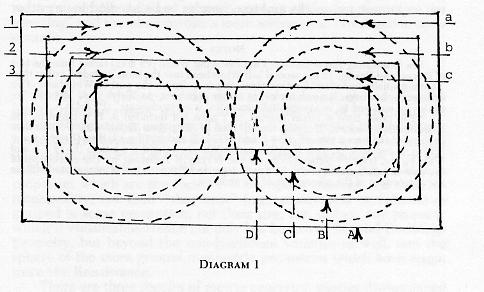
Process and Religion: The History of a Tradition at Chicago

Theological inquiry in the process tradition has normally been pursued in a context of close association with developments in philosophy and the sciences. Taking its cue from Whitehead, it has been especially attentive to work in these fields that has recognized and appropriated the relational and processive nature of thought and experience. In this country, theological reflections in this vein have sometimes come to be associated with certain "schools" or "centers," as clusters emerge where Whitehead’s work itself, or the metaphysical and social vision which spawned it, is taken seriously and applied to the issues of religious life. Prior to the emergence in recent years of Claremont as a focal point for process studies, the University of Chicago tended to serve as the primary center for theological inquiry in the process mode. There, evolutionary imagery and developments in related sciences were taken seriously. Gerald Birney Smith and Henry Nelson Wieman alerted the faculty early on to the importance of emergence theories in metaphysics and the new sciences; Charles Hartshorne gave witness to the resources of a processive view in philosophy of religion and theology; under the deanship of Bernard Loomer, Whitehead’s Process and Reality was brought virtually to the center of the curriculum; and a group of leading process thinkers was attracted to the faculty at Chicago, where at one time Daniel Day Williams, Bernard Meland, and Loomer dominated the theological field, together offering the standard course sequence for work in philosophical theology.

While distinguished work in many areas of religious inquiry has been carried on at Chicago, it has been especially celebrated by those who work at the interface of theology and philosophy, and, more particularly, by those who are persuaded by the vision and perceptiveness of Whitehead’s program. While Chicago no longer exists as a center of process thought and is to a lesser extent than before identified with philosophy-theology dialogue and interaction, it leaves a legacy worthy of study by anyone interested in the history of these modes of inquiry in American religious thought.

Assessments could vary as to the motivating force behind this utilization of process-relational ways of thinking at Chicago, just as could attempts to place historically the initiation of manners of pursuing theological questions which gave philosophical literature a prominent role. Much has been made, legitimately, of Wieman’s first lecture before the Chicago faculty in 1926, in which he masterfully demonstrated the relevance of Whitehead’s philosophy for current theological endeavors. It is true that this lecture, and the enthusiastic reaction to it, launched a new era at Chicago during which the concerns of metaphysics came to the fore and attention to emergence thinkers became more formative. Another important event was the coming of Hartshorne to the philosophy faculty in 1928 and his eventual close association with the work of the Divinity School. It was perhaps the impetus of his work which truly initiated a Whiteheadian era at Chicago. Finally, there ought be noted the role of Loomer’s doctoral thesis, "The Theological Significance of the Method of Empirical Analysis in the Philosophy of A. N. Whitehead" (1942), a work which attained an almost incredible influence, given the fact that it remains to this day unpublished. Loomer’s work was widely read. When he was made Dean in 1945, he sought to make the principles of the Whiteheadian system formative of educational policy itself at the Divinity School, and he hoped to make mastery of Process and Reality a foundation for theological study.

To the extent that these efforts succeeded and to the extent that Wieman, Hartshorne, Loomer, Williams, and Meland came to be regarded as persuasive and major spokesmen in American theology, Chicago became a center of inquiry where process-relational modes of thinking were to the fore. Whether these efforts provided the centripetal force for a new "school" per se is open to various modes of interpretation, but the attention to the Whiteheadian system and its many implications, to interdisciplinary routes of inquiry, to the latest insights from the emerging sciences, and to process-relational modes of thinking identified Chicago with a progressivism and excitement in theological study which many found appealing. But what is seldom recognized is the fact that the roots of this tradition antedate Whiteheadianism by several years. Long before the writing of Process and Reality, long before the arrivals of Wieman and Hartshorne at Chicago, the stage had been set for a radical experiment in theological inquiry. Before these writers were becoming self-conscious about a particular metaphysics through its explicit formulation, a school was emerging at Chicago. At the turn of the century there were theologians at work who in their own way can be regarded as "process thinkers." The later entry of Whiteheadianism into Chicago discussions represented another stage of process inquiry, of course, one in which explicit metaphysics and imagery from the new physics was more to the fore; however, it may be that it found a ready hearing at the Divinity School because of the nature of the traditions and modes of inquiry already in place there. To see the force of this argument we need to look at some of the movements at brew in those earlier years.

In 1904, William James proclaimed: "Chicago has a School of Thought!" (CS 1). Some universities, he noted, had thought but no school; others had a school but, unfortunately, no thought. James had been convinced that Chicago had both through his readings from the University’s Decennial Publications series, especially Studies in Logical Theory, co-authored by John Dewey and other members of the philosophy department. While James noted that Dewey’s book was short on detail, he celebrated the general contours of Dewey’s way of thinking outlined there. It should become clear why this way of thinking was to have significance for work in theology. Dewey’s method represented an evolutionism and also a pure empiricism. For Dewey, James noted, "There is nothing real, whether being or relation between beings, which is not direct matter of experience. There is no Unknowable or Absolute behind or around the finite world" (CS 2). James also heralded the fact that in Dewey’s way of thinking there was nothing "eternally constant; no term is static, but everything is process and change" (CS 2). In making "biology and psychology continuous" (CS 2), Dewey noted that every "situation" implies at least two factors, environment and organism, each a variable of the other, interacting with and being influenced by and developing the other. According to James’s reading, "the situation gets perpetually ‘reconstructed,’ to use another of Professor Dewey’s favorite words, and this reconstruction is the process of which all reality consists" (CS 2). James ought be credited for recognizing early on here that Dewey’s work at Chicago (which he maintained was indicative of many of "the Chicago writers") was signaling not only a breakdown in static ways of thinking but also a turning away from viewing the world in terms of substance categories. As James characterized this approach: "A fact and a theory have not different natures, as is usually supposed, the one being objective, the other subjective. They are both made of the same material, experience-material namely, and their difference relates to their way of functioning solely . . . ‘Truth’ is thus in process of formation like all other things" (CS 4).

It is reported that during the first twenty-five years of this century, Dewey’s writings were regarded as practically a primer for work in theology, psychology, education, and the social sciences at Chicago. In heeding the work of Dewey, the early Chicago theologians did not think of themselves as proceeding in a particularly philosophical vein, however. They were not consciously assenting to a specific philosophy or to a specific theological position. In attending to this kind of work and to similar developments in social psychology and cultural anthropology, they simply were adopting a method, a method eventually so germane to and presupposed by the procedures of their work that its philosophical underpinnings hardly surfaced for explicit formulation or examination. The astute student will recognize that because the men of the early Chicago School "simply" adopted and forged a method rather than a particular philosophical position or ideology, their work was much more noteworthy in the long course. Thus, in considering the influence of philosophical resources upon the development of theology in America, we do well in Dewey’s case not to emphasize (as do most commentators) A Common Faith, but rather to attend to the earlier "nontheological" works: Studies in Logical Theory and How We Think.

Here Dewey broke new ground in logical theory by reporting that "it only distorts results reached to treat knowing as a self-enclosed and self-explanatory whole -- hence the intimate connection of logical theory with functional psychology" (SLT x). In this volume, Dewey developed an instrumentalist and evolutionist conception of truth, according to which "there is no reasonable standard of truth . . . except through reference to the specific offices which knowing is called upon to perform in readjusting and expanding the means and ends of life" (SLT x). From this view we get a new understanding of objectivity. According to Dewey,

anything is objective insofar as, through the medium of conflict, it controls the movement of experience in its reconstructive transition from one unified form to another. There is not first an object, whether of sense-perception or of conception, which afterward somehow exercises this controlling influence; but the objective is such in virtue of the exercise of function of control (SLT 76).

Thus, Dewey invited people to move away from substance forms of thinking and to abandon pursuits of "pure knowledge" or "truth itself" apart from the social process. When this work was coupled with other developments at Chicago and in the new sciences generally, the implications for theology were of note.

These writings in logical and psychological theory, concerned with the methodology of inquiry generally, contended that mental processes are functions of the biological organism in its adaptation to, response to, and control of the environing situation. Likewise, the early Chicago theologians focused their inquiry on the function of theological concepts and ideologies, they tended to analyze their subject in terms of the interplay of organism and environment, and they thought in terms indicative of a context of adjustment and adaptation. Consequently, they tended to view ideological and religious developments in terms of social processes of adaptation and adjustment. This orientation had the effect of lessening the theologians’ concern for static truth or revelatory fiat and diverted effort away from a search for any metaphysical Absolute. One of the results of this attention to social adaptation and to the functional import and evolutionary nature of religious doctrines and traditions led to the development (by men like Shailer Mathews and Gerald Birney Smith) of the "socio-historical method," a distinguishing characteristic of Chicago’s inquiry in the days of which William James wrote. In this method, religion was always viewed in relational terms and was regarded as in process. Static categories were jettisoned in favor of language which took seriously the fluid and relational nature of the world, its processes, and its interconnections. While it would be inaccurate to suggest that the work of these earlier thinkers was exactly of a piece with the more metaphysically oriented Whitehead, their attention to the social process was a rejection of atomism in favor of a relationism and an organicism in religious thought. Development, not stasis, was the byword. Interconnectednesses, not things, ruled the day.

Perhaps the leading figure in the development and promulgation of this theological method was Shailer Mathews, who taught at the Divinity School from 1894 to 1933, serving as Dean from 1908. It is not without significance that the Mathews Festschrift, edited by Miles Krumbine in 1933, was entitled The Process of Religion. Trained in history (with specialization in the French Revolution) and highly influenced by developments in the new sociology, Mathews never thought of himself as doing metaphysics or theology in the traditional manner. His interest was in the history and development of society and of religious doctrine, With the new sociology of Lester Frank Ward and Albion Small, Mathews saw society as an organism with its parts functionally related, "No longer the traditional aggregate of atomistic, autonomous units without continuity, society was viewed as a mechanism of interdependent parts which performed functions essential to the whole" (SM 233). Consequently, in the study of theology, Mathews believed that the primary element for study was not the individual but the group. With the new sociology, Mathews also agreed that humankind’s activities, not merely blind natural causation, contribute to the direction and development of the evolutionary process. Thus, just as what we now know as "society" was an outcome of an historical-evolutionary process, so also history itself could be seen as the outcome of a social process. This view, reported Mathews, "served to give me a mind-set which saw history as a social process with elements of the past continuing in the present" (NFO 49). Or, as stated by an inquirer of similar persuasion, Vernon Parrington: "The individual . . , is no longer an isolated, self-determining entity, but a vehicle through which is carried the streams of life, with a past behind and a future before. He is a portion of the total scheme of things, tied by a thousand threads to the encompassing whole" (MCAT Vol. 3:192).

Eschewing "philosophy" and "metaphysics," by which he probably meant some form of Absolute Idealism, Mathews in his early work set to developing what came to be known as the "sociohistorical" method. Process in that method was not the same as the process of Whitehead’s system, though it did depend on an evolutionary and basically processive view of reality. Mathews’ emphasis was on social process, the development by groups of social ideals and theological ideologies, which received their motivating force and guiding models from the economic, political, and social patterns in place and at work in the culture. In this method of examining a particular religious tradition, stress was laid upon determining what social needs were being met through religious beliefs and practices by a culture at a particular point in its history.

Perhaps one of the most revealing examples of the application of this method in Mathews’ work is his long essay in Biblical World (1915), "Theology and the Social Mind." Here he presented religion as a phase of the dynamic life process in which the shared valuations of a cultural group, influenced by the whole matrix of social patterns and habits inherited in the historical situation, are carried forward and readjusted. In this essay Mathews illustrated his approach by enumerating the succession of "social minds" which had been dominant during various stages of Christianity’s history. In each phase, the patterns and metaphors of theological doctrine conformed to the models traceable to the social mind operative in the life of the group. Thus, in describing the history of Christianity, Mathews dealt not with the question of the metaphysical truth of various doctrines, but rather with the issue of the function of doctrine through a succession of dominant "social minds," which he designated as the Semitic monarchical, the Hellenistic monarchical, the imperialistic, the feudal, the national, the bourgeois, and the scientific-democratic. The task of enumerating and examining these developments may make the theologian’s effort appear less presumptuous, for one may attend to "the growth of the idea of Cod" without claiming to discover or describe the nature of God itself.

In all of this it was understood that religion was an activity in process, as social groups sought to achieve more productive adjustment to the factors of the natural and social environment which carry their culture through historical development. Adaptation and process, interaction with the forces of the environment, are the key elements in the religious scholars’ quest, not eternal verities or external revelations. This evolutionary and organismic perspective of society, religion, and the world -- and the sociohistorical method engendered by it -- became the hallmark of the early "Chicago School." We can see why a book with a title like Religion in the Making (Whitehead, 1926) would have found a ready audience there as early as 1910 or 1915. But it was only in Mathews’ later years that his interests broadened to include a more cosmological orientation, wherein he would be especially receptive to a program like that of Whitehead. It is striking to read Mathews’ writings of the 1920’s and 1930’s and to discover how they include -- indeed, are virtually dominated by -- a set of themes and claims which can quite appropriately be read as the arguments of a "process theology."

In 1924 Mathews wrote, concerning the appearance of personality in nature:

If life has grown more personal while organisms have grown more complicated this must be due in part to the influence of an environment within which there must be that which can evoke personality in the progressive series of organisms. This is an immediate corollary of the fact that the evolutionary process is conditioned by the environment with which the organism is in dynamic relation. . . . Similarly, as human evolution leads toward human personality and this process must be within and dependent upon an environing universe, there must be something correlative to it, something capable of assimilation by it within the environment. . . . It is impossible to think that personality could evolve from the exclusively impersonal. There must be that in the environment which the personality-producing organism can appropriate, and with which it can act harmoniously. If something analogous to personality were not in the universe the process of evolution would have stopped below personality as we know it in man.

From such a point of view the evolutionary process of humanity can be described as a successive development of organisms sufficient to appropriate or respond to personal elements from the environment, the influence of which is argued by the process itself. And this is what would be expected from our discovery of elements in the universe analogous to reason or purpose.

It is at this point, of course, that one is again tempted into the all but forbidden field of metaphysical speculation. For if the ultimate of reality is activity, and if we see it in certain lines of process up through what we call matter into life and then into personality, it is easy to see why naturalism fails to satisfy human needs. [We must remember the way in which naturalism was being used at this time.] It fails to take into account all the qualities which observed evolution shows must have been implicit in ultimate activity, namely, those which could produce personality, and so must themselves be not foreign to personality. In other words, we might think of this ultimate activity as being, so to speak, potentially dualistic, mysteriously capable of expressing itself in ever-enlarging personal as well as impersonal ways, environments and organisms.

But be the value of metaphysical speculation of this sort what it may, when one sees activity characterized by reason and purpose and at the same time producing strains of living matter (no longer a word of materialism) which in turn has personality as a function, one has come in sight of God. For by these facts the great conviction is forced upon us that just as we men and women have personality within that mass of chemical and physical activity which we call our bodies, so in the infinite universe of activity is there immanent an infinite Person whose existence and character account for its relationships, its tendencies and its achievements. Such a Person cannot be static perfection, but creative of new values far in advance of chemical compounds. The analogies with which we most satisfactorily think of Him cannot be derived from that which is mechanistic or static (CSR 399-401).

In arguing against mechanism throughout Contributions of Science to Religion, Mathews suggested that there was purposive, directive activity within this process we call the universe. According to Mathews: "If there is tendency, development, process, evolution, then the infinite activity is working toward ends. . . . One thing seems beyond peradventure: the mechanistic conception breaks of its own weight when one studies any process" (CSR 396). Thus, here Mathews concluded aphoristically, "nature reveals a kingdom of ends as well as of histories" (CSR 396). And we note that this talk of purposes, tendencies, etc., was not drawn from a conception of a guiding agent external to the process itself. Cod ought not be "thought of as an entity objective to the universe imparting grace, or as immanent in dead matter, or as an undefined spiritual order over against nature" (ICE 48). This view gave Mathews a faith drawn from his observation of the resources available to direct natural experience, without dependence on some separated, supernatural realm.

Mathews claimed: "Science discloses a universe of activity characterized by traits so analogous to what we call reason and purpose in human beings, as to be unintelligible unless such qualities are recognized" (CSR 397). But in referring to reason, purpose, etc., he seemed usually to be aware of the dangers associated with language that might suggest literally a deity which was a particular objective agent totally separate from the activity of the natural process. "No more is the God of the theologian a metaphysical being," said Mathews. "He, too, is reality conceived in patterns" (GIG 212). According to Mathews, "there is no existence exactly corresponding to the patterns with which the deity has been conceived. There was no Yahweh on Mount Sinai and no Zeus on Mount Olympus" (GIG 212). Ought we add: "and no existence exactly corresponding to the patterns put forth in the systems of contemporary process theologians"?

Mathews never developed a philosophical system in any technical detail -- nor would he have wished to claim any explicit connection with what he called "philosophy" -- but in recognizing the passing of absolute notions of space and time and the mechanistic conceptions based upon them, in viewing matter as primarily activity rather than substance, in utilizing evolutionary, processive, and relational understandings of God and religion, he may be said to have "anticipated the cardinal presupposition of process philosophy" (SM 311). Indeed, Mathews believed "that there is nothing more fundamental and elemental than processes; nothing transcends or undergirds processes. Everything that exists is either a process, an aspect of a process, or a relation between processes" (SM 311). Consequently, "relations, not substances, are primary" (SM 313).

Now where does this leave us in our consideration of the history of process theology? It is instructive in gaining perspective, I believe, for us to realize that there was serious reflection on these matters by theologians before Whitehead’s work came to prominence, and to recognize that "process thought," when we appreciate its historical breadth and pluralism, is a many-splendored thing. To understand that the theologians of the movement of which Mathews was a leader could be seen as "process theologians" -- despite their divergences from the Whiteheadian mode of that brand of theology -- is to learn an important lesson in a tradition that ever needs to guard against the lure of its own orthodoxy. Process inquiry must continually be nudged toward a broader understanding of its traditions, so that it is not identified simply with one particular system.

If process thought is going to remain a viable option today, it must truly pursue a process-relational mode which enmeshes itself as deeply in life as in any rendition of a metaphysics. If it is to follow a genuinely organismic -- not atomistic -- model of inquiry, it must campaign against limited rationalisms and against limiting specializationalism. It must not sacrifice the reality of life’s ambiguities and tragedies on the altar of conceptual cleanliness, a false coherence, or abstract systematization. We can seek through our rational enterprises to attain a margin of intelligibility, but we must not mistake the created structures of those enterprises as designative necessarily of the fullness of reality itself. When we are able to place our limited attempts at understanding and description in appropriate perspective, then it is more likely that we shall more truly open ourselves to the communal, the relational, the elemental, and the ambiguous resources in our lives together which serve as lures toward that ever fuller existence which we seek.


References

CS -- William James. "The Chicago School," The Psychological Bulletin 1 (1904), 1-5.

CSR -- Shailer Mathews. Contributions of Science to Religion. New York: D. Appleton and Co., 1924.

GIC -- -- Shailer Mathews. The Growth of the Idea of God. New York: The Macmillan Co., 1931.

IGE -- Shailer Mathews. Is God Emeritus? New York: The Macmillan Co., 1940.

MCAT -- Vernon Parrington. Main Currents in American Thought: Beginnings of Critical Realism in America, 1860-1920. New York: Harcourt Brace Jovanovich, Inc., 1933.

NFO -- Shailer Mathews. New Faith for Old. New York: The Macmillan Co., 1936.

SLT -- John Dewey. Studies in Logical Theory. Chicago: The University of Chicago Press, 1903.

SM -- Kenneth Smith and Leonard Sweet. "Shailer Mathews: A Chapter in the Social Gospel Movement," Foundations 18 (1975), 219-37 and 296-320.