The Screwtape Letters and Process Theism


The Screwtape Letters by C. S. Lewis is a collection of fictitious epistles from a suave, professional, and insidious devil to a younger, inexperienced, but just as insidious fellow demon. The purported author of the letters is Screwtape, a self-described undersecretary in the Department of Temptation, who offers sagacious advice to his young nephew Wormwood, a "junior tempter." Screwtape and Wormwood plot and scheme together lay claim to yet another soul for Hell’s population and in doing so reveal both their knowledge of human ways as well as the vast array of techniques employed for manipulating earthlings to diabolical ends.

Though Lewis’s personal theological perspective is rarely considered or studied in terms of Alfred North Whitehead’s process philosophy, Lewis’s portrait of "the Enemy" (i.e., Jesus Christ) in The Screwtape Letters is more than a little similar to the rudiments of the christologies espoused by John Cobb, Peter Hamilton and others. In short, "the Enemy" as presented in The Screwtape Letters functions quite well in terms of process thought.

Herein lies an advantage of process thought: the works of Christians such as author/scholar C. S. Lewis, though steeped in a more orthodox tradition of Christianity, do indeed fit relatively easily and function relatively well within the schema of process thought. This is not to say that certain doctrinal differences do not exist between Lewis and process theologians. The significant thing is that the particular school of process thought is flexible and comprehensive enough to function credibly and adequately, in both the theological and philosophical senses, without denigrating or disparaging the Christian faith which it seeks to incorporate and elucidate.

In his own wax, Screwtape concurs with the rudiments of process thought:

In a word the Future is, of all things, the thing least like eternity. It is the most completely temporal part of time -- for the Past is frozen and no longer flows, and the Present is all lit up with eternal rays . . . Hence nearly all vices are rooted in the Future. Gratitude looks to the Past and love to the Present (SL 63-69) . . . Humans do not know the future, and what the future will be depends largely on just those choices which they now invoke the future to help them make. (SL. 118)

True to process thought, Screwtape implies that the world is a process of becoming in which transience and activity are fundamental; he further indicates that the only eternal aspect of the Future is the question of potentialities which may or may not be actualized; and he indirectly supports Whitehead’s supposition that the justification of any system of thought lies in its ability to organize and elucidate immediate experience.

Because he concurs with Whitehead’s supposition, Screwtape directs Wormwood to oppose reason and science:

Your man has been accustomed, ever since be was a boy, to having a dozen incompatible philosophies dancing about together inside his head . . . Jargon, not argument, is your best ally in keeping him from the Church . . . The trouble about argument is that it moves the whole struggle onto the Enemy’s own ground. By the very act of arguing, you awake the patient’s reason; and once it is awake, who can foresee the result? . . . Above all, do not attempt to use science . . . as a defense against Christianity. [This] will positively encourage him to think about realities he can’t touch and see. (SL 8-10)

This attempt to conjoin and utilize the realm of science, with its accent on empirical and sentient data, and the realm of philosophy, with its accent on the quest for metaphysical truths, is basic to process theology. As Norman Pittenger writes, "Process thought is the name usually given to the view of the world that takes with utmost seriousness the dynamic, living, evolutionary quality of our existence and of the world in which we live (PT 205).

Moreover, as Screwtape himself admits, a distinct advantage of the Enemy is his full understanding of real life, derived from his former existence in the human world. A supposition of process thought is that the Enemy’s participation in human selfhood, i.e., as a human being, is a culminating proof of a higher metaphysical reality. Hence Screwtape’s and Wormwood’s success in claiming souls derives not so much from their abilities to present and indirectly define their victims’ "realities" but from their victims’ inability, or more likely, unwillingness to discern or encounter the higher metaphysical realities which Christ represents. This is exactly the case when Screwtape reminisces that he once showed a wavering atheist pictures of reality (e.g., a street newsboy, a passing bus, etc.) in order to prevent what might have resulted in a sudden unexpected victory for Christ. Herein lies the value of the empirical flavor of process thought: earthly reality is considered to be an experiential touchstone, a pointer to or an avenue by which to gain access to higher truths. Screwtape’s aversion to and fear of human reason and science is especially understandable when viewed in light of process thought. Reason coupled with humankind’s innate sense of wonder results in a preoccupation with metaphysical questions which is most frequently (too frequently according to Screwtape!) transformed into a human quest for spiritual development.

Screwtape repeatedly reveals his ignorance of and inability to appreciate God’s love of humans as enacted through Christ. The freedom of humans to reject or accept God’s love is an act of persuasive rather than coercive love. As Daniel Day Williams notes, "Love means to will the freedom of the other, the acceptance of the consequences of the relationship to another, and the vulnerability which goes with that acceptance (SFL 60-64)." Thus if God is love, Jesus as Christ is the agent through which God’s love for humankind is communicated. God’s love, however, is communicated to humankind by Christ in such a way as to leave humankind free. Hence God seeks to persuade rather than coerce the human spirit. Though he does not fully comprehend it, Screwtape at least recognizes the Enemy’s strategy:

the Irresistible and the Indisputable are the two weapons which the very nature of His scheme forbids Him to use. Merely to override a human will (as His felt presence in any but the faintest and most mitigated degree would certainly do) would be for Him useless. He cannot ravish. He can only woo . . . the creatures are to be one with Him, but yet themselves; merely to cancel them, or assimilate them, will not serve. (SL 38)

The Enemy’s reluctance to coerce, says Screwtape, should be regarded by all demons as an invitation for mischief.

Screwtape also finds solace and opportunity in the modern quest for the historical Jesus.

You will find that a good many Christian-political writers think that Christianity began going wrong, and departing from the doctrine of its Founder, at a very early state. Now, this idea must be used by us to encourage once again the conception of a "historical Jesus" to be found by clearing away later "accretions and perversions" and then to be contrasted with the whole Christian tradition... We thus distract men’s minds from Who He is, and what He did. (SL 106f)

Despite Screwtape, process thinkers have advanced strong arguments advocating historical analyses of the Christian tradition.

Schubert Ogden insists that people today no longer express their understandings of the meaning of existence in the mythological language of the classical theological tradition. Hence what is needed from theology is a thoroughgoing attempt to translate the meaning of the church’s traditional witness into terms in which contemporary people either do or can most readily understand their life as human beings (RG 79f). Almost as if in direct reply to Screwtape, Daniel Day Williams asserts that historical biblical criticism is essential to prevent "faith from taking flight from history and creating a picture of the Christian revelation which distorts historical fact" (SFL 156f). Much to Screwtape’s chagrin, Jesus stands to gain rather than lose influence over the world as a result of historical analyses, and nowhere is this more true than in process thought. As Robert Mellert notes, our present historical criticisms are very similar to efforts by the Christians of the first centuries: "We are attempting to explain the primitive Christian experience of Jesus in the language of a philosophical perspective of God and man to suggest how that perspective might deal with the inter-relation of humanity and divinity in the person of Jesus, who is called the Christ (WPT 79f).

Yet Hell itself is not devoid of its own philosophical pretensions. Though it is not surprising that the following Satanic discourse is in direct contrast to most Christian doctrines and traditions, it is interesting to note that Screwtape’s ramblings touch upon an important issue in process christology:

The whole philosophy of Hell rests on recognition of the axiom that one thing is not another thing, and, specially, that one self is not another self. My good is my good, and your good is yours. What one gains another loses. Even an inanimate object is what it is by excluding all other objects from the space it occupies; if it expands, it does so by thrusting other objects aside or by absorbing them. A self does the same. With beasts the absorption takes the form of eating; for us, it means the sucking of will and freedom out of a weaker self into a stronger. "To be" means "to be in competition" (SL 81).

By definition, a process christology involves the compatible co-presence or even the inseparability of God and man in a decisive manner revelatory of both God and man. Thus christology means that the deepest and truest nature of man is at root continuous with God’s nature (FET 161f). This is where devilish logic errs. By failing to grasp the true significance of such concepts as history and love, Screwtape does not perceive the enrichment that time, in general, and Christianity, in particular, offer to persons.

The struggle of humankind is to align itself as well as possible with the will or the activity or the "objective presence" of God, but not in such a way as to denigrate human individuality. Even Screwtape perceives that "the Enemy wants a world full of beings united to Him but still distinct" (SL 38).

The distinctiveness of Jesus lies in his determination to remain increasingly susceptible to God’s influence. Though God instills within every entity its initial conceptual aim, the person of Jesus is important for humankind because Jesus strove diligently and successfully to prehend God and obey the resulting prehensions and thereby kept his own subjective aim aligned with God’s aim and purpose.

Screwtape also recognizes the importance of opening up and allowing, to use biblical terms, the Spirit to descend upon one:

What (the Enemy) wants of the layman in church is an attitude which may, indeed, be critical in the sense of rejecting what is false or unhelpful, but which is wholly uncritical in the sense that it does not appraise -- does not waste time in thinking about what it rejects, but lays itself open in uncommenting humble receptivity to any nourishment that is going (SL 73) . . . the only thing that matters is the extent to which you separate the man from the Enemy. It does not matter how small the sins are, provided that their cumulative effect is to edge the man away from the Light and out into the Nothing. Murder is no better than cards if cards can do the trick. Indeed, the safest road to Hell is the gradual one -- the gentle slope, soft underfoot, without sudden turnings, without milestones, without signposts. (SL 56)

Hence humans can emulate Jesus, though perhaps not as successfully, in facilitating their prehension of God by seeking to ensure that their subjective aims are in accord with God’s. In short, the actualization of human potential (i.e., becoming all that we as humans can become) is the best means to ensure that the God of Christianity is not confined to the skies.

To conclude, Screwtape observes that "it is funny how mortals always picture us as putting things into their minds: in reality our best work is done by keeping things out" (SL 20). In reality this statement seems true. There exists in humankind a proclivity to articulate that innate sense of human wonder that is manifest in and by religion. Process thought offers a viable framework which gives free rein to this proclivity and in doing so assists humankind to derive the maximum amount of meaning and joy from the simple fact of their existence.


References

FET -- Loomer, B., "Empirical Theology Within Process Thought," in The Future of Empirical Theology. Chicago: University of Chicago Press, 1969.

PT -- Meland, B., "The New Creation," in Process Theology, ed. Ewert Cousins. New York: Newman Press, 1971.

RG -- Ogden, S., The Reality of God. San Francisco: Harper & Row, 1960.

SFL -- Williams, D. D., The Spirit and the Forms of Love. New York Harper & Row, 1968.

SL -- Lewis, C. S., The Screwtape Letters. New York: MacMillan & Co., 1961.

WPT -- Melert, B., What Is Process Theology? New York: Paulist Press, 1975.

Feminist Concerns and Whitehead’s Theory of Perception

Feminists and nonfeminists alike have recognized that feminist theory is without a philosophical home. This is true in two senses. First, feminism has not yet generated either a metaphysical System or, more broadly, an independent philosophical framework. Second, many feminists are critical of using established philosophical systems to articulate the experience of women on the grounds that any philosophical framework imposes its implied metaphysics on the experience of women. To overcome the absence of a philosophical base, some feminists are suggesting that Whitehead’s process philosophy is able to provide an adequate framework for feminist philosophizing.1 Many of the basic categories of Whitehead’s metaphysics and his theory of God seem compatible with women’s experience of reality and transcendence. However, the most striking parallel between Whitehead’s philosophy and feminist theory that makes this suggestion attractive to many feminists is the emphasis in both on experience as a process of becoming in which entities are engaged in self-creation. This article examines Whitehead’s theory of perception to indicate how this theory provides a philosophical reinterpretation for two issues of concern to feminists: criticism of cultural symbols, including language, and the importance of intuition and emotion, usually associated with women, in experience.

A consistent claim of feminists is that the language, concepts and images operative in society, even if not obviously sexist, reflect patriarchal structures and thought patterns. Feminists point out that while language and concepts may accurately reflect male insights about experience, they often exclude women’s experience. As a result, women do not experience their own reality; they have always experienced through the concepts and images that have filtered and molded their experience to accord with the male-generated images and concepts they have absorbed through socialization.2 Moreover, because women have been politically and intellectually subjected, they have been excluded from generating the dominant images, words, and concepts which organize and structure reality; in Mary Daly’s words, "the power of naming [has been] stolen from [women]" (BGF 8). Because of this exclusion, feminists are calling for the criticism of dominant cultural symbols in light of women’s experience of the world. By struggling to peel from traditional symbols the layers of patriarchal meaning which have accrued, feminists are attempting to discover and name dimensions of women’s experience which have been excluded or distorted by male-dominated and often misogynist concepts. In addition to criticizing cultural symbols, feminists are hoping for the emergence of new images and concepts from women’s struggle to experience beyond or beneath or without the preconceptions embedded in present language and concepts.

Whether or not feminists recognize it explicitly, a theory of perception and a theory of language are operative in these claims. Several aspects of Whitehead’s theory of symbolic reference -- how language functions in societal and personal life; that symbolic reference is an interpretative judgment and so open to error; and that symbolism requires constant criticism and reform in light of what is directly experienced -- converge to provide a philosophical analysis that supports and encourages feminist criticism of the operative cultural symbols.

According to Whitehead, language reflects what a culture or society considers important, whether or not the living members of that society have consciously acknowledged or accepted the evaluative assessment which is embedded in its language.3 The conceptual patterns we bring to experience and the language used to express experience select out those aspects of experience which conform to those concepts and words. In this way, language evidences the interpretative judgment, though unconscious, which characterizes symbolic reference. The concepts and words are responsible for identifying in experience what that society assumes to be important (MT 9). In sum, the assumptions of a society are carried within the way people think and talk.

Moreover, Whitehead understands symbolism as an interpretative judgment which not only reflects the biases and assumptions of its society but also is subject to error because of tendencies to oversimplify experience (MT 21). As a result, what we commonly identify as a fact of experience is really the result of a judgment, albeit unconscious and habitual, which interprets what is directly experienced (MT lOf). One conclusion Whitehead draws from this is that criticism of current language requires testing the adequacy of those judgments against direct experience (S 60f). It is the task of symbols, Whitehead tells us, to discover -- not create -- meaning (S 57).

Feminists who claim that women are denied access to their own reality are supported by Whitehead’s insistence that implicit notions of what is important are embedded in language, thereby imposing perspectives of importance on what is experienced (MT 15). Whitehead’s view is consistent with feminist claims that generations of patriarchy, in which women were considered inferior to men and were denied political, economic, educational, social, and religious equality, have implanted these attitudes in the language, concepts and thought patterns with which both women and men unconsciously organize experience. Whitehead’s position is also consistent with that of feminists who insist that language be revised by using the criterion of how adequately it expresses and elucidates women’s experience. Thus, identifying symbols which more effectively discover the meaning, value, and purpose in women’s experience is a feminist goal which receives philosophical impetus from Whitehead’s theory of symbolism. Moreover, from a Whiteheadian analysis, if feminist, nonsexist, or androgynous images are used to organize and name experience, there will be a change in what is identified as important in the experience. This accords with feminist views that changing the images, language, and concepts of experience will, in effect, alter what women experience.

Both Whitehead and many feminists argue that noncritical acceptance of inherent cultural assumptions runs the risk of ignoring aspects of experience that are overlooked or kept in the background by this symbolism. Because symbolic reference is often not recognized as an interpretative synthesis but mistakenly viewed as a pure perception, a society can fail to recognize the need for critical evaluation of the ways it understands experience.

Besides the ways Whitehead’s theory of symbolic reference supports feminist attempts to purge cultural symbols from their sexist and patriarchal connotations, it seems clear from the following passage that Whitehead would applaud feminist hopes of producing symbols more faithful to women’s experience. According to Whitehead,

A continuous process of pruning, and of adaptation to a future ever requiring new forms of expression, is a necessary function in every society. The successful adaptation of old symbols to changes of social structure is the final mark of wisdom in sociological statesmanship. Also an occasional revolution in symbolism is required. (S 61)

To fail to heed feminist criticism of cultural symbols foretells a safe but stale future. While Whitehead admits that changes in the basic symbols result in radical transformation and even disruption of society, he is very clear about how a society’s failure to revise its symbols affects that society.

The art of free society consists first in the maintenance of a symbolic code; and secondly in fearlessness of revision, to secure that the code serves those purposes which satisfy an enlightened reason. Those societies which cannot combine reverence to their symbols with freedom of revision, must ultimately decay either from anarchy, or from the slow atrophy of a life stifled by useless shadows. (S 88)

Although Whitehead did not see the implications of this passage for our patriarchal society with its sexist images and language, his warning seems to foreshadow what many women, and some men, are coming to recognize. His theory of symbolism then, is not only compatible with feminist goals of revising and renewing cultural symbols, but also provides a systematic analysis which gives philosophical support and impetus to these goals.

Whitehead’s theory of perception is also relevant in another way to feminist theory. There is a widespread opinion, labeled a stereotype by most feminists, which holds that women are more attuned to picking up emotional overtones and more intuitively aware of hidden, obscure meanings in situations than most men. Whitehead’s broadening of direct experience to include perceptions in the mode of causal efficacy provides an interesting twist to this opinion when it is examined in the philosophical context provided by his theory of perception.

Whitehead claims that in common sense and in traditional philosophies direct perceptions in the mode of causal efficacy are overlooked (PR 184).4 As a result, direct experience is identified with perceptions of presentational immediacy or perceptions in the mixed mode of symbolic reference. Moreover, excluding perceptions of causal efficacy is detrimental, for we thereby overlook certain aspects of experience. Since we are not accustomed to expect perceptions in this mode, we are not attuned to them and so deny their presence and underestimate their importance. As a result, we often conclude that values, meaning, and purpose must be contributed by the subject experiencing and fail to recognize the presence of emotions, values, and purposes within reality itself (S 39f). By ignoring direct perceptions in the mode of causal efficacy, we reduce the world experienced to aspects which are immediately presented to the senses and to what we judge to be the possessor of those characteristics. In effect, when perceptions of causal efficacy are omitted, the world we experience has no depth, intrinsic value, feeling tone, or inherent purpose.

However, experience which ignores content about the world from perceptions of causal efficacy is considered normal. Experience is usually associated with ways of dealing with the world patterned on the model of scientific observation. Those who approach experience objectively, dispassionately, analytically, and rationally, are praised for having an accurate grasp of reality. By contrast, those -- and they seem primarily to be women -- who approach experience intuitively, grasping feeling tone and insisting that value, emotion, and purpose are experienced within reality are usually patted on the head for contributing such insights and then dismissed as too emotional or intuitive to be trusted with contributing anything important about the "real" world. It would be erroneous to confine women’s experience to perceptions of this sort. However, insofar as this widespread opinion accurately reflects a difference in the way many men and women presently experience the world, it is interesting to see how this opinion is reconceived when examined in terms of Whitehead’s theory of perception. In effect, Whitehead’s insistence that direct experience includes perceptions in the mode of causal efficacy reverses the usual evaluation of the different ways women and men are supposed to experience the world.

Perceptions of causal efficacy put us in direct touch with the inner nature or character of things and persons as well as with the emotions, values, and purposes inherent in reality. Whitehead’s description thus provides a language and philosophical context with which to explain systematically dimensions of women’s experience which are usually dismissed as unimportant. This should mean that women will be more likely to identify and credit the intuitive and emotional dimensions of their experience and be better able to communicate what they experience. In addition, this should lead to enhancing both women’s experience, because it encourages them to be attuned to purposes and feeling tones in reality, and also women’s understanding of their own experience, because it provides a context which will literally make sense out of their experience. Furthermore, the fact that Whitehead’s theory of perception provides a philosophical context and categories which are consistent with these aspects of experience makes it more likely that women’s experience will be credited with contributing important and unique insights about experience which have heretofore been overlooked or regarded as insignificant.

There is a further way in which the usual negative evaluation of women’s experience is turned upside down when explained in relation to Whitehead’s theory of causal efficacy. His analysis of perception suggests that those who develop and include both pure modes and their judgments about the world are experiencing more fully than those who rely only on perceptions of presentational immediacy. This conclusion has ironic practical implications, particularly for philosophical theory. Whitehead’s stress on the importance of perceptions of causal efficacy implies that excluding insights generated from women’s experience from informing linguistic theory and philosophical theories of perception and knowledge only insures that these theories will be inadequate and oversimplified. On Whitehead’s analysis, traditional reliance on perceptions of presentational immediacy for knowledge about reality can only mean that the images, language, and concepts that result will be partial, for they will be limited to what is immediately apparent to the senses. Thus, traditional attempts to keep theories of reality uncontaminated by intuitive insights have resulted, if Whitehead is correct, in condemning those theories to incompleteness. When examined in light of Whitehead’s theory of perception, it becomes clear that emotional and intuitive experiences of women have been ignored even though these dimensions of experience are necessary for a more accurate and complete view of reality. In sum, a Whiteheadian analysis reveals that women’s experience has been dismissed when it should have been praised and relied upon as a more adequate reflection of the reality surrounding us.

Examining these two issues in light of Whitehead’s theory of perception suggests the rich possibilities of appropriating this theory for feminist theory. This analysis should lay to rest fears that appropriating aspects of Whitehead’s philosophical system would diminish or distort the significance of women’s experience. Hopefully, these examples indicate that at least Whitehead’s theory of perception is able to provide a fruitful philosophical home for feminist theory.


References

BGF -- Mary Daly. Beyond God the Father: Toward a Philosophy of Women’s Liberation. Boston: Beacon Press, 1973.


Notes

1Some excellent examples of this are the papers delivered at the Conference on Feminism and Process Thought held at Harvard Divinity School Sept. 29-Oct. 1, 1977, and available from the Center for Process Studies, David Ray Griffin, Executive Director, School of Theology at Claremont, 1325 N. College Ave., Claremont, Calif. 91711 Valerie C. Salving, "Androgynous Life: A Feminist Appropriation of Process Thought"; Marjorie Suchocki, "Feminism in Process"; Penelope Washbourn, "The Dynamics of Female Experience: Process Models and Human Values"; and John Cobb, "Feminism and Process Thought: A Two-Way Relationship."

2 Mary Daly presents a strong argument which illustrates this point (BC F 1-12).

3 Chapters I, II, and III of MT are especially relevant, for here Whitehead develops his theory of language in relation to the notion of ‘Importance’.

4 Symbolic reverence and its relation to presentational immediacy and causal efficacy are discussed throughout. See especially the chapters on "Organisms and Environment’ (PR 168-97) and on "Symbolic Reference" (PR 255-79).

Hartshorne and the Problem of Personal Identity


Shalom:

According to Hartshorne, "to be" is "to create" (CSPM 1). Upon this basis he formulates an entire metaphysics which characterizes the person (not the word "person") as "a kind of low-level universal" (CSPM 73). Thus the personal identity of Peter or Joan is an abstraction relatively to "the momentary states or events in which alone the individual is fully concrete or actual" (CSPM 73). Spatiotemporal events, themselves invested with a "psychical" attribute, are therefore taken as ultimate, and whatever else specifies human beings must be subordinated to these event-realities, themselves expressed in event-language.

This argument presupposes a false dilemma, as I see it, that either one accepts the notion of a separate soul-substance enduring through time or else one must accept the thesis of process philosophy. Hartshorne expresses this implied identification of individual immortality with a "soul-substance" when he writes that the notion of an "immortal soul" has "muddled and confused many problems" (CSPM 45). My inability to accept Hartshorne’s view does not entail acceptance of any "soul-substance" as conceived by Hartshorne. "Soul" may still refer to the most fundamental level of the person and may be immortal. In other words, "soul" and "immortality" do not necessarily entail the Cartesian notion of a "soul-substance."

Hartshorne’s sense of "creativity" points to processes of sentient cells, experiences, or monads which appear to constitute the ultimate foundations of reality. Thus, for instance, sensations are analyzed in terms of body cells furnishing "their little experiences or feelings," each one of which contributes to a pool of "more comprehensive experience" constituting "what we call our sensations" (CSPM 7). From which it follows, ultimately, that the self must be regarded as a series of momentary selves the unity of each of which can only be regarded as the unity of a complex set of what I will refer to as "interrelated event-cells," while the unity of the more general sense of "person" or "self’ can only be regarded as the unity of a sequence or succession. An analogy would be that of a symphony. A symphony can be regarded as a unity constituted by a series of groups of notes, the symphonic unity itself becoming increasingly more specific as one approaches the end of the unit, symphony. In the same way, the unity of a particular person could be regarded as the over-all unity of a temporal series of structured, momentary selves concretized in a particular sequence of such "momentary selves."

However, no single spatiotemporally organized group of notes could intelligently be referred to as being itself the symphony. Since "to be" is "to create," any single group of notes can only be regarded as an evanescent contribution to the completed symphony, itself evanescent. Since "persons" are regarded by Hartshorne as "low-level universals" expressed by the total temporary state of whatever it is that constitutes a "momentary self" at any particular point in time, it follows that the word "person," quite unlike the word "symphony," does not simply refer to the completed totality of this or that particular series of the total life-span of that particular series of "momentary selves." Thus the word "person" plays the same role, in the analogy, as a particular complex of notes at a particular time in the course of the symphony. But here the analogy simply breaks down.

I am aware that I am "this person" now, and now, and now. I do not refer to myself as a section of a person now, and another and different section at each successing microsecond. This, of course, is quite unlike the successive series of groups of notes constituting the symphony. As groups of notes they can be radically different at each succeeding moment, whereas persons are not, as persons, radically different at each succeeding moment. Thus one can say of someone, "that is just the kind of thing I would have expected him to do," whereas there is little inherent and quasi-inevitable connection between certain parts of Beethoven’s symphonies.

If, despite the inappropriateness indicated above, one wishes to maintain that the analogy is between "person" and "symphony," and not between "person" and successive "groups of notes," it makes little sense to say that I am more of a person in the half-hour preceding my death than I am now, whereas the series of complex notes which constitute the symphony are closer to being the symphony the nearer the end of the symphony is approached. But this, of course, is no more than an analogy. Perhaps in order to avoid the dangerous consequences of such an analogy Hartshorne prefers using the more abstract Buddhist concept of the self as a series of constantly passing selves (CSPM 9) instead of formulating his "process" view of the person in terms of an ordered series of interrelated event-cells constituting this or that specific temporal sequence.

In chapter 9, which I shall concentrate upon, Hartshorne reaffirms his basic general position: events are more determinate than the individual (CSPM 173). In other words, the totality of actual events which constitute my psychophysical history are more determinate than any unitary "I" to which these psychophysical events may be referred. Thus if "I" do something like "deciding upon a course of action," that "deciding" is not’ to be attributed to an "I" which is to be regarded as in some way distinct relatively to the actual spatiotemporal events comprising the occurrences of my life-history: it is to be attributed to those occurrences themselves. In this sense, "deciding" is not to be understood as it ordinarily, if obscurely, is understood: it is to be understood as the cumulative result of a myriad of subdecisions undertaken by the psychically-infused spatiotemporal events constituting the event-history which is "me." If so, all intentional terms are deprived of their specific meanings by being attributed, in the interests of an arbitrary philosophical thesis, to domains to which they do not in fact belong. Thus, for instance, deciding ceases to be understandable except as a reduction to these microscopic subdecisions compensated by what I believe to be Hartshorne’s general view of the entire process as a collection of particular processes which are part of a general telos manifesting God in process. ‘I" can "decide," so to speak, because God is "in the making," to use Whitehead’s phrase. Then the psychophysical problem of "deciding" is shifted to a combination or interpenetration of physics and religion, both of which may certainly be involved in the whole activity of deciding, but neither of which has much to say as regards its specific activity.

This kind of argument seems to me to manifest what might be called the fallacy of misplaced location. If I have a disposition to act in a certain way, it is of course quite obvious that this disposition will manifest itself in and through "events." But it does not follow from this that the disposition can, itself, be simply reduced to the events in and through which it manifests itself. This would be to simplify outrageously the complex problems involved in the structure of the person. The disposition is also the events in which it manifests itself, but it is not necessarily identical with these events. A man who, for some reason, feels the need perpetually to humiliate people will not find any explanation for that need in the actual attempts to humiliate others: he will only find it in the inferences which might be derived from the motives which lead him to behave in that way. The present motive which leads him to behave in that way now, assuming by the word "now" Hartshorne’s 1/10th of a second as defining "present" (CSPM 175), is likely to be identical with the motive which will lead him, to behave in the same sort of way tomorrow. Deep-seated motives, dispositions and intentions do not appear to have the same kind of temporality as the clocked events of the physical world or the events of a supposed "stream of consciousness.

Hartshorne characterizes events in terms of increasing asymmetrical specificity: "the earlier members of an event-sequence" relatively to "the successors" are less definitely specified. Temporal direction is certainly a fact of existence. If existence is identified with process, which is the questionable move in all "process philosophies," all existents can only be analyzed in terms of the consequences of this temporal direction as applied to each particular kind of existent. Given this univocal conception of time, personal identity does tend to be regarded as something like a completed symphony: "If the child is only potentially, i.e., somewhat indefinitely, destined to become an adult, but the adult has perfectly definitely been such and such a child, then to call the child and the adult the identical concrete entity is erroneous. Identity is directionless, symmetrical" (CSPM 178-80). Again, "the genuinely concrete or inclusive unity, the determinate subject, is a new creation each moment." Or, "if I change my beliefs -- and in subtle ways they are ever-changing -- this means that there are really successive believers" (CSPM 181).

A human destiny clearly does imply a certain direction taken in life. It is also quite obviously true that the multiple possibilities open to a child or a young man or woman cease to exist as possibilities for a middle-aged man or woman who has already opted for, or been led into, this or that career, job, or other mode of life. These are simply biographical facts of life. But Hartshorne identifies such biographical facts with the ontological constitution of the person. This leads him to the paradoxical consequence of dissolving the problem of the person by transferring those activities which are, in fact, specific to such biographies, to events as such and to a God who is supposedly "in process." The particular direction actually taken by a child, which results in his becoming this man or woman as distinct from that man or woman, is explained in terms of the becoming itself. But since this particular becoming as distinct from that particular becoming (i.e., the child’s taking this as distinct from that direction) itself needs explaining, Hartshorne can only deal with the problem by shifting it elsewhere.

The whole complex or "cluster" of concepts referring to intentions, attitudes, and tendencies are attributed by Hartshorne to "momentary selves" manifesting a God in process. The reason for this appears to be quite clear. If these intentional concepts are simply integrated into a univocal time-sequence, then they simply become descriptions of behavior, and we are either on the road to behaviorism and determinism or on the road to the hazardous analogy of the symphony to which I have referred. In order to avoid these consequences while at the same time maintaining "process" as the ultimate key-concept, process philosophers are obligated to invest this process itself with a generalized psyche. So we have the double "solution" manifested not only in the writings of Hartshorne, but also, partially at least, in some of Whitehead’s views: the solution explicitly held by Hartshorne of the self as a series of "momentary selves" or the solution implied by quotations such as those referring to body cells as contributing "their little experiences" to a more comprehensive experience." In other words, either the abstract notion of "momentary selves" or the more concrete notion of what I have called a series of interrelated psychophysical "event-cells."

Both these supposed "solutions" (they are two sides of the same coin) are the direct consequence of the reduction of "the person" to "process." If "process" is the ultimate "reality," then I am by definition a series of successive selves. I can either express this directly by using an expression like "momentary selves," supplemented by a speculative device designed to give some sort of unity to the otherwise unacceptable implication of a crumbling of each "momentary self’ into a dust of pure momentary "events," or I can go the way of many neurologists who see the "momentary self’ as the result of successive integrations of the nervous system in its constant reactions to internal and external stimuli. It is this latter view which I have referred to as the series of interrelated event-cells.

If I follow the first direction, which is the one favored by Hartshorne, I must suppose that each successive "total temporary state," to use Grice’s expression, is also the "total temporary state" of a "subject." Whether I use the expression "momentary self " or the word "monad," what I am in fact doing is setting a limit, on no validly argued grounds, to the dissolution of the "total temporary states" into a purely ad hoc combination of inexplicable and inexplicably organized collections of bodily cells, sensations, intentions, thoughts, nervous processes, desires, and the like. In a word, I’m not explaining the self: I’m simply positing it, which is not a very convincing mode of doing philosophy, The introduction of the divine may well be the necessary next step to give a more coherent and universal view to this very arbitrarily posited "self." So, as with Hegel, "God" or the "Spirit" becomes the ultimate real "subject" of this entire process. Particular individuals are then relegated to the status of "low-level universals" which, by virtue of this introduction of the divine as permeating all things, now possess the desired quality of "subjectivity." What this really means is that this arbitrarily introduced general "psychicalism" has become the means of avoiding the difficult and complex problems associated with "the person."

If I follow the second direction, which is the one favored by many neurologists and by a number of "identity theorists," I must suppose that each "total temporary state" is both a physical and a psychical "total temporary state." Since no neurologist has, so far as I know, been able to derive even the simplest of sensations from the electrochemical processes of the nervous system, I must, in some way, posit that the physical is also the psychical. Hence there have been many attempts to describe the process in a language which will cover both the inorganic and the organic-sensory. But whether I use the term "psychicalism," favored by the process philosophers, or such terms as Russell’s "neutral stuff" or Feigl’s distinction between the physical as the "reference" and the psychical as the "sense," I am merely positing a name, not arguing philosophically for a conceptual scheme designed to overcome the body/mind dualism. Here again, the method seems to me entirely unconvincing. If the divine is now used to give the view a supposedly greater philosophical coherence, then I inevitably reach the sort of conclusion implied by Hartshorne’s bodily cells with their "little experiences or feelings." Thus we reach the general idea of a God animating psychophysical event-cells.

Quite apart from the sheer arbitrariness of the "process" solution favored by Hartshorne, to suppose that the problem of human freedom and conditioning can be solved by investing the whole of existence with "free creativity" is quite simply to beg the whole question. It transfers to the merely posited real "subject" of the "free creativity," namely God, the problem of freedom and human responsibility. It does this by investing a behavioral problem with an ontological foundation which has not itself been justified. It appears to me to be little more than a category mistake to tie the whole cluster of intentional concepts either to a God constantly creating "new occasions" or to the pseudo-freedom of psychicalized bodily cells somehow related to a Leibnizian spiritual monad without Leibniz’s philosophical foundations for that monad This transfers the immediate import of moral concepts from their proper domain to a domain where their use becomes little more than metaphorical. To attempt to justify this by transforming the epistemological problem of "uncertainty" into an ontological fact is simply a way of mobilizing the present limits of scientific knowledge in order to assert an arbitrary philosophical thesis. Does not the proposed solution give rise to more difficulties than we would have if we simply abandoned the conceptual framework of process philosophy entirely?

As indicated in the quotations above, Hartshorne holds that the "identity" of a "person" is no more than the identity of a series of "momentary selves." His example of "my changing beliefs" is more accurately translatable as "there are really successive believers" Does it really make sense at all to talk of my changing beliefs? Hartshorne is aware of this problem, since he refers to "the old Hindu argument" that some kind of permanent "I" is needed to understand the very notion of change in beliefs. If the "I" is simply identified with a succession of "momentary I’s," I do not think that it is even accurate to retranslate this as "successive believers." By using the words "I" and "believer" Hartshorne is, I think, simply introducing by the back door the complex and obscure notion of a quasi-permanent "self," allowing it to carry at least part of the weight of his proposed retranslation. If "I" is to be construed as a series of "momentary selves" and if the "self" of "momentary self" has not been adequately grounded, then in fact there are not "successive believers" at all: the most that can be said is that there are successive modes of belief-behavior.

If the reality at work is the inner creativity of God expressing himself as, among other things, the "low-level universals" of a multiplicity of "I’s" or as expressing himself in the supposed subjectivity of psychicalized cells, how exactly does my present self-awareness derive from this? How exactly does God’s "internal creativity" give rise to my present self-awareness? I see no ground for deriving the second from the first, nor even for positing the first at all. To simply refer to God’s free creativity, implying that God can of course do just this, is to explain nothing. It is no more than the assertion of what has to be demonstrated, based, of course, on the plain empirical fact that I am aware of myself. Conversely, if God is seen primarily as the expressed psychicalization in process of a multiplicity of event-cells, how can there be anything more than just that: psychicalized event-cells? It is only by a leap of science-fiction (the kind exemplified by Teilhard de Chardin’s "psychical dust" and subsequent "complexification" theory) that psychicalized cells can be transformed into my awareness of myself. The only circumstance able to lend theories of this sort even the remotest appearance of plausibility lies in the ambiguity and vagueness of the word "psychical."

Hartshorne agrees, of course, that "from birth to death I am I and not any other human person" (CSPM 183). But there is an inherent ambiguity in this use of the word "I." One must suppose that the I to which Hartshorne is referring is both the "momentary I," lasting, presumably, 1/10th of a second, and the total series of these assumed momentary selves." But this immediately raises the question of the relationship between these two uses, necessary uses, as I see it, of the word "I." It certainly does not seem to me that I have any empirical evidence whatsoever for holding that the "I" writing these words now, at this precise 1/10th of a second, is in any sense a different "I" from the "I" which started writing this paper some time ago. The ambiguity lies in this: Hartshorne has superimposed a theoretical structure creating an insoluble problem upon the unanalyzed many-sidedness of experience.

I know that I am "the same person" now as the person who started writing this paper; and I also know that I have undergone a complex variety of changes in sensation, feeling, emotion, ideas, bodily processes and so on between then and now. This is certainly the problem. Harts-home’s proposed solution erects a theoretical construct called a momentary self" and then suggests the link of "memory" as the tie binding these "momentary selves" into a unitary sheaf. Hence Hartshorne responds to "the old Hindu argument" by referring to memory. Now memory is an old Occidental argument for bolstering personal identity, and it has never been very successful. Within the framework of process philosophy, it seems to me even less likely to succeed: it must suffer the same sort of fate as belief. Suppose that A represents "me" as a "momentary self" at time T1 and B represents "me" as a "momentary self" at time T2. I can by fiat simply assert that what occurs in A also "inheres" in B. But if I do this, then "me" at A and "me" at B are not, strictly speaking, "momentary selves." For "me" at B comprehends, partially or entirely, "me" at A under the form of "memory." In this sense memory" ceases to be a link between two ontological entities called "momentary selves," for it becomes part of the description of B. Then the "self" at B and at A is a necessary condition for being able to refer to memory at all. Thus personal identity is the condition for "memory." This reverses Hartshorne’s contention that memory is the condition for personal identity.

If I do not assert by fiat that A inheres in B under the form of memory, but try to establish memory as a real link between A and B considered as distinct entities or momentary selves," then I must analyze the manner in which memory does, supposedly, constitute such a link. From this point of view I must start off with the 1/10th second A and the 1/10th second B as the basic realities. Each constitutes a different "total temporary state." But each total temporary state is a present total temporary state. The problem becomes that of transforming some of that "presentness" into "pastness," i.e., memory. I cannot simply refer to the ordinary meaning of the word "memory" because that is precisely the problem: lam trying to elucidate how what is ordinarily called "memory" in fact functions as a bridge between two "present" total temporary states. Yet precisely, within this supposed basic framework of two "present" total temporary states, what is called memory necessarily ceases to possess the property of "pastness" which is associated with memory. What I erstwhile called "memory" simply becomes a present element in two "present" total temporary states. The bridge dissolves, and I am left with a series of present "momentary selves" inexplicably linked so as to constitute that obscure reality which we generally refer to as "personal identity."

Thus on both counts the framework of "process philosophy" seems to me utterly unable to deal with the problem of personal identity. Contrary to the view necessarily implied by this framework, it is not because I remember certain events yesterday that I am "the same person" today: rather, it is because in some way I am "the same person then and now that I can remember such events. Memory cannot, within this framework (nor, so far as I can see, within any other framework) form the basis for personal identity. It would seem that the old Hindu argument" still requires an answer.

I will end by stating quite dogmatically -- dogmatically because a justification requires the full working out of such a theory -- that for an "I" to be able to remember, to believe, to intend, to think, and to know seems to require a theory of a many-leveled self, each level being specified by the systematic equivocity of time.2 Such a theory seems to me to be impossible within the framework of process philosophy.

Robertson:

Shalom’s argument against Hartshorne’s account of the self has three main parts: what goes by the name of self or person (1) washes out into a (dubious) psychicalistic account of nature, (2) dissolves horizontally into a series of episodes, and (3) is vitiated all along by a "God in process." I wish to speak briefly to these charges.

Regarding the first: I do not care to defend here Hartshorne’s psychicalism against the criticism that it commits the pathetic fallacy (or "fallacy of mislocation," as Shalom contends) by attributing to nature human-like feelings, actions, etc.3 But I do wish to argue that he is innocent of trying to move from (a human-like) nature ("event-cells," etc.) to human beings and characteristically human activities.

Hartshorne has for years accepted something like Whitehead’s "reformed subjectivist principle" as the point of departure for philosophical thinking. For example, fifteen years ago he described his method as follows:

The speculative argument is that some analogies must be universal, for otherwise we could not explicate such general terms as "actuality". To do this we start with a specimen of actuality; and our own experiences as actual are the clearest, most indubitable instances (Descartes’ great discovery, as Whitehead points out). From this beginning we can conceive more and more general variables of experience. (PI 349; emphasis mine)

Recently he has reaffirmed this methodological decision: "bodily experience, not vision of environmental objects [should be] our initial sample of perception" (CSPM 80). Nor does the reference to "bodily" experience warrant thinking that Hartshorne is referring to subhuman external realities. This would be to reject rather than to reform Descartes’ subjectivist principle. The point rather is to overcome Descartes’ excessive intellectualism (and latent solipsism) in favor of our experience of psychosomatic social-relatedness.

From the self Hartshorne moves by way of analogical thinking and category stretching to describe other entities in the great chain of being (e.g., CSPM 53-56). Whether he escapes all the well-known logical blunders in so doing is arguable. But what seems clear is that the movement of his reasoning is from self-consciousness to nature rather than vice versa. If he talks about the event character (1/10th of a second in length and all that) of the self, it is because he thinks that is what analysis of self-consciousness itself discloses and not because he means to construct the self out of subhuman individuals or organisms (Shalom’s "event-cells").

Regarding the second point: This has to do with making sense out of characteristically human experiences of change and self-identity. Shalom questions the adequacy of Hartshorne’s Buddhist-like alternative to the doctrine of a soul-substance. The theory of a self as a series of events linked by memory cannot, he argues, explain why, for example, "a man . . . feels the need perpetually to humiliate people":

If I have a disposition to act in a certain way, it is of course quite obvious that this disposition will manifest itself in and through "events," But it does not follow from this that the disposition can itself be simply reduced to the events in and through which it manifests itself.

But why not, assuming the events are sentient organisms? Does one need to posit a sixth reality to explain why, say, all five generations of the Campbell family are as they are? If one can do without such a transtemporal reality in a family biography and still account for inherited traits, why not also in an individual biography, where one "event-self" inherits from its predecessors?

The real difference between Hartshorne and Shalom boils down to whether (a) it is memory that accounts for personal identity or (b) vice versa. Shalom’s argument against the former relies on Grice’s notion of "present total temporary states," Shalom totally includes memory as an element in a "present total temporary state" and within this context charges that "what is called ‘memory’ necessarily ceases to possess the property of ‘pastness’ which is associated with memory" and required by Hartshorne’s theory.

But is this dissolving of the mnemonic bridge not counter-experiential? How does one explain the phenomenon of a tradition -- a tradition which nourishes and limits its constituents -- on this hypothesis? Whence a tradition’s continuity if not in memory? Can one deny that past episodes in a tradition can exert a powerful influence on the present?

Further, I question the adequacy of thinking of any present state as only present, for the present moment is never a mere mathematical point but (as the radical empiricists and phenomenologists have argued) is rather "thick" with past and future. The past grounds and constrains us, and the future lures us on as the present’s potential. This potentiality is experienced in the psyche as anticipation; the past is experienced as memory.

I gladly admit that the past and present exist in different ways, but unless the past somehow exists now as an ingredient in the present, we end up in a solipsism of the present moment -- which seems contrary to experience.

While I do not deny that memory fails as a bridge if it is transposed into Grice’s and Shalom’s concept of the present, it is not clear that the reasons for that transposition are compelling.

Regarding the third point: Shalom’s objection here is, if I understand him, that Hartshorne invokes God to give "individuals... the desired quality of subjectivity." If so, this smacks of Deus ex machina. But is this Hartshorne? I should think Hartshorne’s is almost the exact opposite position. The creature’s subjectivity is its power of self-creation. God has nothing to do with it, directly anyhow. Indeed, Hartshorne risks the coherence of his scheme by denying that God and creature can, as contemporaries, even be related in the moment of the creature’s self-creating act. This is to protect the autonomy of the creaturely agent. God as ground of the finite order as a whole makes such an act possible. As lover of the world, God treasures the outcome of each creative act. But God is not invoked by Hartshorne to do for the creature what only the creature can do for itself.

This points to the relevance of Hartshorne’s conceiving of God as "God in the making," a conception Shalom seems to find comical at best and absurd at worst. God is "in the making" in the sense that there is potentiality in God, and it is only because there is potentiality in God that the contingent decisions of the creatures have ontological "space" to occur and can be thought to have any final significance. Whatever one makes of Hartshorne’s neoclassical theism, it seems to be far from usurping human freedom, subjectivity, or creativity and also far from being a Deus ex machina.

In conclusion, I submit that Shalom’s most substantial point is the second one. The first and third are not central, I believe, because, even though Hartshorne is a psychicalist and a (neoclassical) theist, his Buddhist-like account of the self is logically independent of both psychicalism and theism. Shalom’s second objection boils down to whether memory grounds personal identity or vice versa. I personally find his argument fresh, trenchant, and interesting, and I look forward to hearing more about his "many-layered self." Yet, while I am not altogether convinced that Hartshorne and the Buddhists are right about the self, I have not found Shalom’s argument against them decisive.


References

CSPM -- Charles Hartshorne, Creative Synthesis and Philosophic Method. London: SCM, 1970. (See particularly chapter 9, "Events, Individuals and Predication," pp. 173-204.)

PI -- Sydney and Beatrice Rome, eds., Philosophical Interrogations. New York: Holt, Rinehart, and Winston, 1964.


Notes

1 Shalom: I have tried to analyze the inadequacy of "memory" as a basis for personal identity in "Identité Personnelle et la Temporalité du Moi," (in Analecta Husserliana, 1976). The same kind of difficulty is raised by Sydney Shoemaker towards the end of his book Self-Knowledge and Self-Identity (New York: Cornell University Press, 1963).

2 Shalom: For the beginnings of such a theory, see my essays "On the Structure of the Person: Time and Consciousness" (in Dialectics and Humanism, Journal of the Polish Academy of Science, 1975) and, more particularly, "The Problem of the Person: Philosophy and the Neurologists" (to appear in Dialectics and Humanism, 1979).

3 Robertson: Indeed, I find Hartshorne’s reasoning on this confusing and perhaps confused. He seems to me to argue that (1) human love involves relativity to its object and (2) all organisms are relative to other individuals and (3) therefore, all organisms can be said to love (see, e.g., CSPM 53-56). Of course, Hartshorne is a deft and subtle reasoner, and perhaps I have overlooked something in accusing him of erring in this obvious manner. Nevertheless, it seems to me that he is more successful in showing that loving is an internal relation than that all cases of internal relatedness are cases of loving (or knowing or feeling).

The Ethereal Body as a Means of Survival

Some Whiteheadians have sought to affirm a subjective survival of death by defending the notion of a disembodied soul. Such a concept is fraught with difficulties, and this is no less true when it is considered within a Whiteheadian framework. John B. Bennett (PS 4:131f) has called attention to some of these. In Whitehead’s view, the body is related to the soul both as a protective device and also as a "complex amplifier." Since the body has a complexity of order which procures contrasts, Bennett argues that the soul without the body could have no fresh experiences, but would rather be confined to memories of past experiences it had when in an embodied state. Without the body, the soul would lack the variety of content and the degree of novelty that are exemplified by a living person; it would even lack the capacities required to be an enduring object, since it would have no means of interaction with an environment. Bennett concludes that Whitehead’s system does not provide the conditions necessary for the ongoing life of a disembodied soul, but he admits that this does not rule out the possibility of the soul’s continuing in a new body. If subjective immortality is to be confirmed within a Whiteheadian framework, then a resurrection body is needed rather than a disembodied soul.

It is not difficult to understand why philosophers have been unwilling to affirm the crude notion of resurrection when understood as the reanimation of a physical corpus. The notion of an ethereal or "astral" body, however, deserves much more consideration from philosophers than it has previously received. While such an idea, when examined from a materialistic perspective, sounds ‘much like Ryle’s "ghost-in-the-machine," the etheric body conceived in terms of Whiteheadian occasions of experience might not be so far-fetched.

For Whitehead, the soul is a route of occasions. These are very unusual occasions in that they are the only ones that enjoy consciousness, since consciousness can only occur where it is fostered by a sophisticated mentality and novelty. At any moment in the creative process, the soul is synonymous with the regnant or dominant occasion within this route that is enjoying its brief subjectivity and attaining satisfaction. Whitehead believed that the route of occasions comprising the soul is to be found in the "empty spaces" in the interstices of the brain. These occasions, according to Cobb’s understanding of Whitehead, wander "from place to place according to the richness of the stimuli received at these places." During this process, these regnant occasions must be surrounded by other living occasions, "presumably of the variety found also in the empty spaces of the cell" (CNT 82f).

In Religion in the Making, Whitehead distinguished between actual entities constituting routes of mentality and those constituting material routes (RM 110f). The soul would be, of course, a route of mentality. It is accompanied perhaps by other mental routes that serve to store subconscious memories until such time as they are recalled by the regnant occasion. Whitehead refers to the routes of occasions comprising the physical body as "material routes." Now suppose that the physical body develops within itself a network or nexus of occasions that has the ability to exist independently, continuing to support the route of mental occasions comprising the soul and the related mental occasions that accompany it, even after the physical death of the organism. Such a nexus might be made up of physical occasions in such a relationship that they would lack the density of the physical body and, therefore, would perhaps be invisible in the macrocosmic world, at least under most circumstances. The result of such a phenomenon might be something much like the "astral" body of some Eastern and esoteric traditions. We might recall that Whitehead conceived of all space as occupied by actual entities and, in the Dialogues, even speculated that intelligences might exist in what we perceive as empty space (D 192). Such a conception as the "astral" body would certainly not seem impossible then within a Whiteheadian framework.

Although Whitehead himself never entertained such a concept, there is some evidence from other sources that such entities as astral bodies may indeed exist. I shall briefly attempt to examine some of the evidence from the following sources: (1) Eastern religions, (2) esoteric traditions, (3) parapsychological research, and (4) findings of thanatologists.

Teachings of an etheral body are found in some branches of both the Hindu and Buddhist traditions. In the Vedantist tradition of Hinduism, the linga sharira or subtle body is sometimes considered immaterial, lacking both shape and size, and not occupying space (DEL 315). Some Vedantists, however, hold that it is composed of a subtle kind of matter and that it is extended in space and has both shape and size (DEL 330n). From Mahayana Buddhism, The Tibetan Book of the Dead, originating from the eighth century tantric tradition, teaches that the soul leaves the corpse in a "shining" body which is able to pass through material objects such as doors and walls. This body retains all the senses of the physical body, but it lacks any imperfections such as blindness or deformity that the physical body may have had (LAL 85).

Such Western esoteric traditions as Theosophy, Spiritualism, etc., have also taught the existence of an etheric body. Some of these traditions, borrowing from Eastern sources, hold that the "astral" body permeates the physical body and that it has parts or chakras which are analogous to organs (the word chakra is from Sanskrit, meaning wheel). These chakras are described as "vortices of shifting colors, sounds, and densities." According to some traditions, there are seven major chakras and twenty-one minor ones (RV 134f). While there may be no reason to take the details of such an esoteric teaching seriously, the chakras might be viewed as at least a mythological attempt to express the truth that such an etheric body would have to have different parts in order to perform different functions.

Parapsychologists have shown an interest in investigating claims of what are commonly called out-of-the-body experiences, or "astral projections." Persons who have these experiences believe themselves to be able to leave their physical bodies for temporary periods to move around freely in their "astral" bodies, or "etheric doubles." Many persons who have had these experiences believe that this astral body will be the vehicle for their survival of death. At the time of death, they believe that a kind of umbilical "silver cord" breaks, releasing them from their ties to the physical plane. After these "astral projections," some persons have provided impressive information about events going on in places that they supposedly visited while in such a peculiar state, and many of their reports have been corroborated. It is difficult to verify the experiences themselves, however, since only a small number of such persons believe themselves capable of producing these states on demand under laboratory conditions. One might suggest telepathy or clairvoyance as possible alternative explanations for the knowledge accumulated during these states but, if the out-of-the-body experience is itself a fantasy, it is difficult to account for the uniformity of the experiences, since common characteristics have been reported at greatly different times and from greatly different cultural settings (LWD 124f).

Perhaps the most widely publicized reports of etheric bodies have come from the recent efforts of thanatologists to gather data concerning the experiences of patients whose normal life functions have ceased for brief periods of time, although such persons were later resuscitated. During the brief time these patients were, to all outward appearances, dead, they experienced themselves leaving their physical bodies in a body of a more ethereal and flexible kind. While these bodies sometimes seemed to conform to the general shape and appearance of the physical body, at other times they seemed to assume more varied shapes. Raymond A. Moody, Jr., in Life After Life, quotes a patient as follows:

It was another body . . . but not another regular human body. It’s a little bit different. It was not exactly like a human body, but it wasn’t any big glob of matter, either. It had form to it, but no colors, and I know I still had something you could call hands. (LAL 40)

Likewise, a similar report from another patient:

I kept getting in and out of my physical body, and I could see it from directly above. But, while I did, I was still in a body -- not a physical body, but something I can best describe as an energy pattern. If I had to put it into words, I would say that it was transparent, a spiritual as opposed to a material being. Yet, it definitely had different parts. (LAL 40)

Although some of the patients reported a sense of "timelessness" during these experiences, which would at first glance appear to rule out a Whiteheadian interpretation, it is obvious from their reports that a real temporal sequence was very much in evidence.

With so many diverse sources pointing to the possible existence of an "astral" or ethereal body, one cannot help but wonder why philosophers have given so little attention to this possibility. Anthony Flew in his article "Immortality" in The Encyclopedia of Philosophy refers to the concept of the etheric body as the "shadow-man doctrine." Flew cites the fact that the doctrine is found in the writings of some of the Christian Fathers, most notably Tertullian in his De Anima. The first attempt to deal with the concept by a first-rate philosopher was undertaken by St. Thomas Aquinas. While Flew admits that the etheric body notion at first sight seems to be the most promising way of affirming the possibility of another life beyond death, he dismisses the doctrine for two reasons: (1) he believes that the existence of such a body should be empirically detectable, yet no real empirical evidence seems to exist; and (2) he believes the notion to be tied up with sightings of apparitions, etc., which he thinks can be better explained as hallucinatory (EP 4:140).

Flew’s first point is well taken. While some experimentation of the sort he would approve has been attempted, it has been conducted rather crudely and thus far has not been particularly promising. Duncan MacDougall was one such researcher who made an attempt at the beginning of the century to prove that the vehicle for continued life must have weight, take up space, and possess other physical characteristics. He proceeded to place dying patients in a bed on a weighing platform. There was a gradual loss of weight over the last few hours of life which was to be expected as the result of moisture loss. This weight loss was measured in one case as amounting to twenty-eight grams an hour. At the moment of death, however, a sudden loss of twenty-one grams was registered. He repeated the experimentation using other patients with similar results. Subsequent attempts to repeat MacDougall’s experiment, however, were unsuccessful, and this particular type of experimentation has generally been forgotten. Jacobson suggests that new experiments with more recent technical resources might be successful in ascertaining a possible energy field around the body other than the heat waves that are known to exist (LWD 151). Perhaps the kind of empirical evidence Flew demands will someday be forthcoming.

Flew’s second reason for dismissing the etheric body is rather inadequate. It is true that people have sometimes identified the sightings of apparitions with the "bodies" of persons who have reported out-of-the-body experiences. There is no reason to believe, however, that such an identification is justified. The sightings of apparitions may involve an altogether different phenomenon than the reports of experiencing an "astral" or etheric body. The dismissal of claims for sighting apparitions is not sufficient ground for dismissing the experiences of an etheric body.

When one considers the claims of those who have reported experiencing an etheric body, he might contend that these claims have more credence when considered in terms of Whiteheadian occasions (or, in keeping with recent physics, energy configurations) than they would have if considered in more traditional substance categories. We must admit, however, that if we stay within a Whiteheadian framework, there are certain problems that demand our consideration. Even if the existence of the etheric body can be proven beyond reasonable doubt, one might object that we have proven survival, but not necessarily immortality. Whitehead pointed out that there is no reason to believe "that a purely spiritual being is necessarily immortal" (RM 110f). The same would hold true for a being inhabiting an etheric body. We have no way of knowing, for example, that the routes of occasions making up such a body will not eventually disperse or simply cease having new members.

Another problem arises in determining just what kind of an environment such a body would inhabit. Would the person be able to communicate with other persons in the same condition? Would such bodies inhabit the same space as that inhabited by our physical bodies? Reports of persons who have had the etheric body experience suggest that these questions can be answered in the affirmative, but how could such affirmations be accounted for within a Whiteheadian framework? It is not my purpose to provide an answer, but I would suggest that such questions should be taken seriously and pondered by Whiteheadian scholars. After all, Whitehead believed that the validity of his metaphysical scheme lay in its ability to account for the full range of human experience, and he suggested further revision and enlargement of his concepts in order to better accomplish this purpose. Much work has yet to be done.


References

CNT -- John B. Cobb, Jr. A Christian Natural Theology. Philadelphia: Westminster, 1965.

D -- Lucien Price, editor. The Dialogues of Alfred North Whitehead. Boston: Little, Brown, 1954.

DEL -- John H. Hick. Death and Eternal Life. New York: Harper and Row, 1976.

EP -- Paul Edwards, editor-in-chief. Encyclopedia of Philosophy. New York: Macmillan and Free Press, 1967.

LAL -- Raymond A. Moody, Jr. Life After Life. Atlanta: Mockingbird Books, 1975.

LWD -- Nils O. Jacobson, M.D. Life without Death? New York: Dell Books, 1973.

RV -- Lawrence Blair. Rhythms of Vision: The Changing Patterns of Belief. New York: Schocken Books, 1976.

Explaining the Historical Process

In a previous article (HT 14:297-313) I suggested the possibility of adapting the doctrines of Alfred North Whitehead for analysis of explanatory narrative in history. At that time, it seemed that advocates of the neopositivist "deductive-law" model of explanation, following the lead of Carl Hempel, had shown how ineptly historians went about the task of formulating cause-effect hypotheses in their accounts of the past. However, the "genetic" school of explanation, including Walter B. Gallie and Louis Mink, had criticized the Hempelians for misconstruing the real task of historians -- to account for the complex individual event -- and had argued that narrative was a self-explanatory form of tinder-standing that required no analytical justification. My own suggestion was that Whitehead’s scheme for analyzing the temporal emergence of particular events provides a justification and explanation for the dynamics of historical narrative and also a set of concepts that could satisfy the demands of analytical critics.

During a year of study sponsored by the National Endowment for the Humanities, I have formulated a method for explaining the historical process that permits analysis of both the internal temporal structure of events and the external, formal relationships among them. The method is intended to be consistent with Whitehead’s scheme and with recent process-oriented models in the sciences and arts. Its primary purpose, however, is to provide the historian with a critical approach to the analysis and construction of intelligible historical narratives. Thus, terminology and levels of abstraction have been chosen to enhance the historian’s craft more than his philosophy.

This paper will summarize the results of my inquiry, emphasizing the basic conceptual scheme and its applications rather than its theoretical underpinnings. We have first to examine an actual piece of historical writing (something that critics don’t do very often) and then describe a typical event in its historical context.

The basic difficulty in historical narratives is to maintain a consistent point of view. That is, the historian is constantly tempted to shift from describing the emerging internal structure of an event to describing the relations between structural elements as if they were themselves events. When that shift occurs, considerations of cause and effect get mixed up with considerations of noncausal, aesthetic contrast; the "external" and "internal" points of view confuse each other. As an example, let us take an account of the coronation of Charlemagne in 800 AD. by the respected historian Louis Halphen (CC 28-37). This excerpt appears in the Heath "European Problems" series which is available to most readers.

Halphen’s argument runs like this: (1) by the end of the eighth century, Charlemagne had emerged as master of the West; (2) under these conditions, it was to be expected that a more general title should be added to his collection, to reflect his full power, when local conditions permitted; (3) local conditions in Rome in December, 800, demanded the intervention of an Emperor; and (4) Byzantine imperial power was at that time temporarily disrupted and incapable of intervening in Rome. Therefore, concludes Halphen, Charlemagne was acclaimed Emperor by the Pope, by his own Franks, and by the Roman people because the prevailing conditions made it both obvious and advantageous to do so. It was simply a matter of legitimizing what was already accomplished in fact.

But Halphen’s narrative is not so straightforward as the above summary suggests. After listing Charlemagne’s previous conquests as evidence of his power, he introduces the main theme with a rhetorical question: "Under these conditions, was it not to be expected" that the king should add a more general title commensurate with his authority? Then comes a second statement which contains the same elements, but shifts the terms of the argument:

One fact of capital importance dominated the whole question: in the course of the events which had unfolded in Italy since the intervention of Charlemagne in the affairs of the Lombards, the West had, around him and through him, come to be conscious of its unity as opposed to the "Roman Empire" which, following its eight-century old career in the Eastern Mediterranean, continued to embody the tradition of ancient Rome. Forced back on the Bosporus in "New Rome," that Empire had conserved only a few isolated pieces of its ancient territories to the west of the Adriatic and the Ionian seas, and the future held little in store for these fragments. The papacy itself had ceased to look to the descendants of Constantine and Theodosius and was turning instead resolutely to the Carolingians with whom it felt from this time on a close solidarity. And along with the papacy all the West, or at least all the continental West, had finally realized that by ranking itself around the Conqueror of the Saxons it would gain in strength and in its prospects for the future. (CC 28f)

In this passage the deductive argument, which treats each element of the situation as a separate event, has been overshadowed by a fabric of subjective relationships among elements treated as constituents of one complex process. And the rhetorical devices overshadow the logic. It is worth looking closely at how, and why, this is done.

First, institutions and abstractions are personalized by the use of expressions of feeling and thinking. An entity called "the West" is said to have "come to be conscious of its unity." It "finally realized" that it could profit by "ranking itself’ around Charlemagne. In contrast, the Empire is "forced back" into small areas. The Papacy, meanwhile, "ceased to look to" the Eastern Empire and, "turning resolutely" toward Charles, "felt a close solidarity" with him.

A syllogism regarding causation might be abstracted from this fabric, but it is evident that the empirical warrant for its premises lies elsewhere. This is why critics have denigrated narrative explanations. But is this really the place for logical rigor? Halphen was trying to establish the overall context of the coronation, namely a complex, dynamic relationship among the three or four significant powers. We need to grasp that relationship as a whole before we can understand the behavior of any one participant. That is why objective details were suppressed in favor of subjective feelings.

Second, there is a suggestive use of capitalization and quotation marks, as well as of epithets, to contrast the power of Charlemagne with the weakness of Byzantium. The West is able to stand on its own, but "the Roman Empire" at "New Rome" is apparently less real, more pretension than power. Also the Byzantine emperors are merely "the descendants of Constantine and Theodosius," evoking bygone glory, while Charles is the more recent, more virile "conqueror of the Saxons. Clearly this overall contrast is to be felt, not reasoned.

Third, the description of conditions is buttressed by the historian’s hindsight, masquerading as the foresight of clever contemporaries: "the future held little in store for these fragments . . ." and "it would gain in strength and in its prospects for the future." Halphen could have separated his own hindsight from the views of his subjects. But the narrative form constantly tempts writers to confuse the two, and to shift the point of view from present to past. In a fictional narrative, we would be disappointed if the author failed to do this, because it helps us identify more closely with the subjects. In nonfiction, the technique is less admired, and for the same reason.

Finally, a relativistic sense of time augments the subjectivity of the passage. Past, present, and future are interwoven to produce the impression of movement within a formal period. For example, the papacy "had ceased to look . . ." then "was turning . . .," and finally "felt from this time on . . ." all in the same sentence! This device provides an analogy to the emergence of elements from an indeterminate past toward determinate actuality. Rather than dismiss it as bad writing, as positivistic critics have done, we ought to consider how to incorporate it in a coherent methodology.

Halphen’s persuasive arrangement of evidence and assertion, with all its allusions, attributions, and diacritical devices, forms an analogy to the temporal arrangement of the event he wishes to clarify. Rather than use a strict deductive-law argument, he has provided a means of re-experiencing the event, in such a way that the reader feels the emerging impetus toward Charlemagne’s coronation. One can deny the validity of such analogy only if one rejects the notion that events are initially and primarily formulations of subjective experience. If we ask, "what are the chances of such an arrangement occurring again?" then the answer must be couched in terms of some analytical scheme. But if we want to know how this arrangement came to be what it was, then the subjective analogue is preferable. It may be that the two modes of presentation are incompatible within the structure of the narrative. However, their incompatibility may be due to inadequacies in the theory of historical explanation.

The dynamics of "following" a narrative such as Halphen’s provide justification for two complementary modes of analysis. On the one hand, the temporal development of the action reflects the internal development of the complex event in history. Whitehead’s process doctrines allow us to sort out the phases of interaction constituting such development, and there is also a tradition of literary criticism devoted to the general forms of action, which I shall discuss below. With these tools, historians and their critics can construct and analyze narratives without falling back on the self-defeating claim that the story explains itself.

On the other hand, as we follow a narrative we are constantly deriving hypothetical lines of future development from the data already given. These anticipations are fulfilled or not fulfilled by successive phases of development, until at the conclusion of the narrative we realize a contrast between the one actual pattern of the whole event and the hypothetical patterns that might have emerged. This process assumes, of course, that the initial conditions are indeterminate as to the final pattern of the actual event. Thus, it appears incompatible with the deductive-law model of explanation. But if we conceive of the pattern of contrasts as making up a formal hierarchy of conceptual elements, which is logically as well as aesthetically related to the actual event, then we provide a means of abstracting from events the kind of terms appropriate for deductive arguments.

The hypothetical elements and contrasts evoked by the flow of narrative are, in process terms, real elements in the constitution of the actual event. The contrast between real possibilities and actuality in the final decision of the event is the source of its historical significance, in terms of its relations with its antecedents and with its relevant future. Thus the two modes of analysis, formal and temporal, are complementary, and both are required for the understanding and construction of narrative explanations.

To illustrate this argument I will attempt to analyze another typical historical event, namely the passage of the Reform Bill of 1832 in England. The Reform Bill is chosen because it involved a wide range of elements and because it has been the subject of extensive research, conveniently excerpted in another Heath booklet available to most readers (RB). The analysis proceeds in four stages. It begins with a description of the hierarchy of conceptual elements implicated by the final form of the event, then moves to similar description of the antecedent world; the contrast between potential patterns of emergence Implied by the antecedent world and the one pattern illustrated by the Reform Bill passage is then accounted for by analysis of the phases of the latter’s internal development; and finally, there is consideration of the metamorphosis of the Reform Bill as a real element in the constitutions of subsequent events. Space permits only a rough sketch of the complete analysis and brief attention to its implications for the writing of historical accounts.

The passage of the Reform Bill may be defined in a shorthand way as the procedure of voting by Parliament, and approval by King William IV, of a law changing the qualifications for voting in British elections and redistributing seats in the House of Commons. By a modest extension of the duration of that procedure, we can consider also the complex of Parliamentary elections, political maneuvering, and economic change that accompanied its emergence from 1830 to 1832. This extended duration is what historians usually have in mind when they think of the "passage" of the Reform Bill. All actions in this duration are present as constituent elements in the final form of the "passage" as a complex occasion.

From a cursory glance at this duration, at the cultural geography of the time, and at subsequent events, we can ascertain that passage of the Reform Bill included, as constituent elements: Parliamentary action, the relations between members and leaders of both Houses, the king’s behavior, industrial development, bourgeois and working-class activity, and differing ideas about the preferred pattern of interaction among all of these. If we are to be clear about the relationships among these elements, we need to arrange them according to their respective levels of abstraction.

The hierarchy is built up from the most complex, particular elements to the most simple, generally applicable ones. In history, the field of "null" abstraction is the multiplicity of subjective interactions with indefinite spatial and temporal dimensions (i.e., the "experience of becoming"). It is the one actual "history" to which all histories refer and in itself is incapable of analysis.

The first level of abstraction is the level of synoptic definition, in which the form of the whole event overrides the multiplicity of relationships within and without it. We extract from the web of experience this event, with its temporal and geographical dimensions. We may compare it with other events defined in the same way. This is the level commonly employed in historical classification, when we refer to "the French Revolution of 1789" or "The War of the Roses." But such designations need to be made very carefully, so that different studies of the same event can be effectively related.

An event such as the passage of the Reform Bill, 1830-32, is a distillation as well as a synthesis, realizing some of the many potential relationships brought into focus by elements above it in the hierarchy. Those elements, in order of increasing abstraction, are: individuals, groups, institutions, concepts, and fields.1

The second level of abstraction is that of individuals, viewed as foci of patterns of relationships with other elements. Each person, as he or she interacts with other individuals, groups, institutions, and concepts, brings into focus one potential configuration representing his or her experience of what actually happened. Each person prehends only certain aspects of other elements. For example, Francis Place viewed the Reform Bill proceedings from his position as organizer of working-class demonstrations. He had close connections with other organizers, with working-class individuals and groups, and with individual Whigs and Radicals in Parliament and Cabinet. His connections with respect to the urban political magnates, the gentry, and the King were less direct and complete. And there were some elements related to, say, the Duke of Wellington which Place didn’t perceive strongly at all, or perceived as irrelevant.

The level of individual elements is the level of biography, with its wealth of detail, its perceptual bias, and its psychological insights. Biography has always presented methodological problems, because the relationships among individuals and other elements of an event are usually too complex to fit into explanations based on regularity. Care must be taken that no individual is presented as the full expression of the meaning of any other element. The individual prehends aspects, not wholes, just as the actual event prehends aspects of that individual’s experience.

At the individual level we see most vividly the contrast between what actually happened and what might have been. The plans and fears of individuals are often recorded in detail, and their reflections on actual events are informed with deep feeling. We can read Francis Place’s despairing letters about the apathy of workingmen -- and his warnings to government about working-class excitement -- during the Reform era, and we can read his reflections on the Bill’s exclusion of working-class interests afterward (RB 80-82). These contrasts add to the subjective intensity of the passage of the Bill as an actual event and function as dynamic elements in a narrative.

The third level of abstraction involves groups as foci of interaction. At this level, individual psychology becomes less important than group dynamics. The historian who views an event from the perspective of some group, or of the relations between groups, may illustrate his argument by reference to individuals; but the argument itself concerns the functions of the group within institutional structures and the ways in which it illustrates institutional or conceptual patterns. Norman Gash, for instance, disputes Halevey’s contention that the French Revolution of 1830 was a decisive influence in the passage of the Reform Bill by detailing the reactions of several groups, including the ultra-radicals and the ultra-Tories. He forms his opinions inductively by looking at individuals from each group and illustrates his argument the same way. But his conclusions refer to group perceptions, and it is on this level that he refines the general account of the whole event (RB 40-47).

Whether a collection of people is treated as a group or an institution depends on the purpose of the account and the relative levels of abstraction of other elements. Therefore it is impossible to make one list of groups significant for all accounts of the Reform Bill passage. But one could suggest, for example, the various factions in Parliament, the individual political unions in the cities, the Rotunda group, the Owenites, and the Benthamite Radicals.

The pattern of relationships brought into focus by any one group may be analyzed for the purpose of clarifying the patterns of other elements. For example, the ultra-Tories show significant responses to working-class activism, to the idea of revolution displayed in France, to the Church and Monarchy as institutions, and to the Duke of Wellington. Also, the pattern may be analyzed in terms of its difference from patterns in other, related events. Thus it is instructive to compare the ultra-Tories’ behavior during the Reform era with their behavior prior to and during the previous controversy over Catholic Emancipation.

It may seem that I am merely rationalizing what historians already do. But the purpose of the hierarchy is precisely to formalize the process of abstraction used by historians, so that they can avoid the logical inconsistencies that often corrupt their narrative explanations and meet the criticism that has been (I think justly) leveled at them. When we shift levels of abstraction, the pattern of significant relationships also shifts. For example, there is a tendency to analyze the behavior of groups from the perspective of Parliament as an institution, since Parliament was the scene of so much Reform action. But if we focus on an individual in the same duration, we should have to consider other types of groups to which that individual might belong: a church congregation, a family, an investment venture, or a scientific society.

At the fourth level of abstraction are institutions. It is often hard to decide whether or when a group becomes large enough, permanent enough, structured enough, or associated with physical structures or symbols to the degree implied by the term "institution." In general, institutions emphasize order more than organization, whereas groups reverse that priority: the relation between them is a relation of scale appropriate to a particular inquiry. Usually, large groups such as "classes" or "sectors" or nations can be analyzed as institutions, for their relations with other elements are apt to be illustrated through subgroups. During the passage of Reform the gentry, the political union network, "industry," and the working classes related to other elements this way. Relations between the gentry and Parliament were not those of two groups functioning within one institution, but of two institutions interacting through groups.

While individuals express themselves through specific actions, and groups through their functions, institutions do so through their structures. Beyond that, at the fifth level of abstraction, we are concerned with concepts of order: principles, ideas, doctrines. An institution articulates one pattern of relationships between the conceptual elements of a given actual event. Thus Parliament, during passage of the Reform Bill, responded to aspects of the concepts "constitution," "aristocracy," "democracy," "property rights," and so on. Only certain aspects of a concept are involved, from an institution’s perspective. "Property rights" enters into the perspectives of other institutions and through them to other groups and individuals. A vigilante group shooting a lurking trespasser in Northern Wales involves "property rights" but from a quite different perspective. On the other hand, "property rights" enters into the institutional experience of Parliament only in respect to its meaning for people who stood to gain or lose voting rights and control of boroughs and counties. The full complex meaning of this concept, illustrated perhaps in a thousand different incidents during the Reform duration, cannot be realized in any one element of any particular event.

The historian may study the ways in which different institutions prehended a concept in order to clarify the relations between them. Thus, Bristol had one view of "virtual representation," the gentry another, and urban industrial magnates a third. The contrasts between these views provided the dynamic force for Parliamentary action, which had to try to resolve them. The resolution, embodied in the Reform Bill, formed one of many configurations that might have resolved the contrasts. Those configurations not realized remain real potentials, in contrast to what actually happened, and provide the impetus for historical advance.

The sixth level of abstraction displays the categories of "forces" or "factors" traditionally used by historians to indicate their disciplinary perspective: economic, political, technological, aesthetic, psychological, social, or cultural. These categories are so ubiquitous that they demand inclusion in any scheme of analysis that proposes to be of service to historians. In accounts of the Reform Bill, political and economic perspectives figure prominently; technological, religious, and philosophical factors offer subordinate contrasts. An assessment of the relative importance of each perspective to the actual event under scrutiny is a prerequisite for consistent explanation. Historians who favor one perspective over others a priori must nevertheless clarify the contrasts among all of them, so that other historians, and philosophers, can offer amendment or amplification within an overall critical framework. The lack of such a framework, which probably must be constructed outside the confines of narrative, has meant a proliferation of studies unrelated except by the vague intuition of historians immersed in the period. And this is true of the other levels of abstraction as well.

The seventh level is the level of ideals. Such terms as "justice," "peace," "reform," and "deference" belong at this level. As elements, they have potential for inclusion in any and all events; but their meaning is determined historically, by inclusion in this or that event. Since ideals may represent mutually exclusive ideas (at least in Western logic), it is not possible for any one event to include all of them in its hierarchy of elements. Some must be omitted, or in Whitehead’s terms "negatively prehended." Also, a particular event illustrates only certain aspects of an ideal from its historical perspective. Thus no event can realize the full potential of any ideal or group of ideals, and still less the full potential of antecedent occasions from which their historical meaning was derived.

Historians have shown the possibilities of tracing the development of ideals such as "progress" or "freedom" (as Whitehead himself attempted in Adventures of Ideas). They have also examined contrasts between ideals, such as the tension between equality and justice, or between freedom and order. In such cases, one examines the similarities and differences between the configurations displayed by each object’s articulation in the hierarchy of some actual event. Freedom may be illustrated by one configuration, order by another. The actual event determines one meaning of the contrast between them, which may be anything from complete rejection of one to a relatively new synthesis.

In review, the hierarchical scheme is constructed on a modified reductionist principle, in that each level of abstraction is to be explained in terms of the elements at the next highest level. Thus the one actual event is made up of aspects of individual experience; these in turn may be explained by reference to group relationships; and the group relationships may be accounted for in terms of their institutional functions. By proceeding step by step in the hierarchy, we avoid the fallacy of explaining a particular interaction in terms of elements so abstract that they could account for many other particulars as well.

Each element in the hierarchy illustrates aspects of the pattern of relationships on the levels above it and is illustrated by elements on the levels below. Thus, a group like the Benthamite Radicals illustrates one potential pattern of relations among the several institutions to which it adheres, and its own dynamics as a group are illustrated by the behavior of its individual members. None of these elements is to be seen as an object with adhering properties or as a property in itself. Rather, they are foci for relationships with other elements, whose potential may or may not be fully realized in the actual event.

__________________________________________________

The Analytical Hierarchy of Elements in Events

Level 7: Ideals of Civilization

Level 6: Disciplinary Perspectives

Level 5: Complex Concepts, Ideas, Principles

Level 4: Institutions

Level 3: Groups

Level 2: Individuals

Level 1: Actual Events

Undifferentiated Actuality

Definitions and Principles

1. An "element" is a focus of relationships between some or all of the elements in a hierarchy, including other elements at its own level. It brings into focus one potential configuration, or proposition, which may or may not be actualized in the final form of the event. Thus, an individual element is to be conceived of as one type of dynamic focal activity.

2. The hierarchy is constructed from a level of initial abstraction with one complex member upward toward levels of high abstraction with many members. The lower levels are oriented more temporally than spatially, while the upper levels gradually reverse that orientation.

3. As potentiality moves toward actuality, the number of propositions decreases as their complexity increases. Thus, each level is to be accounted for or explained by reference to a less complex set of elements on the level above it.

Preliminary Sketch of the Hierarchy of Elements for the Passage of the Reform Bill Of 1832

Level 7: Distress/ Balance/ Reform/ Capital/ Property/ Leadership/ Work / Justice

Level 6: Economics/ Politics/ Technology/ Science/ Military/ Religion/ Philosophy/ Culture

Level 5: Economic Distress/ Social Deference/ Social Revolution/ Exclusion/ Political Reform/ Property Rights/ Virtual Representation/ Aristocracy/ Democracy/ Constitution/ Compromise

Level 4: Monarchy/ Gentry/ Lords/ Parliament/ Political Unions/ Bristol/ London/ Factories/Counties/ Rotten Boroughs/ King’s Council/ Commons

Level 3: Canningites/ Ultra-Tories/ Radicals/ King’s Councilors/ Rotunda/ Cabinet/ Moderate Whigs/ Independent Tories/ Birmingham Political Union

Level 2: Peel/ Cobbett/ Grey/ Wellington/ Place/ William IV/ Brougham/ Palmerston/ et. al.

Level 1: Passage of the Reform Bill in England, ca. 1830-1832

Interpretation

An element at one level brings into focus one configuration of aspects of elements on the levels above it. For example, the Radicals at level 3 bring into focus aspects of the Gentry, Rotten Boroughs, Political Reform, Philosophy, Property and Monarchy, showing how they relate to each other in terms of the Radicals’ experience in the passing of the Reform Bill. This "Radical" configuration is in turn illustrated by the experience of individuals who prehended aspects of the Radicals as a group from their individual perspectives.

By analyzing the levels of abstraction used in different accounts of the same event, we can bring them into correlation, and construct a synthetic model of the event. This model may then be amended and refined so that the several accounts complement each other.

__________________________________________________

As one moves up the hierarchy, one proceeds from the level of complex actuality, with one member, toward levels of greater simplicity, more members, and greater potential for application. One also moves from an emphasis on organic function to an emphasis on orderly position and from temporal activity toward spatial definition. The higher levels of the hierarchy are therefore more amenable to logical analysis, the low-er to narrative description. But these are relative distinctions.

The range of potential configurations apt to be realized grows smaller as we move down the hierarchy toward the level of the actual event. The contrasts between potentiality and actuality are correspondingly increased. The actual event thus displays not only the logic of its own decision, but also the scope of undetermined possibility from which, by comparison, it derives its complex significance. What "actually happened" in the Reform era would be meaningless without our awareness and evaluation of what might have happened.

The hierarchy does not display the transformations through which it emerged. But it does constitute an affirmation of value, a statement about the relative significance of elements derived from its past, that all subsequent events must take into account. As such, it takes its place in the general scheme of extensive connection, the "external" world of cause and effect, continuity and change, which is the more traditional field for historical inquiry and philosophical criticism. As presented here, the hierarchical scheme shows why "scientific" models of explanation, based on invariant relationships between abstract properties, have failed to satisfy the historical understanding. Although elements at the higher levels of abstraction are amenable to such analysis, their realization in the actual event is mediated through more complex elements, whose primary attributes are irregularity and particularity. The interplay among elements in a given hierarchy can be and ought to be analyzed logically but they are not causal relationships.

With this in mind we turn to a description of an event’s antecedent world. This world will include a range of events which, like the example of the Reform Bill passage, implicate hierarchies of abstraction, with their appropriate contrasts between actuality and potentiality. Elements at the higher levels of abstraction have wide application and can thus be grouped under general labels. Elements at lower levels will be more particular and complex, making prediction of the structure of subsequent events almost impossible. Thus the hierarchical scheme will provide grounds for a general continuity in history, which can be analyzed logically, and for particular change, which can be accounted for only by description of creative process.

The whole range of hierarchical elements makes up the antecedent field of some event, such as the passage of the Reform Bill. The field has a time duration in terms of conventional historical dating which is roughly equivalent to the subsequent event. Thus the antecedent field of the Reform Bill passage is about two years long, or from the accession of the Duke of Wellington as prime minister in the Spring of 1828 (when the issue of Reform was first broached) to the first meeting of parliament after the elections of summer, 1830, when Reform became the focus of political conflict. The field can also be characterized geographically, so that if revolutionary activity on the Continent was an element in the emerging constitution of the Reform Bill passage, then the same area ought to be considered when analyzing its antecedent world. This approach follows a general principle, that the terms of explanation ought to be commensurate with the terms describing the novel event.

At first glance, analysis of a field of hierarchical elements seems hopelessly complicated. It multiplies several times over the analysis of elements in one actual event. But there are two aspects of the antecedent field that make things easier. First, in accordance with the principle of intensive relevance propounded by Whitehead (PR 148/224), the bulk of antecedent elements may be tacitly dismissed from consideration because they are irrelevant from the perspective of the event to be explained. Only where some question arises about the change in significance from what might have been expected must the historian really account for such items. For instance, Elie Halevy and other historians assumed that the revolutionary events in France during July and August, 1830, must have influenced the outcome of the British elections. But Norman Cash, reviewing the election dates and the number of uncontested seats, concluded that the cross-Channel influence was generally negligible (RB 40-47). The one historian analyzed the Revolution because he thought it mattered; the other analyzed its influence because the available data did not make it evident. Thus, although the bulk of the antecedent elements may be dismissed from consideration, it is one of the chief occupations of historians to review elements dismissed in previous accounts and to correct assessments of relevance in light of new data. In this way, critical models can be constructed and refined.

The second feature of the antecedent world that simplifies analysis is that, at the higher levels of abstraction, the same elements appear in the hierarchies of several events. This overlapping constitutes patterns of order, or nexus. For instance, the concept "Catholic Emancipation runs through a number of significant episodes in the period 1828-1830, from the election of Daniel O’Connell for County Clair in 1828 to the signing of the Emancipation bill by a reluctant George IV in April, 1829. Also, individuals such as Wellington and groups such as the Whigs appear as elements in many events. Therefore, it is unnecessary for the historian to elaborate the full hierarchies of all the important events of the antecedent world. It is enough to indicate the primary nexus and the more significant groups and individuals.

But in addition to the elements realized in occasions of the antecedent duration, we have to investigate those that remained merely potential. These illustrate relationships that did not fully develop, but were still meaningful in contrast to what actually happened. They are a part of the field of elements prehended by successive novel events, because they indicate possibilities available for future development. For instance, Charles X, Polignac, LaFayette, and Louis Phillippe appear as individual elements in the French Revolution. They were involved as aspects of actual events, but also as aspects of unrealized, potential configurations. The latter add significance to the former; they provide that subjective intensity with which actual entities enter into the constitution of subsequent occasions. The most obvious illustration of this argument is the title of Maehl’s anthology: The Reform Bill of 1832: Why Not Revolution?

It may be obvious by now that analysis of an antecedent world can become far more complex than the traditional background summary of main trends and causes. Yet it is not just an intellectual exercise. By sorting out the primary contrasts at their appropriate levels of abstraction, we provide a critical approach to both the criticism of narrative explanation and the construction of logical arguments.

In a narrative account, the historian offers events in a sequence designed to evoke in the reader’s imagination the contrasting elements and potential configurations discussed above, with the expectation that the reader will hold them together in an emerging synthesis as the story progresses. By the time the narrative reaches the events of October, 1830, the field of conditional elements we have sketched is supposed to be fairly well constituted, but in a symbolic, prelogical way. The narrative historian can afford not to be very explicit about this field, because a reader with any imagination will have been evaluating it in anticipation of the next major development in the account.

In an analytical explanation, which refines and justifies the narrative, the field of antecedents must be examined quite explicitly. The historian must sort out the major contrasts, identify levels of relative abstraction, and take note of configurations that remain potential in order to avoid the logical fallacies and stylistic shortcuts noted in the first part of this paper. Nor is this kind of analysis fatal to historians’ literary pretensions; as I will show, it can bring to light aspects of narrative construction that enhance the flow of accounts, if only because the historian is more conscious of what he is doing.

Elements of high abstraction in the antecedent field apply to many events in that duration, but also to events in previous and subsequent durations. These elements form the terms in normative or hypothetico-deductive arguments. We cannot say that "whenever Catholic Emancipation is followed by a revolution in France, the British Parliament will pass a Reform Bill." But we could hypothesize that "whenever a principle such as "Parliamentary Reform" is found in the antecedent world as a contrast between (a) moderate revival of an old ideal, (b) ultraconservative reaction, (c) popular anticipation of radical change, and (d) a vehicle for the ambitions of young politicians and idealists, then the principle in form (d) is most likely to be articulated as the primary element in some event emerging from that antecedent world." Now, this example is based on retrodictive reasoning, and it is full of traps; but in the context of nineteenth-century Britain, it might have functioned as a prediction.

The general idea is that some elements in the hierarchical field are abstract enough to be included in a formal category of relationships that applies to other events in other durations and that such applications may be formally derived and analyzed without prejudice to the critique of narrative elements described previously. In fact, the two modes of analysis are complementary.

They complement each other, however, only if we substitute a principle of indeterminism for the principle of determinism assumed by positivist models of explanation.2 (Here we depart from the basis of Hempel’s criticism.) Indeterminacy means that (1) the full range of elements in the antecedent field of a given event offers such potential for the emergence of subsequent events that the particular given event could not be predicted from it to the exclusion of any alternative. The given event must determine itself, in the sense of bringing into actuality one of many potential patterns of emergence implicit in its antecedent world. (2) Abstraction from the actual antecedent world of conditions which may fit the requirements of a hypothetico-deductive argument precludes the possibility of accounting for the emergence of a given novel event in its full particularity. By abstraction, we can account for certain types of events, but we can no more predict the particular event than a chemist can predict the location of a single molecule in a gas-filled chamber.

Thus, by describing the antecedent field we can provide a reasonable basis for logical analysis, but we also demonstrate the need for a narrative explanation of the creative process through which the Indeterminate conditions of the antecedent world are transformed into constituent elements of some novel occasion. The narrative forms an analogy to the process of emergence. If we now examine the dynamics of that process, we shall see that they can be clarified by application of concepts used in criticism of narrative fiction.

It is beyond the scope of this paper to examine the several modes of transition from antecedent to novel occasion. Briefly, I have followed Whitehead in arguing that elements of the antecedent world are assimilated in the initial phase of emergence as objective data with corresponding subjective intensity, in the mixed mode of symbolic reference (PR 168-83/255-79). These initial data can be described as elements of composition, symbolic in nature, which in historical events appear as fragments of the hierarchical configurations previously discussed. The fragments include individuals, groups, institutions, concepts, and perspectives, derived from the antecedent world under the aegis of some set of pure potentials, graded in intensive relevance. They express tentative propositions regarding the significance of the past for this occasion. Just as an artist might begin with a certain form or a snatch of musical ideas or a line of dialogue, so the historical event begins with an array of episodic fragments. Catherine of Aragon proves barren of legitimate sons; Rome rejects Henry VIII’s appeal for a dispensation to annul his marriage. Wolsey schemes for power; Thomas Cromwell advances his career. A hundred other fragments emerge in this early phase of the English Reformation. Each fragment, a blend of feeling, fact, valuation, and potential, expresses a proposition, a statement of one possible configuration of elements for the final resolution of the creative process.

I have grouped the subsequent phases of interaction among propositions under a category of symbolic transformation. As each potential configuration is integrated into an emerging pattern, the feeling and form it symbolizes are combined with the feelings and forms of others, resulting in ever more complex and novel compositions. Each element, then, is transformed from its initial appearance as a fragmentary figure into a constituent of a larger pattern. The process continues until a synoptic judgment is reached, accounting for every item in the universe prehended by that occasion from its perspective (PR 44f/71).3

Many historians will recognize in this summary a description of their own approach to the composition of narrative. This is in keeping with our purpose to formulate a theory that makes historical narrative analogous to historical process, bringing craft and philosophy together again. There are some features of symbolic transformation, moreover, that make the analogy an explicit framework for critical study: (1) symbolic transformation deals with contrasts between propositions; (2) it proceeds generally from the realization of the most abstract contrasts to the most particular; and (3) it expresses a temporal pattern or form amenable to classification.

The first task for the historian is to identify the salient contrasts in the emerging pattern of an event and describe the transformations through which they are gradually integrated. Identification may begin with pairs of elements, but it will inevitably proceed to more complex configurations which those elements bring into focus. For example, in the Reform Bill proceedings of 1830-1832, one might sort out contrasts between Tories and Whigs, workingmen and aristocrats, fiscal conservatives and fiscal progressives, Lord John Russell and Lord Grey, and so on. But very quickly it becomes necessary to deal with the more complex contrasts among such groups as gentry, urban magnates, rural laborers, and industrial workers; among moderate Tories, ultra-Tories, and reform Whigs; and among such issues as the French Revolution, the abolition of slavery, fiscal reform, and the rotten boroughs.

The obvious problem of dealing with such contrasts in the linear form of narrative can be alleviated by pointing out explicitly what sorts or contrasts are being integrated, so that even if readers lose sight of the particular information involved, they can still appreciate the aesthetic transformation of elements. This is akin to a fiction writer’s exposing, in the story, the principles of his composition: it gives the game away, which is awkward in fiction but very desirable in history.

When we get "inside" an event, says Whitehead, the vector character of causation is overtaken by the scalar character of contrasts (PR 212/323). Thus we can distinguish between elements (and their configurations) that are larger, more important, more comprehensive, and elements that are less so. No scheme of analysis could account for all gradations of relative scale, so I have begun with a simple division into contrasts of relative parity or disparity and contrasts that are discordant or concordant. These terms represent two continua rather than discrete categories: a contrast of discordant disparity, for instance, is identified only in relation to other contrasts in the particular event under scrutiny.

Let me give some brief examples. Contrasts of concordant parity occur between two or more configurations whose primary foci have about the same size and intensity and whose function in the composition of the event is mutually supportive. In the Reform Bill proceedings, the House of Lords and the monarchy are often mutually augmentative; the political unions and the Reform Whigs work in tandem; Brougham and Russell and Palmerston enhance each other’s roles. And, though their general Orientation seems so different, even the ultra-Tories and the Radicals, in their common fear of Wellington’s power, achieve a sporadic concordance. In this sense, what we mean by concordant parity is not so much cooperation or expressed support, but a relationship in the composition of the event characterized by reciprocal intensification. Bacon and eggs, if you will.

Contrasts of discordant parity are found typically in events which lack the decisive resolution of the Reform Bill.4 One finds discordant parity between liberalism and nationalism in the deliberations of the Frankfort Assembly of 1848; between Gladstone and Disraeli in the middle of Victoria’s reign; and between workers and urban magnates in many cities during the Reform agitation of 1830-1832. The identification of such contrasts at any level of abstraction should warn the historian that the final pattern of relationships in the event may not yield a "satisfaction" of all conflicts and that these discords are the most likely foci for future occasions. However, discord in the early phases of symbolic transformation may be resolved later on, with a corresponding enhancement of intensity for the elements involved.

Contrasts of relative concordant disparity show how the pattern of relationships focussed on one element is reflected and augmented by that of a less significant one. In the arts, this is achieved by repetition and variation of a motif in various parts of the composition. In historical events, such contrasts appear at all levels of abstraction and express the gradations of intensive relevance worked out in the process of concretion. As configurations of elements (i.e., propositions) are gradually integrated, the degrees of subordination may shift considerably. These alternatives are not eliminated from the temporal constitution of the event, but remain as overtones of value for the one pattern actualized in its final decision.

The interplay between disenfranchisement and enfranchisement in the Reform Bill proceedings may illustrate concordant disparity. The first version of the Bill was introduced with a strong emphasis on getting rid of the rotten boroughs, while the enfranchisement of the new urban-industrial areas to the north appeared as a subordinate program. Opponents of government introduced an amendment reversing that disparity, and the final version of the Bill contained a compromise in which the pressure to guarantee new seats to the industrial constituencies was more evident than hostility to the rotten boroughs. Yet, as students of later reform movements can testify, the original contrast remained as a potential alternative, providing what Whitehead termed a "lure for feeling" in subsequent occasions.

Contrasts of discordant disparity illustrate relatively minor conflicts which detract from the resolution of the whole, cast doubt on its synoptic judgment of the past, and remain as potential seeds of change. For example, the general support of the working classes for the Reform Bill of 1832 gains in significance when placed against their bitterly disappointed aspirations for voting rights and their increased awareness of class discrimination. Discordant contrasts represent mistakes in the process of symbolic transformation. The mistakes may be only apparent and with a more sophisticated view may be seen as relatively concordant instead; that is why the identification of discordant contrasts is a useful procedure. Other discords need to be recognized for what they are: signs that historical events, like artists, rarely achieve perfection.

The development of a pattern of contrasting configurations follows the path of "ingression" described by Whitehead in that contrasts at the most abstract levels are resolved first. The particulars cannot be determined until the generalizations which they illustrate have been arranged. In historical events, this means a progressive decision regarding the contrasts between propositions focussed at the level of fields, then complex concepts, institutions, groups, and individuals, ending with the most complex, particular decision as to the actual event. It may sometimes appear from the historical records that an institution or concept is the final aspect to be settled, as in the Reform Bill proceedings, when the legislation emerged swiftly from the king’s concession on creation of additional peers. But in actuality, the exact experience of the participating groups and individuals could not be determined prior to a decision about the relative weight of the principles they espoused or the institutions within which they functioned. Their role in any potential configuration prior to the final resolution of the event may be quite definite, but the status of that configuration remains unresolved.

The identification of contrasts and the analysis of their transformations will obviously be a matter for judgment, and therefore for dispute, among historians and their critics. No one familiar with the discipline can expect such an analytical scheme to bring about a new era of perfect resolution. We could expect, however, a gradual narrowing of gaps between different accounts and interpretations, a movement from uncertainty toward certainty, as historians refine their critiques within a common heuristic. This expectation (or faith) is all that the proud designation of science comes to: a disciplined approach to inquiry. It is prevalent also in such "subjective" fields as literature, where criticism is directed toward the delineation of categories of meaning shared by most informed members of the field.

Recent work in literary criticism, in fact, suggests a way to diminish controversies arising from analysis of temporal development in historical events. The whole sequence of symbolic transformations may be thought of as a plot.

In a pair of well-known essays, R. S. Crane and Norman Friedman outlined an approach to forms of the plot that discarded the notion of a mere sequence of action. Rather, argued Crane, "the plot of any novel or drama is the particular temporal synthesis effected by the writer of the elements of action, character, and thought that constitute the matter of his invention" (TN 141). One of these three elements will usually predominate in a given plot. It will be the focus of change, while the other two elements react to it and not primarily to each other. Thus there are plots of character, plots of action, and plots of thought. Beyond these basic forms, however, one must consider the power of the whole pattern to evoke analogous experience in the reader, to affect his thoughts and feelings. The concept of plot concerns not only what happens, but also how it is expressed. Analysis of the symbolic elements of the plot must follow a synoptic judgment about the whole composition.

Crane’s concept of plot can be adapted for historical narratives and for historical events if we make the transition from "people-centered" fiction to "event-centered" accounts of the past. The characters in an historical event are, for analytical purposes, its propositions. "Character" expresses the content of the proposition, its various elements and their complex pattern of relationships. In a plot of character, this pattern undergoes qualitative change in response to its adventures with other propositions (action) and to the emerging implications of its perspective on the past and anticipation of the future (thought).

Plots of action are built around the adventures of propositions rather than their qualitative change: in an historical event, this means the shifting of contrasts from parity to disparity, from concord to discord, from significance to insignificance as the pattern of the event emerges from potentiality toward actuality.

The element of thought in a plot means an awareness, either by characters or author, of the implication of some configuration or contrast as a potential judgment of the past and anticipation of the future. This awareness may rise to the level of consciousness or remain relatively intuitive or instinctive. Thus it may be applied to historical events without entailing anthropomorphism. In Whitehead’s work the element of thought is termed the "perspective" of the event. A perspective originates from the prehension of a matrix of pure potentials and emerges during the phases of symbolic transformation. The emergence of perspective forms the plot of thought.

For example, the coronation of Charlemagne involved changes in the way certain configurations (focussed on Charlemagne, on the Papacy, and on the Byzantine court) perceived the past and organized themselves for subsequent interaction. These changes may be described in terms of institutions or concepts in addition to individuals or groups. The awareness of circumstances manifested in an institution such as the papal curia shows up in its relations with other elements in an event.

Crane’s concept of plot seems to be a useful way to approach the temporal composition of historical events and of their narrative analogues. It provides both a sense of the whole pattern, which is the best starting point for intelligent criticism, and a means of distinguishing the constituent changes of character, circumstance, and perspective. By delineating the plot of an historical event, we establish a common referent for critical analysis of contrasts and thus reduce the range and intensity of arguments that are bound, as we admitted earlier, to occur.

The general division of plot forms into "action, character," and "thought" may be further developed in accord with Norman Friedman’s later essay based on Crane’s ideas. Friedman outlined some fourteen plot forms, distinguished by the direction or type of change involved in each of the three divisions (TN 145-66). For instance, a character may change from good to evil (or the reverse), become disillusioned, survive a series of tests, or prove to be more admirable in a crisis than anyone could have believed. While there is not space here to discuss all of Friedman’s categories, it may be said that their application to historical events yields useful insights without unreasonably straining the "fit" between his definitions and the historian’s traditional approach to the data. Friedman’s categories are not all equally useful, of course, and some may need revision before they can be applied to the full range of historical events. But they do provide an initial framework for critical comparison of historical events and of the narrative accounts explaining them. They allow historians to replace their ad hoc explanations with identifiable perspectives subject to correlation and refinement.

The analysis of an historical event in terms of its plot forms and related symbolic transformations eventually leads back to the final phase of synoptic resolution, illustrated by a hierarchy of contrasting elements, through which the event was initially defined. But now, instead of using this phase as a guide to the antecedent world, one can turn the other way, toward the future. In its final phase, the event establishes concrete conditions to which subsequent events must conform. It thus becomes an objective datum in the world beyond itself, in so far as it is prehended by subsequent events. At the same time, the event in its symbolic form expresses a contrast or pattern of contrasts between concrete actuality and relevant forms of potentiality. This aspect also passes on into subsequent occasions. When an event becomes an objective datum in the emerging constitution of some subsequent occasion, its symbolic form is interpreted anew, in relation to other symbolic objects, but always in conformity with the conditions established by its own actualization. This process of "passing on," which involves a conditioned change of symbolic form, I have termed the metamorphosis of an event. By studying the metamorphic adventures of a given event, we can better estimate its historical significance, and also get a better sense of what to look for in its antecedent world.

Thus far I have talked about metamorphosis only in the simple case of a single antecedent appearing as an element in the constitution of a single novel event. But it will be obvious that the term implies a more complex arrangement, in which an event is prehended from several subsequent perspectives, becoming illustrated in many different ways from duration to duration. For example, the balance of authority between Pope and Emperor, a feature of many occasions prior to the coronation of Charlemagne, was assimilated as a complex element in that event. But it was perceived one way by the Frankish King and his court, quite another way by the Papacy in Rome, and still another way by the Byzantine court. The three viewpoints represent three configurations in the emerging constitution of the event. Moreover, the coronation of Charlemagne was not the only event in that duration to incorporate the historical relationship between Pope and Emperor as a symbolic element. There were dozens of other events prehending the same condition from their own perspectives. As each prehension became realized in the final form of some actual event, the original contrast between papal and imperial authority underwent kaleidoscopic elaboration. Any subsequent occasion would therefore assimilate it in a great variety of intermediate forms, and would have to recombine them to establish its own particular feeling for that contrast.

The complete metamorphic analysis of any event would appear to be a formidable challenge. It requires a thoroughness and a talent for painstaking clarification that few historians may care to claim. Yet it is a necessary prerequisite to the reestablishment of narrative as a valid form of explanation. It is, on the one hand, an extension of our analysis of an emerging actual event and, on the other, an extension of our analysis of its antecedent world.

Fortunately, the analytical scheme is relevant to the massive body of research already published by historians. We have innumerable studies of this or that trend, this period or that period, and descriptions of "the state of Europe" or "the economic situation" in selected durations. The construction of an analytical scheme begins with the organization and critical appraisal of these efforts, not with a whole new edifice of information. Also, once the scheme is known, the effort of construction can be shared among historians of diverse interests.

Metamorphic analysis completes the basic approach to historical explanation derived from Whitehead’s philosophy of organism and from related research in the arts and sciences. This approach assumes that narrative accounts form analogues to the composition of historical events and that the dynamics of narrative are expressed in events as symbolic transformations, emerging in temporal patterns, and resulting in definite configurations that can be analyzed at several levels of abstraction. It is based on the compatibility, even the mutual necessity, of analytical and narrative modes of explanation. Because it is evident that previous modes are no longer efficacious, I have suggested a great many changes, stemming from a fundamental shift in the perception of reality, in the way we research, write, and criticize historical accounts. Even the few examples I have used here for illustration demonstrate the need for a wholesale reassessment of the work historians do.

As a starting point, I would suggest a series of monographs analyzing reputable published accounts of individual events, in terms of their plot forms, contrasts, and levels of abstraction. In this way we can build upon the achievements of the past and provide an easier transition to the new model for craft-oriented historians who are traditionally wary of philosophical schemes. Beyond that, though one may shrink from the prospect, we must produce a full-blown example of the complete analysis and narrative explanation of some historical event before the process approach to historical inquiry can be accepted as a useful framework for discourse in the discipline.


References

CC -- The Coronation of Charlemagne: What Did It Signify? Ed. Richard E. Sullivan. Boston: D. C. Heath, 1959.

HT -- History and Theory, by Dale H. Porter, "History as Process," 14 (1975), 297-313.

RB -- The Reform Bill of 1832: Why Not Revolution? Ed. William Henry Maehl, Jr. Boston: D. C. Heath, 1967.

TN -- The Theory of the Novel. Ed. Philip Stevick. New York: The Free Press, 1967, for the two essays by R. S. Crane, "The Concept of Plot," 141-45, and Norman Friedman, "Forms of the Plot," 145-66. ‘The Autonomy of Historical Understanding," in Philosophical Analysis and History, ed. William Dray (New York:Harper and Row, 1966).


Notes

1 These categories are a fairly traditional part of the historian’s frame of reference and are perceptively discussed by Carl Gustavson in his manual A Preface to History (New York: McGraw-Hill, 1955).

2 Of the recent work in physics, biology, anthropology and art criticism which I have used to support and illustrate arguments for indeterminacy, the most cogent is Kenneth G. Denbigh, An Inventive Universe (New York: George Braziller, 1975).

3 The concept of synoptic judgment was developed by Louis O. Mink, "The Autonomy of Historical Understanding," in Philosophical Analysis and History, ed. William Dray (New York: Harper and Row, 1966).

4 In Whitehead’s scheme there can be no real discord in the final satisfaction of an event: every element positively prehended will have its determined role to play. Historical events, however, are so much less unified than Whitehead’s model -- they are more like societies of occasions -- that some discord is inevitable.

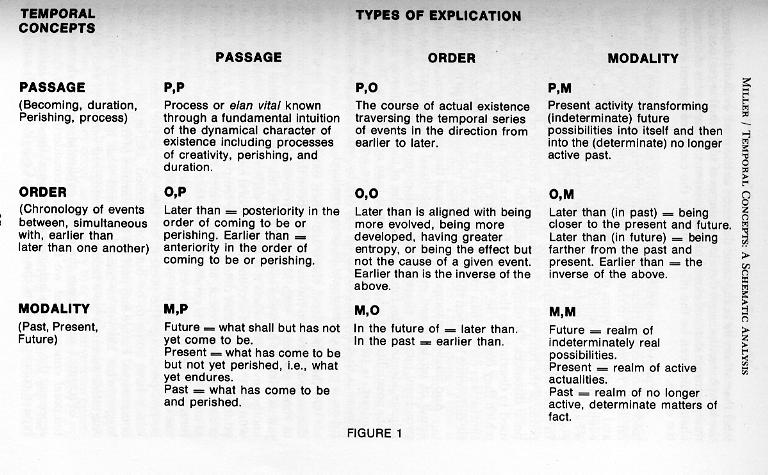
The Nonspeculative Basis of Metaphysics

1

In the beginning, philosophers claimed to offer knowledge, or at least to look for it. That knowledge, they said, was about things, or beings. But the most perceptive of them were aware that knowledge of a vast number of diverse things, or beings, concerns not just their diversity and multiplicity but also what they have in common or are in common. When philosophers of that kind focussed their attention upon what they took to be common to all beings -- took to be the unity they manifested in their very particularity and diversity -- they called it being. Some few philosophers today persist in using the term "being" in this way. Most contemporary philosophers, however, prefer the term "reality" to the term "being." Some of them may think of themselves as trying to express with that term precisely what earlier philosophers tried to express when they used the term "being." But the most influential of today’s academic philosophers regard any attempt to focus on reality in that way as an exercise in obscurantism.1

Most philosophers who have made the far-reaching claim to know beings and being have also claimed to know something about the nature of knowledge itself. Many of them were aware that this reflexive claim was implicit in the claim to know reality, or being. To put it differently, they were aware that a determined concern for the foundations of knowledge must accompany any truly rigorous pursuit of knowledge itself. Nonetheless, they did not advocate what is today called foundationalism, for that is a relatively recent doctrine, despite the great age of the metaphor from which its name comes. Odd as it may sound, there are other foundations for knowledge besides the kind defined by foundationalism.

If I claim that philosophy can in principle provide knowledge of reality and also knowledge about the nature of knowledge itself, I shall be perceived to be saying something very old-fashioned. But the claim is about what philosophy can and ought to do, not about what it has habitually done. It has been deflected from its double task time and again -- often enough because of the practical success of the other disciplines it has had so important a hand in creating. Even when it has not been deflected, it has not performed the second (reflexive) task very well; and, because the two tasks are truly interdependent, the first task has accordingly suffered. Both tasks are, I think, more concrete and more empirical than philosophers have supposed. All this means that I must unfold my claim in more detail. It may in the event strike the reader as a new-fangled claim rather than an old-fashioned one.

The proliferation of many specific disciplines from the matrix of philosophy is an old story, and I do not mean to rehearse it here. The most prominent result of that fecundity is also familiar: most academic philosophers now take it for granted that philosophy has no first-order cognitive function. This assumption involves more than a refusal to take seriously a philosophic knowledge of beings and being: it is tantamount to a dogmatic insistence that philosophy has no empirical cognitive function whatever. Any attempt on the part of philosophy to attend directly to the nature of its own knowledge -- any attempt, that is, to deploy reflexively some supposed direct cognitive grasp -- is therefore futile according to these philosophers, for they believe that there is no such direct cognitive grasp. Although some of them concede that it is the legitimate concern of philosophy to give an account of knowledge, they take it for granted that the exemplar of knowledge is supplied to philosophy from outside. Science -- together with the other disciplines that aspire to the condition of science -- provides the exemplar, and it is the philosopher’s job to understand the exemplar, not to prescribe for it or imitate it. Philosophy, they think, deals with propositions (statements, sentences) generated by science, by other human disciplines that have some sort of empirical birthright, and by common sense; philosophy does not deal directly with nature, or the world, or reality.

There is another and less familiar result of that old story: many philosophers who continue to believe that philosophy has a first-order cognitive function have come to suppose that that function must itself be understood on the analogy of science’s cycle of theory-building and theory-testing -- a cycle I have called on more than one occasion the speculative-empirical cycle, or the theoretic-empirical cycle.2 One instance of this belief is the well-known definition of speculative philosophy at the beginning of Process and Reality -- "the endeavor to frame a coherent, logical, necessary system of general ideas in terms of which every element of our experience can be interpreted" (PR 4/ 3). I am sure that philosophic theories of that sort -- Whitehead goes on to use the expressions "philosophic scheme," "general scheme," "philosophic generalization," and "imaginative construction" about them -- can be of interest and value. But I think that the cognitive access of philosophy to reality -- to the reality of our own knowing, for that matter -- can be much more direct than that. If I should be right about that -- a possibility I ask the reader at least to entertain -- then any theoretic (speculative) activity we might decide to engage in as philosophers must be soundly based on that direct knowledge. Certainly philosophic theory should not take precedence, so that we feel obliged to reinterpret in terms of it things that are in fact known directly, and thus find ourselves constructing those familiar things out of "ultimates" laid down by the philosophic theory. To put it differently, the philosophic theory, being itself an "imaginative construction," should not be used to construct that which has no need of being constructed.3

2

From the three books in which I have tried to do substantive philosophy, as distinct from criticism or analysis of the philosophy of others, the outlines of a metaphysical system can be extracted by anyone who is so minded. But I have not tried to elaborate a system -- least of all a system in the sense of Whitehead’s "imaginative construction" -- but rather to turn myself and the reader first of all to what can be directly known. I have made the distinction between direct and indirect knowledge before, though in somewhat different terms, both in The Recognition of Reason4 (1963) and in The Acts of Our Being (1982). And the distinction is implicit in the elaborate discussion of causality -- with special applications to action and mind -- that is central to my Meditation on a Prisoner (1975). The distinction appears again, in what I hope is a more exact form, in a forthcoming article, "After the Linguistic Consensus: The Real Foundation Question."5 In this present essay I must be brief, but some account of the distinction is essential if I am to make my position clear to readers of this journal. That, I take it, is what I was commissioned to do for this special issue -- a circumstance which I hope will excuse this otherwise unseemly profusion of self-reference.

We know directly when we know something by virtue of attending to it; we know something indirectly by virtue of attending to something else. That something else may be a concept, a proposition, or a body of theory -- which of course may also be construed as a complex proposition, on one acceptation of the term "proposition." I mean attend rationally, for knowledge consists in what I have often called rational (or cognitive) awareness. The term "awareness" insists on the immediacy of the attention and on its sensory roots -- even our awareness of propositions is not without its sensory roots, although we do not Sense propositions. The term "rational" (or "cognitive") insists on articulateness and on a universality that transcends any instance of rational awareness. But just because propositions and other things of that kind can be used in indirect knowledge, one should not conclude that they themselves cannot be known directly. The matter is more complicated than that.

Suppose it is a bright day in October. A group of us have been talking under a sugar maple -- now in its full hectic color-out on the campus, and we have just walked into a classroom, where one of us -- a physicist of some renown -- undertakes to explain some vexed point about the role of the Psi-function in quantum theory. Suppose also that we are competent enough in such matters to follow the mathematics and take part in the discussion on a professional level. As we do so, our most intense rational awareness will be focussed upon what we may agree to call a complex of propositions, namely the body of theory propounded by the physicist. The attention we give to the chalk marks, the chalkboard, and the maple tree -- still visible through the window -- now becomes a mere background attention to just the extent that we are able to attend competently and creatively to the complex of propositions. All these background things could, of course, be at the focus of our rational awareness, and perhaps they were at that focus a while ago -- we may have been admiring the maple, and as we came into the room, the physicist may have said, "Ah, a chalkboard; now I can make my point really clear."

But the Psi-function has a different status from both maple tree and chalkboard: as we focus upon it, we shall in fact be entertaining something that is distinguishable from the chalk marks and indeed from the particular character of the notation we are using, although -- we shall suppose -- it is not available to be attended to without some appropriate notation. When we entertain the Psi-function, our rational awareness terminates in something that is sustained by the knower in a radically different sense from the sense -- if any -- in which the chalkboard or the maple tree is sustained by the knower. If my attention to the chalkboard lapses as I labor to follow what is being written on it, its existence obviously does not lapse for me. If, on the other hand, I stop attending to the Psi-function, through some failure in competence or concentration, the Psi-function is gone for me, and another series of competent rational acts is necessary if I am to be able to entertain it again.

We shall come in a moment to the direct-indirect distinction. It is important just now to notice that I am not making the point that the maple tree and the chalkboard can be known directly and the Psi-function only indirectly. Although the Psi-function is not available to sensation as the maple tree is, our knowledge of it is direct enough. The reality of the Psi-function, considered as an element of a body of theory, no doubt owes something to the formative, or constructive, power of rationality, but, just so long as we sustain that ens rationis,6 it is just as directly known to us -- isjust as much at the focus of our rational awareness -- as the maple tree would be if we were attending to that instead.

The distinction between directness and indirectness comes in when we ask what we know by virtue of our rational awareness of the Psi-function besides the Psi-function considered as an element in a body of theory. Certainly the Psi-function purports to -- and moreover really does -- tell us something about the fine-structure of the chalkboard and the maple tree. But it does so by virtue of something that is not that fine structure: when scientists revise the body of theory, they do not revise the fine-structure. Moreover, the Psi-function is directly entertained by us in a way that the (quantum level) fine-structure itself can never be.

Science is a very complex activity. Although it uses the speculative (theoretic)-empirical cycle to provide us with indirect knowledge of many things we can never know directly (an electron, a quantum of energy, a black hole), it is an activity shot through with direct knowledge. The elements of a theory are known directly, and whatever we consult to help confirm or disconfirm a theory -- usually instrument readings or other things observed in the realm of common sense -- are also known directly. It is, moreover, one of the great glories of science that it extends the range of our direct knowledge: men have walked upon the moon and looked back at the earth. But that it does offer us also a kind of knowledge of things that we can in principle never know directly seems incontrovertible.

The most grievous philosophical seduction that accompanies the indirect knowledge provided by science is the notion that our direct knowledge is in principle untrustworthy -- a thing of illusion or folk-knowledge -- and that we can only give a rigorous account of things by propounding a theory about them. (The notion can be seriously entertained only if we fail to notice that theories are among the things we know directly.) And since a body of theory gives us indirect knowledge that in many cases must remain so, we find ourselves building up, out of material provided by theory, constructions that we take to be more truly the real articles than the things we can know directly. Even metaphysicians sometimes yield to this seduction. Some Whiteheadians, I suggest, engage in just such a construction when they argue about how an ‘actual entity’ is really constituted and how, in the light of that constitution, we should interpret such entities as persons. One thing we can be sure of: if there really are outside the world of theory -- such entities as Whiteheadian ‘actual entities,’ then we can never know them directly. (The same thing is of course true of such a scientific imaginative construct as ‘wave of probability.’)7 Things like chalkboards and maple trees, however, are of the same scale as ourselves and our action, and we do know them directly -- and ourselves in action as well. (To say that we know them directly is not of course to say that we know them exhaustively.) Those who suppose that only a body of propositions can serve as an exemplar for knowledge may disagree with these claims about direct knowledge, but even they will probably agree that our apprehension of the arena in which we argue about propositions -- and thus about bodies of theory -- is direct enough.

The real foundation question -- which is only very distantly related to the question whether what is today called foundationalism is or is not a dead issue -- is the question whether what purports to be direct knowledge is really knowledge, and if it is, how we are to understand it.8 Direct knowledge is not adequately characterized by the few instances I have given of it: it includes my knowledge that I am now writing and the reader’s knowledge of reading in a different "now." Directness is in no prima facie conflict with reflexiveness. Nor is it wise to confuse the issue of directness with that of common sense. Although some of the instances I have given are commonsense ones, others are not. For that matter, we cannot even say that all commonsense knowledge is direct, seeing that common sense is full of simple and prescientific uses of the theoretic-empirical cycle and therefore rich in instances of indirect knowledge.

If there is direct knowledge -- if, that is to say, what purports to be direct knowledge is authentically so-then it ought to be our standard for concreteness. The real foundation question is about what purports to be direct knowledge, but it is an odd question, for we cannot set about giving any sort of answer to it without in some sense relying on direct knowledge. Not that any instance of direct knowledge is quite beyond criticism or doubt. It is rather the general mode of knowledge of which the instances are indeed instances that is beyond criticism or doubt. It is the general mode that philosophy -- and indeed every procedure, every insight, and every empirical consultation that belongs to the complex activity we call science -- must rely on. Although there is no incorrigible instance of direct knowledge, that general mode of which any (corrigible) instance is indeed an instance is incorrigible in the sense that any act of correction or refinement must itself be an instance of it. Reflection about direct knowledge -- more precisely, direct knowledge returning upon itself in reflexive deployment -- tells us this.

It tells us a great deal more. The most extensive account of what I think it tells us will be found in The Recognition of Reason, under the rubric radically originative reflection. The same rubric appears briefly in Meditation on a Prisoner, in support of the account I give there of causality and of the primary entities whose exercise of ontic power is our most concrete example of causality. It is also invoked in The Acts of Our Being, in support of my extension of that account to the problem of responsible agency. In The Recognition of Reason I try to draw attention, by the use of radically originative reflection, to the joint rational and empirical satisfaction afforded by direct knowledge. Since radically originative reflection is itself an instance of direct knowledge, that joint satisfaction characterizes it as well. Direct knowledge, so deployed in reflection that it becomes conscious of its own autonomy and responsibility, gives us the only answers we can have to what I have recently been calling the real foundation question.

Lately I have used such expressions as "rational awareness," "cognitive awareness," and "rational-empirical cognitive engagement" about both the simple and the reflexive employment of direct knowledge. In The Recognition of Reason the expression "cognitive presence" is sometimes used, and I often stress there the continuity of awareness and understanding. In The Acts of Our Being I speak of "knowledge in the mode of rational-empirical presence," and in that case too the expression is meant to apply to both the simple and the reflexive deployment of direct knowledge. This terminological copiousness is not intended to outline a theory but rather to call attention to something concrete that is more often overlooked than not. The term "recognition" itself -- which can be substituted for many of these other expressions -- is a common term I use metaphorically and with the same intention of not constructing a theory. It serves to remind us that -- as epistemologists -- we ought not to set out to construct knowledge out of something less than knowledge. It reminds us also of anamnesis -- suggests an anamnesis brought down to earth and given an empirical task; suggests an innateness not of ideas but of a capacity to become rationally aware of the concrete.

My writing about knowledge may have been too intricate. It has in any event been ignored rather than confuted, and what I have had to say about action, the mind-body problem, causality, and responsibility has been thought to be the chief burden of my work. I trust that forthcoming work and work in progress will make the real foundation question more accessible, because I see no hope of progress with those other and more patently metaphysical questions unless their intimate involvement with the real foundation question is recognized. To the readers of this journal, who in general believe that philosophy is the critic of abstractions, I should like to point out that I am urging a realism which has at least the advantage of making it clear how we can perform that function. It is certainly no naive or common-sense realism, for it dares to make use of reformed idealist insights. In some respects it is old stuff -- pre-Kantian and even pre-Cartesian; in other respects it is quite new and may well deserve to be called postlinguistic.

Its most important claim is this: when we know directly, our rational awareness does not terminate in linguistic forms imposed upon a tumult of ineffable empirical stimuli but rather in the beings (and Being) whose extralinguistic reality is the basis of all sound language. The foundation-directed exercise I have engaged in under the rubric of radically originative reflection has never been directed towards a Cartesian consciousness and its contents, or towards a phenomenologically-conceived consciousness and its contents, but rather towards a cognitive power that is itself empirically engaged. Hence the emphasis on the rational-empirical satisfaction provided by direct knowledge in its simple (nonreflexive) deployment and on the persistence of that same double satisfaction in its reflexive deployment.

3

The most important instance I have used of something known directly is what I now call a primary being, or primary entity.9 The terminology deliberately echoes Aristotle’s "prote ousia," an expression whose real meaning is almost totally lost in the traditional translation "primary substance."10 (There are fundamental differences from Aristotle, but they will probably be obvious enough.) A primary being is a dynamic one: it has a beginning, a development, and an end; it is also a spatially extended one. We shall naturally know a primary being in more detail if we can survey the whole of it, but our direct knowledge of it is not dependent upon an experiential survey of the whole of its temporo-spatial range. Direct knowledge is not the outcome of a two-stage process -- first an experiential survey by an awareness consisting wholly of sensation and feeling, and then the imposition upon that of a conceptual (or linguistic) universal. In all direct knowledge (unlike indirect knowledge) the rational and empirical poles are fused: we cannot isolate them in a "pure" form. The unity or integrity we grasp by the rationality of our awareness reigns throughout the temporo-spatial extensiveness of the primary being -- it is indeed what allows us to grasp even a part of the extensiveness as belonging to that primary being. The unity or integrity is common to the whole of that being. Although not a "universal," the unity or integrity is universal to every part, feature, or aspect of it; although not located just here or there within the extensiveness of the being, it pervades the whole of it.

One important reason for this -- so difficult to express that I am certain that in several tries I have not managed to express it adequately -- is that rational awareness of one primary being is at the same time rational awareness of it as an instance of Being. I do not mean the concept "being" or the word "being," but Being as something common, or general, and present to our rational awareness as common, or general, even though its presence is a factor in the presence of the particular primary being. What I call recognition is a rational function: the unity or integrity recognized is never merely the unity of the particular in question. Nor is it even merely the unity of any group of like particulars -- a species, for instance. So the formula used in the previous paragraph does not quite get at the truth of the matter: the universality that is essential to even the most trivial kind of direct knowledge concerns the particular that we are directly aware of, because rational awareness is never awareness of a mere particular. The particular is directly known with its root in what is common.

It would be rash to try to settle the universals question in passing. I venture here only the observation that the common, or general, presence of Being in the presence of a particular primary being is not the presence of a universal -- although it is the true source of all dealing in universals. It is, it seems to me, the business of classifying beings in some general scheme and constructing theories about them that gives rise to a realm of universals -- essences, Forms, eternal objects, natural kinds, mathematical objects. Their real status, I think, is that of well-founded entia rationis.

The second important instance of direct knowledge I have dealt with is causality. The key to my treatment of it is that I take it to be an aspect of primary beings -- an aspect of their identity and integrity, but an aspect also of their interdependence and togetherness. To know a primary entity directly is already to know causality directly: to recognize the one is to recognize the other. In the three books I mentioned I did not set out to produce what some might call an analysis of the concept of cause or the term "cause." I wanted instead first to attend to and then to call attention to the concrete exercise of causality, not only by the primary being we call the person but by a great many other primary beings as well. I have, incidentally, never maintained that we have direct knowledge of causality only in the instance of our own action and that we then argue by analogy to its existence in nature. My most important example of the exercise of causal power has indeed been the action of persons, but that is only because human action is our most important concern. Direct knowledge is also direct knowledge of nature. Direct knowledge of action -- indeed of one’s own action -- becomes indispensable only when we are dealing with the reflexive foundation question. But it is so important an example that it is worth using it again.

It is the extraordinary complexity of that exercise of causality that has most struck me and that I have tried to attend to and to convey. For what I take myself to be directly attending to in attending to a human being in action is the marshalling by a superordinate primary entity of a vast complexity of subordinate primary entities that contribute to the very being of the superordinate one even as they are so marshaled. One sees this marshalling whenever one is (directly) rationally aware of any instance of causal efficacy on something else by a superordinate primary being. One sees it when one is rationally aware of a person constructing or moving a physical object; one sees it also when one is rationally aware of a person moving some other person by speech or writing. We are thus rationally aware of causality whenever we attend either to a primary being and its ‘internal’ organization or to a primary being affecting something else.

What we usually call causality therefore comprises, in the case of primary beings, at least two features. The first, more important, and less obvious one is the exercise of power by a superordinate primary being on subordinate primary beings. Such subordinates are in one sense not something else -- the cells of my body contribute to my being; in another sense they are something else -- within limits they can be detached and live separate careers. All this is dealt with under the rubric of asymmetrical identity in Meditation on a Prisoner, and it is central to what I say there about the mind-body question. The second and more obvious one is the exercise of power by a primary being on something else -- I am now making marks on paper and thus in the long run having some effect upon you as reader. The first feature I call ontic power -- "ontic" because the marshalling of subordinate beings that also contribute to the being of the superordinate concerns the being of both items. The second feature I call causal power.

Ontic power is obviously the more fundamental kind, because the exercise of causal power depends upon it. But ontic power is not radically different from causal power. On the one hand, the being of a complex primary being involves an asymmetrical identity with its subordinate primary beings, and this ‘relationship’ between superordinate and subordinate cannot be understood in terms of causal power. On the other hand, the being of a complex primary being is the source of its causal power. To put the matter differently: the interdependence of superordinate and subordinate primary beings is a causal relation that involves simultaneity: my thinking and writing is supported by and marshals neural happenings simultaneous with it and indeed asymmetrically identical with it (ontic power); the effect all this has upon the reader comes later (causal power). And of course the subordinate neural happenings themselves exhibit causal power (one neuron fires after the summation of the contributions of other neurons that fire earlier). The same two aspects of causality appear if we take the neuron as a superordinate and look at its relations to, say, constituent large molecules.

In The Acts of Our Being I suggested that if we were to revive the medieval distinction between the terms "immanent" and "transeunt," then "ontic power may be regarded as the ground of the agent’s immanence in its causal power."11 Causal power would thus be the transeunt exercise of an immanent power. I made this latter point in a lengthy note that deals with the medieval distinction. But I did not recommend reviving the term "transeunt," because in recent discussion transeunt causation has been incorrectly identified with so-called event causation. This would have produced confusion, because what I call causal power is not equivalent to event causation.12

4

The preceding remarks about primary beings and causality are so compressed that they may be hard to follow. But the topics are developed in considerable detail in Meditation on a Prisoner and The Acts of Our Being. For the present essay what is important is that I take both topics to be within the scope of our direct knowledge: there are many kinds of primary beings we can know directly, and so we can also know causality directly in some of its complexity. It seems nevertheless clear that there are many kinds of primary beings that we can never know directly. There speculative philosophy, which I think is best understood as the framing of philosophic theories, surely has some function. It has, however, two important limitations. First, it is limited by the authority of our direct knowledge -- an authority exercised not only by way of the use of direct knowledge in the testing of theory but also in our direct knowledge of a body of theory -- a knowledge that develops at equal pace with the formative (constructive) power of rationality that goes into the making of theory. Second, it must respect the authority of what is known by way of direct knowledge. It must, that is, not regard those things so known as things merely ‘experienced’ -- as things, accordingly, that await reformulation in terms of a philosophic theory before they can be truly known. Thus, although I was willing, in Meditation on a Prisoner, to interpret the indirectly known world of the physics of the very small in terms of primary beings analogous in their act-temporal structure to such directly known primary beings as ourselves, I was determined not to take such theoretic entities as my ontological standard. Whiteheadians, I suggest with respect, tend to invert that order of precedence. I have given several instances in the past,13 and I can give many more on demand. Theory -- especially scientific theory -- is of immense importance in human affairs: there are, after all, so many things that we can only know indirectly. But if it should be the case, as I think it is, that all indirect knowledge -- whether philosophic or scientific -- is both based upon and enframed by direct knowledge, then it must surely be the philosopher’s chief function to work towards deepening our direct knowledge.


Notes:

1Certainly most of those who carry on the debate about realism and antirealism in philosophy of science would regard it as obscurantism, and that is one reason why that debate has been so inconclusive.

2 The Recognition of Reason (Carbondale: Southern Illinois University Press, 1963), ch. 5; The Acts of Our Being: A Reflection on Agency and Responsibility (Amherst: The University of Massachusetts Press, 1982), pp.20,103,104,118-19, 139-40.

3 In the course of writing my (1948) Harvard doctoral dissertation, "The Idea of Freedom in the Metaphysics of Whitehead," all but the last chapter of which eventually became my Whitehead’s Metaphysics: A Critical Examination of PROCESS AND REALITY, I had come to feel that the philosophic scheme, theory, or imaginative construction Whitehead presents in Process and Reality would not do as an account of human freedom, and indeed would not do as a general metaphysics. But in trying to provide an alternative in the last chapter of that dissertation I was still persuaded that the method of speculative (theoretic) generalization offered some hope for metaphysics. By the time I wrote The Recognition of Reason (completed 1959, published 1963) I had developed a quite different view about philosophy’s access to the real. That was one of several reasons that led me not to include the last chapter of the dissertation in the Whitehead book, which was published in 1967.

4 Note especially the contrast of what I call the "concrete mode of knowledge" with the "speculative-empirical cycle" in The Recognition of Reason, pp. 143-73.

5Forthcoming, Review of Metaphysics.

6 J do not mean to suggest that entia rationis are merely beings of reason, but only that they are not available to us without a formative (constructive) act of rationality. Thus I leave open the question whether acts of that kind are partly abstractive and not wholly constructive. Most contemporary analytic philosophers will probably prefer to say entia linguae rather than entia rationis.

7 I do not refer to the mathematical function itself but to the imaginative interpretation of it.

8 For a more detailed account see my "After the Linguistic Consensus: The Real Foundation Question," forthcoming, Review of Metaphysics.

9 For some account of other terminology I have used, and my reasons for preferring the expressions just mentioned, see The Acts of Our Being, pp. 195-96 arid pp. 228-30, notes 3, 4, 10. Note 10 is especially important for one of my most fundamental disagreements with Whitehead. Most of that note appeared originally in Human Agents as Actual Beings," PS 8:103-13.

10 See The Acts of Our Being, pp. 195-97; 228-29, n. 3.

11 Ibid., p. 33.

12 Ibid., pp. 218-19, n. 3. Roderick Chisholm has made the term "transeunt" current for event causation as distinct from (immanent) agent causation. As the example (cited in my note) with which he establishes the sense he intends to give "transeunt" shows, that distorts the meaning "transeunt" has in the medieval contrast with "immanent." I therefore suggested in my note that "transmitted" would be a better term for characterizing event-causation. Accordingly, if we did decide to revive the medieval terminology, it would he better to say that the causal power exercised by a person on something else (say a cue stick) is transeunt, and that the power ‘exercised’ by that something on a third thing (say a billiard ball) is merely transmitted.

~a Whitehead’s Metaphysics, pp. vi-vii; "Human Agents as Actual Beings," PS 8:107-09; The Act.s of Our Being, pp. 206, 229-30, n. 10.

Human Agents as Actual Beings

This article grows out of several attempts to respond viva voce to those who did me the honor of asking me to enlarge upon the view of the human agent set forth in my Meditation on a Prisoner: Towards Understanding Action and Mind (MP). The act of speaking itself suggested to me certain examples that were found helpful by my bearers, and although the examples could be transposed into the key of the act of writing, it seems to me that they are more vivid as they stand. So I venture to ask the reader to imagine me speaking rather than writing what follows.1

As I speak these words, I exercise power in the world about me. My action is an exercise of physical power, since I produce sound waves that by way of your eardrums excite your nervous systems. Insofar as my words are heard and understood, I also exercise a power of a somewhat different kind on your minds. But I shall not explore that difference just now, but simply say that by my act of speaking I exercise causal power of a complex sort on the world about me.2

But as I spoke those words, I also exercised another kind of power, more difficult to conceive of than causal power. It is the power I exercise over my brain, my whole nervous system, and indeed over my whole body, Of this power we may say, in a commonsense way and subject to later qualification, that I exercise it while acting; and that some neuron in my brain that fires in the course of the action, or some neural network through which a complex impulse passes, is subject to it. Of course the cells and indeed molecules of my larynx are also subject to it. If the action under consideration takes longer than the firing of the neuron, as in the case of uttering a sentence, then it would appear that an action can exercise power on an event that ended before the action itself ended. If this should be so, the temporality of an action requires a fresh approach to the problem of causality. In MP I try to provide such an approach.

In some actions there is an additional feature still more difficult to conceive of. It is present only in the kind of action I took as my example -- action that issues in rational speech and is therefore characterized by an intelligent understanding on the part of the agent. The variety of such actions is considerable. On the theoretical side, it ranges from the speaking or writing of sentences of modest import up to the enunciation of important scientific or philosophical truths; on the practical, it ranges from the involvement of rational speech with the ordinary tasks of daily life up to its involvement with moral decisions of the most momentous kind. If we suppose that this considerable range of acts not only is supported by neuronal activity but also exercises power over it, then it follows that what in the course of the action is understood, what is articulated, what, it may be, is postulated as a standard for the action, all contribute to the power exercised by the action over its supporting neuronal activity. Though the way in which I approach these matters is significantly different from the way of most recent writers on reasons and causes, it should be clear that what is articulated in rational actions is akin to what is usually dealt with under the rubric of reasons. In this necessarily brief statement let me simply say that the mode of power in which an action exercises power on one of its subordinate events may include the power of reasons.

Here, in the full spate of philosophical assertion, I am checked, if not by my own reflection, then at least by your response. Surely it is not proper to distinguish an I from the body and all the events in it that go on while the I lives. Surely we have no right to distinguish something called an action from all the things that are happening in the body as the action goes on. I would seem to be identical with the history of the assemblage of cells that includes my neurons; my action, in the same way, would seem to be identical with everything that is happening in my body while I perform it.

I concede to your imagined objection and say that of course this is true, so long as you do not conceive of the identity as a physicalist (materialist) would conceive of it. The identity I propose instead is an asymmetrical one: the agent is asymmetrically identical with his body and its history; and any one of his actions is asymmetrically identical with everything that happens in his body as he performs it. That is to say that although the agent’s power is dependent upon the nervous system in that it is performed in and with it, nonetheless that same power is exerted over the nervous system and indeed over any particular neuron that fires or is constrained from firing in the course of the action.

Although this view of power is an unusual, perhaps even a strange one, it appears more plausible if we focus upon just what adjustments it calls for in our habitual beliefs, for the adjustments are not in conflict with the assumptions of science about transactions in which physical energy is lost or acquired. If we compare the power I exercise by way of sound waves upon your ears (power, sense 1) with the power that I, in action, exercise upon some neuron that fires or is inhibited from firing during the action (power, sense 2), we see a marked difference. The first is an ordinary physical transaction; it takes up time, and I, distinct from you, expend energy (in the ordinary physical sense) to agitate your tympanums. The second is not a physical transaction in that sense. Under the rubric of asymmetrical identity the agent is not considered to be an entity radically distinct from his body, nor is his act considered to be a function radically distinct from the physiological processes that go on in the course of the act. Though agent and act are in one sense distinguished from what I call their infrastructures, in another sense they are not. Therefore, if the agent exercises power over some neuron or neuronal complex, if these things are subject to the power of the act, the power is not of the kind that is exercised by way of a physical transaction that takes up time and in which physical energy is expended in the production of an "effect." By the same token, the firing of the neuron or the coursing of impulses through a neural complex does not support the agent’s thought and speech by expending physical energy on them, although of course it does expend physical energy on other neurons and neuronal complexes and hence does exercise causal power on them.

In MP I developed these themes at some length in the setting of a detailed discussion of human agency and causality. My examples were acts of Socrates on his last day -- acts, I take it, that are paradigms of moral responsibility. What I here call power, sense 1, I called in that book causal power. The concept of C E causality,3 which plays so prominent a role in the book, is another way of expressing the concept of causal power. What I here call power, sense 2, I there called ontic power. Where the agent’s power over one of his neurons was under discussion, I made the latter notion more specific and spoke of supervening ontic power. This allowed me to call the neuron’s contribution to the act conditioning ontic power. An example of ontic power would be the asymmetrical interdependence of the macroscopic features of the act of speaking, including all the dynamic movement of subjectivity towards understanding that goes with the words, with a whole complex of neuronal activity. The whole-part relation of act to single neuron makes vivid the temporal distinction between this mode of interdependence and C E dependence. Thus it is possible that a single neuron might be interdependent in the mode of ontic power with a macroscopic feature of action (e.g., conscious understanding) simultaneous with it and also make a contribution by way of its causal power to a later neural occurrence in some other part of the brain.

But obviously the theme of ontic power is not so radically separated from that of causal power as the distinction might suggest. Indeed, if we return to my earliest example for a moment, if I am making any sense on the topic of action, then the causal power I exercised in vibrating your ear drums was a function of the ontic power deployed in my act. If this should be so, then supervening ontic power deserves to be dealt with under some causal rubric of its own. On the basis of what has been said so far, we cannot give a satisfactory account of it by analyzing it into the various C E transactions that can be discerned within that which is asymmetrically identical with it. Nor do we give an adequate account of supervening ontic power by listing the various conditioning ontic powers that contribute to it. For that reason, I borrowed, though with a difference of interpretation that made it clear that I was not borrowing the well-known tenets of Platonism along with it, the Platonic phrase "real (Or true) cause" to refer to the agent in his exercise of supervening ontic power. In responsible moral action, and indeed in what I called in MP originative actions in general, the agent himself is the real (or true) cause. By this I do not mean just that he is the real cause of what happens in the world as a result of his actions, although in the mode of causal power he is just that. I mean rather that he is the real cause, the unifying power, of the total act and thus of the complexity of non-acts into which analysis seeks to resolve the act. The concept of real cause, then, is simply another way of expressing the concept of supervening ontic power.

It will be obvious that I have tried to absorb and transform in the concept of real cause/ontic power aspects of causality that have long since disappeared from the concept of C E causality.4 that does service in modern philosophy of science. It should also be obvious that the concept of ontic power is intended to help renew the old close association between the category of being and that of causality.

II

Meditation on a Prisoner was not designed to supply a complete metaphysics. It was meant to draw attention to a feature of action that calls for a recasting of many received ideas about causality, and some other features of action that call for a recasting of some received ideas on the role of mind both in action and in human affairs in general. But I do not labor under the misapprehension that the human self can be adequately understood by holding exclusively to discourse in terms of action. I tried to make this clear both in the reference to being in the expression "ontic power" and by using the expression "fundamental entity" in the latter part of the book to refer to human beings and other kinds of entities as well.

It is now widely believed that the self-identity of the human self (or the human person) cannot be that of a substance. When the term "substance" is used in the sense current in modern philosophy, I share that belief. But some reservations are in order. The rejected doctrine is one that is, in the first place, expressed in terms of a word, "substance," that carries over very little of the Greek word, "ousia," it purports to translate; and that, in the second place, has been reworked considerably in post-Cartesian philosophy. Two important things have been lost: (1) the idea of being that is present in the Greek word by virtue of the fact that "ousia" is a substantive formed from a feminine participle of the verb "to be"; (2) the dynamic overtones present in such Aristotelian phrases as "ousia energeia" and "ousia entelecheia."5 The full account of the human ousia in De Anima and in the Nichomachean Ethics is a dynamic one, in which the rationality of the agent shapes, by virtue of his choices and his actions, his own coming-to-be. The self-integration of an entity of that kind is inseparable from the matter of self-identity. Self-integration takes a considerable time, and the outcome of it is always much in doubt. Yet Aristotle calls this human self an ousia -- an entity -- and I feel no hesitation in following him at least that far. That is not to say that I consider the human person to be a substance in most of the senses that the great philosophers from Descartes through Kant would have accepted.6 Nor, of course, do I want the whole of the original Aristotelian doctrine, since there are undoubtedly elements in it that contributed to the post-Cartesian history of the concept of substance.

Although no one who reads the unconventional view of causality and temporality set forth in MP will suspect me of trying to restore Aristotle, the dynamic side of the concept of ousia and its resonance with the theme of being have always been important to me. I tried to preserve at least those features by way of the concept of fundamental entity in the latter part of MP.

The concept of ousia, understood in this dynamic way, is by no means foreign to Whitehead’s philosophy. Indeed his expression actual entity (in what follows I shall italicize Whitehead’s technical terms) is a much better translation for ousia energeia/ousia entelecheia than actual substance" would be. But a curious thing has happened. Whitehead’s standard for what the self-identity of an actual entity must be is so atomistic and Parmenidean that nothing we can conceivably identify in experience will fulfill it. He is thus moved to postulate entities that meet the standard and are therefore proper entities to use as the basis for a reconstruction of the things we can experience. And so he is quite unwilling to apply to the human person, whose struggle with his own self-integration takes so long, is so vulnerable, is so flawed by multiplicity and what might even appear to be radical interruptions, this honorific term "actual entity." I am not at all reluctant to take this momentous step. Since he has preempted the term "actual entity" and has given it a restricted sense that I do not agree with, I used instead the term "fundamental entity" in MP. But on consideration I think it is wise to retain the resonance with the Greek terms ousia energeia and ousia entelecheia that the word "actual" gives in English, In what follows I shall therefore use the term "actual being" either in place of "fundamental entity" or to supplement it. Since I see no reason in the world why such expressions as "actual entity" and "actual being" should have only the atomistic-Parmenidean sense Whitehead insists upon, I shall say that men and women are actual beings. If there are actual entities of a Whiteheadian kind, they too would be actual beings in the sense I intend, but they would be actual beings of a less momentous kind. An appeal to an old metaphysical tradition that has shown itself to be still very much alive in this century then permits us to say that actual beings like ourselves express Being more adequately than do supposed actual beings of the atomistic-Parmenidean7 kind that White-head reserves the term actual entity for.8

Curious as Whitehead’s move was, it becomes more curious as we look at it more closely. Such actual entities are organisms that undergo growth; they are subjects and have feelings with more or less subjective intensity; they engage in a self-creation that is an integration; they make decisions; they have aims; they may or may not accept persuasions; they may entertain propositions; they form societies; they enjoy satisfactions; and some of them are even conscious. Any Whiteheadian can easily add to this list of anthropomorphic terms. Whitehead has deemed the features of human life upon which these italicized technical terms are based so important that much of his philosophy is designed to protect their authenticity from materialistic attacks. But at the same time he is unwilling to ascribe to the creature in whom he has found these features the kind of extreme self-identity he feels any ontologically fundamental entity should have. He therefore postulates actual entities that have the requisite absolute self-identity, and he ascribes these features to them. The actual entities being what they are, however, these features undergo the sea-change that italicizing them as technical terms indicates.

Going back to the "ordinary" organisms in which the original important features were found, Whiteheadians must now deal with them in a truly extraordinary way. They can no longer attribute to them these same important features, for their standard for those features is now given by those italicized technical terms. The features they were originally interested in are now only to be found in the strict technical sense in the postulated actual entities. Thus, if decision is something carried on by actual entities, human decision takes on a Pickwickian sense: we can at best only reconstruct human decision as a derivative of decision. The result is a profound confusion in our understanding of human nature. Designed to protect the reality of human subjectivity from materialistic encroachment, this philosophy now tells us that a human subject is not a subject but rather a society of actual entities, these latter being true subjects. The ordinary organism from which our root metaphor comes is not an organism, but once more, a society of organisms. A man’s feelings cannot be feelings, because feelings are what organisms (actual entities) have, and the man is a society rather than an actual entity; feelings do not belong to the society but to the actual entities that make it up.

I have a good deal of faith in human ingenuity. If philosophers are persuaded that they must give an account of human nature, and, ultimately, responsible human action, in terms of Whiteheadian actual entities, societies, and the like, I am sure they will produce some ingenious constructions. Given the strange restrictions under which their makers must work, the constructions already produced are marvels of ingenuity, although a creature so constituted is probably more plausible as a sensitive observer of sunsets than as the creative agent who, in a surprisingly short burst of intense activity, produced Process and Reality. But marvel as we may, we shall still be puzzled about why one should have to undertake such an Aufbau of something that was originally deemed so important that in a very real sense the postulated actual entities are in fact constructions out of it.

Meditation on a Prisoner is not in the least directed at Whitehead. Its target, like his own, is a materialistic view of nature and of human nature. But I have taken a quite different course about human nature, calling the agent himself an entity, or being, and furthermore an actual one. And since we cannot call him an actual entity without confusion, we call him an actual being. His actions, including those in which rational and responsible decisions are taken, are acknowledged to be ontologically fundamental, which means that they are not dealt with reductively and need not enter our philosophy by way of an Aufbau. This does not hinder our use of the term "action" in metaphor. Thus, if I call some microevent act-like or ascribe act-temporality to it, it is the natural home of the term in its human context that provides the sanction for the metaphorical extension of it to the microevent.

III

The connection between the view of action set forth in MP and the concept of a fundamental entity (actual being) needs to be developed in greater detail. Peter Limper is right to point out, in his perceptive review of MP, that my handling of that theme in the latter part of the book is too sketchy (PS 6:214-20). Here it is only possible to call attention to a number of respects in which I am very far from attributing to the human subject the kind of excessive Parmenidean unity that White-head attributes to his subjects (actual entities) -- a unity that in his case makes becoming an entirely internal adventure.

The controlling principle in MP that prevents one from ascribing an unrealistic kind of self-identity to the human person is that of asymmetrical identity, which is of course a One/Many principle. Its application is very wide, so wide that it does not merely provide a way of reconciling discontinuities with continuity within the human person, but also calls into question our right to think of the unity of one of his acts, or indeed the unity of his person, as merely his unity. The unity of any finite particular is regarded as a share in unity -- so much unity, so to speak, as is consistent with being the unity of that particular manifold it is asymmetrically identical with. In short, the principle of asymmetrical identity, pursued far enough, leads me to reject a radical pluralism. This in turn leads me to reject the concept of an absolute individual. The unity of the most well integrated person is a participant unity; the power exercised in the unifying process of self-integration is a participant power. I do not know why Whiteheadians should object (PS 6:219) to this monistic theme, since they are committed to think in terms of a God who supplies the initial subjective aim of each actual entity, and of the completion of the development of the actual entity by "the final reaction of the self-creative unity of the universe" (PR 75 -- italics supplied).

In MP the principle of asymmetrical identity functions in various ways, of which those relevant to the concept of fundamental entity (actual being) are least developed. Central to all of them is the theme of act-temporality, which it is not possible to go into just now.

(a) A fundamental entity (actual being) is asymmetrically identical with its infrastructure, an act asymmetrically identical with its infrastructure. One, but only one, aspect of an infrastructure can be expressed in terms of subordinate actual beings in reciprocal communication by way of the causal power they exercise. This obvious principle of discontinuity, or discreteness, is balanced by the fact that all such elements are caught in the one ontic power of the superordinate entity and, where action is at issue, in the act-temporal power of one of his acts. (b) The structure of acts exemplifies both discontinuity and continuity. Acts ramify in sub-acts, so that there is a principle of discontinuity within them. There may also, as we shall see in (c), be discontinuity between them. On the other hand any act is asymmetrically identical with its sub-acts and so is continuous as over against their multiplicity. Furthermore, any act may in principle be caught up in a new act of greater temporal sweep and more purposive moment, as when, having intended only a sentence, I may, even while uttering it, find myself going on to develop a paragraph to which it is subordinate. Acts may also overlap, one beginning in the middle of another, as when, in the middle of conversing with a friend, I might stand up to put a log on the fire or pour a drink.

(c) Bemused by the relation between acts and sub-acts and by the agent considered as an act-source, I allowed myself in MP to suggest that the whole sweep of an agent’s life might be as seamless as the act-temporality I ascribe to any act. So it might be if we were, as actual beings, only agents. But of course we are not, and Peter Limper was surely right to object to it in his review (L 218). Acts that are neither subordinate nor superordinate with respect to each other do not always overlap.. They succeed each other and are in some sense distinct. Though an agent comes-to-be by virtue of (among other things) his acts, he does not always act. Nor indeed is he always what he ought to be. The self-identity of human beings, at least, is in that sense a normative notion. But of course the principle of the asymmetrical identity of a unity and a multiplicity allows for more than one sense in which there are discontinuities in the human subject.

(d) The infrastructure of an actual being or of one of his acts is a discontinuity principle to just the extent that it is a multiplicity. The infrastructure mediates inheritance (for instance, in cell division or in the repetition of similar circuit patterns in the excitation of the brain), and inheritance thus has in it that same discontinuity. The principle of asymmetrical identity, however, allows for a correlate principle of continuity. Thus it is I who call upon remembered words as I think, and my thought has a unity that is not cancelled by the reiteration of electrochemical events of the same pattern that (for the sake of the argument we may suppose) mediates certain kinds of memory.

(e) But the most important reservation about the absoluteness of the self-identity of an agent is the principle expressed in MP in the contrast between participant power and common formative power (MP 331-35, 344f). Paradoxically, it is my refusal to accept a radical pluralism of distinct actual beings that exculpates me of the charge of regarding the whole coming-to-be of the human agent as an unqualified unity. Though any finite agent is an act-source, I take it that he has that status only because his ordering power is, both as to the power and the order, an instance of an ordering power that is not exclusively his. I do not pretend to be utterly clear about this, but I take it that self-identity is as fragile a thing as self-integration, and as dependent as the latter is on resources that lie outside the individual qua individual.

Consider the example I began with. There are various reasons for thinking that the power I exercise in speech is not unambiguously mine. Set aside cultural heritage and biological heritage; do not consider them as contributing to the ambiguity. What I mean is that even if one concedes that an act of that sort is in some sense mine and that it exercises power over an infrastructure asymmetrically identical with it, there remains something ambiguous about that "mine." For one thing, I come-to-be by virtue of this and other acts, and I, considered just as a finite being, do not therefore preside as a completed being over my own coming-to-be. In that sense the unity of the power I exercise in an act that contributes to self-integration is not fully explicable on the basis of the I that existed prior to that advance.

The self-identity of a particular is never absolute, and it is least so in the responsible and rational activity of self-integration, in which the individual power of the act is commanded by a power that is anything but particular. On the one hand the tides of the body and its final dissolution render the agent’s self-identity ambiguous. On the other hand the normative roots of responsible action also render it ambiguous. But I do not mean to leave out of these qualifications the notion of power itself. To think of the agent, an act source that comes-to-be and passes away, as a self-sufficient power would surely be to assign him a self-identity of too momentous a kind. For this reason he is called in MP a participant power: his self-identity, then, is as relative to a power he draws upon to come-to-be as it is relative to the standards he is responsible to. On the matter of unity we can still learn from Plato’s reaction to Parmenides and from the reaction of Plotinus to both. I do not think this is any reason for denying the human self the title of fundamental entity, or actual being. The human being is as fundamental as any finite entity in the universe: its continuity massive, though not absolute; its unity a participation in unity and always vulnerable at that, but never merely that of a series of discretes; its self-integration fragile and uncertain, but still so much our exemplar for integration that it is self-defeating to reduce it to the self-integration of postulated entities.

IV

What is the evidence for all this? Does this theoretic structure help us to interpret our experience in the broadest sense of "experience"? Questions about justification are certainly in order, but for a number of reasons I think these are not the right ones.

First, what has been said about originative acts -- that is, about the power exercised in an act by virtue of the asymmetrical identity of action and infrastructure -- contains an implicit view about the relation between the "rational" and the "empirical" poles in any rational act that issues in articulate understanding. What was said about action in general says in effect of rational action that, however fine-grained your analysis of the infrastructure may be, extending even to the details of its mediation between the world outside an agent and the agent himself, you will not find there the full story of the act itself. Your perusal of the infrastructure and its mediation of the physiological basis of experience will yield you neither the experience itself nor the rational insight that takes place in and with it. The term "innate" comes to mind as an apt expression (after due qualification) of the fact that reason, sharing the general structure of action, exercises a supervening ontic power that cannot be resolved into the conditioning ontic powers that mediate its relation with the world. The act will be seen to have something "innate" about its unity as that unity issues in understanding, even though it is an "innate" feature that would not operate without the mediation of the infrastructure, and even though it turns out to be also a way of experiencing something.

Second, the view of action presented is reflexive in that the discovery and presentation of the view also purports to be an example of action.

Third, the implicit epistemology of the view is naïve, close to common sense or to the natural standpoint, realistic in one sense of that chameleon word. In more technical language, reason in presenting this view of action is self-transcendent and knows itself to be so. Its self-transcendence, while not confined to its reflexive grasp of action, nonetheless extends also to that.

Fourth, the view here presented, since it does not proceed by way of reduction followed by reconstruction, can take actions seriously for what they purport to be, including in this case rational action.

These brief observations in section IV, some of which state in too compressed a form arguments developed in my The Recognition of Reason (1963), do not demonstrate the correctness of the present view. What they do suggest, however, is that it does not belong to the class of speculative theories that are then to be brought to the bar of experience. For better or worse, one accepts or rejects views of this sort in a more immediate engagement, I will not say with experience but with the facts of reason-involved-with-experience. To put it in the language appropriate to MP, one undertakes the action of reasonable thought to try to see what action, including that kind of action, is. And it is right before our reflexive gaze to be seen for what it is -- or at any rate as much to be seen as anything can be seen for what it is. I do not mean that the language of action is there to be analyzed, but rather that action itself is there, available as a mode of being to that fundamental, that actual being, the responsible and rational agent. The concrete and reflexive circle I invoke here is the circle of Being, as the term "ontic power" concedes. The reflective genesis eis ousian we exercise in the philosophic act is not out of touch with the Being it exemplifies.


References

MP -- Edward Pols. Meditation on a Prisoner: Towards Understanding Action and Mind. Carbondale and Edwardsville: Southern Illinois University Press, 1975.

RR -- Edward Pols. The Recognition of Reason. Carbondale: Southern Illinois University Press, 1963.


Notes

1. The argument of this paper was presented at the meeting of the Society for the Study of Process Philosophy on March 18. 1977, in connection with the meeting of the Metaphysical Society of America at Vanderbilt University. Peter Limper’s paper "Action, Responsibility, and the Problem of Personal Identity," which expressed a view of the agent closer to that of Whitehead’s, was also discussed. I was able to read his paper before my own was quite finished, and the final form of my paper owes a good deal to the need to respond to his perceptive criticism of my views in that paper, in his review of MP, and in conversation and correspondence.

2. Although there is no space here to deal with Hume’s views on causality and power, they are discussed extensively in MP.

3. In MP I distinguish between the official version and the working version of CE causality. It is the working version that is equivalent to the concept of causal power.

4. 1 refer here to the official version of C E causality.

5. See Metaphysics, 1042b 9-11, 1043a 19-21, 1050a 22-24; De Anima, 412a 12-31.

6 There is a return to this dynamic view of substance in Leibniz, but another view more suited to the requirements of his logic, dominates the dynamic view more often than not.

7. By "Parmenidean" I mean the epochal treatment of a unit of becoming. Although temporal language is often used about actual entities in PR, it is not intended in its usual sense. The durations that supply the ontological foundations of time in PR are also epochs in the root sense of "arrests, or "stops." Human becoming is clearly not "Parmenidean" in that sense. In MP, however, I have preserved some echoes of the epochal theory in the notion of act-temporality.

8. I mean actual entities other than God.

Mill and Hartshorne

Although it has been remarked that the moral philosophy of Alfred North Whitehead bears a resemblance to utilitarianism (WMP 85), it is surprising that no one, to my knowledge, has explored the nature or extent of the resemblance between process philosophy and utilitarianism. In fact, process philosophers have written relatively little about ethics in general; their major contributions to contemporary philosophy, like those of Whitehead himself, have been in the areas of metaphysics, philosophy of science, and philosophy of religion.1

A notable exception to process philosophy’s general lack of concern with ethics, however, may be found in two essays by Charles Hartshorne. In these two essays, The Aesthetic Matrix of Value" (AMV) and "Beyond Enlightened Self-Interest: A Metaphysics of Ethics" (BSI), Hartshorne spells out some major implications of his view of process metaphysics for ethical theory. I believe that the resemblance of Hartshorne’s ethical writings to classical utilitarianism, and in particular to John Stuart Mill’s version of utilitarianism, is a very close one indeed. In order to demonstrate this resemblance, I will compare Hartshorne’s position to that contained in Mill’s Utilitarianism (U). I will defend the following three claims: first, Hartshorne and Mill offer strikingly similar ethical theories; second, Hartshorne’s process metaphysics lends itself more convincingly to a defense of utilitarianism than do the psychological principles advanced by Mill; third, like Mill, however, Hartshorne’s position is vulnerable to one of the classic objections against utilitarianism, the problem of justice.

I. The Agreement of the Theories

In this section, I will argue that both Hartshorne and Mill accept the following five basic theses:

(1) The moral value or rightness of action consists in its furtherance of an ultimate end or goal, "the good."

(2) The ultimate or intrinsic good is experience of a certain sort.

(3) There exist morally significant differences of quality among experiences.

(4) In most general terms, experience is valuable insofar as it exhibits a balance between two poles (which Mill calls ‘tranquillity’ and ‘excitement’ and Hartshorne calls ‘harmony’ and ‘intensity’).

(5) The moral goal of enhancing experience must take into account the experience of all sentient beings, not just a particular individual or group.

In short, I will try to show that Mill and Hartshorne share a view of ethics as (1) teleological, (2) having its telos in experience, (3) requiring qualitative distinctions among experiences, (4) based on an aesthetic criterion of good experience, and (5) altruistic.2

The fact that Mill adheres to the first two of the above theses is a commonplace of ethics. The teleological basis of Mill’s ethics is clear in his statement of the principle of utility: "actions are right in proportion as they tend to promote happiness; wrong as they tend to produce the reverse of happiness" (U 10). In this principle, Mill recognizes happiness as the ultimate end or goal of action and the criterion of rightness. Mill further characterizes happiness as a kind of experiential state: "by happiness is intended pleasure and the absence of pain; by unhappiness, pain and the privation of pleasure" (U 10).

Hartshorne is no less clear in his acceptance of a teleological, experiential ethics: "If we know what experience is, at its best or most beautiful, then and only then can we know how it is right to act; for the value of action is in what it contributes to experiences" (AMV 303). Here, once again, right action is defined as that which contributes to the fundamental goal of achieving a kind of experience. Hartshorne offers his own version of a principle of utility: "To be ethical is to seek aesthetic optimization of experience for the community" (BSI 214; cf. MT 19). Mill and Hartshorne agree, then, that ethics aims at the goal of producing a certain kind of experience, although it is not yet clear that they would agree on what kind of experience ought to be fostered.

The third and fourth theses listed above provide some characterization of the kind of experience claimed to be the goal of moral action. Mill explicitly acknowledges the importance of such a characterization for his theory. Immediately after the statement of the greatest happiness principle, he adds: "To give a clear view of the moral standard set up by the theory, much more requires to be said: in particular what things it includes in the ideas of pain and pleasure, and to what extent this is left an open question" (U 10). Although Mill retains Bentham’s term ‘pleasure’ to describe the good, he proposes a significant change in the sense of this term. That is, he introduces the notion of different qualities or kinds of pleasure in place of the narrowly sensual and quantitative conception of pleasure proposed by Bentham. Mill uses a distinction between "higher" and "lower" pleasures to respond to the criticism that utilitarianism cannot account for the moral significance of the differences between human beings and (other) animals. Human intellectual and imaginative activities, Mill claims, are intrinsically superior to mere sensual pleasure – "It is better to be a human dissatisfied than a pig satisfied; better to be Socrates dissatisfied than a fool satisfied" (U 14).

Hartshorne also recognizes an important difference between the relative worth of human symbolic activity and the instinctive behavior of animals. The increased awareness and control made possible by symbolic thought enriches human experience to such an extent that it can be said to represent a difference not merely in degree, but rather in kind, from the experience of other animals (BSI 212-13). This ability also enables human beings to act on the basis of a much broader scope of concern for others than is possible in the case of subhuman creatures.

Recognizing that there are different qualities of pleasure, however, does not yet tell us very much about what kind of experience is, for Mill and Hartshorne, the end of morality. In fact, many have argued that the notion of different qualities of experience causes more problems than it resolves. F. H. Bradley, for example, maintains that Mill’s hypothesis of different qualities of pleasure introduces a criterion besides pleasure into the evaluation of experiences (ES 117-20). That is, Mill claims to rank pleasures as better or worse based on something other than the amount of pleasure produced. This new criterion, then, must appeal to some other feature of the experience, such as its relationship to human pride, liberty, or dignity, and in fact, Mill does appeal to these attributes in explaining the preference for higher over lower pleasures (U 13). Therefore, Bradley concludes, Mill cannot present the greatest happiness principle as a single or unitary principle of morality, since it requires the use of a value criterion other than pleasure.

Bradley’s argument (like those of many of Mill’s critics3) depends on the following two assumptions: (1) Pleasure is a unitary concept, that is, pleasure is the very same feature in every pleasant experience. Thus, if a ranking is not based on the amounts of pleasure present in two experiences, it must be based on something other than pleasure. (2) Attributes like pride, liberty, and dignity are separate from pleasure and hence represent nonhedonistic criteria for evaluating experiences.

Questions may be raised about both of these assumptions. In response to the first assumption, Rem Edwards has argued persuasively that "instead of a single quality of pleasantness which all ‘pleasures’ have in common," pleasure is a generic concept including "innumerable qualitatively different feelings that we like and wish to sustain and repeat" (PP 46). In response to the second assumption, I believe that Mill would respond in a manner similar to his later account of the relationship of virtue and happiness (U 45-49). That is, Mill could maintain that the pride, liberty, and dignity which distinguish the higher pleasures are not separate from pleasure or happiness, but rather are essential parts of human happiness. Indeed, Mill might have said, these attributes contribute more to human happiness than the lower or sensual pleasures.

Mill’s "qualitative hedonism" can, I believe, be defended against charges of incoherence. There remain, however, several serious questions about its adequacy as a foundation for ethical theory. First of all, extending the concept of pleasure far beyond the specific sense proposed by Bentham generates certain linguistic difficulties. For example, Mill’s statement that it is "better to be Socrates dissatisfied than a fool satisfied" (U 14) has the odd sounding implication that it is not only more dignified, but also more pleasurable (or more pleasant) to be Socrates dissatisfied than a fool satisfied. Moreover, elsewhere Mill appears to use the term ‘satisfaction’ as a synonym for ‘pleasure’. In response, Mill might argue that the concepts of pleasure and happiness must be understood broadly enough to support the judgment that, all things considered, Socrates is happier than the fool.

If pleasure or happiness is understood in this very broad fashion, however, hedonism loses what many view as one of its major attractions.4 That is, recognition of pleasure as a single dominant end makes possible the use of a determinate rational procedure for moral deliberation, such as Bentham’s felicific calculus (PML 37-43) or Rawls’s counting principles (TJ 411-15). Thus, the hedonist in the narrow sense is able to avoid the unattractive positions of ethical intuitionism or relativism. If, however, the end of pleasure is no longer a single thing, it loses much of its appeal as a guide to action. Different kinds of pleasures are preferred by different persons -- they may even be incommensurable for a single person, or at least not comparable in terms of specific rational principles. The qualitative hedonist, therefore, must retreat to a much heavier reliance on intuition.

In response to this last charge, Mill would surely respond that he does provide a principle for comparing different kinds of pleasures. This famous principle, which I will call ‘the experienced judges’ test’, is stated as follows: "Of two pleasures, if there be one to which all or almost all who have experience of both give a decided preference irrespective of moral obligation to prefer it, that is the more desirable pleasure" (U12). There is considerable doubt, however, whether this principle can accomplish the task Mill set for it. First of all, the kinds of experience called for may not be possible for one individual. Can Socrates experience the pleasures of a fool any more than the fool can experience the pleasures of philosophy? Even if the requisite experience were possible, would there be sufficient unanimity among the judges to establish anything more than a very rudimentary ranking of pleasures? And, if such a ranking could be established, would it in fact place the "higher" pleasures over the "lower" ones, as Mill claims? Given the great variety of human likes and dislikes, the answers to these questions seem far from clear to me. Moreover, even if the experienced judges did choose as Mill expected, we would not have any idea why the "higher" pleasures are generally preferred over "lower" pleasures.

There is, however, another passage in Utilitarianism where Mill appears to suggest a different criterion of good experience, which is summarized in thesis (4) above. The passage in question is offered in response to a Schopenhauer-like objection that happiness is an unattainable goal. Because this passage is not as well known as those discussed above, I will quote it at some length:

The objectors perhaps may doubt whether human beings, if taught to consider happiness as the end of life, would be satisfied with such a moderate share of it. But great numbers of mankind have been satisfied with much less. The main constituents of a satisfied life appear to be two, either of which by itself is often found sufficient for the purpose: tranquillity and excitement. With much tranquillity, many find that they can be content with very little pleasure; with much excitement, many can reconcile themselves to a considerable quantity of pain. There is assuredly no inherent impossibility of enabling even the mass of mankind to unite both, since the two are so far from being incompatible that they are in natural alliance, the prolongation of either being a preparation for, and exciting a wish for, the other. It is only those in whom indolence amounts to a vice that do not desire excitement after an interval of repose; it is only those in whom the need of excitement is a disease that feel the tranquillity which follows excitement dull and insipid, instead of pleasurable in direct proportion to the excitement which preceded it (U 18).

Once again, in this passage, linguistic difficulties appear to hamper Mill’s explication of his extended senses of ‘pleasure’ and ‘happiness’ The relationship between ‘pleasure’ and the terms ‘tranquillity’ and ‘excitement’ first introduced in this passage remains unclear. For example, the phrase "with much tranquillity, many find they can be content with very little pleasure" is in apparent conflict with the later phrase describing tranquillity as "pleasurable in direct proportion to the excitement which preceded it." This conflict might be resolved by interpreting ‘pleasure’ in the former phrase in the narrow Benthamite sense and in the latter phrase in Mill’s own extended sense.

What is extremely interesting about this passage, however, is that it suggests the use of tranquillity and excitement as criteria for evaluating lives as satisfied or happy in the broad sense of those terms. Mill suggests that the satisfied life consists in a balance of tranquillity and excitement, not, as he had already pointed out, in a state of continuous highly pleasurable excitement (U 17). It should be noted that the distinction between tranquillity and excitement is different from Mill’s previous distinction between higher and lower pleasures, and the criterion here suggested is independent of the experienced judges’ test. Unlike the experienced judges’ test, this criterion attempts to characterize (in very general terms) the nature of valuable experiences and of happy lives.

I view the above passage, then, as an attempt by Mill to produce a criterion of valuable experience (and of a valuable life) which is both broader and more subtle than Bentham’s concepts of pleasure and pain. Unfortunately, Mill does not develop this criterion any further in Utilitarianism. It does, however, sufficiently resemble a criterion proposed by Hartshorne to merit a comparison of the two. Following Whitehead, Hartshorne uses the concepts of harmony and intensity to signify aspects of experience similar to Mill’s tranquillity and excitement (AMV 303-04; cf. MT 19). For Hartshorne, as for Mill, beautiful or valuable experience is a result of the balancing of these two qualities. Unlike Mill, however, Hartshorne provides a further characterization of the special sense in which he uses the concepts of harmony and intensity as criteria for valuable experience. Harmony is said to be the mutual adaptation of the constituents of an experience, including the absence of irreconcilably opposed elements. Intensity, on the other hand, depends upon contrast, the integration of diversified stimuli within an experience. Optimum experience, then, consists in a balance of harmony and intensity, or unity and diversity (AMV 304).

An experience may be unbalanced toward either pole -- too much harmony without sufficient intensity produces boredom or sleep, and too much intensity without sufficient harmony produces confusion, pain, or shock. Unlike Mill, Hartshorne applies these concepts primarily to the structure of individual experiences. Hartshorne also uses them to evaluate sets of experiences, however: "the very contrasts between cases of ideal beauty and distortions toward either extreme of un-unified diversity and undiversified unity can themselves, taking life as a whole and memory of other cases into account, enrich the total beauty of experience" (AMV 304-05). Though Hartshorne’s analysis of the aesthetic structure of experience is more sustained than Mill’s, both recognize the importance of a balance between simple harmonious experiences (tranquillity) and more complex or intense experiences (excitement). This agreement is noted in thesis (4). Given the basic similarity of their approach, Hartshorne’s more fully developed doctrine can, I believe, be viewed as at least a plausible interpretation of Mill’s briefer remarks on "the main constituents of a satisfied life" quoted above. It provides what Mill’s doctrine of different qualities of pleasure requires, namely, a broader conceptual framework for evaluating experience than that proposed by Bentham, and, I believe, a more attractive criterion than the experienced judges’ test.

Thesis (5) asserts the moral significance of all experience. This thesis points out the fundamental importance of altruism for Hartshorne and Mill. Both theories view the overall or total enhancement of experience, with the experience of each individual given equal consideration, as the ultimate goal of action. Concern for the good of others, then, should be a motivation as strong as, if not stronger than, one’s concern for one’s own good. Mill expresses this point as follows:

[T]he happiness which forms the utilitarian standard of what is right in conduct is not the agent’s own happiness but that of all concerned. As between his own happiness and that of others, utilitarianism requires him to be as strictly impartial as a disinterested and benevolent spectator. (U 22)

Hartshorne also offers an unequivocal statement of the scope of moral concern:

Not just tomorrow concerns me but my life as a whole, and not just that one human being which I am, or my little circle, but human beings generally, so far as I have dealings with them or can influence them. Indeed, not human life only but life as such is the final referent of thought. (BSI 205; cf. AI 368)

Hartshorne and Mill both claim that in living an unselfish life one reaps benefits not only for others, but for oneself as well, such as a satisfaction experienced in benefiting others and a freedom from undue anxiety about one’s own personal future (U 18, 21-22; AMV 308).

Thus far, I have attempted to demonstrate that Mill and Hartshorne accept five basic ethical theses. Both acknowledge the utilitarian principle that morality consists in the production of the best experience for the greatest number. Both recognize different kinds of experience and propose a general criterion for evaluating experience based on the interaction of contrasting qualities. Although Mill and Hartshorne use different terms to refer to these qualities, their characterization of the qualities suggests some basic similarities between the two sets. Given all of these areas of agreement and the absence of any significant disagreement, I conclude that Hartshorne defends a fundamentally utilitarian moral theory closely resembling that of Mill.

II. The Justification of Utilitarianism

Basic differences between Mill and Hartshorne are to be found, not in their principles of morality, but in the reasons each offers for accepting a utilitarian moral theory. These differences reflect, in turn, the basic divergence of the two philosophers in epistemological and metaphysical matters -- Mill is a thoroughgoing empiricist who holds that even mathematical propositions are generalizations from experience (SL 147-69) while Hartshorne defends a rationalistic metaphysics including a priori proofs for the existence of God (CSPM 43-56). Despite this basic divergence, however, the two philosophers face similar questions of justification. In this section I will briefly review and compare the claims made by each in two areas: (1) the justification of happiness as the fundamental object of desire and (2) the justification of altruism.

One of the most widely discussed aspects of Mill’s theory is his so-called "proof" of the principle of utility (U 44f). Mill contends that the general happiness must be held to be good because every person desires his own happiness. Happiness is, moreover, said to be the ultimate good because nothing is desired except as a means to or as a part of happiness (U 48f). True to his empiricist principles, Mill admits that his assertion of the ultimacy of happiness in human motivation is "a question of fact and experience, dependent, like all similar questions, upon evidence" (U 49). He does not, however, go on to offer any direct empirical evidence for this claim. Rather, he defends his position by responding to two objections.

Against the objection that virtue as well as happiness is desired for itself, Mill admits that virtue can be desired for itself, but argues that virtue is desired for itself only when its exercise is experienced as pleasurable. In that case, however, virtue is not different from happiness, but rather is a part of happiness (U 46-48). Against the objection that people do will things without thought of the happiness involved or even contrary to their own happiness, Mill replies that the will can be moved by force of habit to choose things which are in fact no longer desired (U 49f ).

In sum, then, what Mill offers is a series of psychological claims about relationships among desire, happiness, virtue, and will in human beings. In the absence of empirical data to support these claims, Mill simply appeals to his readers to make their own observations; he asserts that in doing so, they will recognize that pleasure or happiness is in fact the sole object of desire (U 49). General agreement on these claims, however, seems to be either unlikely or vacuous depending on how broadly the terms ‘pleasure’ and ‘happiness’ are understood. Also absent from Mill’s account is any explanation why pleasant experience is the ultimate object of desire. Perhaps Mill viewed this simply as a brute fact, or perhaps he would have relied on psychologists for a developmental or structural explanation for happiness as the basis of motivation. In any case, I believe it is clear that Mill grounds his "proof" of the principle of utility on what he believes to be observable regularities of human nature.

Mill has been widely criticized for making a fallacious inference from the fact that pleasure is desired by everyone to the moral claim that it ought to be desired. Although such an inference is clearly illegitimate, Alasdair Maclntyre suggests that Mill’s intentions here have been misunderstood. According to Maclntyre, Mill’s remarks are not intended as a formal deduction; rather, Mill is offering an ad hominem argument against anyone who claims that pleasure is not desirable (SHE 239). This ad hominem argument, of course, would be based on Mill’s efforts in this chapter to show that pleasure or happiness alone is desirable. Maclntyre’s interpretation squares better than that of critics like G. E. Moore (PE 66f) with Mill’s own claim that he cannot give what is "commonly understood by proof’ for his doctrine, but will present only "considerations capable of determining the intellect either to give or withhold its assent" (U7).

In a somewhat different vein, John Bawls suggests that Mill’s "proof" of utility amounts to this: If happiness is the sole good (and this is what Mill attempts to show in his chapter on the proof of utility), then the greatest happiness principle is the only plausible candidate for a single ultimate standard of morality. Hence, Mill can urge that utilitarianism be adopted on the grounds that it is the only plausible theory which can accomplish the all-important function of making moral judgments rational or systematic. In other words, only the principle of utility can avoid intuitionism (TJ 562, also 40f). I will not here venture an opinion as to whether Maclntyre’s or Bawls’s interpretation of Mill’s "proof" of utility is more nearly correct; I will only note that according to both interpretations, Mill’s conclusion depends on his psychological arguments purporting to show that happiness is the sole object of desire.

In order to justify his acceptance of a utilitarian moral theory, Hartshorne must also face the question why a certain kind of experience should be acknowledged as the ultimate end of human action. Like Mill, Hartshorne responds to this question by making a factual claim about the fundamentality of "high quality" experience as an object of desire. Unlike Mill, for whom this is an empirical claim about human nature, however, Hartshorne views it as an implication of a Whiteheadian metaphysical system which is held to be valid for all possible states of the universe.5 In this system, experiences (or "feelings") are the primitive constituents of all reality. Moreover, the basic principle of motivation -- in fact, the "glue" of the whole universe -- is the "intrinsic value of experiencing," "the appeal of life for life, or feeling for feeling, of experience for experience, consciousness for consciousness -- and potential enjoyment for actual enjoyment" (BSI 203).

This "intrinsic value of experiencing" is measured according to the criteria of harmony and intensity mentioned in the previous section. Those criteria are also held to have metaphysical generality, that is, they are valid not only for human beings, but for any possible state of reality. Both intellectual value, or truth, and ethical value, or goodness, are said to presuppose the aesthetic value of experience and to have primarily instrumental value in their ability to enhance the intrinsic value of experience (AMV 308). Unlike Mill, then, Hartshorne does not merely assert the fundamentality of happiness for motivation; rather, he derives this conclusion from a metaphysical system in which the concept of experience figures prominently in the basic structure of reality. The philosophical appeal of Hartshorne’s argument, therefore, is heavily dependent on whether one finds his metaphysical principles themselves well-founded.

Our discussion thus far has focused on the importance of individual happiness as a motivating force in human beings, as expressed in Mill’s claim that each person desires his own happiness and his claim that virtue is desired because it makes the virtuous individual happy (U 48). It appears, however, that Mill commits a simple fallacy of composition in inferring from each person’s desire for his own happiness that the general happiness is a good to the aggregate of all persons.6 The egoist will surely reply as follows: "The fact that I desire my own happiness is no reason why I ought to desire the greatest happiness for the greatest number. In fact, a desire for the general happiness might often interfere with my achievement of my own happiness." Mill seems, then, to require a further premise in order to make an inference from desire for individual happiness to desire for the general happiness.

Justifying the need for an altruistic point of view may, in fact, be the most important task of any utilitarian. It is, after all, utilitarianism’s basic appeal to concern for others which most clearly distinguishes it from all those ethical theories based primarily on self-interested desires. Such theories range from simple egoism to the sophisticated theory of justice developed by John Rawls. Rawls acknowledges, in fact, that if one substitutes perfect altruism for Rawls’s own assumption of mutual disinterest as the primary motivation of individuals in the philosophically most favored choice situation (the original position), the principle of utility would be chosen over Rawls’s own principles of justice as the best guide to a just society (TJ 188f). Rawls describes perfect altruism as the attitude of persons whose desires conform to an optimal social distribution of happiness as determined by an impartial and benevolent spectator with complete knowledge of the relevant circumstances. This notion of the impartial spectator, which Rawls attributes to Hume and Adam Smith, is also employed by Mill (TJ 184; U 22).

Given the importance of altruism for his theory, then, why does Mill not anticipate and respond to the egoist’s objection stated above? Does Mill have an argument in defense of altruism? I suspect that the force of the egoist’s objection to his "proof" of utility did not strike Mill because of his previous arguments in Utilitarianism regarding the ultimate sanction of the principle of utility. There Mill argues that the primary source of utilitarianism’s strength as a guide to action (its "ultimate sanction") is to be found in "the social feelings of mankind -- the desire to be in unity with our fellow creatures" (U 40). Like the desire for happiness, Mill claims that this desire for unity is "a powerful principle in human nature." Akin to his claim for the primacy of happiness in human motivation, then, Mill offers as yet another assertion of psychological fact, another "principle of human nature," the claim that the happiness of others is a desire of each person and an important part of each person’s happiness. It is significant, however, that Mill holds that the pleasure of acting beneficently is not innate; rather it is a result of the fact that acting beneficently is an important cause of one s own pleasure, and hence is closely associated with pleasure early in life (MEW 259-60). In fact, Mill believes that the continuing growth of civilization will encourage individuals to form an even stronger association of their own interests with those of others:

In an improving state of the human mind, the influences are constantly on the increase which tend to generate in each individual a feeling of unity with all the rest; which, if perfect, would make him never think of, or desire, any beneficial condition for himself in the benefits of which they are not included. If we now suppose this feeling of unity to be taught as a religion, and the whole force of education, of institutions, and of opinion directed, as it once was in the case of religion, to make every person grow up from infancy surrounded on all sides both by the profession and the practice of it, I think that no one who can realize this conception will feel any misgiving about the sufficiency of the ultimate sanction for the happiness morality. (U 41f)

In what sense, however, is Mill’s assertion that altruistic concern is a principle of human nature a defense against the egoist’s objection? It is, I suppose, a defense in the same ad hominem sense in which his assertion of the centrality of happiness as an object of desire is a defense against the critic who denies the desirability of happiness. That is, in response to the question: Why should I be concerned about the happiness of others? Mill can respond: "You should be concerned because your own happiness depends on theirs."

This argument for altruism, however, has a serious weakness which is not shared by the previous argument for happiness. Mill readily acknowledges that the identification of self-interest and other-interest in human beings is far from perfect -- in fact, we have seen that Mill urges the inculcation of a stronger concern for others into everyone. But since this is the case, the above response to the egoist’s challenge will fail whenever the egoist faces a self-sacrifice situation, a situation, that is, in which self-interest and the interests of others do not coincide. In such a self-sacrifice situation, promoting the general happiness does not enhance one’s own individual happiness. Furthermore, if Mill’s response to the egoist would depend solely on the fact that altruism often enhances individual happiness (and I can see no other grounds for a response in Mill), then Mill requires an independent argument for his claim that a more complete identification between self-interest and other-interest in human life should be encouraged.

With regard to the altruistic nature of utilitarianism, Hartshorne once again offers a metaphysical justification in place of Mill’s psychological claims. As we have seen, the process metaphysics defended by Hartshorne takes momentary individual experiences or events (Whitehead’s actual occasions) as the primary and concrete constituents of reality. Each individual experience, according to Hartshorne, is influenced by and in turn influences a plurality of other experiences. The basic structure of reality, therefore, is social. Personal identity picks out but one strand of inheritance within a much more complex network of social interaction. Because the influence of an experience is not restricted to its own personal sequence, its concern need not be restricted to future states within that sequence. Rather, Hartshorne claims, the basic concern is for all future experiences to which one can contribute. Personal self-interest is but one special case of this general concern, albeit one with regard to which the subject usually has the most knowledge and influence. Given this fundamentally social structure of reality, Hartshorne maintains that striving only to achieve one’s own future satisfaction is an irrational limitation of the scope of one’s efforts (BSI 209, 212-14).

Hartshorne offers another (and stronger) defense of altruism in response to a serious criticism of the previous justification. It may be argued that if reality is a social process composed of momentary feelings, all contributions made by one individual to others are bound to be ephemeral, ultimately insignificant, and hence not a rational concern. One’s achievements, in other words, are scattered about in other experiences, and are, sooner or later, forgotten and lost. Hartshorne asserts in response that the value achieved through human effort need not be ephemeral or insignificant. Indeed, he maintains that individuals can make a lasting contribution to the entire future, not just a short-lived contribution to a few successors. This goal is achieved, according to Hartshorne, by the inclusion of all felt values within the divine consciousness. Hartshorne conceives God as a being who experiences every event as it occurs, retains all achieved values with his cosmic experience, and makes that experience available in turn as a guide to future events (CSPM 236-40). Thus, all achieved values are held forever in the divine memory; moreover, these values become a part of God’s supreme and all-embracing influence on the world.

Hartshorne’s doctrine of God, which he has developed and defended throughout his long and prolific career, plays a crucial role in his justification of utilitarianism. In fact, given his emphasis on the nature of God as a universal experiencer who shares the joys and sorrows of the world, God assumes, for Hartshorne, a role in some ways similar to that of Hume’s impartial spectator. God possesses all the relevant information, perfectly adequate reasoning ability, and a perfect sympathy with the feelings of each individual within the social system (BSI 207). Moreover, at every moment God actually integrates the feelings of every individual into his own all-embracing experience. The divine experience, therefore, perfectly reflects the net balance of happiness over suffering in the world. It is a perfect measure of the degree to which the utilitarian goal has been achieved.

For Hume and Mill, the idea of the impartial spectator is chiefly an heuristic device, a tool for weighing goods within a single system and unprejudiced by selfish interests. Rawls criticizes this device on the grounds that it "does not take seriously the distinction between persons," but rather combines the disparate interests of different individuals into a single value system, that of the impartial spectator (TJ 27, cf also 188-90). Mill’s only apparent reply to this criticism, namely his claim that taking the interests of others into account in fact serves individual happiness, depends on self-interest. As we have seen, Mill admits that self-interest and altruism are not always congruent. Hence, he appears to have no justification for a general practice of including the interests of different individuals within a single system of evaluation.

Hartshorne, in contrast, is able to challenge the moral significance of individual independence on several grounds. First of all, his conception of reality as social process makes individual personal identity through time an abstraction from a more concrete network of social interaction which unites individuals. Moreover, Hartshorne is able to appeal to the divine experience not merely as an heuristic device, but as an actual integration of disparate feelings into a single all-embracing reality. Relying, then, on a process metaphysics, Hartshorne might reply to Rawls that distinctions between individuals are less significant than their social interaction and their unification within the divine experience. Thus, utilitarian moral principles most closely correspond to the basic structure of reality as posited by his metaphysical system Since ultimate value in Hartshorne’s view is achieved in the divine experience, human beings are morally bound to contribute to that experience by acting according to utilitarian principles.

In sum, then, we have seen that Mill and Hartshorne address similar problems of justification, albeit with different solutions. Mill’s defense of utilitarianism in both of the areas discussed is based on appeals to psychological fact. Mill’s first claim that happiness is the ultimate object of all desire seems very questionable, based as it is on psychological evidence which is both suspect in itself and too narrow in scope to establish his conclusion. I have suggested that Mill’s defense of altruism relies on a second claim that altruism contributes in some degree to each individual’s own happiness. This claim, however, cannot sustain the unqualified altruism of the greatest happiness principle. Hartshorne, on the other hand, grounds his utilitarianism on basic metaphysical doctrines. Utilitarianism in ethical theory does indeed appear to reflect most faithfully the emphasis of process metaphysics on experiential values and social interdependence.

III. The Problem of Justice

Probably the most well known, and the most serious, objection to the classical utilitarianism of Bentham and Mill is the charge that it conflicts with certain fundamental claims of justice or fairness. According to this objection, if we adopt the greatest happiness principle as the ultimate criterion of morality, it becomes our duty to treat some people unfairly, provided it can be shown that such action would promote the greatest happiness for the greatest number. Two standard examples will serve to illustrate this objection. If the cultivation of the greatest amount of Mill’s higher or intellectual pleasures could be realized in a certain society only by the slave labor of a small group within that society, then it appears that we would, according to the principle of utility, be required to enslave that group in order to promote the greatest happiness. Or, if we could avoid a great amount of suffering (a riot, perhaps) by the sacrifice of an innocent individual, then we ought to sacrifice that individual. In these cases, the grossly unfair practices of slavery and the killing of the innocent, although they seem intrinsically reprehensible, would be obligatory according to utilitarian principles.

Mill himself recognized some degree of tension between justice and utility, for the entire final chapter of Utilitarianism is devoted to an attempt to clarify the relationship between the two concepts. Mill concludes, however, that although justice may sometimes appear to be a moral standard independent of utility, in fact we can adequately account for the claims of justice only if we view them as derivative from and subordinate to the greatest happiness principle. Mill does not consider anything like the slavery and riot examples presented above. Remarks like the following, however, suggest that he would be forced to concede the possible justifiability of slavery or the killing of the innocent on utilitarian grounds: "All persons are deemed to have a right to equality of treatment, except when some recognized social expediency requires the reverse (U 77f). A defender of Mill might argue that unfair practices like slavery never promote the greatest happiness of the greatest number. This generalization, however, depends as much on the nature of all the social conditions which could obtain as it does on the principle of utility. Given a commitment to utilitarian calculation as the basic decision procedure, one cannot rule out the possibility that circumstances might arise which would justify unequal treatment in a particular case.

In section I, we have seen that Hartshorne, like Mill, affirms as an ultimate principle the maximization of intense, harmonious experience. For Hartshorne, too, then, the value of justice or equal treatment is dependent upon its contribution to overall utility. Like Mill, of course, Hartshorne can allow that establishing certain basic rights may be a good way to promote overall utility, but he must also allow that such rights should be abolished if they interfere with the production of the greatest good. In the previous section, we have seen that Hartshorne’s commitment to a process metaphysics allows him to offer a stronger defense of a utilitarian ethical theory than Mill. One might also argue that this metaphysical view provides some explanation for subordinating the claims of justice to those of utility. That is, claims for equal treatment for individuals may be held to depend on a doctrine of personal identity which is less fundamental than the doctrine of social inheritance underlying claims for the maximization of the total welfare.

Like Mill, Hartshorne must contend that a full philosophical analysis of our intuitions regarding justice will demonstrate that whatever legitimacy they have derives ultimately from their role in maximizing utility. Accordingly, he must reject as misleading and false the strong intuitions and considered judgments of those who would oppose slavery and the killing of the innocent in the above mentioned examples. Although Hartshorne provides more in the way of an explanation for subordinating justice to utility than does Mill, his position is still vulnerable to any theory which can provide a cogent defense of the centrality of justice for ethical theory.

Finally, Hartshorne’s ethics raises some puzzles of its own. For example, Hartshorne’s position would appear to imply the same subordination of justice to utility considerations in the divine will as is demanded of human wills. But this view of the divine will has some seriously counterintuitive consequences. Hartshorne holds that suffering or evil is the result of inevitable conflicts between creatures (CSPM 237f; see also AMV 311f). Given such inevitable conflicts, then, it would appear that a God motivated by utilitarian aims must will that some individuals be forced to suffer in order to promote the greatest happiness of the greatest number. But willing that some individuals be forced to suffer for the good of others would appear, at least, to be incompatible with a divine concern for the welfare of every creature: There is a sense, then, in which Hartshorne’s God is not impartial after all. That is, he is willing to permit the suffering of certain individuals, namely, those whose suffering can contribute most to the welfare of others. Thus, the conflict between considerations of utility on the one hand and justice on the other appears to be as problematic on the divine level as it is on the human.

IV. Conclusion

This paper is intended as a first attempt at relating the traditions of process philosophy and utilitarian ethics. I have argued that there is a close similarity between the utilitarianism of John Stuart Mill and the process ethics" of Charles Hartshorne. This conclusion, if it can be sustained, offers both advantages and disadvantages for both traditions. On the positive side, process philosophers may look to the substantial utilitarian literature to help clarify and develop the ethical implications of process thought. Utilitarian moral philosophers may likewise appeal to process metaphysics as a powerful external justification for their ethical theory. On the negative side, insofar as either tradition depends on the other, it may also be subject to long-standing criticisms and weaknesses of that other tradition, as, for example, the problem of justice.


References

AMV -- Charles Hartshorne. "The Aesthetic Matrix of Value," in Creative Synthesis and Philosophic Method. LaSalle, Illinois: Open Court, 1970. Pp. 301-21.

BSI -- Charles Hartshorne. "Beyond Enlightened Self-Interest: A Metaphysics of Ethics," Ethics 84/3 (April, 1974), 210-16.

CSPM -- Charles Hartshorne. Creative Synthesis and Philosophic Method. LaSalle, Illinois: Open Court, 1970.

ES -- F. H. Bradley. Ethical Studies. Oxford: Clarendon Press, 1876.

ME -- Henry Sidgwick. The Methods of Ethics. 7th ed. London: Macmillan, 1907; rpt. New York: Dover, 1966.

MEW -- John Stuart Mill. Footnote to Chapter XXIII of James Mill’s Analysis of the Phenomena of the Human Mind (1869), reprinted in Mill’s Ethical Writings, ed. J. B. Schneewind. New York: Collier-Macmillan, 1965.

PE -- G. E. Moore. Principia Ethica. Cambridge: Cambridge University Press, 1903.

PML -- Jeremy Bentham. An Introduction to the Principles of Morals and Legislation, in The Utilitarians. Garden City, New York: Anchor-Doubleday, 1973.

PP -- Rem B. Edwards. Pleasures and Pains: A Theory of Qualitative Hedonism. Ithaca: Cornell University Press, 1979.

SHE -- Alasdair MacIntyre. A Short History of Ethics. New York: Macmillan, 1966.

SL -- John Stuart Mill. A System of Logic. London, 1843; rpt. London: Longmans, Green, 1936.

TJ -- John Bawls. A Theory of Justice. Cambridge, Mass.: Belknap-Harvard University Press, 1971.

U -- John Stuart Mill. Utilitarianism. London, 1863; rpt. Indianapolis: Bobbs-Merrill, 1957.

WMP -- Richard S. Davis. "Whitehead’s Moral Philosophy," Process Studies 3/2 (Summer, 1973), 75-90.


Notes

*I would like to thank Loretta Kopelman, James LeRoy Smith, and an anonymous reader for their helpful comments on an earlier draft of this paper.

1 Whitehead produced no extended or systematic treatment of ethical theory, and his remarks on ethical topics are scattered throughout his later writings, especially RM, AI, and MT. Commentary on Whitehead’s moral philosophy has been largely limited to attempts at description, clarification, and systematization: see, e.g., Paul A. Schilpp, "Whitehead’s Moral Philosophy" in The Philosophy of Alfred North Whitehead, ed. Paul A. Schilpp (Evanston: Northwestern University Press, 1941), pp. 563-618; Lynne Belaief, "Whitehead and Private Interest Theories," Ethics 76/4 (July, 1966): 277-86; and WMP.

2 I believe that a good case can be made that Whitehead also would accept these five theses. I do not intend to defend this claim at length, but I will refer parenthetically to some particularly suggestive statements by Whitehead.

3 Sidgwick’s reply to Mill, for example, makes the same two assumptions (ME 94f).

4 See, for example, Sidgwiek (ME 406) and Rawls (T 552-56).

5 For Hartshorne’s conception of metaphysics, see "What Metaphysics Is," in CSPM, especially pp. 19-24.

6 Edwards suggests as a more sympathetic interpretation of this argument that "Mill might have been anticipating what R. M. Hare has called the ‘universalizability’ feature of language. Both descriptive and normative language incorporate a rule which says that if we ascribe a given predicate to something, we are logically committed to ascribing that predicate to anything which is like it in relevant respects’ (PP. 142f). Edwards grants, however, that Mill makes no explicit appeal to a linguistic rule of universalizability. Moreover, it seems to me that an egoist could accept the universalizability principle but insist that one of the relevant respects for ascribing goodness to something is that it be experienced personally by the egoist.

7 This problem is analogous to that faced by St. Thomas Aquinas in attempting to reconcile the Pauline statement "God wills all men to be saved" (I Timothy 2:4) with the doctrine of God’s eternal reprobation of sinners (cf. Summa Theologiae Ia. 19,6 ad 1).

Temporal Concepts: A Schematic Analysis

Discussions of time frequently echo Augustine’s perplexity: he knew perfectly well what time was until someone asked him what it was. The reasons for the difficulty in answering what time is are several, including the paradoxes of being and non-being; the experiential and emotional weightiness of the subject (consider, for example, the temporal character of hope, despair, regret, satisfaction, and boredom); and the metaphysical centrality of time in understanding such things as substances, events, causation, and consciousness. The array of analyses of time in response to these difficulties in turn suggests an additional difficulty: the existence of a plurality of sometimes discordant temporal concepts. It is this latter difficulty which I wish to explore in this paper. I hope to bring some preliminary order to the confusions that thought about time engenders by sketching a schematic analysis of three groups of temporal concepts pertaining to temporal passage or transience, temporal order or chronology, and the temporal modes of past, present, and future. The analysis is diagrammed in FIGURE 1.

The resulting schematization, I suggest, can be helpful in a number of ways. It enables us to distinguish and characterize some of the more salient elements and alternative conceptions of time. It thereby also allows us to identify battlefronts between rival conceptions of time as well as to establish some of the relationships between the different concepts. The analysis further suggests that the language of time consists of systematically ambiguous terms, each with several interpretations, and that in particular the notion of time itself can indicate any of the distinguished elements of time, the alternative ways of conceiving of these elements, and their several combinations. Somewhat programmatically, the analysis sets the conditions for an adequate, integrated, and comprehensive theory of time, which must either include in some synthetic way all of the elements and their relations or else demonstrate how one or more of these can be successfully reduced to other concepts.

1. The Elements of Time.

I begin my analysis by identifying the three temporal elements with which we shall work: temporal passage, temporal order, and the temporal modalities. Each of these has its champions, thinkers who make it primary in their analyses, and each is itself internally complex, as we shall see, and thus only relatively elemental. But for our purpose of getting the ‘big picture" of time in short compass, this intermediate level of analysis seems most suitable.

The process philosophers begin with the generalized intuition that ours is a changing world marking the passage of time. The Aristotelian analyzes this process of change over time in terms of the coming to be of some entities, qualities, and relations; the passing away of others; and the endurance or persistence for a while of yet others. The passage of time is thus marked by becoming, perishing, and duration. As a matter of common sense, we might see a given instance of temporal passage primarily in terms of just one of these facets of temporal passage and think of them as three different types of process that might transpire in different locations and at different times. Yet these concepts can be suitably generalized such that every instance of temporal passage can be conceived to be an instance of each of these. Thus a Platonist might be most impressed with the ravages of time, its continually nugatory effect to make all temporal things transient and thus only half real, existing only in a perpetual process of perishing. Even an enduring object continually ceases to be at the past moment when it just was. An Aristotelian, on the other hand, is more impressed with the durability of things. Every process of change of any variety presupposes an enduring substratum which gains or loses substantial forms, magnitude, qualities, or relations. Time as the number of motion and change measures both the duration of the process of change and the parallel duration of objects at rest during the same interval. And the universe as a whole endures forever.

Finally, modern process philosophers like Bergson and Whitehead focus upon the process of coming to be (or genesis, creativity, creative evolution, becoming) and find this to be a universal feature of the world process. Bergson couples becoming with duration with the result that time for him has a cumulative snowballing character, whereas White-head combines the processes of becoming and perishing to yield an ontology of atomic events. In general we can observe that things that pass away do so by displacement, the coming to be of a contrary state of affairs in their place. Things that endure from one moment to the next must come to have a different temporal locus, i.e., come to exist at later times and establish whatever relations with later coexistents this might entail. Hence genesis is an aspect of every temporal process. There is a continual and universal "production of novelty," even where the "production" is a destruction of what existed previously or the "novelty" is merely a new reiteration of what went before. The terminology of ordinary language is stretched somewhat in intelligible ways for the sake of metaphysical generalization. Thus because it contains in every instance at once a passing away, a coming to be, and a change in what endures, "time [in the sense of temporal passage] makes a difference."

The second complex element of time is temporal order, the chronology of events. This can be described as the complement of temporal passage, since whatever comes to be, perishes, or endures does so as a part of a particular order, i.e., it becomes, perishes, or endures before, after, or alongside of other things, events, and their times. Thus at any moment we can speak not only of what then exists or is occurring, but also of what not yet or no longer exists or occurs. Times and the things of time are sandwiched between other times with their existents and occurrences. However, some philosophers of time like Herman Weyl, Adolph Grünbaum, and J.J.C. Smart, who are preoccupied with problems of chronology and chronometry as they emerge in physics, take temporal passage to be either an inessential or a nonsensical feature of time. The most basic intrinsic feature of time for Grünbaum appears to be a chronology of events determined by causal sequences, some of which, at least, have anisotropic properties. Irreversible causal sequences or increasing entropy in one direction of closed systems over time create "time’s arrow." No reference to temporal passage is required to account for the chronology of events and the direction of time, says Grünbaum.

Finally, and most briefly, let us identify the temporal modalities of past, present, and future together as the third complex element of time. The modalities are featured most prominently in phenomenological accounts of human experience, in some analyses of action, and in the pragmatic and temporal factors of knowledge such as prediction and verification. Our present actions shaped by unalterable conditions of the past in turn help to shape in bringing closer an anticipated and projected future, which is thereby partially under our control.

2. Intrinsic and Relational Characterizations of the Elements.

The three complex elements of time, having been identified in a preliminary way, can further be explored by examining their relations to one another. Each, I propose, admits of both an intrinsic characterization and characterizations relative to each of the other two elements of time. The diverse and sometimes rival conceptions of time fasten upon one or another of these differing characterizations. The resulting nine characterizations (One intrinsic and two extrinsic for each of the three elements of time) are diagrammed on the matrix in FIGURE 1.

Thus temporal passage might be characterized intrinsically as an élan vital, creativity, durée, or perpetual perishing known through a fundamental intuition of the dynamical character of existence. However, it can also be characterized in relation to the chronology of events as the course of actual existence (Or consciousness, in mentalistic conceptions of temporal passage) traversing the temporal order of events in the direction from earlier to later. And in terms of the temporal modes, temporal passage can be regarded as that dynamic present activity which gnaws at the edge of the (indeterminate) future and transforms possibilities into facts that are subsequently cast off as determinate past events.

Then, too, temporal order, including "time’s arrow," admits of both intrinsic and extrinsic characterizations. Candidates for intrinsic ordering properties include such things as the course of biological evolution or organismic development (Bergson), the direction of increasing entropy or of irreversible causal processes (Reichenbach), or the asymmetrical relations of prehension (Whitehead). That is, those events which are later than others lie in the same direction as the more evolved stages of the biosphere, the more developed stages of individual organisms, the more entropic states of closed physical systems, or the events of a causal chain which can be the effects but not the causes of a given event on the chain.


Alternatively, however, the direction of time has been characterized without comparison of the specific contents of different times but rather by reference to the other features of time, such as the modalities and becoming. In terms of the modalities of past, present, and future, events in the past which are closer to the present are later than those which are more remote, whereas the reverse holds true for future events, i.e., those nearer the present are earlier than those more remote. In other words, the relationship of earlier to later can be described in terms of the temporal modalities and the concept of comparative temporal distances. Or temporal passage, the process of becoming, can be used to discriminate the earlier from the later in terms of the order in which they come to be. On this account of temporal order, yesterday’s sunrise was earlier than today’s, not because of some detectable intrinsic difference between the two but simply because it came to exist first.

And finally the temporal modalities of the past, present, and future admit of intrinsic and extrinsic or relational descriptions. The most prominent intrinsic characterization, albeit one disputed by the determinists, identifies the future as the realm of the incompletely determinate possibilities of what shall occur; it is an open future. The past, by contrast, is fully determinate but inactive and nonactual, while the present is that actual process or activity by which the indeterminate future is made determinate in being realized.

On the other hand, there are other, extrinsic ways in which the distinctions between the modes have been drawn. Some accounts, such as those associated with Minkowski representations, treat the modes just as relations between events. That is, one event is future (Or past) to another event just when it is later (or earlier) than the other. In other words in this type of account, the temporal modalities become assimilated to the relations that determine the temporal order of events. There is no single past, present, and future which is everchanging in content as universal history is generated, but rather a distinct past, present, and future relative to each event. A further variant of the temporal modalities defines them relative to temporal passage, the process of coming to be and perishing. The present, on this view, is the domain of things which have come to be but not perished, i.e., actual existents and occurrences. Future and past are the domains of the not yet and the no longer, what has yet to come to be and what has already perished. Augustine seems to have held a psychologized version of such a view.

Figure 1 summarizes the several explications of the three sets of temporal concepts that we have been considering. The three rows represent the concepts being explicated, and the columns indicate the type of concepts used in the explications. Cells (P,P), (O,O), and (M,M) on a diagonal of the matrix represent the explications in terms of the intrinsic properties of the temporal category being explicated, whereas the other cells represent explications of the concept in terms of their relations to one another.

3. Implications and Applications of the Scheme.

Now that we have constructed a chart of this variety of temporal concepts and their relations, what can we make of it? I shall make some suggestions and invite you to add your own.

1. First of all, the chart reminds us of some of the variety of temporal concepts and helps us to keep them distinct while at the same time cataloguing them in a systematic way. At the very least it provides us with a useful summary of more detailed expositions for didactic and other purposes. If someone accosts you with Augustine’s question, "What is time?" you can haul out the chart, show it to him, and ask if he has any further questions.

2. J. B. Lucas holds the thesis that our concept of time is "often . . . made to serve purposes that are not altogether compatible."1 His point is illustrated if we consider the differing salience of the basic elements of time from three different mental frameworks. The passage of time is evident even in a passive, receptive mood in which the noises and motions of the ambient world and our changing inner states create an awareness of the ebb and flow of time without particular effort of intellect or will. But though time’s passage is evident even in a near stupor, a chronology of events requires an active memory and/or intellectual reconstruction of the order of passing things now past. No longer absorbed in the present, we seek the larger context for this and former presents. Finally, it is as agents that we are most concerned with the modalities of time: the given past, the present in which we act, and the open future for which our present actions might make a difference. But since we are at once experiencers, thinkers, and agents, we seek to relate and integrate these distinct elements of time. Our schema thus summarizes important features of a psychology of time.

3. Moreover, the chart helps to explicate other time-bound concepts and to explain rival interpretations of these. For example, in standard contemporary philosophy of science causation is characterized in terms of law-exhibiting sequences in the order of events, whereas more traditional and common sense views often conceive of causation in terms of a generative and governing force or power. These rival conceptions of causation can be seen to be affined to rival interpretations of "time’s arrow." Causation as a law-exhibiting sequence of events is allied with the intrinsic interpretation (O,O) of the temporal order independently of concepts of temporal modality and passage. The more dynamical traditional views are more likely to treat law-like regularities, when they occur, as secondary to or derivative from generative causal powers exhibited in temporal passage as described by (P,P), (P,O), and/or (P,M).

4. Because the same terms have differing explications, the chart establishes that the language of time is equivocal. Not only are the terms which indicate what I have called the elements of time equivocal, but so is the notion of time itself multiply, but systematically equivocal inasmuch as it refers to different elements and different combinations of them in different contexts.

5. In distinguishing while holding together variant temporal concepts, the scheme can provoke attempts to explain the relations diagrammed. Are some of the concepts more basic than others, and if so, in what ways? Can some be reduced or eliminated in a more adequate account, and if so, how? Are there ways to synthesize the several concepts into a comprehensive metaphysics of time which can interpret the real status of whatever is characterized by each of the descriptions? Some of the relational explications describe ways in which reductionist attempts have proceeded or might proceed, as for example in cell (M,O) where the modalities are assimilated to concepts of temporal order. However such an attempt at reduction will fail unless it also deals successfully with the remaining concepts of modality, (M,P) and (M,M), by showing either that they too can likewise be reduced or that they fail to signify features of reality or experience.

In the first part of this paper, I introduced the three complex temporal elements of passage, modality, and order in a broadly descriptive fashion suggestive of the pervasiveness of the temporal phenomena they characterize. With Kant I would further propose, but without argument here, that they are so basic to our experience and conceptualization of the world in which we live as to be inexpugnable in some form or other so long as we experience and conceive the world; they are, in short, existentially necessary. In the presence of the three intrinsically distinct, intelligible, and existentially necessary primary notions of temporal passage, modality, and order together with their derivative relations, and in the absence of any successful reductions known to me of one of these to the others, I am inclined to regard a synthetic metaphysics of time which has a place for each of the nine cells of the matrix as the only kind which could be adequate to all the facets of time.

6. The preceding claim is both highly speculative and highly programmatic. It is speculative because no rigorous defense has been given. It is programmatic because it sketches what must be incorporated into an adequate conceptualization of time without working out how these shall fit together. Let me illustrate this latter point with one question it would seem desirable to answer. The future may be described relative to temporal order by combining (M,O) and (O,O). That is, like later than, the direction of the future is the direction of greater entropy in closed systems or of one direction in certain irreversible causal chains. Yet the future may also be described by combining (M,M) and (M,P) as the direction taken by a process of actualization of previously unactualized possibilities. The question is, why should the future, if defined in these two different ways be the same? Could their relations be reversed such that the order of coming to be was from greater to less entropy, from more evolved and developed to less evolved and developed, or from downward falling to upward falling objects in a gravitational field? It might seem foolish or nonsensical to ask if time could be reversed if we had but one characterization of the future. The response might be just that it is an analytic truth that one direction of time is the future. But if in fact we speak of the future under two or more descriptions, the basis of their correspondence becomes problematic.


Notes

1 R. Lucas, A Treatise on Time and Space (Scranton, Pa.: Barnes and Noble, 1973), p. 91. I owe this reference to Professor J. M. Crombie.

The Sacrament of Creative Transformation


I. Ecclesiology

In recent Whiteheadian process thought, the technical category of "proposition" has come into prominence. Donald Sherburne used the category in his exploration of the ontological status of art (WA, ch.5). William Beardslee used it to elaborate the formal structure of the christological character of Jesus, (HH, ch.8). John Cobb’s christology in Christ in a Pluralistic Age also appropriated this orientation.

I find that this category, made central in the christological reflection of Beardslee and Cobb, easily lends itself to further elaboration under the theological model of sacrament and to an extension of that model into ecclesiology and sacramentology. To speak of Jesus Christ as an embodiment of a plan of salvation offered by God is already to be in the framework of sacrament. In the first part of the presentation I would like to sketch the main architectural lines of a process sacramental model in which the Whiteheadian understanding of proposition is a central notion. (The notion of proposition did not figure in my earlier work on process sacramentology, in The Becoming of the Church.

There are several advantages to this approach. Using the same conceptual equipment for the delineation of christology, ecclesiology, and sacramentology fosters an intimate theological organicness, "an overarching unity" (MC 68).

Secondly, because the notion of proposition is tense with contrast between past and future, it can carry a lot of eschatological freight. The loss of religious intensity can be attributed in part to the weakening or eschatological vision. The recovery of that vision is high on the theological agenda.

I am convinced that the renewal of liturgical forms still has a long way to go. The analysis of sacramental structures through the anatomy of a "proposition" can be helpfully programmatic. This is a third advantage, one that I shall explore in examples.

Finally, I am aware that "sacrament talk" is a particularly Roman Catholic penchant. But I am eager to see whether the process framework does not promote some ecumenical rapprochement. Though I will speak later about some of the seven canonical sacraments in the Roman tradition, the analysis applies to sacraments that occur in any Christian tradition (even when not called sacraments, and that includes some items in the Catholic repertory too.).

For the most part, I am presuming the metaphysics of Alfred North Whitehead as formulated in Process and Reality. I accept, for example, the process understanding that God acts in the world only persuasively and never coercively. That, of course, is not simply a process conviction. It is well grounded in the biblical report, in widespread religious intuition, and, for that matter, in the very character of love. In Whitehead’s thought, "persuasion" (rather than coercion) is a metaphysical statement which defends the reality of the world’s agency along with God’s.

With Christian eschatology as with process philosophy, I presume a teleology. The world’s becoming has a thrust. The more rationalistic school of process theology would perhaps speak of a movement towards perfection, towards total harmony. The christology of Paul in I Cor. 15 works with such a vision. The empirical school of process theologians would stress rather a teleology of a struggle towards greater stature of spirit (as in Bernard Loomer’s thought). This school gives the dissonances, surds, and ambiguities a metaphysical and not a provisional status. At the end of time in Matthew 25, there remain both good and evil in a final way.

The teleological structure of the world is grounded in the initial aim which each occasion receives, at its instigation, from God. The extent to which there is an affirmative response and the various possible modes of implementation or dissent -- these get their character from the choices and decisions of the subject. The outcome of each occasion of experience is a coproduction of both God and itself. It requires the aim which the divine agency offers, and it requires the reception of the aim and the activity of implementation from the self-creating agency of the subject of each occasion of experience.

The offering of an aim towards self-transcendence, towards greater intensity and satisfaction, towards greater stature of spirit, is explicated in Whitehead with the help of the category of proposition. In the simplest formulation, propositions "are tales that might perhaps be told about particular actualities" (PR 256).

My emphasis is upon what Whitehead called nonconformal propositions, namely, a subject/predicate statement that does not conform to present fact, but suggests a possible future version of a fact with respect to some particular subject or subjects. A proposition is an entity that exists in the misty flats between actuality and possibility. The subject of a proposition (the "logical subject") is in a sense a really existing subject. But in the proposition it is considered in abstraction from its present concreteness.

Predicates of propositions (the "logical predicates") speak about possibility, though not about sheer possibility. The predicate of a proposition deals with possibility in direct relationship with particular subjects. "Thus in a proposition the logical subjects are reduced to the status of food for a possibility" (PR 258).

The predicate of a proposition indicates a possible configuration for a subject which differs from the present configuration. There is a contrast between what is and what might be. The contrast introduces an element of intensity into experience. Some intensity occurs even if the subject does not embark upon the new self. But sometimes the lure of propositions does move history. "In their primary role, propositions pave the way along which the world advances into novelty" (PR 187).

"A movement," observes Whitehead, "preserves its vigor so long as it harbors a real contrast between what has been and what may be, and so long as it is nerved by the vigor to adventure" (AI 360). In theological language we would be speaking of the power that exists when one is under the claim of the eschaton. "The death of religion comes with the repression of the high hope of adventure" (SMW 172).

This technical language describes a familiar experience. As a prelude to embarking upon some new direction, we normally play out those alternative versions in imagination. The various propositions get entertained. When the contrast between the present version of self and a possible new version of self is profoundly interesting, it begins to compel not just attention, but the energies requisite for its implementation. Whitehead insists upon the importance of a proposition’s being interesting if it is to get very far in promoting creative transformation.

Whitehead makes a distinction between a general/universal proposition and a singular proposition (PR 186). A universal proposition is addressed to all of the members of a particular class (all humankind, for example). A singular proposition is addressed to a specific individual or to a limited number of subjects within a group.

Although it can, of course, be said in many ways, it is a constant in the Christian confession of faith that in Jesus Christ God makes a proposition to all people about how they are to tell their tales if they are to experience God and each other in suchwise as to enjoy redemption. This is an affirmation of the universality of the Christ-event.

The expression that "God has made a proposition to the world in Jesus Christ" needs a gloss. Propositions can only be entertained by individual subjects, and "the world" does not have a subjectivity of its own. The world is a web of relationality, and that relational web exists by virtue of all of the interaction among all actual occasions at any given moment. This, then, generates two corollaries.

First, the statement that God offers the world a proposition in Jesus Christ must mean that Jesus receives from God a subjective aim that he embody a structure of relational existence to which every life is called. It must also mean that other human lives receive the subjective aim that they tell their tales according to the tale that is objectified in Jesus (though Jesus’ life is not the only disclosure of the plan of God). The point is that only individual subjects can entertain propositions. Therefore, a "proposition to the world" means an aim given Jesus in respect to future human lives, and an aim given future human lives in respect to Jesus.

The second corollary has to do with the word "world." Since that word’s referent is the web of relationality which has every actual entity in its embrace, a proposition to the world must mean that the tale to be told is primarily a tale about relationality. The transformation is precisely a recreation of relationships. Christian "new being" is an emergent from transfigured relationality.

Each of the propositions from God is grounded in what Whitehead calls the primordial nature of God, i.e., God’s envisagement of the full range of the world’s possibilities. It is in this context that William Beardslee has called Jesus, as the Christ, an objectification, embodiment, or incarnation (I would say "sacrament") of a proposition that God is making to history. The design of God, in which God’s propositions are grounded, is single-minded. Every singular proposition of God reflects God’s universal proposition. In Johannine terminology, the design of God is God’s word, the Logos. We are reminded in Hebrews that although the word of God has been spoken many times and in myriad ways, it is uttered with decisiveness in Jesus. The words and work, the life, death, and resurrection of the Lord, all of these objectify God’s proposition for the creative transformation of history. No single word or aspect of Jesus is the proposition’s objectification. The predicate of God’s proposition is complex. The whole Jesus-event is Christ-event.

The proposition which God makes to history in Jesus the Christ is a universal proposition. It is a way for all people to tell their tales. All human lives are the logical subjects of the proposition of God. The "tale," therefore, cannot be a particular form of human life. It cannot be tied to any specific cultural or historical configuration. The proposition has to do with a structure of experiencing. In Beardslee’s words:

Christ does not stand for a predetermined form of human existence, but stands for a selfhood that is fully open to the momentary encounter with concrete beings which that existence encounters, in the faith that both such momentary but concrete encounters are of ultimate significance, and that the effort and hope, as well as the receptivity and ‘realization’ which such encounters embody, are not merely of the moment but are taken up into God’s recognition and enjoyment of reality. (HH 160)

John Cobb uses the expression "creative transformation" as the most generalized statement of the tale which the divine proposition, objectified in Jesus, presents:

The Logos is threatening to any given world, for it functions to transcend and transform it. . . . In short